7 Cat Sleeping Positions and What They May Mean: Decoding Feline Resting Habits
Cats can sleep up to 16 hours each day, and the way your cat curls up reveals important clues about their comfort level and emotional state. The positions your cat chooses while sleeping communicate whether they feel safe, warm, and relaxed in their environment. From the tight ball that conserves heat to the exposed belly that signals total trust, each pose tells a story.
Understanding what cat sleeping positions mean helps you create a better home for your pet. You’ll learn to spot when your cat feels secure versus when they might need more warmth or a quieter spot. These sleeping habits trace back to both wild instincts and social bonds cats form with their owners.
Whether your cat sleeps on your chest, perches on furniture, or tucks into a loaf shape, their choice isn’t random. The position depends on temperature, how safe they feel, and their relationship with you. Learning to read these signals strengthens your connection and helps you meet your cat’s needs.
Decoding Common Feline Sleeping Positions
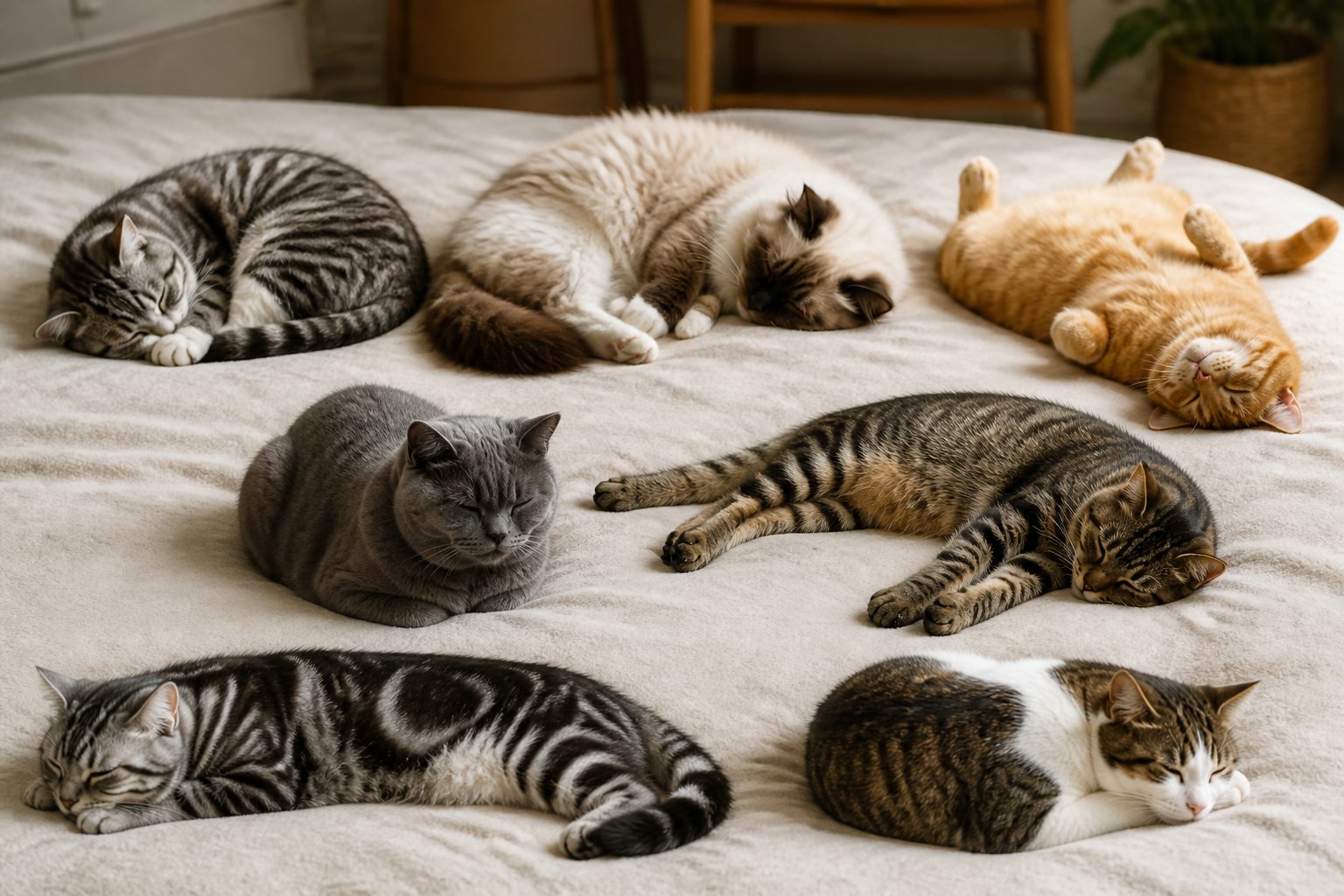
Your cat’s sleeping position tells you about their comfort level, sense of security, and body temperature needs. Each pose serves a specific purpose related to warmth, protection, or trust.
The Loaf
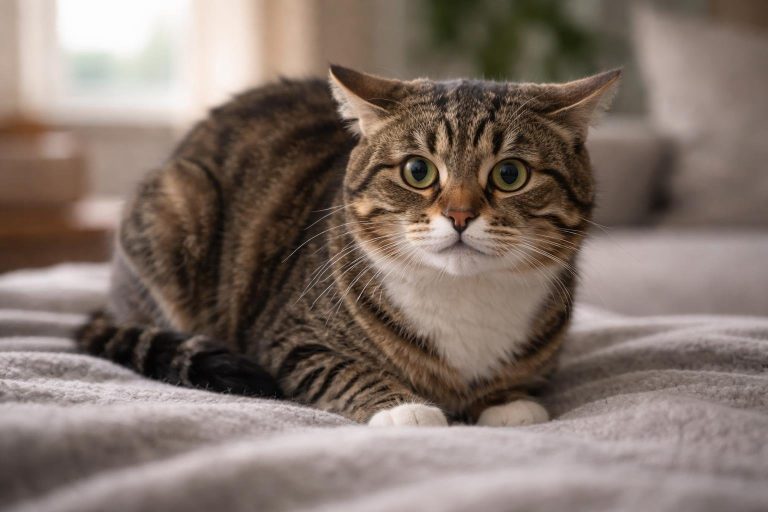
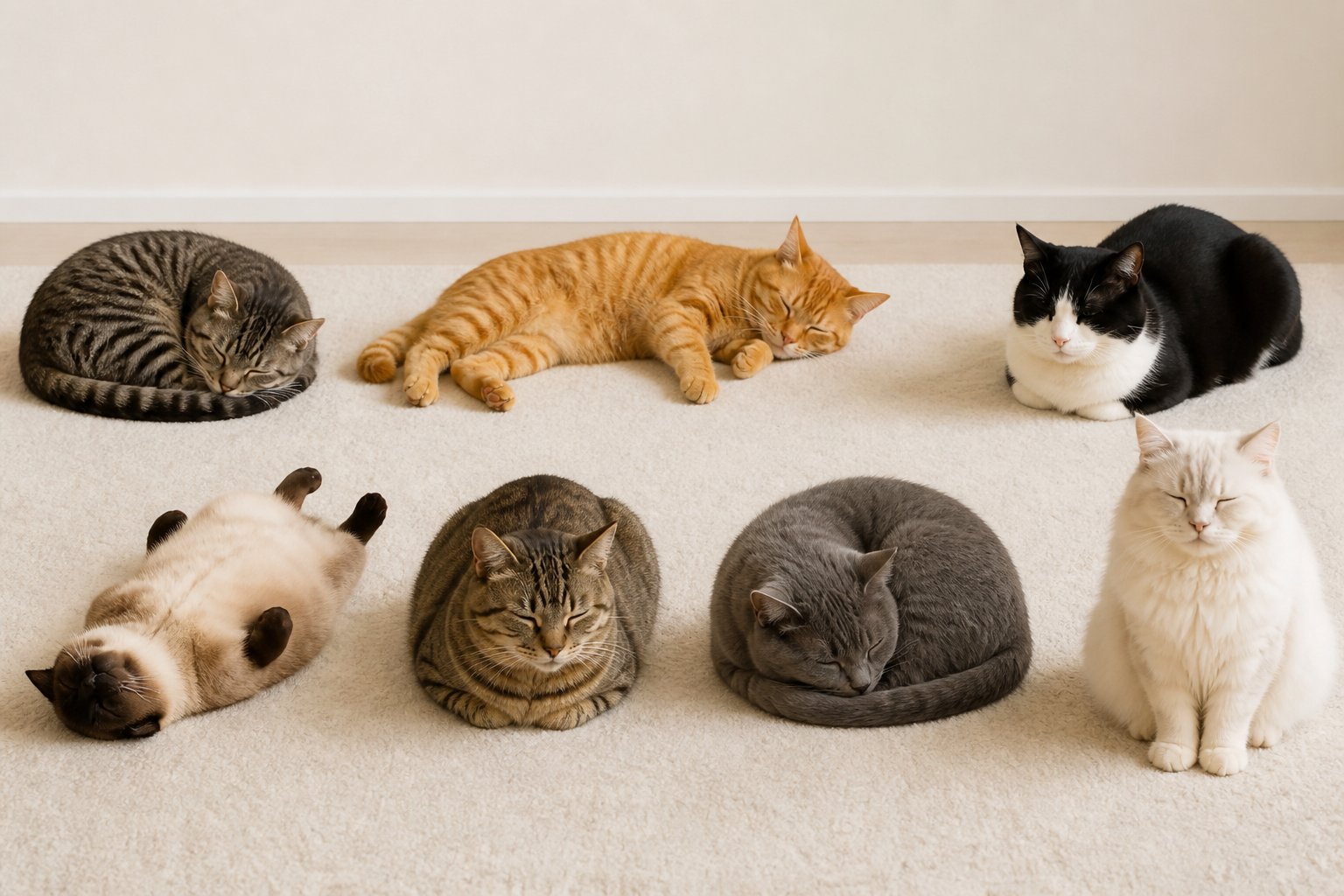
When your cat sits with their paws tucked underneath their body and their head up, they’re in the loaf position. This position helps them preserve body heat while keeping their vital organs protected.
Your cat stays alert in this position. They can quickly spring into action if needed because their muscles remain engaged.
Key characteristics of the loaf:
- Front paws curled completely under the body
- Tail wrapped around the side
- Head remains upright
- Eyes may be open or closed
This position shows your cat feels relatively safe but not completely relaxed. They’re comfortable enough to rest but still ready to respond to potential threats.
Side Sleeper
Your cat lying on their side with legs stretched out demonstrates a high level of trust. This side sleeping position exposes their vulnerable belly and vital organs.
Cats choose this position when they feel very comfortable in their environment. The stretched-out legs allow for quick movement if they need to jump up or run away.
This position also helps your cat regulate their body temperature. The extended posture allows more heat to escape from their body compared to curled positions.
You’ll often see your cat sleeping on their side during deeper sleep cycles. They feel secure enough to let their guard down while maintaining an escape option.
Belly-Up
The belly-up position shows maximum trust and confidence. Your cat sleeps on their back with their front legs either resting on their belly or stretched over their head.
This sleeping position with an exposed belly reveals your cat feels completely safe. Cats instinctively protect their abdomen because it contains vulnerable organs.
Important note: Even though your cat trusts you enough to sleep this way, most cats will still defend themselves if you touch their belly. They may bite, scratch, or swat at you.
This position also helps your cat cool down. The exposed belly releases body heat more effectively than other positions.
Curled Up
Your cat sleeping curled into a tight ball with their nose touching their tail is one of the most common feline sleeping positions. This classic pose serves multiple practical purposes.
The curled position helps your cat retain body heat. Their body forms a compact circle that minimizes heat loss from their extremities.
This position also protects vital organs in the abdomen. Your cat surrounds these vulnerable areas with less essential muscle and bone tissue.
Cats who regularly sleep curled up may enjoy round or donut-shaped beds. These bed styles support the natural curve of their body in this position.
Unusual and Playful Cat Sleep Styles
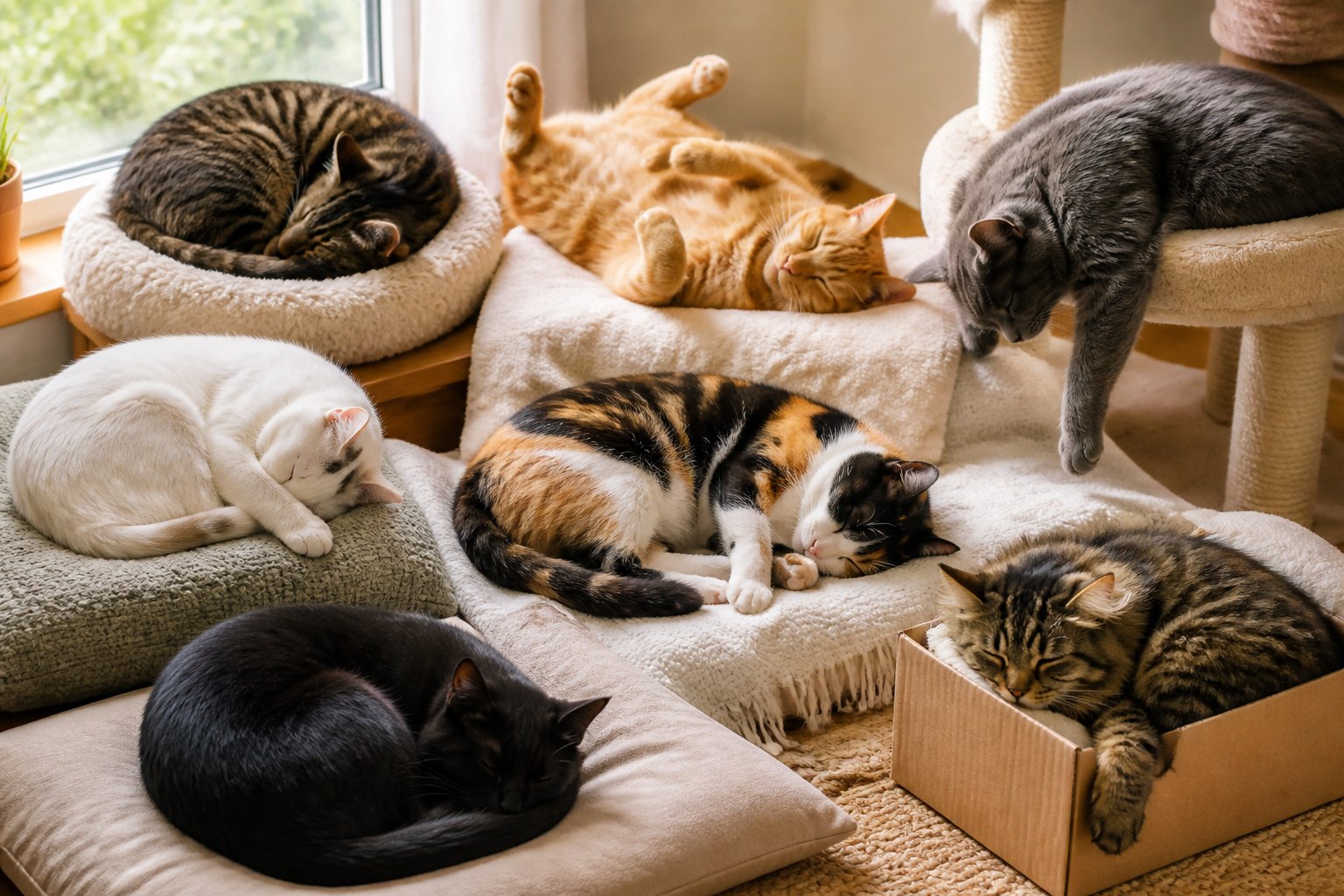
Cats can twist into positions that seem impossible or uncomfortable. These flexible poses often show how secure your cat feels or help them stay comfortable while resting.
Contortionist Twists
Your cat might sleep in positions that look extremely awkward or painful to you. Cats can sleep in uncomfortable-looking positions because their bodies are much more flexible than yours.
The discs in your cat’s spine are very elastic. This allows them to bend and twist in ways that would hurt most other animals. Your cat’s shoulder blades attach loosely by muscle rather than bone, giving them a huge range of motion.
What looks strange to you is actually quite comfortable for your cat. These twisted cat sleeping positions are normal and not a cause for concern. Your cat might curl sideways, bend at odd angles, or twist their body while keeping their head in one direction.
These flexible feline sleeping positions show that your cat feels safe enough to relax completely. When cats are stressed or worried, they tend to sleep in more protective positions instead.
Paws Across the Face
You might find your cat sleeping with their paws covering their eyes or face. This position serves several practical purposes beyond just looking adorable.
Paws over the face provide insulation and warmth for both the paws and face area. Your cat’s paws act like a sleep mask, blocking out bright lights that might disturb their rest.
This position also helps your cat:
- Block dust or pollen from irritating their nose and eyes
- Create a darker environment for deeper sleep
- Keep their face warm during cooler temperatures
- Feel more secure by covering vulnerable areas
Your cat might use this position more often during the day when sunlight streams through windows. It’s a simple way for them to control their sleeping environment without moving to a different spot.
Perched or Elevated Sleeping
Your cat may choose to sleep on top of furniture, appliances, or other high surfaces. High vantage points keep cats safe from potential predators while they sleep.
In your home, this means your cat feels safer from other pets, children, or visitors. The elevated position lets them monitor their surroundings even while resting. As natural hunters, cats also use these spots to watch for prey or interesting activity below.
Your cat might sleep on:
- The back of your couch
- The arm of a chair
- On top of the refrigerator
- High shelves or cabinets
- Cat trees or towers
These spots may look precarious, but your cat has excellent balance. A cat tree with high perches gives your cat a designated elevated sleeping area that protects your furniture.
What Your Cat’s Sleep Position Reveals About Their Mood
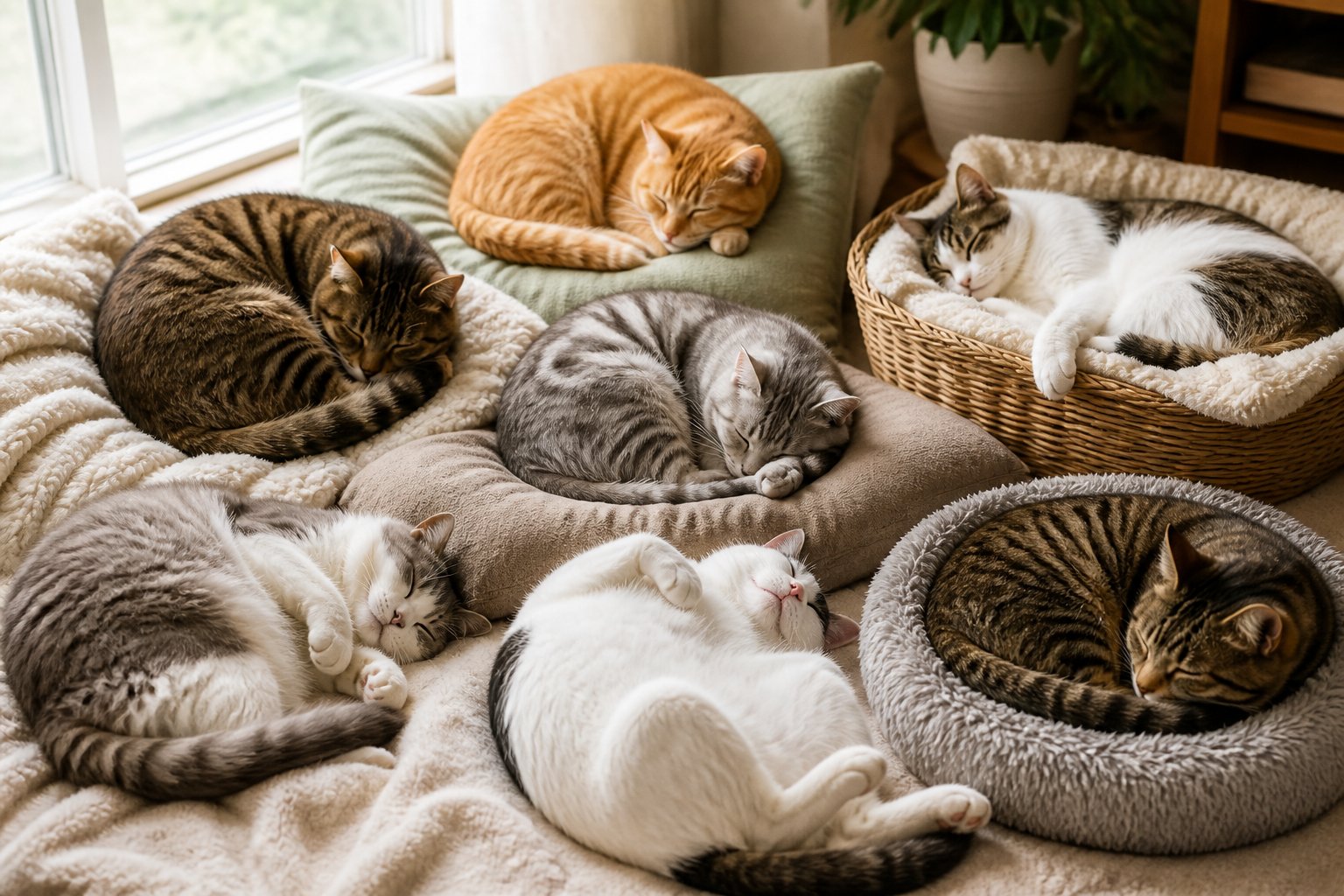
Cat sleeping positions offer clear clues about how your cat feels in the moment. A relaxed pose shows trust and comfort, while a more guarded position suggests your cat stays ready to react.
Feeling Secure and Affectionate
When your cat sleeps on their back with their belly exposed, they feel very safe around you. This vulnerable position shows high trust levels because cats naturally protect their soft belly area from threats.
Side sleeping with stretched legs sends a similar message. Your cat feels comfortable enough to expose vital organs while still maintaining an easy escape route if needed.
Sleeping next to you or on your chest indicates strong bonding. Your cat seeks your warmth and finds comfort in your heartbeat and breathing rhythm. Even sleeping near your feet or between your legs shows affection, though your cat may want a bit more personal space than full contact allows.
Cats that sleep with other pets demonstrate social bonds within your household. They share warmth and companionship through these common feline sleeping positions.
Alertness Versus Deep Relaxation
The loaf position—where your cat tucks their paws underneath with their head up—shows moderate alertness. Your cat feels relatively safe but stays poised to spring into action quickly.
Alert positions include:
- Loaf shape with tucked paws
- Superman pose with limbs extended
- Perched on furniture with a view
- Sitting upright while resting
Curled into a tight ball suggests your cat wants warmth and protection. This common position among feline sleeping positions conserves body heat while guarding the abdomen.
Cats in deep relaxation sleep with eyes fully closed and muscles loose. You might notice your cat sprawled out or in unusual twisted poses that show complete comfort in their environment.
How Environment and Temperature Influence Cat Sleep
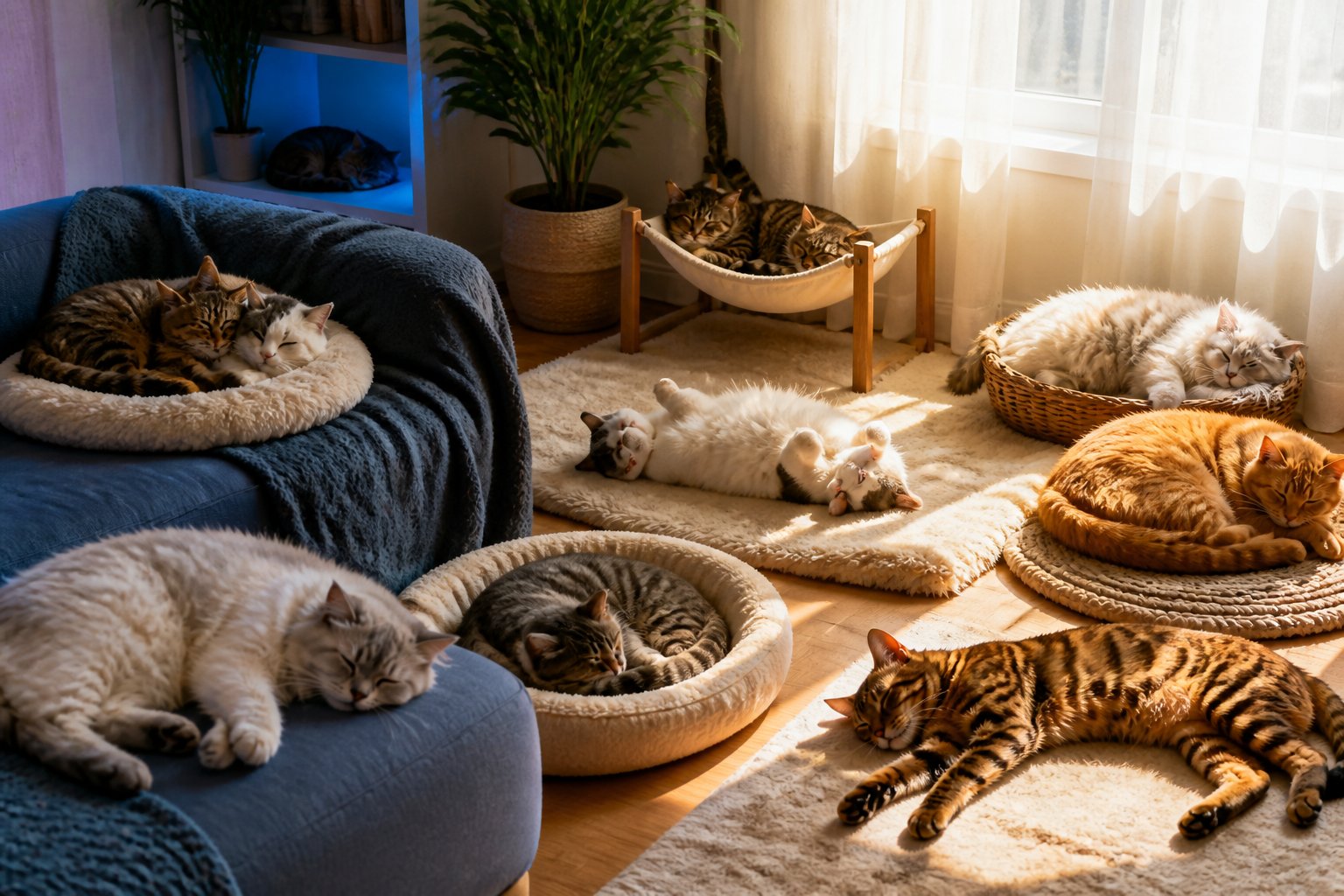
Cats adjust their sleeping positions and locations based on the temperature around them. Their choice of where and how they sleep often depends on whether they need to stay warm or cool down.
The Role of Warmth in Sleep Choices
Cats naturally seek out warm spots when they sleep because they need to maintain their body temperature. Their normal body temperature ranges from 100.5 to 102.5 degrees Fahrenheit, which is higher than humans.
When your cat feels cold, they will curl up in a tight ball to keep heat from escaping. This position reduces the surface area of their body that’s exposed to cooler air. You might notice your cat sleeping in positions that retain body heat, especially during winter months.
Many cats choose to sleep on heating vents, sunny windowsills, or near electronics that give off warmth. A heated cat bed can provide consistent warmth that appeals to your cat’s natural preference for cozy spots. These beds work well for older cats or those with arthritis who benefit from extra heat.
Common warm sleeping spots include:
- On your lap or chest
- Near radiators or heating sources
- In sunny patches of floor
- Tucked under blankets
Cold Weather Versus Warm Weather Sleep Habits
Your cat’s sleeping position changes dramatically based on the weather outside and the temperature inside your home. Temperature directly impacts how your cat rests and which spots they choose.
During cold weather, cats prefer enclosed spaces and cat beds with high sides or covers. They’ll squeeze into boxes, hide under furniture, or burrow into blankets. You’ll see them sleeping curled up more often, sometimes with their paws covering their face for extra warmth.
When it’s hot, cats stretch out completely to expose more of their body surface. They may lie flat on their sides or stomachs on cool tile floors, hardwood, or other surfaces that feel cold to the touch. The Superman position with all four legs extended helps them release body heat quickly.
Cat furniture placement matters during different seasons. Move cat beds away from drafty windows in winter and toward cooler areas in summer. Your cat will naturally seek out the most comfortable temperature zone in your home throughout the day.
Choosing the Ideal Cat Bed and Furniture for Sleep
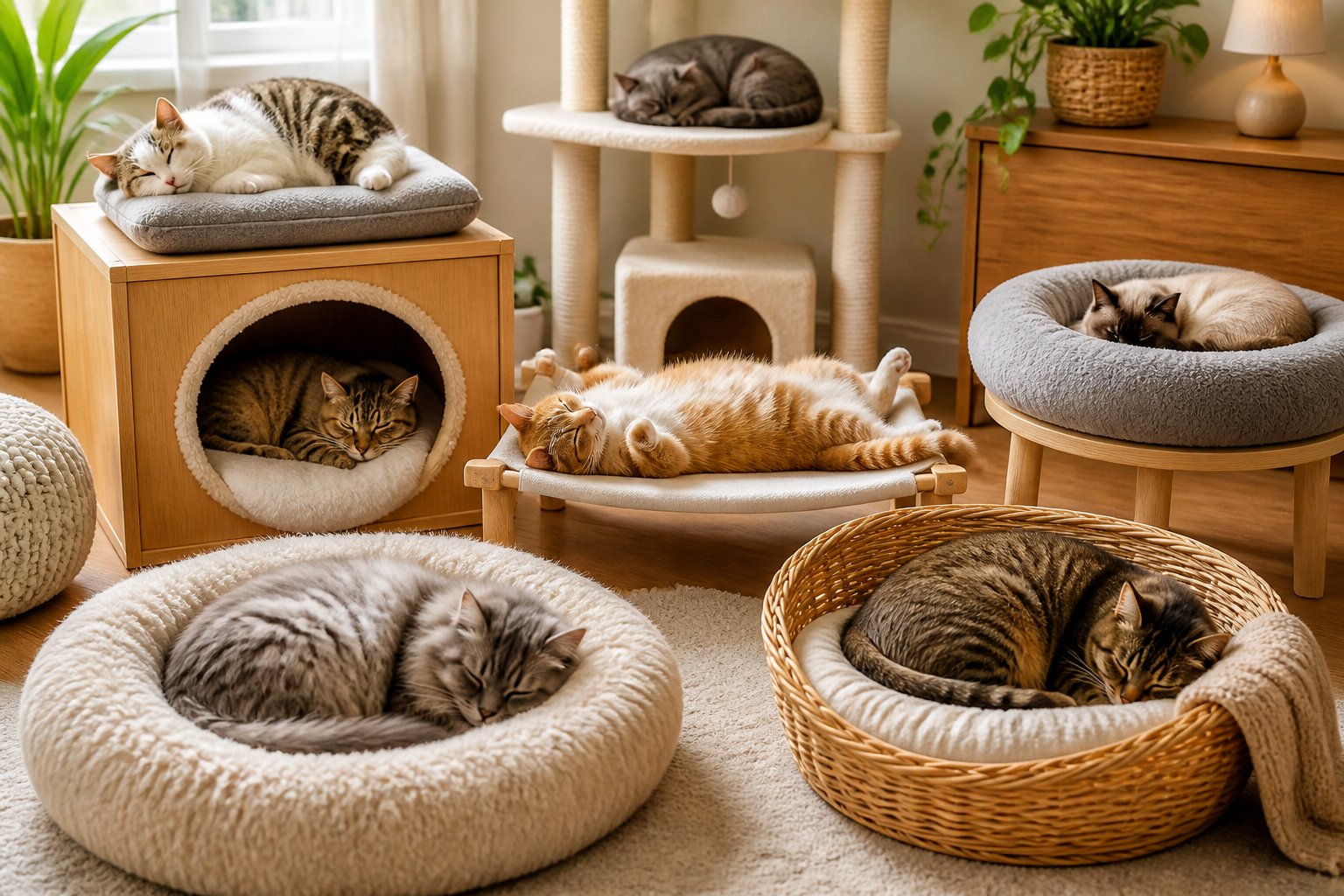
The right bed or furniture piece supports your cat’s natural sleep preferences and keeps them comfortable throughout their 12 to 16 hours of daily rest. Different sleep positions require different types of support, from enclosed spaces for curled-up sleepers to elevated perches for cats who like to stay alert.
Types of Cat Beds for Different Sleep Styles
Cats that curl into tight balls benefit most from round or donut-style beds with raised edges. These beds provide a sense of security and help your cat retain body heat.
Stretchers need flat mat-style beds or rectangular cushions with plenty of room. A bed that’s too small forces your cat into uncomfortable positions and may go unused.
Cave or pod-style beds work well for cats who sleep in hidden positions or prefer privacy. These enclosed designs mimic natural den environments and reduce stress in anxious cats.
Bed Selection by Sleep Position:
- Curled up: Round beds with bolsters, donut beds
- Stretched out: Flat mats, rectangular cushions
- On their side: Medium-sized beds with soft padding
- Tucked away: Cave beds, covered igloos
Measure your cat from nose to tail while lying down and add 2 to 4 inches for proper sizing. Beds that are too large feel insecure, while cramped beds cause discomfort.
Benefits of Heated Cat Beds
A heated cat bed provides targeted warmth that soothes stiff joints and encourages deeper sleep. Senior cats with arthritis gain the most benefit from consistent heat therapy during rest periods.
These beds work particularly well in cold climates or homes with tile and hardwood floors. The warmth helps cats who naturally seek out sunny spots or warm blankets throughout the day.
Look for beds with adjustable temperature settings and automatic shut-off features for safety. Self-warming beds use reflective materials to bounce back your cat’s body heat without electricity.
Heated options are especially valuable during winter months when cats spend more time sleeping. The added warmth can reduce the time it takes for your cat to settle into deep sleep phases.
Furniture for Perching and Security
Cat furniture like towers and window perches accommodate cats who sleep in elevated positions. Hammock-style beds attached to windows let your cat watch their surroundings while resting.
Multi-level cat trees provide options for cats who change positions throughout the day. The top platforms appeal to cats who sleep stretched out in high places, while lower cubby holes suit those who prefer enclosed spaces.
Wall-mounted shelves with padded surfaces save floor space and give your cat multiple resting spots. Place these near windows or in quiet corners where your cat already spends time.
Sturdy furniture prevents wobbling that might wake your cat or make them feel unsafe. Check weight limits and secure all pieces to walls if needed for stability.
Helping Your Cat Find Comfort: Practical Tips for Owners
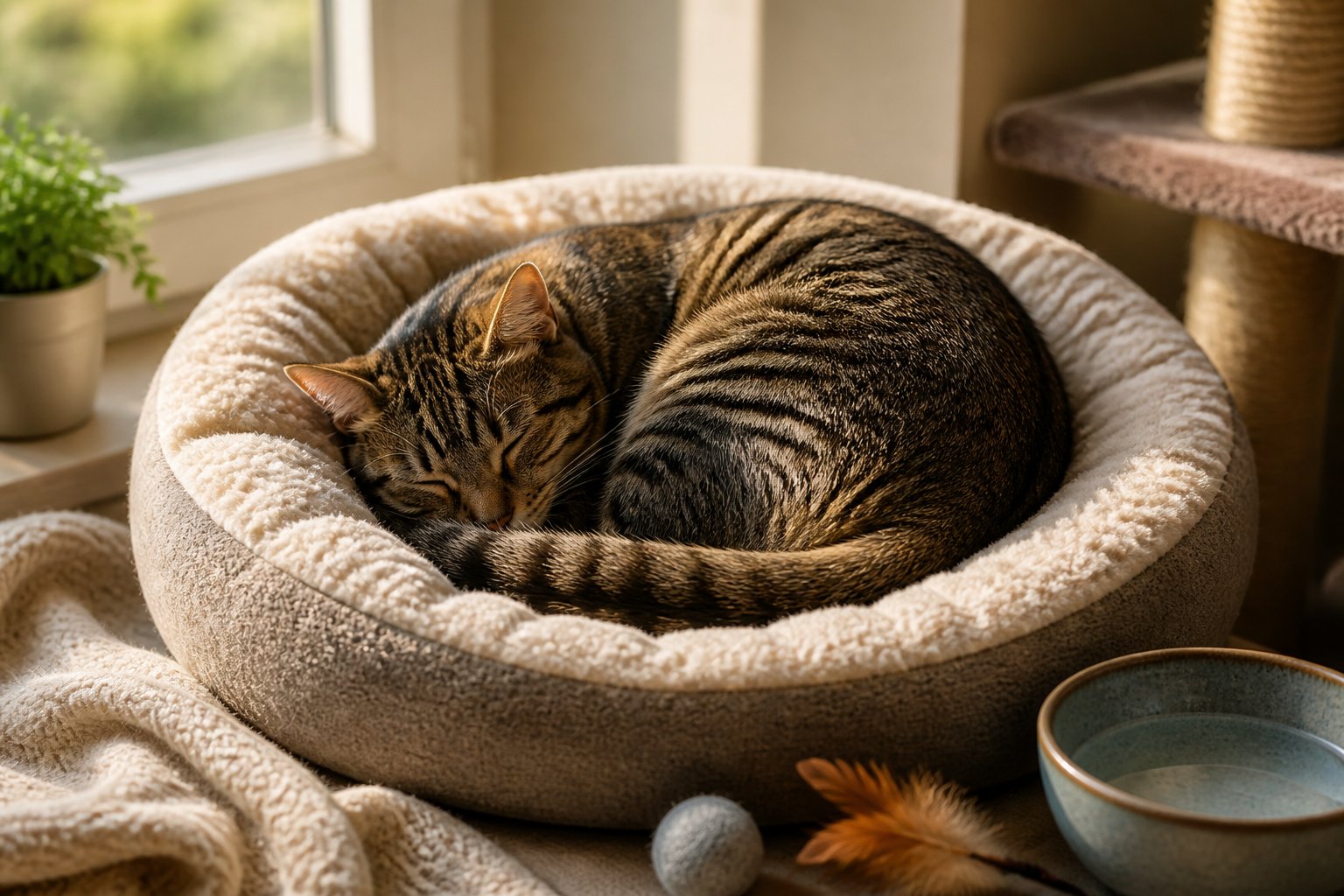
You can improve your cat’s sleep quality by providing the right sleeping areas and knowing when changes are needed. The right setup makes a real difference in how well your cat rests throughout the day.
Creating a Safe Sleep Environment
Your cat needs multiple sleeping spots around your home. Cats sleep 12 to 16 hours each day, so having options matters.
Place cat beds in quiet areas away from loud appliances and foot traffic. Cats feel safer when they can observe their surroundings, so elevated spots work well. A cat tree with a high perch gives your cat both security and a good view.
Temperature control is important. Offer both warm and cool options:
- Heated cat beds for cold weather or cats that sleep curled up
- Tile or hardwood floor access for cats that lie flat when hot
- Covered cat beds for cats that enjoy enclosed spaces
Add a donut bed or round bolster bed for cats that curl into balls. Box-loving cats appreciate the security of small, covered spaces.
Keep litter boxes away from sleeping areas. Cats prefer separate zones for elimination and rest.
Recognizing When to Adjust Your Cat’s Sleeping Spaces
Watch how your cat uses their sleeping areas. If your cat avoids a bed you provided, the location might feel unsafe or the style doesn’t match their preferred sleeping position.
Signs you need to make changes:
- Your cat consistently sleeps in awkward spots like countertops or appliances
- Your cat seems restless or changes positions frequently
- Your cat starts sleeping in their litter box (contact your vet immediately, as this often signals health problems)
Move cat furniture if your cat ignores it. Try different rooms or heights. Some cats want to be near you, while others need distance.
Add more beds if you have multiple cats. Even bonded cats that sleep together appreciate having their own options.
Frequently Asked Questions
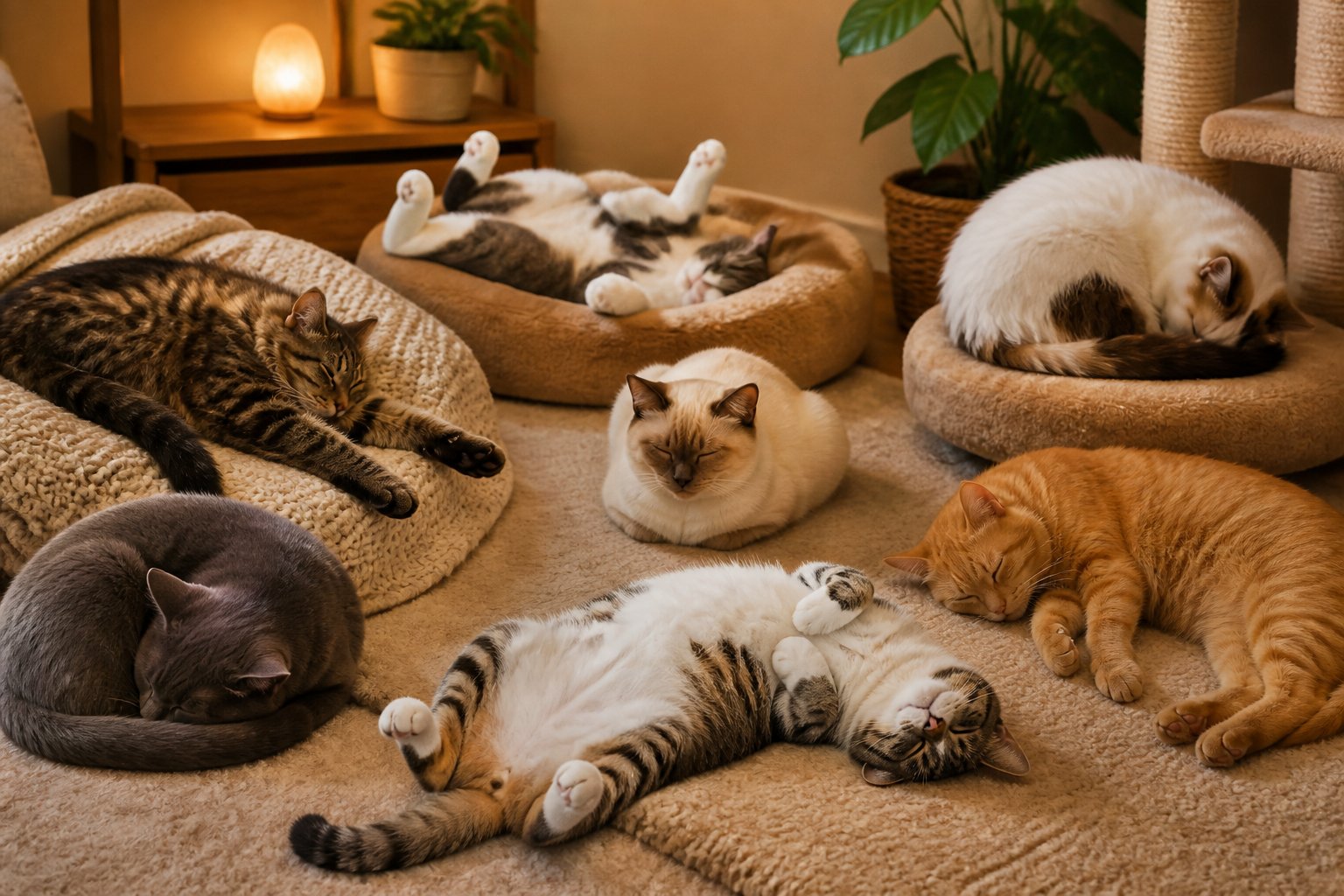
Cats choose sleeping spots and positions based on their feelings of safety, comfort, and connection with you. These choices can also reveal important information about their health and well-being.
What does it mean when a cat sleeps next to you, and how does it reflect trust or bonding?
When your cat sleeps next to you, it shows they trust you enough to be vulnerable while resting. Cats are both predators and prey animals in the wild, so choosing to sleep near you means they feel safe in your presence.
This position shows your cat is bonded to you but prefers a small buffer zone. Some cats simply feel more secure with a bit of personal space rather than direct contact.
What does it mean when a cat sleeps by your head?
Your cat may sleep by your head because it offers a soft pillow and stays relatively still throughout the night. This spot gives your cat less disturbance while they rest.
Cats that adapt to your sleep schedule often want to be near you when you sleep. Sleeping by your head also gives your cat easy access to wake you when they need food or attention.
Your voice may provide comfort to your cat, which is why they position themselves closer to your mouth.
What does it mean when a cat sleeps by your feet?
When your cat sleeps at your feet, they enjoy the warmth while also seeking body heat from you. This position lets your cat stay close to you while maintaining the security of an easy escape route near the foot of the bed.
Your feet provide warmth without the restriction of closer contact. Many cats find this balance of closeness and freedom ideal for their comfort.
What does it mean when a cat sleeps on your legs?
Sleeping between your legs creates a warm, safe, nest-like area for your cat. Your legs surround them with security while keeping them very close to you.
This position still allows your cat an easy escape route if needed. Even though it may be uncomfortable for you, your cat benefits from both the warmth and the protected feeling this spot provides.
Which cat sleeping positions can indicate illness or discomfort, and when should you be concerned?
If your cat sleeps or lies in their litter box, this usually indicates a medical problem with their urinary or digestive system. You should contact your veterinarian immediately if this happens.
Cats sleeping in very hunched positions or avoiding their normal sleeping spots may be experiencing pain. Watch for changes in your cat’s usual sleeping habits or positions.
If your cat’s eyes show swelling, discharge, squinting, or pawing, see your veterinarian as soon as possible. These signs can indicate eye problems even if your cat normally sleeps with their eyes partially open.
What does the loaf sleeping position with the head down typically indicate?
The loaf position occurs when cats tuck their front paws underneath their body while keeping their head up. This position preserves body heat and protects vital organs.
Cats in this position may be relaxed but remain ready to spring into action if needed. They can quickly use their claws if they sense danger.
When the head is down in the loaf position, your cat is likely more deeply relaxed than when their head stays upright. However, they still maintain some level of alertness and protection for their body.