
Are Laser Pointers Bad for Cats? Science-Backed Facts on Feline Play Safety
You’ve probably seen your cat go wild chasing that little red dot across the floor, but you might wonder if this popular toy is actually safe for your feline friend. Laser pointers are not inherently bad for cats when used correctly, but they can cause eye damage if shined directly into your cat’s eyes and may lead to frustration if not used properly.
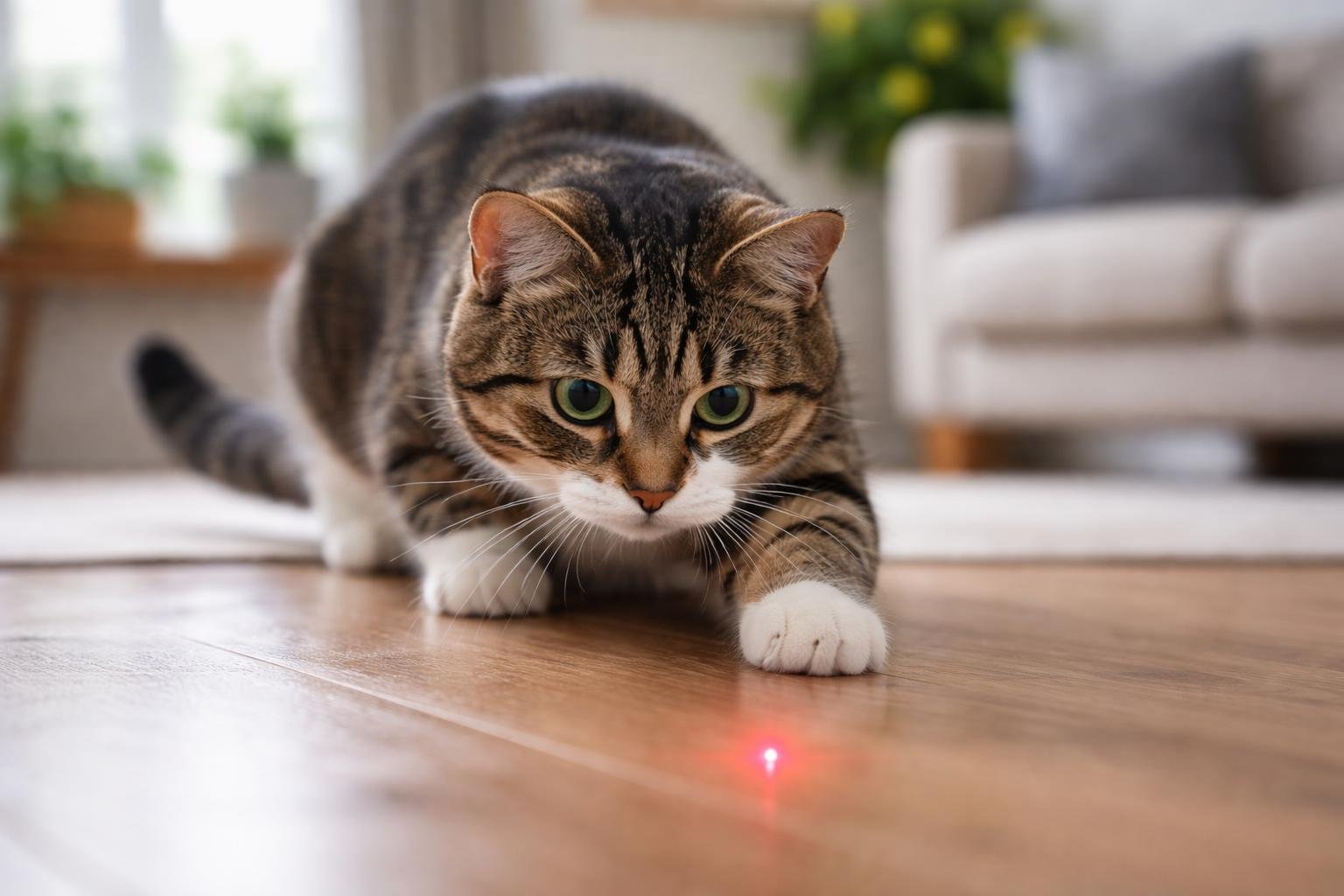
Cats have a natural hunting instinct that makes them unable to resist chasing moving light. This explains why laser pointers can be such an effective tool for exercise and mental stimulation. However, laser pointers can be dangerous to cats if you don’t follow important safety rules.
Understanding both the benefits and risks will help you make the right choice for your cat. This guide covers everything from why cats love lasers to how you can use them safely, plus alternatives that might work even better for your pet’s wellbeing.
Why Cats Are Drawn to Laser Pointers
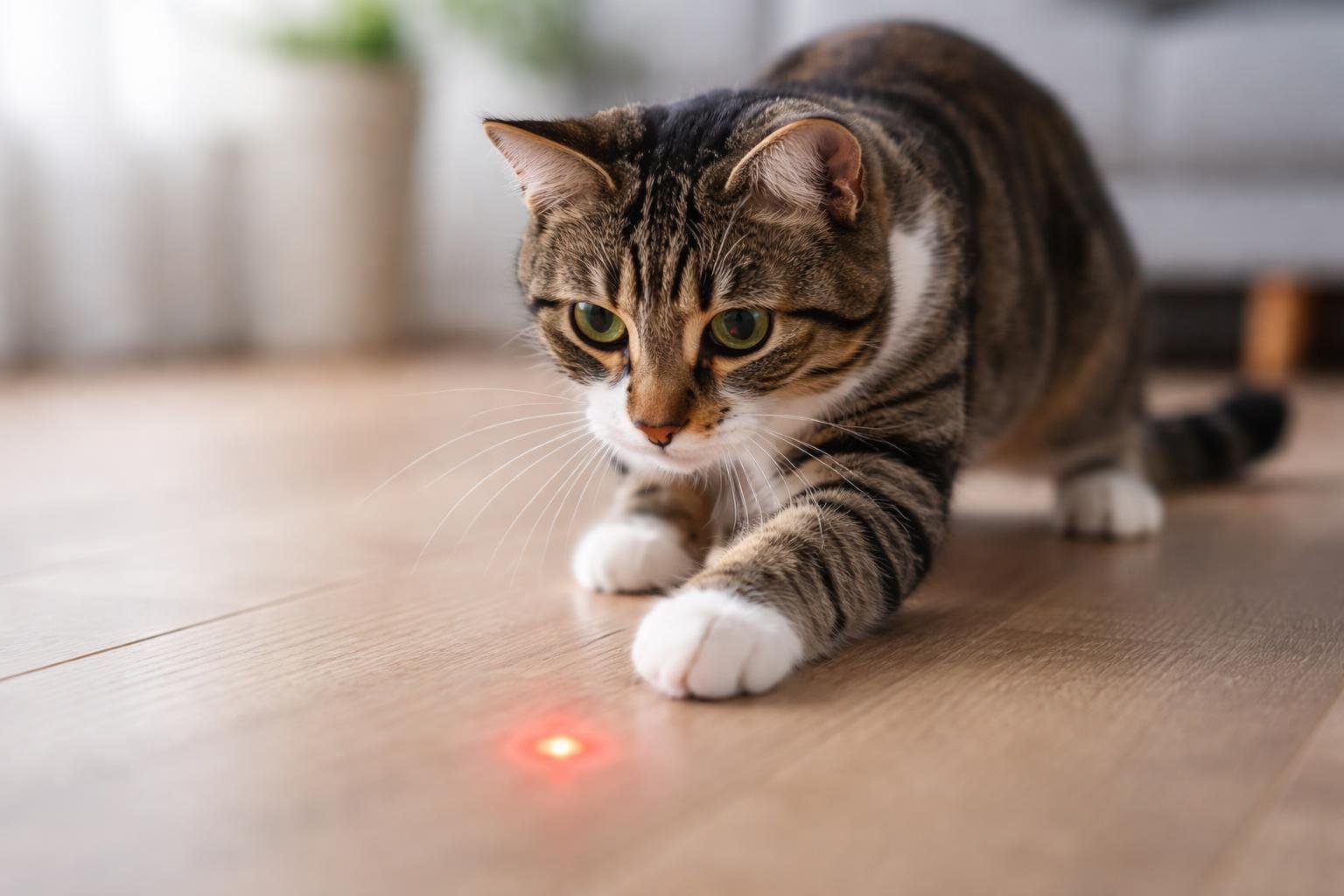
Cats react strongly to laser pointers because of their natural hunting instincts and the way their eyes perceive fast-moving objects. The small, unpredictable movements of the light trigger the same behaviors cats use when stalking real prey.
Prey Drive and Instinctual Behaviors
Your cat’s obsession with chasing laser dots comes from deep-rooted predator instincts. Cats are natural predators that have evolved to hunt small, fast-moving creatures like mice, birds, and insects.
When your cat sees a laser pointer moving across the floor or wall, their brain automatically switches into hunting mode. The quick, erratic movements of the dot mimic the behavior of prey trying to escape. This triggers what’s called a prey drive, which is the instinctual urge to chase, pounce, and capture.
Cat play behaviors mirror real hunting sequences. Your cat will stalk the laser dot, crouch low to the ground, wiggle their hindquarters, and then pounce. These are the exact same actions they would use when hunting live prey in the wild.
The unpredictable nature of laser movement makes it especially appealing. You can change direction instantly, speed up, or slow down, which keeps your cat engaged and alert.
The Appeal of Red Lasers
Red lasers work particularly well for cat toys because of how feline vision processes light and movement. Cats have excellent motion detection abilities that allow them to spot even the smallest movements in low light conditions.
The bright red dot stands out against most surfaces, making it easy for your cat to track. While cats don’t see colors the same way humans do, they can still detect the contrast between the laser and the background. The intensity of the light catches their attention immediately.
The size of the laser dot also matters. It’s small enough to resemble actual prey animals, which makes the hunting game feel realistic to your cat. The fact that the dot has no scent or sound makes it mysterious and intriguing rather than less appealing.
Comparing Laser Play to Other Cat Toys
Laser pointers offer unique benefits compared to traditional cat toys, but they also have distinct limitations. Physical toys like feather wands, mice, and balls allow your cat to complete the hunting sequence by actually catching and holding something.
Key differences between laser and physical toys:
- Laser pointers: No physical contact, endless energy from your cat, requires human participation
- Feather wands: Tactile satisfaction, captures prey instinct fully, requires human participation
- Toy mice: Can be caught and carried, allows solo play, provides physical feedback
- Ball toys: Can be batted and chased, offers independent play, gives tangible results
The main drawback of cat play with lasers is that your cat never catches the prey. With physical cat toys, your cat experiences the satisfaction of grabbing, biting, and carrying their “catch.” This completion of the hunting cycle provides mental satisfaction that lasers cannot deliver on their own.
Benefits of Laser Pointer Play for Cats
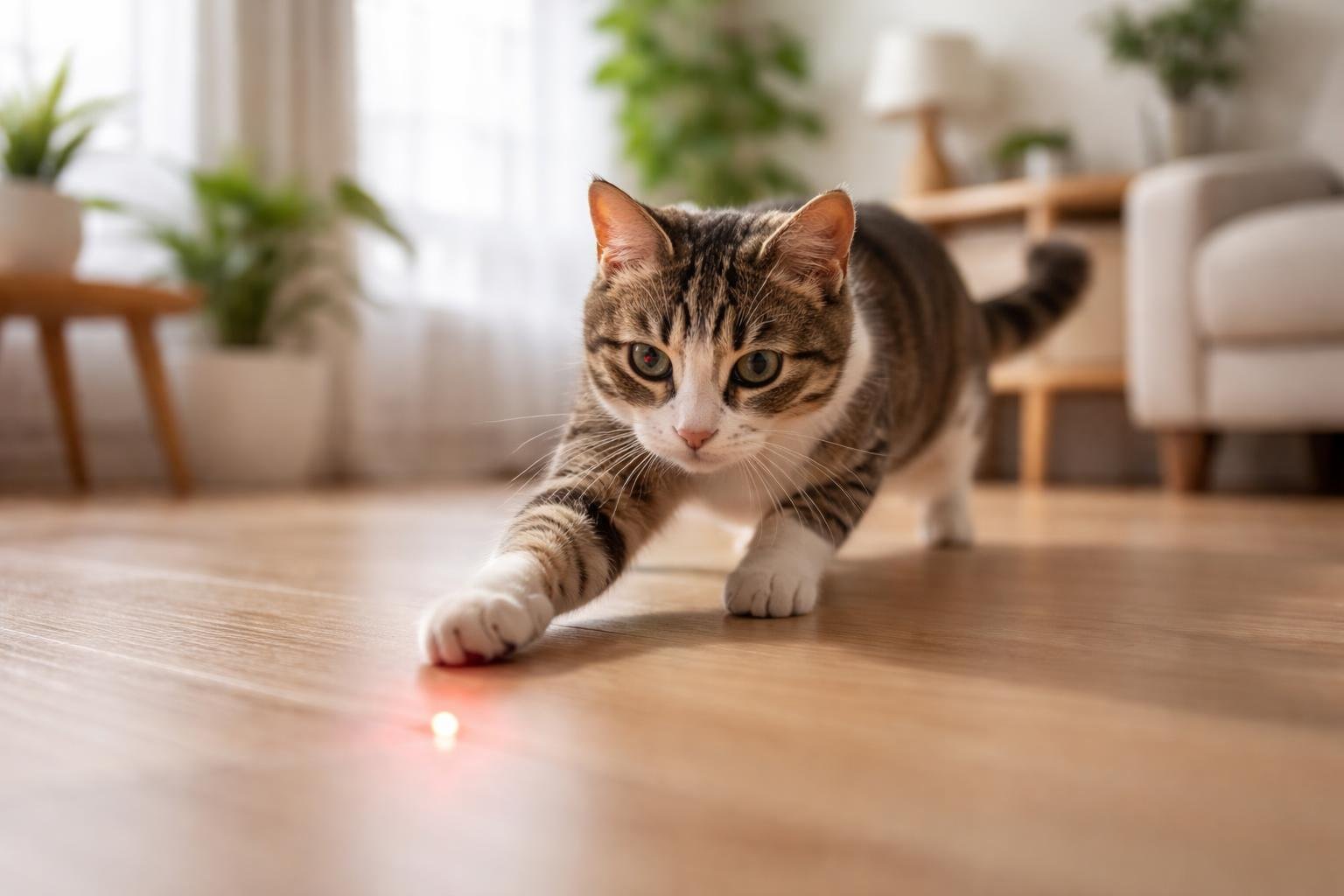
Laser pointers offer real advantages for cats when used correctly. They provide physical exercise, keep your cat’s mind active, and help indoor cats stay engaged in their home environment.
Encouraging Cat Exercise and Weight Management
Laser pointers make your cat move in ways that mirror natural hunting behavior. Your cat will sprint, jump, and change direction quickly while chasing the light across the floor. This type of activity burns calories and helps maintain a healthy weight.
Indoor cats often struggle with obesity because they don’t get enough movement throughout the day. A 10 to 15 minute session with a laser pointer can get your cat’s heart rate up and work different muscle groups. The intense bursts of activity during laser play are similar to how cats would chase prey in the wild.
Regular laser play sessions help prevent weight-related health problems. When your cat stays active, you reduce the risk of diabetes, joint issues, and heart disease. Even older or less active cats can benefit from short laser sessions adjusted to their fitness level.
Supporting Mental Stimulation and Curiosity
Cats are predators by nature, and laser pointers tap into their hunting instincts. The unpredictable movement of the laser dot keeps your cat’s brain engaged as they track, stalk, and pounce. This mental workout is just as important as physical exercise.
Your cat needs to use problem-solving skills during laser play. They calculate speed, distance, and timing with each chase. This type of mental challenge prevents boredom and keeps their mind sharp.
Laser pointer play can reduce problem behaviors that stem from boredom. Cats that get regular mental stimulation are less likely to scratch furniture, knock things over, or meow excessively at night.
Improving Activity Levels in Indoor Homes
Indoor cats face unique challenges because they don’t have access to outdoor stimulation. Laser pointers bring excitement into your home without the risks of outdoor play. You can use them in small apartments or large houses with equal effectiveness.
The beauty of laser play is its flexibility in any living space. You can direct the laser up walls, across furniture, and under doorways to create an engaging home environment. This variety keeps your cat interested and active even in limited square footage.
When you use laser pointers responsibly, they become an effective tool for daily cat exercise. You can schedule sessions during times when your cat naturally becomes active, like early morning or evening. This routine helps establish healthy activity patterns that keep your indoor cat physically fit.
Key Safety Concerns and How to Prevent Harm
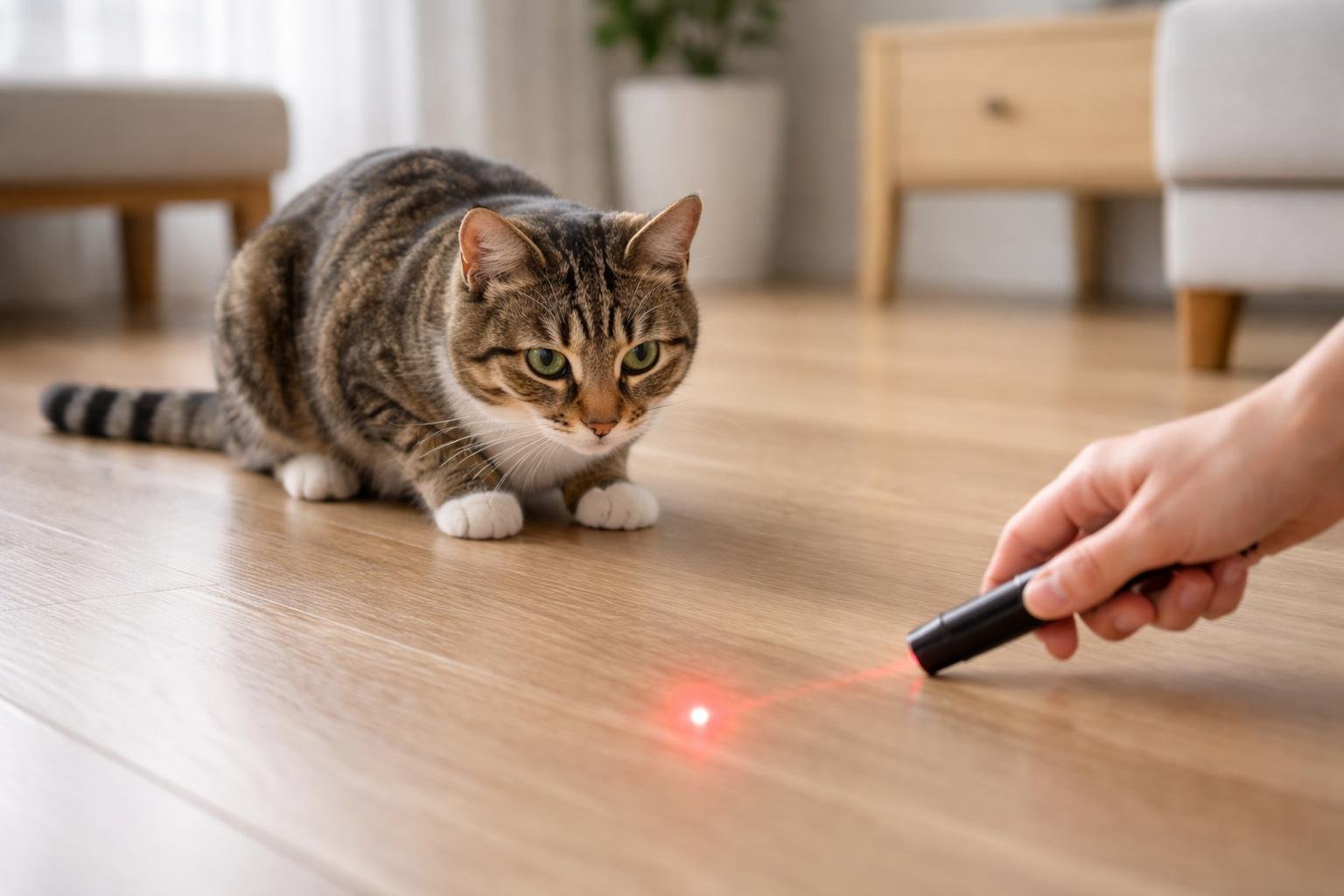
Laser pointers can be safe cat toys when used correctly, but they do present specific risks that need attention. Eye damage, physical exhaustion, and choosing an appropriate device are the main concerns to address.
Avoiding Eye Injuries and Safe Usage Tips
The biggest safety risk with laser pointers involves potential eye damage to your cat. Direct laser exposure to the eyes can cause retinal damage, even with low-power devices. You should never shine the laser directly at your cat’s face or eyes.
Laser pointer safety requires you to keep the dot on the floor, walls, or furniture at ground level. Avoid pointing it at reflective surfaces like mirrors or windows that could bounce the beam into your cat’s eyes.
Safe usage practices include:
- Point the laser away from your cat’s head
- Keep the dot moving at a steady, trackable pace
- Avoid sudden movements toward your cat’s face
- Never let children use laser pointers unsupervised with pets
- Store the pointer safely when not in use
Limiting Session Lengths to Prevent Overexertion
Cats can become overstimulated or exhausted during extended laser play sessions. You should limit playtime to 5-10 minutes per session to prevent physical and mental stress.
Short, frequent play sessions work better than long ones. Your cat needs time to rest between active play periods. Watch for signs of overexertion like heavy panting, excessive drooling, or reluctance to continue playing.
Understanding laser pointer syndrome is important because cats never “catch” the dot. This can lead to frustration. End each session by directing the laser toward a physical toy or treat that your cat can actually capture. This gives them a sense of completion and prevents anxiety.
Choosing the Right Laser Pointer for Cats
Not all laser pointers are equally safe for cats. Look for devices specifically marketed as cat toys with a power output under 5 milliwatts. Red lasers are the standard choice and work well for most cats.
Check that the laser pointer meets FDA safety standards. Avoid high-powered lasers designed for presentations or industrial use. These can cause serious eye injuries.
Features to look for:
- Power rating clearly marked as under 5mW
- Red or orange beam (easier on eyes than green or blue)
- Automatic shut-off feature
- Easy on/off switch you can control quickly
Understanding Laser Pointer Syndrome and Psychological Risks
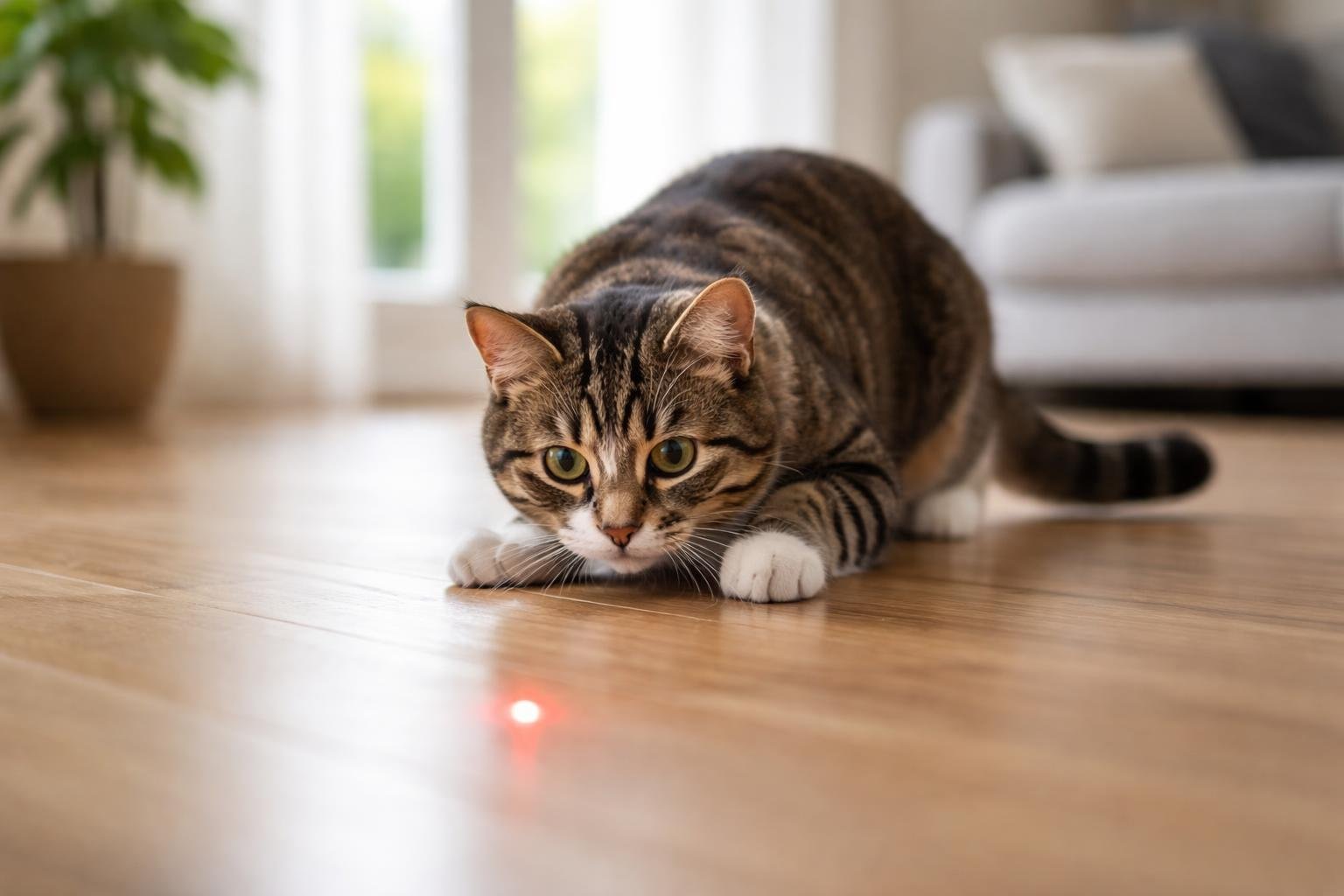
Laser pointers can create mental stress in cats because they never get to catch their target. This repeated failure to capture prey leads to frustration and can develop into obsessive behaviors that affect your cat’s well-being.
Frustration from Uncatchable Prey
Cats have a natural hunting instinct that follows a specific pattern: stalk, chase, pounce, and capture. When you use a laser pointer, your cat completes the first three steps but never gets to finish with a successful catch.
This incomplete hunting cycle creates mental frustration. Your cat’s brain expects a reward at the end of the hunt, but the laser dot simply disappears. The lack of a tangible catch denies the satisfaction that normally comes from successful hunting.
Over time, this repeated letdown can make your cat feel stressed during play. Your cat may become anxious or agitated because the game never has a satisfying ending. This is why laser pointers are controversial among cat experts and veterinarians.
Connections to Obsessive Behaviors
Some cats develop anxiety-like symptoms or obsessive behaviors when laser pointers are used too often or incorrectly. Your cat might start fixating on light reflections, shadows, or other moving spots even when you’re not playing.
These obsessive tendencies can include:
- Constantly staring at walls or floors looking for the light
- Chasing any small reflection or shadow
- Becoming hyperalert to tiny movements
- Pacing or restless behavior between play sessions
The seemingly harmless fun can inadvertently lead to frustration and behavioral problems in your cat. Your pet may become so focused on finding that red dot that it interferes with normal activities like eating, sleeping, or relaxing.
Recognizing Signs of Laser Pointer Syndrome
Watch your cat’s behavior both during and after laser pointer play. If your cat shows certain warning signs, it may be developing laser pointer syndrome.
Common signs include:
- Excessive focus on light spots or shadows throughout the day
- Increased anxiety or agitation after play sessions
- Obsessive scratching or pawing at walls and floors
- Difficulty settling down or relaxing
- Loss of interest in other toys or play activities
Your cat might also display restless pacing or seem unable to stop searching for the light even hours after play ends. Some cats vocalize more or show signs of stress like excessive grooming. If you notice these behaviors, you should stop using the laser pointer and switch to toys your cat can actually catch.
Guidelines for Healthy Laser Play Sessions
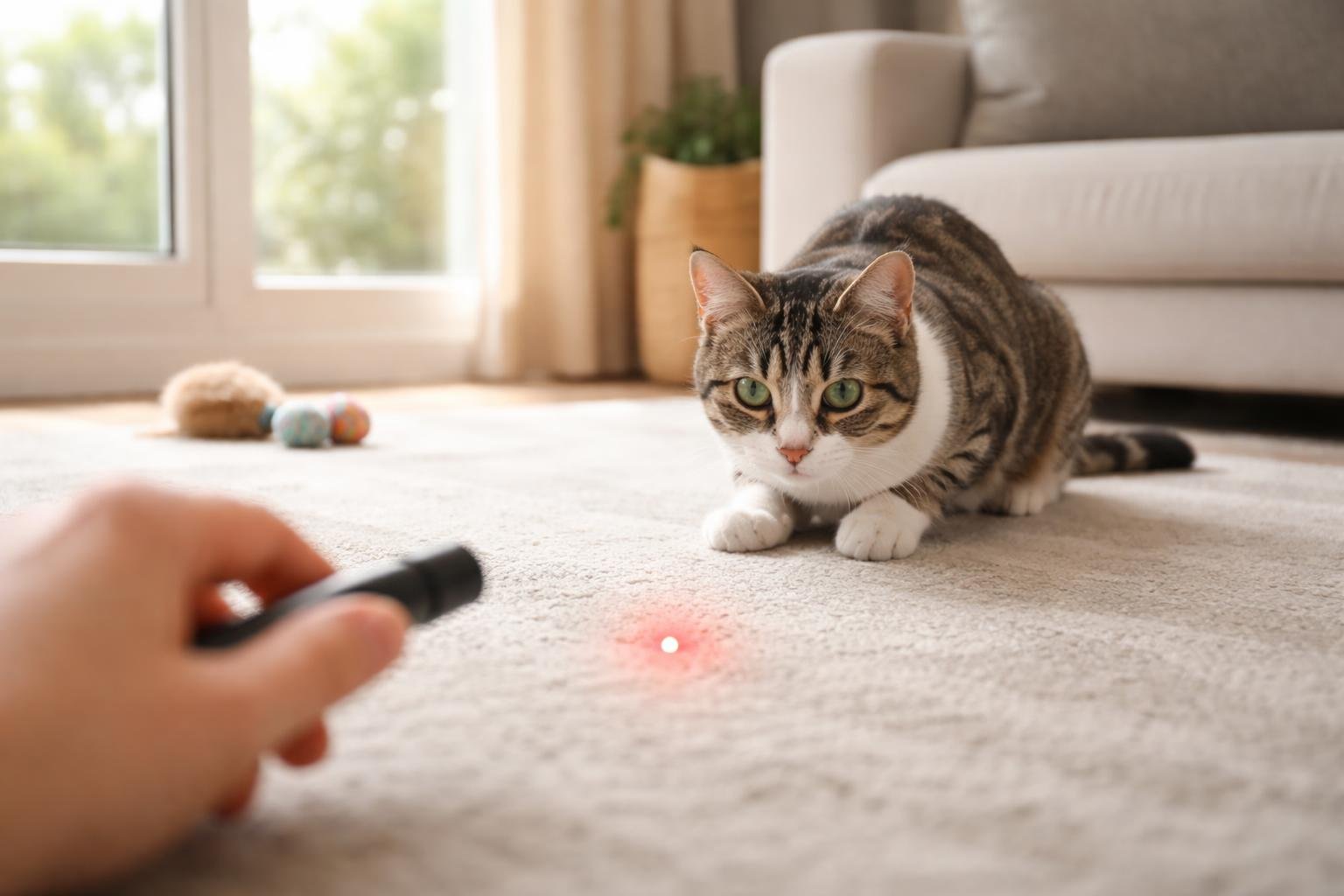
Using laser pointers correctly means finishing each play session with something your cat can actually catch and mixing in different types of toys to keep your cat mentally satisfied.
Completing the Hunting Cycle with Physical Toys
Cats need to complete their natural hunting sequence, which includes stalking, chasing, catching, and “killing” their prey. When you use a laser pointer, your cat can chase but never catch the red dot. This incomplete cycle can lead to frustration and anxiety.
Always end your laser sessions by directing the light toward a physical toy your cat can pounce on and grab. Move the laser dot closer to a stuffed mouse, feather wand, or treat until your cat catches the actual item. Let your cat hold, bite, and carry their captured toy.
You can also toss small treats in the path of the laser light during the final minutes of play. When your cat “catches” a treat, they experience the reward of a successful hunt. This simple step helps prevent laser pointer syndrome, which happens when cats become obsessed or frustrated with the uncatchable light.
Balancing Laser Sessions with Other Cat Toys
Your cat needs variety in their play routine beyond laser pointers. Different cat toys work different muscles and satisfy different hunting instincts.
Rotate between these toy types throughout the week:
- Wand toys – Let your cat jump and catch moving targets
- Kick toys – Allow bunny-kick wrestling moves
- Puzzle feeders – Engage problem-solving skills
- Catnip mice – Provide solo play opportunities
- Ball track toys – Encourage batting and tracking
Limit laser play to 5-10 minutes per session, two to three times per week maximum. Use interactive cat toys for your other play sessions. This balance keeps cat play interesting while avoiding over-reliance on lasers.
Never make the laser your cat’s only form of exercise or mental stimulation.
Ending Playtime on a Positive Note
How you finish a play session affects your cat’s emotional state and future behavior. Your cat should feel satisfied and tired, not wound up or confused.
In the last two minutes of laser play, slow down your movements gradually. Move the dot in smaller circles and shorter distances. This mimics tired prey and helps your cat wind down naturally.
Direct the final laser movements toward a physical reward like a toy mouse or treat pile. Turn off the laser only after your cat has caught and engaged with something real. Walk away while your cat is still focused on their captured prize.
Follow up play sessions with a small meal or treats. Eating after hunting completes your cat’s natural behavioral cycle and creates positive associations with playtime ending.
Alternatives and Enhancements for Enriching Play
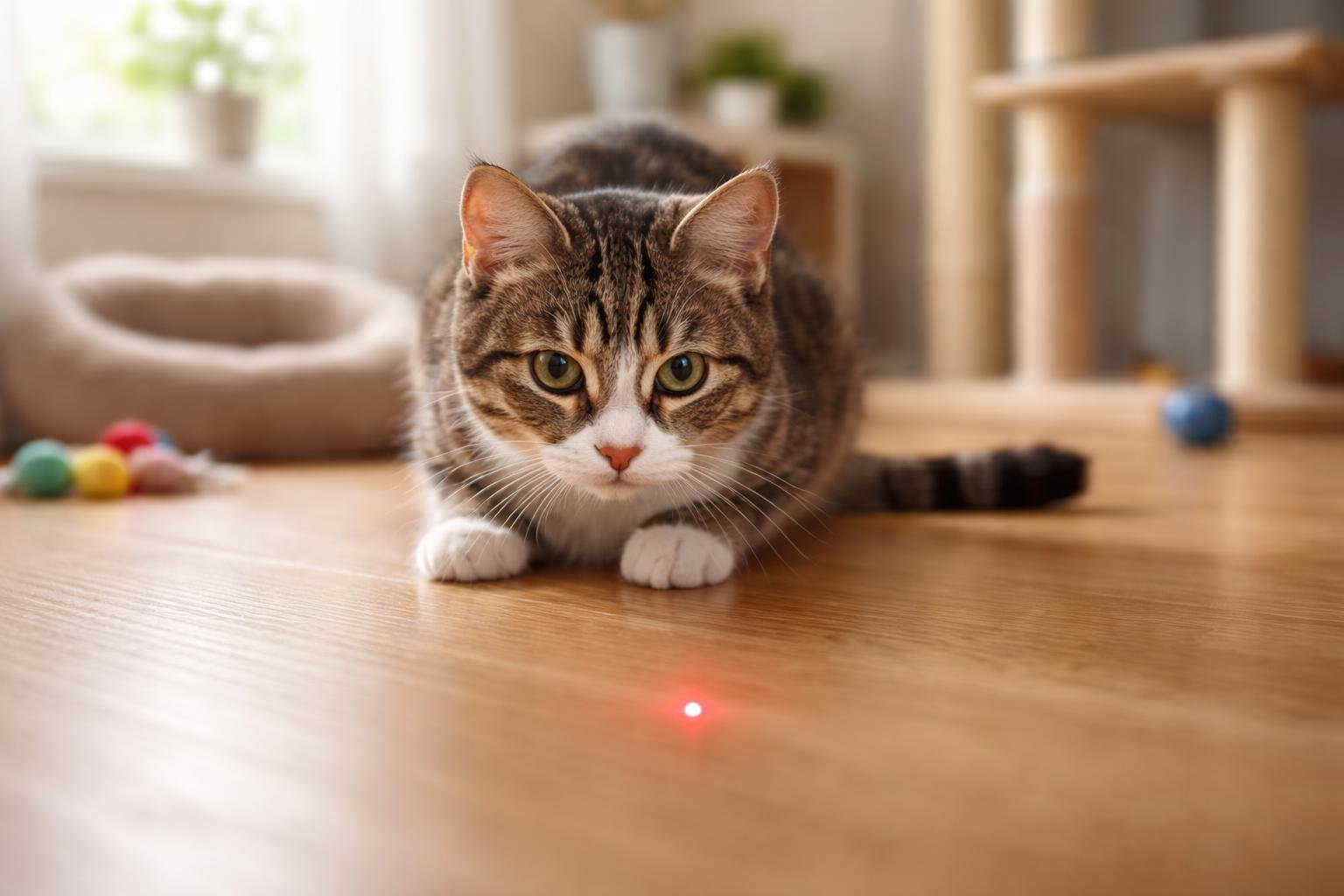
Cat toys that allow physical contact give your pet the satisfaction of catching prey, while smart laser play adjustments help multiple cats enjoy the game safely in your home.
Incorporating Interactive Cat Toys
Wand toys with feathers or fabric strips let your cat actually catch something at the end of play. This provides the complete hunt cycle that laser pointers can’t offer. You should move these toys to mimic prey behavior, dragging them slowly across the floor or making quick jerky movements.
Puzzle feeders combine mental stimulation with food rewards. Your cat works to release treats from compartments, which satisfies their problem-solving instincts. Battery-operated mice and balls give your cat something tangible to bat around and carry in their mouth.
Kick toys filled with catnip let your cat grab with front paws while bunny-kicking with back legs. This wrestling behavior is natural and satisfying. Crinkle balls and spring toys are simple options that cats can toss and chase on their own.
You can rotate different cat toys weekly to keep your cat interested. Store some toys away and bring them back later so they feel new again.
Adapting Laser Play for Multi-Cat Homes
Use two laser pointers simultaneously so each cat gets their own dot to chase. This prevents competition and frustration between cats during play sessions. You need to create separate paths for each laser beam to avoid cats colliding or fighting over the same target.
End laser sessions by guiding all cats to physical toys or treats in different areas of your home. This gives each cat a chance to “catch” something without competing. Space out the reward locations so dominant cats don’t steal from others.
Watch for signs of stress like hissing, swatting, or one cat blocking another’s path. If this happens, play with cats in separate rooms instead. Some cats do better with individual attention rather than group play sessions.
Frequently Asked Questions
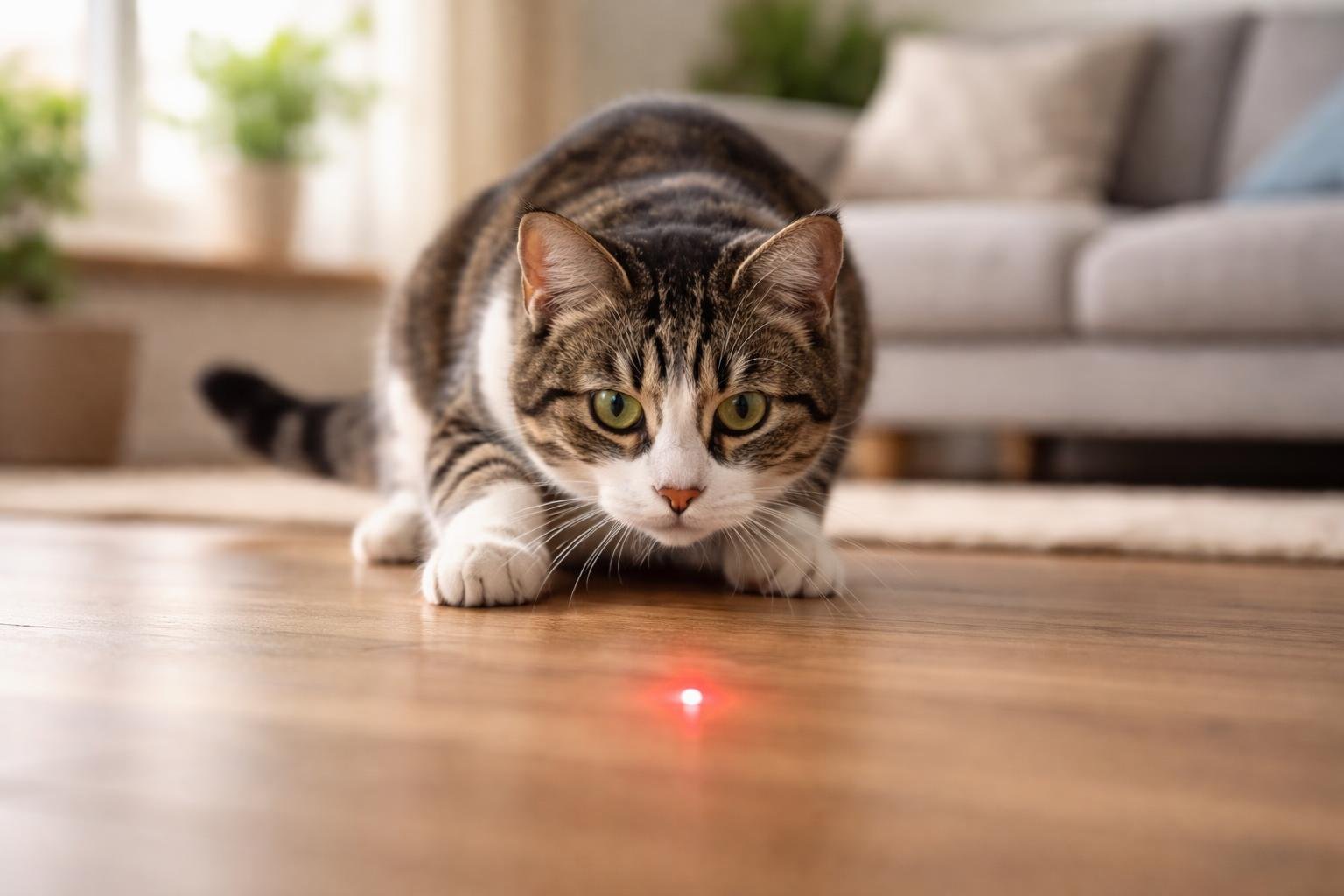
Many cat owners have questions about laser pointer syndrome and how these toys affect their pets’ behavior and mental state. Understanding the science behind these concerns helps you make informed decisions about playtime.
What is laser pointer syndrome in cats, and is it a real condition?
Laser pointer syndrome is not an officially recognized veterinary diagnosis. The term describes behavioral problems that some cats develop from repeatedly chasing an uncatchable light dot.
The condition refers to frustration and anxiety that builds up when cats never experience the satisfaction of catching their prey. Cats have a natural hunting sequence that includes stalking, chasing, catching, and “killing” their target.
When this sequence never reaches completion, some cats may develop signs of frustration syndrome. However, not all veterinarians or animal behaviorists agree on whether this is a distinct syndrome or simply a description of general frustration.
What are the most common symptoms of laser pointer syndrome in cats?
Cats experiencing frustration from laser play may show increased obsessive behaviors. They might constantly search for the red dot even when you’re not playing with them.
Some cats become fixated on lights, shadows, or reflections in their environment. This can include staring at walls, floors, or windows for long periods looking for movement.
Other signs include increased anxiety, restlessness, or changes in normal behavior patterns. Some cats may also show more aggression or become overly vocal after laser play sessions.
How common are laser-related behavioral issues in cats after chasing the dot?
There is limited scientific research on how many cats actually develop behavioral problems from laser pointers. Most of the evidence comes from veterinary observations and pet owner reports rather than large-scale studies.
Many cats play with laser pointers regularly without showing any negative effects. The cats most likely to have issues are those who already have anxious personalities or limited enrichment in their environment.
The frequency of problems also depends on how owners use the laser pointer. Cats who never get to catch physical toys during play sessions may be at higher risk.
Can playing with a laser pointer negatively affect a cat’s mental health or anxiety levels?
Laser pointers can be controversial because they can be dangerous to cats if not used properly. The mental health impact depends largely on your play technique and your cat’s individual personality.
Cats need to experience the full hunting cycle to feel satisfied. When you only use laser pointers without providing catchable toys, your cat misses the reward part of hunting.
This repeated lack of completion can lead to increased stress hormones over time. Some cats become more anxious or develop compulsive behaviors as a result.
However, when you end laser play by transitioning to a physical toy your cat can catch, you reduce these mental health risks significantly.
Do laser pointers confuse cats or frustrate their hunting instincts when they can’t catch anything?
Yes, laser pointers can frustrate your cat’s natural hunting instincts. The inability to physically capture prey goes against everything their brain expects from a successful hunt.
Cats rely on multiple senses during hunting, including touch and taste when they catch something. A laser dot only stimulates sight, leaving other senses unfulfilled.
This incomplete sensory experience can leave your cat feeling unsatisfied. The frustration builds because their brain tells them they should be able to catch fast-moving prey, but they never succeed.
Do cats understand that a human is controlling the laser dot, and does that change their behavior?
Cats do not typically connect the laser dot to the pointer device in your hand. Their predatory instincts focus entirely on the moving light, not on the source.
Research on cat cognition suggests they treat the laser dot as they would any small, fast-moving prey animal. They don’t understand the concept of light projection or remote control.
Some cats may notice you holding something and associate it with playtime starting. However, this doesn’t mean they understand you’re creating the dot they’re chasing.