Why Is My Cat Hissing? 5 Common Causes and Practical Solutions
Your cat’s hiss might sound alarming, but it’s actually one of their most important ways of communicating with you. Cats hiss when they feel scared, threatened, stressed, or uncomfortable, and it’s primarily a defensive behavior rather than an aggressive one. Understanding what triggers this sharp, air-releasing sound can help you respond appropriately and create a calmer environment for your pet.
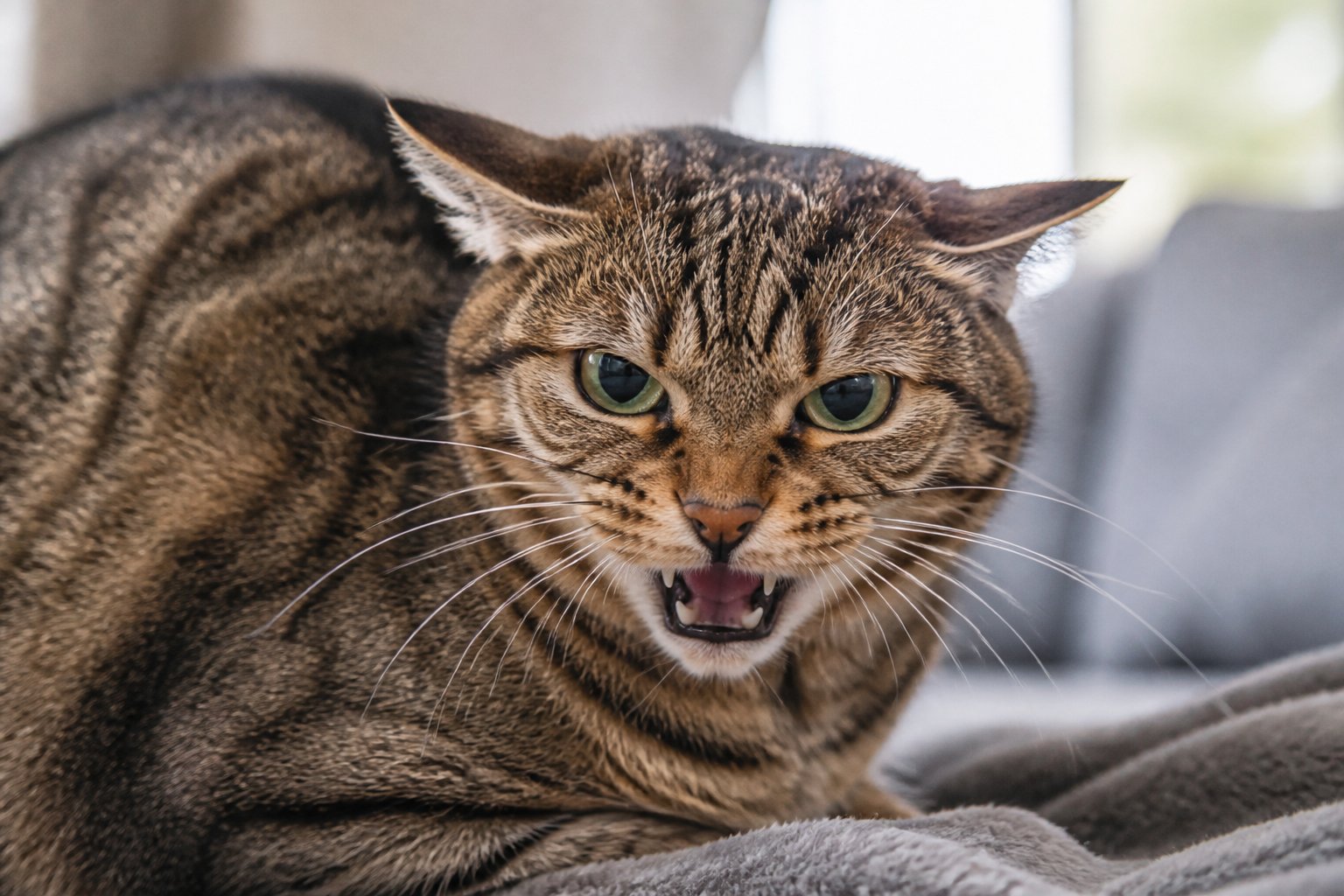
Cat hissing is a normal part of feline behavior and communication, though it signals that something is bothering your cat. The distinctive sound resembles air escaping from a tire and often comes with specific body language like flattened ears, an arched back, or a curled tongue. Learning to recognize these signs helps you understand what your cat is trying to tell you.
Whether your cat is hissing at you, another pet, or seemingly nothing at all, there are specific reasons behind this behavior. This guide will walk you through the most common causes of cat hissing, how to interpret the message your cat is sending, and practical steps you can take to reduce stress and prevent future hissing episodes.
Decoding Cat Hissing: What the Sound and Body Language Mean
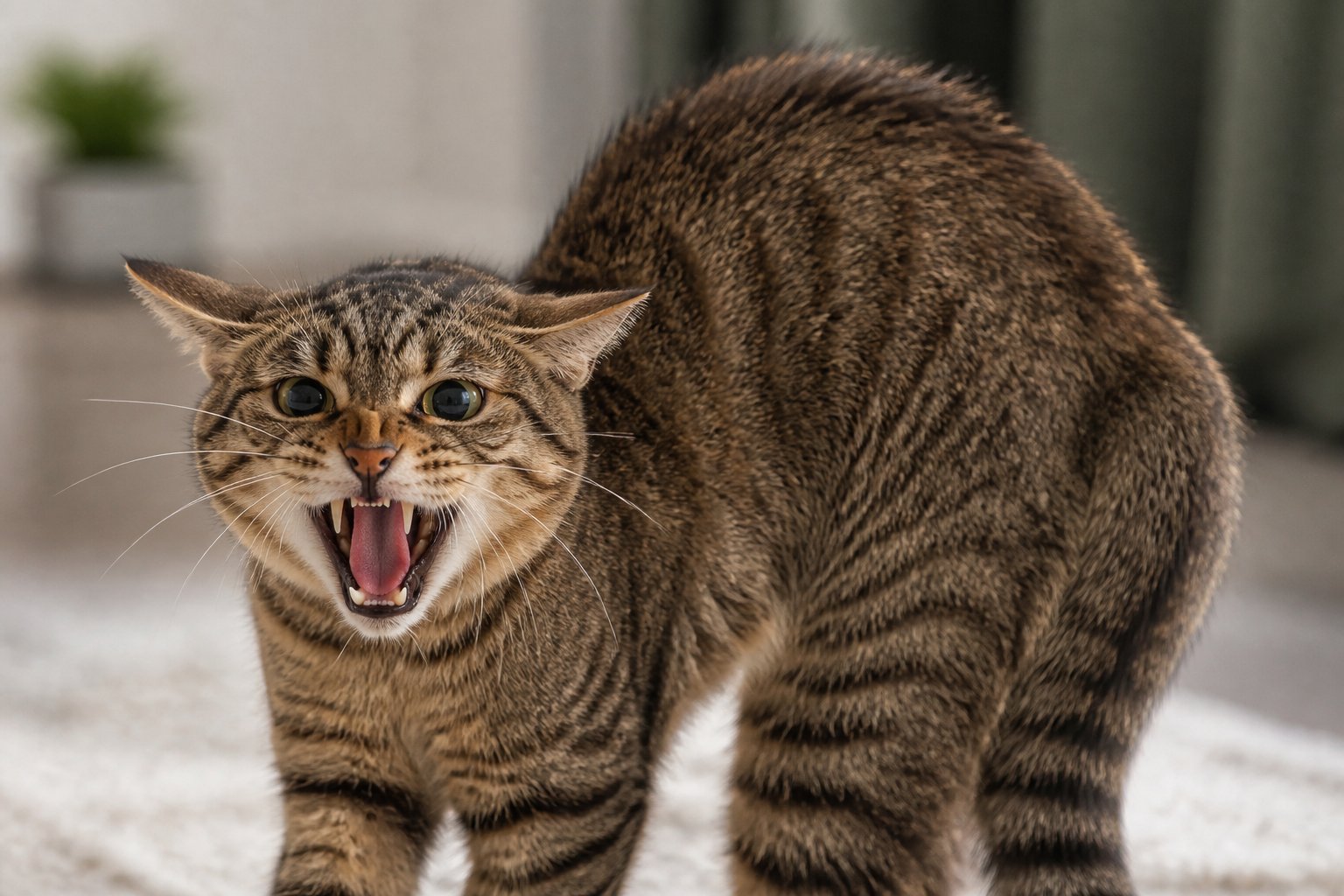
A cat hissing sound serves as a clear warning signal that your pet feels threatened or uncomfortable. The hiss itself has distinct characteristics, and it’s almost always paired with specific physical cues that reveal your cat’s emotional state.
Understanding the Cat Hissing Sound
The cat hissing sound resembles a snake’s hiss or air escaping from a tire. Your cat creates this noise by releasing a sudden burst of air through their mouth. If you’re close enough to your hissing cat, you can actually feel the air hitting your skin.
The intensity of cat hissing varies based on how threatened your cat feels. A silent hiss with an open mouth acts more as a visual warning. An aggressive hiss includes full spitting and comes with louder, sharper sounds. Some cats produce a low, steady hiss that lasts several seconds, while others make short, quick bursts of sound.
Key Cat Body Language Signals Accompanying Hissing
Cat body language tells you exactly how your pet is feeling during a hissing episode. Your cat’s mouth opens wide with their tongue curled back. Their ears flatten against their head, pointing backward or to the sides.
A hissing cat typically arches their back to appear larger and more intimidating. Their fur stands on end, especially along the spine and tail. This reaction is called piloerection. Your cat’s pupils may dilate, and they might turn their body sideways to you or the perceived threat.
Common physical signs include:
- Flattened ears pressed against the head
- Arched back with raised fur
- Dilated pupils
- Exposed teeth with curled tongue
- Stiff, tense body posture
- Tail puffed up or tucked under
Hissing Versus Other Cat Vocalizations
Cat vocalizations serve different purposes, and hissing stands apart from sounds like meowing or purring. While meowing often signals that your cat wants attention or food, hissing always means your cat wants distance from something.
Growling sometimes accompanies hissing but produces a deeper, rumbling sound from the throat. Yowling or caterwauling involves loud, drawn-out cries that cats use during mating or territorial disputes. Cat hissing is more defensive than offensive, making it fundamentally different from aggressive vocalizations like screaming or shrieking during fights.
Purring indicates contentment, while chirping or chattering happens when your cat watches prey. Hissing never signals anything positive. It’s your cat’s way of saying they need space immediately.
5 Major Reasons for Cat Hissing
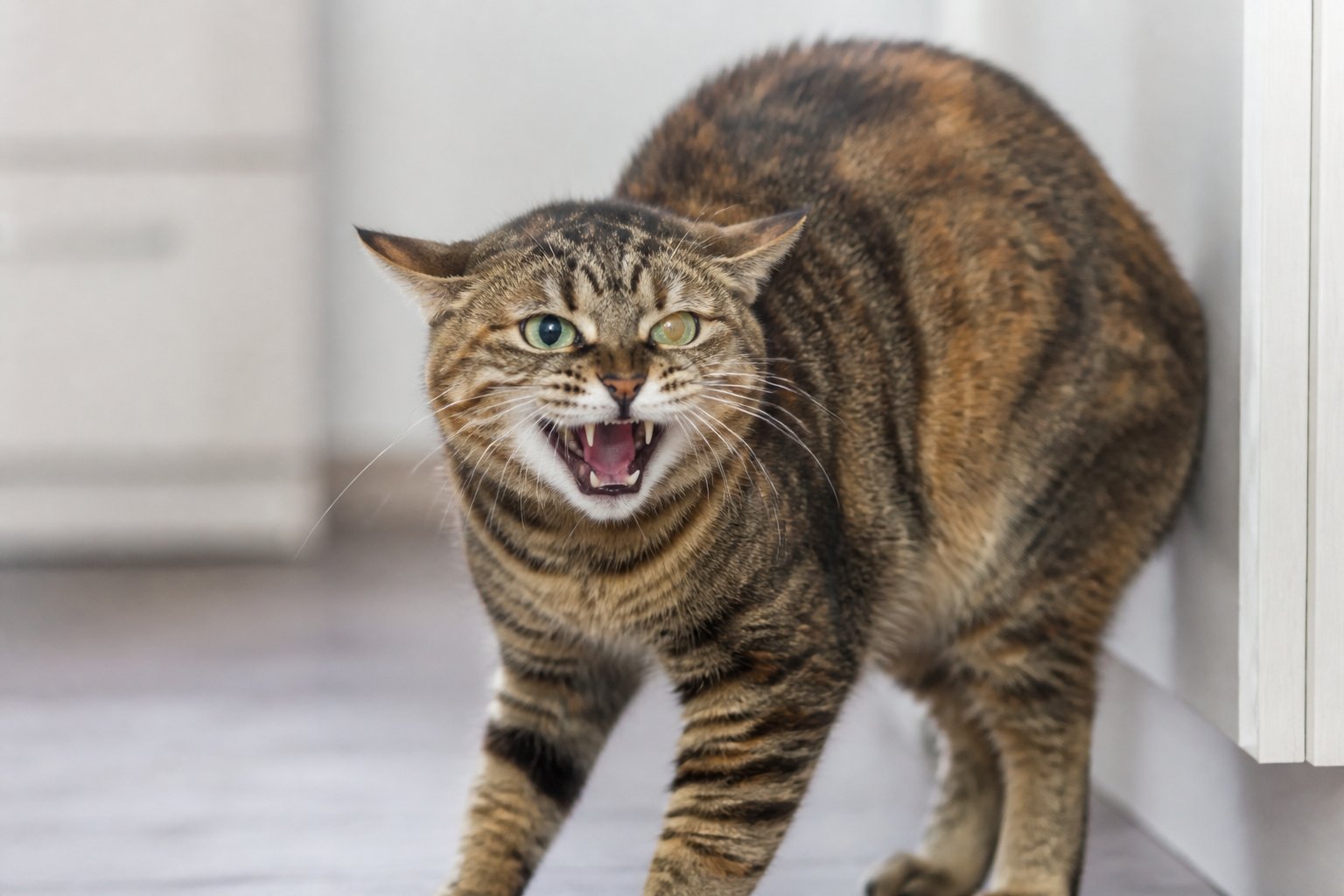
Cats hiss to communicate discomfort, fear, or a need for space. Understanding why your cat hisses helps you respond appropriately and address the underlying issue causing this defensive behavior.
Fear and Feeling Threatened
When your cat hisses, it’s often expressing fear or feeling threatened. This is a defensive response rather than an aggressive one. Your cat uses hissing as a warning signal that says “back off” before resorting to scratching or biting.
Common situations that trigger fear-based hissing include encountering unfamiliar people, meeting new pets, or experiencing sudden loud noises like vacuum cleaners. If you have the smell of an unfamiliar dog or cat on you, your cat might hiss even at you.
Fear hissing typically comes with specific body language cues. You’ll notice flattened ears, an arched back, and hairs standing on end. Your cat may also keep its mouth open with the tongue curled while making the hissing sound.
The key difference between fear and aggression is that a fearful cat wants to escape. It’s trying to avoid physical confrontation by warning you to maintain distance.
Pain or Physical Discomfort
Physical pain is one reason your cat might suddenly start hissing at you. When cats hurt, they may hiss if you touch or try to handle them near the painful area. This protective response helps them avoid further discomfort.
Your cat might hiss during grooming, nail trimming, or when you pick them up if they’re experiencing pain. Watch for hissing accompanied by other symptoms like poor appetite, low energy, or hiding more than usual.
Medical conditions that can cause pain-related hissing include:
- Arthritis or joint problems
- Dental disease
- Injuries or wounds
- Digestive issues
- Skin conditions
If your cat hisses excessively or shows abnormal behavior, schedule a veterinary exam. Your vet can rule out underlying health problems and provide appropriate treatment to address your cat’s discomfort.
Stress and Anxiety
Stress triggers hissing behavior in cats who feel overwhelmed by their environment. Your cat might hiss when placed in a carrier for travel, during vet visits, or when facing any unfamiliar situation that makes them anxious.
Changes in your home can create stress for your cat. Moving furniture, introducing new household members, or altering their daily routine disrupts their sense of security. Cats need time to acclimate to these changes.
Environmental stressors that commonly cause hissing include:
- Loud household appliances
- Lack of hiding spots or escape routes
- Too many pets in a small space
- Inconsistent feeding schedules
Chronic stress makes your cat more reactive and prone to hissing. You can reduce stress by providing cat trees, perches, and quiet spaces where your cat feels safe. Daily enrichment through interactive toys and play sessions also helps decrease anxiety levels.
Territorial or Social Conflict
Cats hiss at each other to establish boundaries and protect their territory. This behavior becomes especially common when you introduce a new cat into your home. The resident cat views the newcomer as an intruder in their established space.
Contrary to popular belief, the cat that hisses is usually the one being chased or antagonized, not the aggressor. Your cat uses hissing to assert dominance and avoid actual physical fights with other animals.
Social conflicts that trigger hissing include:
- Two unneutered males competing for mates
- Female cats protecting their kittens
- Cats competing for resources like food bowls or litter boxes
- Dogs invading your cat’s personal space
Multi-cat households often experience more hissing as cats work out their social hierarchy. If your cat hisses at a new kitten, they’re teaching the younger cat to respect boundaries. This is normal behavior that typically decreases as the animals adjust to each other.
Petting-Induced Aggression
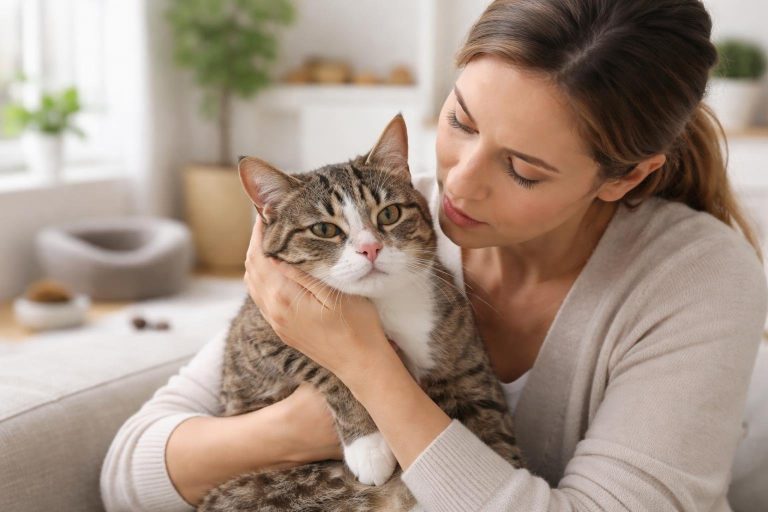
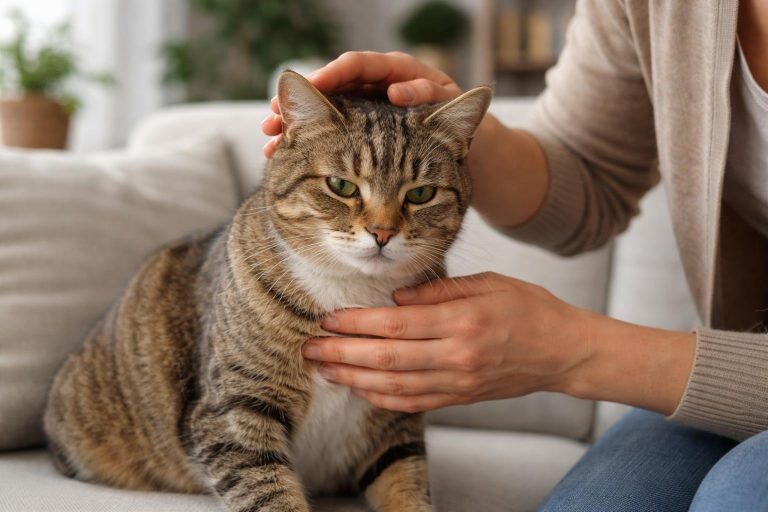
Your cat might hiss at you during petting because they’ve reached their tolerance limit for physical contact. This reaction, called petting-induced aggression, happens when cats become overstimulated from too much touching.
Cats have specific preferences about where and how long they want to be petted. Your cat may enjoy attention for a few minutes, then suddenly hiss when they’ve had enough. They’re communicating that they need you to stop right now.
Warning signs before a hiss include:
- Tail twitching or thrashing
- Ears rotating backward
- Skin rippling along the back
- Pupils dilating
Pay attention to your cat’s body language during petting sessions. Stop before your cat reaches the point of hissing. Some cats only tolerate brief interactions, while others enjoy longer sessions.
If your cat consistently hisses when you try to pet them in certain areas, avoid those spots. Most cats prefer gentle strokes on the head and cheeks rather than their belly or tail area.
Cat-to-Cat Hissing: Social Dynamics and Aggression
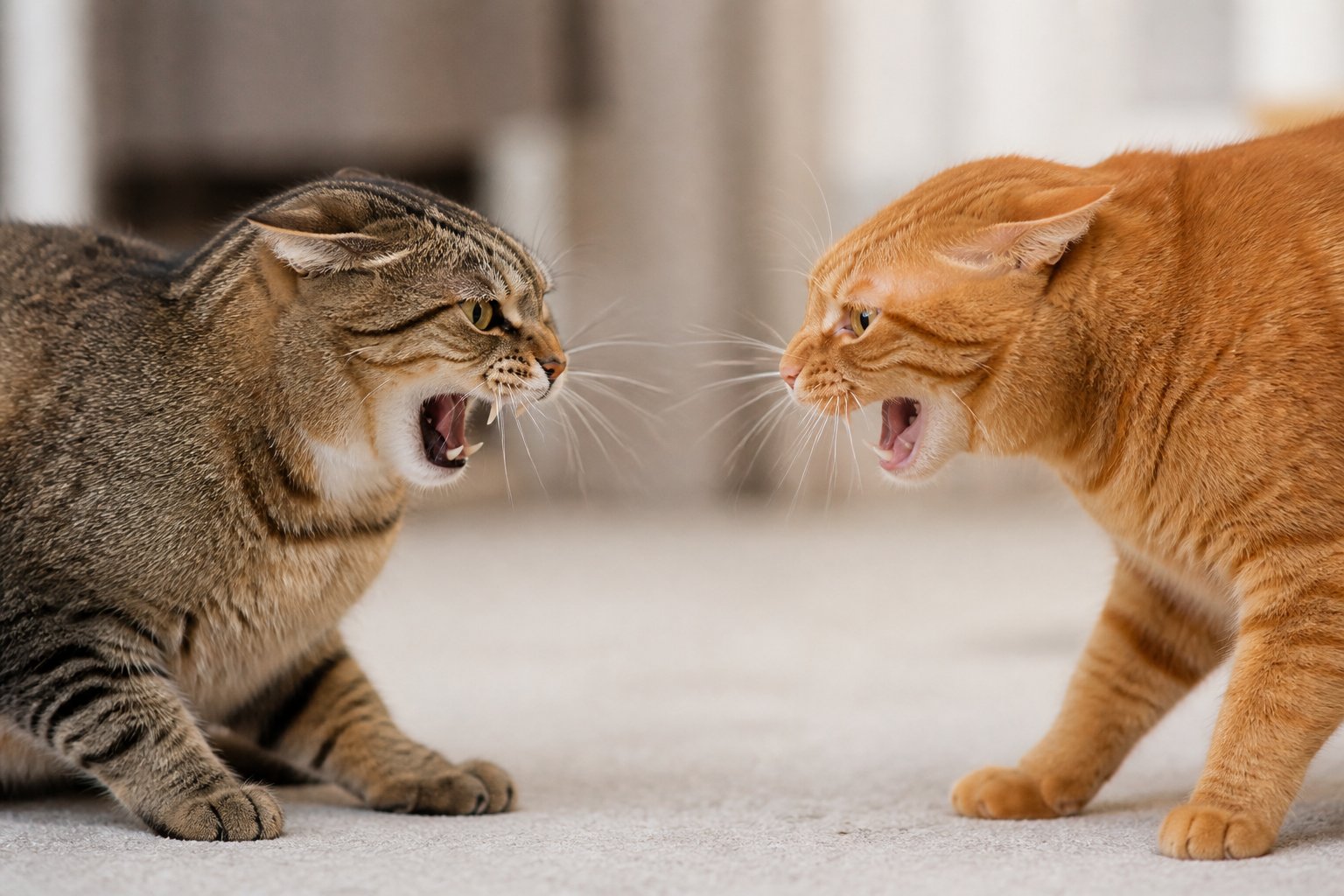
Cats use hissing as a primary communication tool when interacting with other cats, signaling everything from fear and territorial disputes to establishing boundaries. Understanding why cats hiss at each other helps you identify whether the behavior is normal or requires intervention.
When Cats Hiss at Each Other
Hissing between cats typically occurs for several specific reasons. Territory is a major factor since cats are naturally territorial animals and may hiss when another cat enters their space. Two unrelated males or two unrelated females often have a harder time sharing territory.
Fear and lack of socialization commonly trigger hissing. If your cat grew up alone without contact with other cats, they may hiss because they lack feline social skills. They fear the unknown and dislike disruptions to their routine.
Social maturation changes relationships between cats. Cats that got along as kittens may start hissing at each other when they reach one to three years old. Additionally, a scary event like fireworks or a vet visit can become associated with another cat, creating new tension.
Common hissing triggers include:
- Territorial disputes over space or resources
- Fear from unfamiliar cats
- Past negative experiences
- Personality clashes between cats
- Changes in routine or environment
Introducing a New Cat and Managing Tension
Introducing a new cat requires careful planning to minimize hissing and aggression. Start by separating the cats in different rooms for several days or weeks. Each cat needs their own bed, food bowl, and litter box during this period.
Place food bowls on opposite sides of a closed door. This creates positive associations while the cats smell and hear each other without direct contact. Switch the cats between rooms daily so they experience each other’s scents.
After several days of calm behavior, crack the door open one inch. Watch for cat body language like growling, spitting, or swatting. If your cats stay relaxed, gradually open the door wider over time. If they show aggression, separate them again and slow down the process.
Keep initial face-to-face meetings short and supervised. Use treats or play to distract both cats during these sessions. Only allow unsupervised time together after they can eat and play calmly within a couple feet of each other.
Interpreting Cat Aggression in Multi-Cat Households
Understanding aggression in multi-cat homes means recognizing different behavioral patterns. Mild aggression includes occasional hissing with ears forward and bodies leaning forward. Severe aggression involves frequent fighting, hiding, or one cat blocking another from resources.
Never let your cats fight it out. Cats don’t resolve issues through fighting, and the behavior typically worsens. Interrupt aggression with a loud clap or spray bottle.
Reduce competition by providing multiple identical resources in different locations. Each cat needs their own food bowl, water dish, litter box, and sleeping area. Add extra perches and hiding spots so cats can maintain their preferred distance from each other.
When you see a hissing cat, don’t try to calm or soothe them. Give them space since approaching may cause redirected aggression toward you. Instead, reward friendly interactions between your cats with praise or treats. Consider using pheromone diffusers to reduce tension during conflicts.
Some cats cannot live together peacefully despite your best efforts. Permanent separation or rehoming may be the most humane option rather than forcing years of stressful coexistence.
When Your Cat Hisses at You: Interpreting the Message
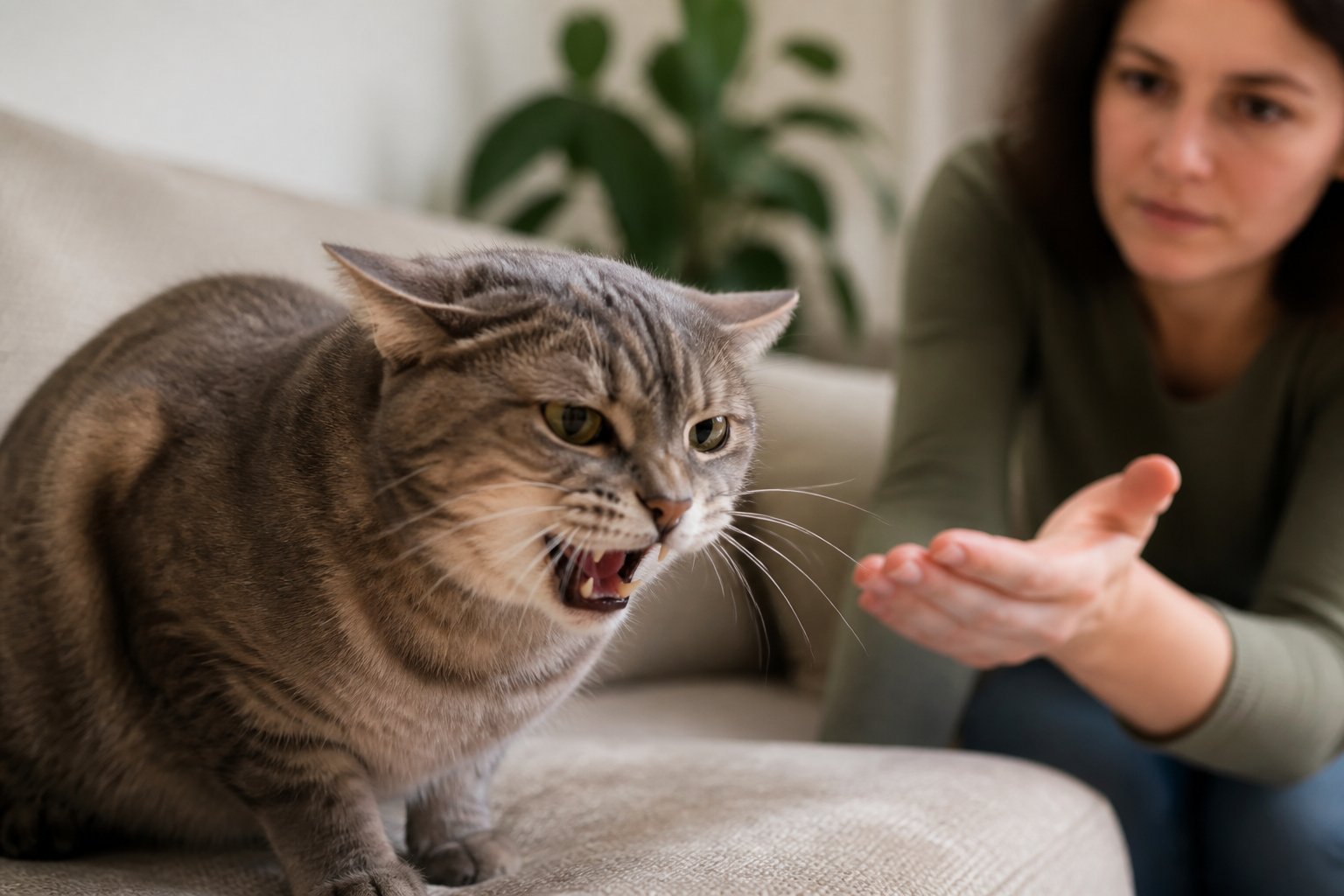
When your cat hisses at you, they’re communicating discomfort or fear rather than showing aggression. Understanding what triggers this behavior and how your cat’s body language signals their emotional state helps you respond appropriately and maintain a positive relationship with your pet.
Common Triggers for Cat Hissing at Owners
Your cat may hiss at you when you’re doing something they find uncomfortable or threatening. Grooming activities like nail trimming or brushing often trigger hissing because cats feel restrained or vulnerable during these moments.
Picking up your cat when they don’t want to be held causes defensive hissing. Cats value their independence and may hiss to tell you they need space.
Household appliances like vacuums create loud noises that startle cats and make them feel unsafe. Your cat might hiss at you if you’re operating these devices near them.
If you smell like an unfamiliar animal after visiting a friend with pets, your cat may not recognize your scent. This confusion can lead to hissing until they realize it’s you.
Trying to move your cat into a carrier for vet visits or travel frequently results in hissing. Cats associate carriers with stressful situations and will vocalize their displeasure.
How to Respond When a Cat Hisses at You
Back away immediately when your cat hisses at you. Moving closer or trying to touch them can escalate the situation and may result in scratching or biting.
Give your cat space to retreat to a safe area. Don’t follow them, stare at them, or try to comfort them physically. Cats need time alone to calm down and feel secure again.
Wait for your cat to approach you on their own terms. This process can take hours, so be patient. Forcing interaction before they’re ready will damage their trust.
Once your cat appears calm, you can offer treats or their favorite food from a distance. Use positive reinforcement to rebuild the connection without pressuring them.
Recognizing Petting-Induced Aggression
Some cats experience overstimulation during petting sessions, even when they initially seemed to enjoy the attention. This condition, known as petting-induced aggression, happens when physical contact becomes overwhelming.
Watch for warning signs before the hissing starts. Your cat’s tail may begin twitching rapidly, their ears might flatten against their head, or their skin may ripple along their back. These cat body language cues tell you to stop petting immediately.
Pay attention to how long your cat tolerates petting. Some cats only enjoy brief interactions of 30 seconds to a few minutes before they become irritated.
Key warning signs of overstimulation:
- Tail swishing or thumping
- Ears rotating backward or flattening
- Dilated pupils
- Rippling skin on the back
- Tensing muscles
- Turning head toward your hand
Stop petting the moment you notice any of these signals. Learning your cat’s tolerance levels prevents hissing and helps you respect their boundaries during future interactions.
How to Safely Respond and Prevent Cat Hissing
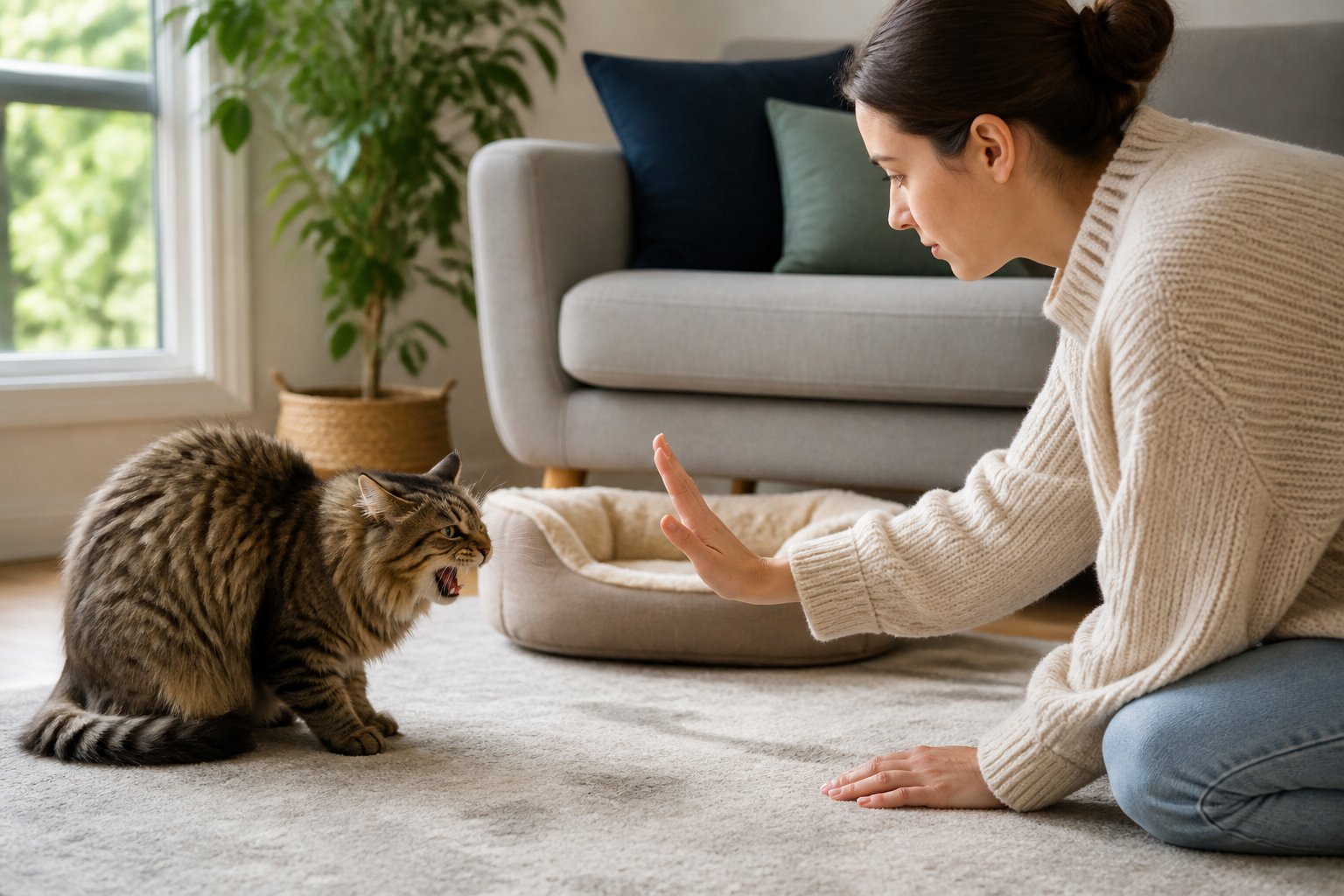
When your cat hisses, your response can either calm the situation or make it worse. Creating a low-stress environment and knowing when to seek professional help are key to reducing cat hissing and improving your cat’s well-being.
Giving Space and Avoiding Escalation
The moment you hear cat hissing sounds, back away immediately to avoid getting scratched or bitten. Your cat is telling you they need distance, and respecting this boundary prevents cat aggression from escalating.
Do not stare at your cat or attempt to hold or comfort them. These actions make cats feel trapped and more threatened. Instead, let your cat retreat to a safe hiding spot where they can calm down on their own terms.
Pay attention to cat body language like flattened ears, an arched back, or hair standing on end. These signals appear alongside hissing and tell you your cat is still upset. Give your cat several hours if needed, as forcing interaction too soon will only restart the stress cycle.
Once your cat appears calm, you can coax them out with treats or toys. Never punish a cat for hissing, as this is a normal communication method that helps them avoid physical fights.
Reducing Environmental Stress for Cats
Daily enrichment reduces the reasons cats hiss by keeping them mentally and physically satisfied. Provide interactive toys, cat trees, and window perches where your cat can observe birds and outdoor activity safely.
Consider these stress-reducing additions to your home:
- Multiple escape routes and high perches in every room
- Hiding boxes where your cat can retreat when overwhelmed
- Separate resources (food bowls, water, litter boxes) if you have multiple cats
- Regular play sessions to burn off nervous energy
Introduce new pets, people, or changes to your home slowly. Cats need time to adjust to unfamiliar situations. Keep new cats in separate rooms initially and allow gradual introductions through scent swapping and controlled meetings.
Use products like catnip or puzzle feeders to redirect anxious energy into positive activities. Maintain consistent daily routines for feeding and playtime, as predictability helps cats feel secure.
When to Consult a Veterinarian or Behaviorist
Schedule a vet appointment if your cat’s hissing happens frequently or seems excessive. Physical pain is a common but overlooked cause of cat behavior changes, and only a medical exam can rule out injuries or illness.
Watch for these warning signs that require immediate veterinary attention:
- Poor appetite or refusal to eat
- Low energy or lethargy
- Hiding more than usual
- Hissing when touched in specific body areas
Your vet can check for dental problems, arthritis, or internal issues that might cause pain-related hissing. If medical causes are ruled out, ask for a referral to an animal behaviorist who specializes in cat aggression and stress management.
A behaviorist will analyze your specific situation and create a custom plan. They can identify triggers you might miss and teach you techniques to help your cat feel safe. This professional guidance is especially valuable when dealing with multi-cat households or cats with trauma histories.
Promoting Harmony: Tips for Minimizing Hissing in the Home
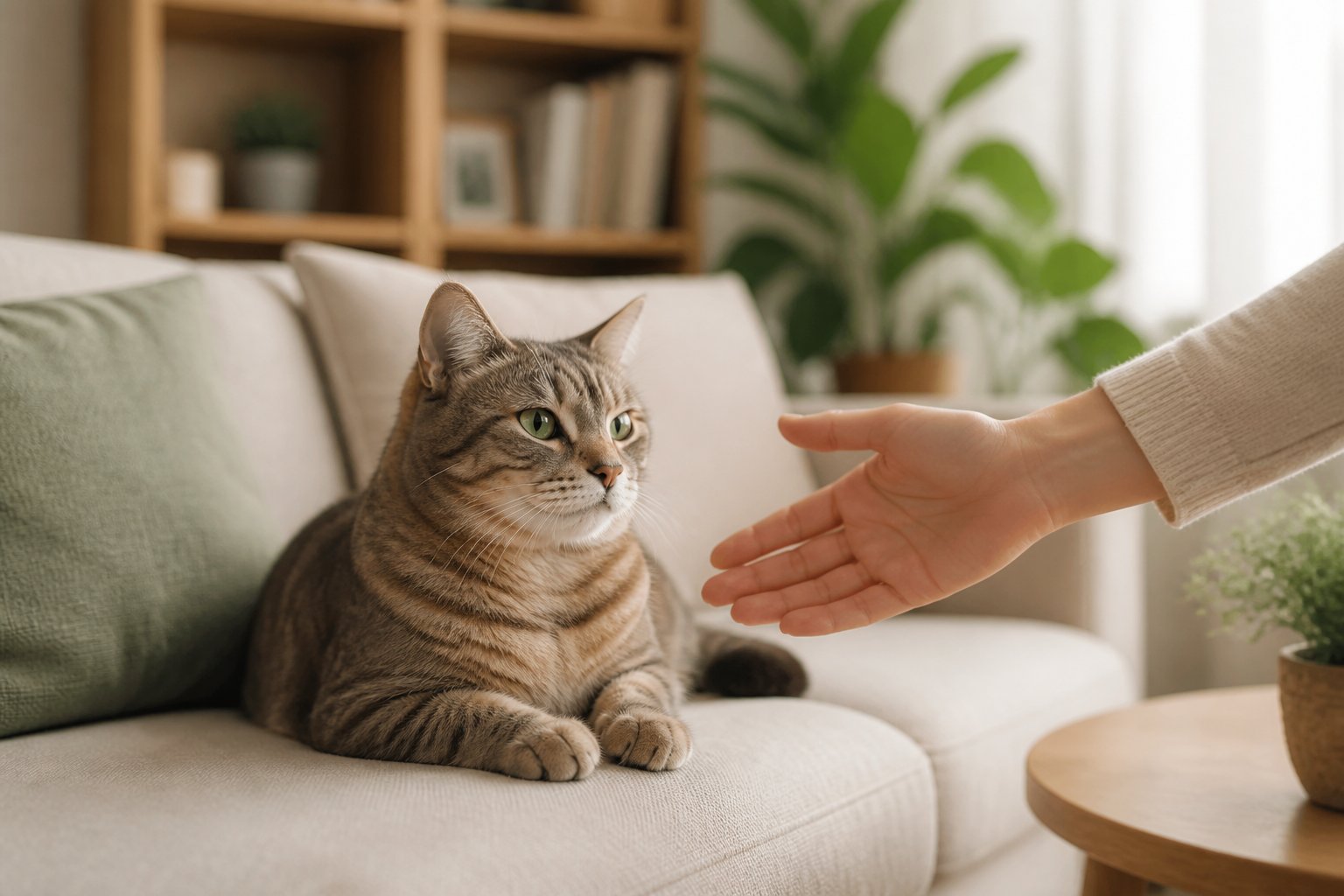
Creating a calm environment requires managing your cat’s resources properly, introducing new pets slowly, and teaching your cat to feel secure around people and animals.
Resource Management and Territorial Peace
Cats often hiss when they feel their resources are threatened or limited. You need to provide multiple feeding stations, water bowls, and litter boxes throughout your home. The general rule is one litter box per cat plus one extra.
Place food and water bowls in separate locations so cats don’t feel forced to compete. This prevents tension and reduces the chances of cat aggression during meal times.
Essential resources to multiply:
- Litter boxes
- Food bowls
- Water stations
- Scratching posts
- Sleeping areas
- Hiding spots
Give each cat their own elevated perches and cat trees. Vertical space helps cats establish territory without conflict. When cats can separate themselves vertically, they’re less likely to hiss at each other over floor space.
Successful Introduction Techniques for New Cats
Introducing a new cat requires patience and a careful step-by-step process. Never put cats together immediately, as this causes stress and hissing.
Start by keeping the new cat in a separate room for at least a week. Let both cats smell each other under the door. Swap bedding between cats so they get used to each other’s scent before meeting face-to-face.
Feed both cats on opposite sides of a closed door. Move their bowls closer to the door over several days. This creates positive associations with the other cat’s scent.
After a week, allow brief visual contact through a baby gate or cracked door. Keep these sessions short, around 5-10 minutes. Watch for cat behavior signs like relaxed body posture before increasing interaction time.
Training and Socialization Strategies
Regular play sessions help reduce stress and prevent hissing. Schedule at least two 15-minute play sessions daily with interactive toys like feather wands or laser pointers. This burns energy and builds confidence.
Reward calm behavior around other pets with treats immediately. When your cat stays relaxed near another animal, give them a high-value treat like tuna or chicken.
Use puzzle feeders and food-dispensing toys to keep your cat mentally stimulated. Bored cats are more likely to develop anxiety and aggressive responses.
Expose your cat gradually to new people and situations while they’re young. Let visitors offer treats so your cat builds positive associations. Never force interactions, as this increases fear-based hissing.
Frequently Asked Questions
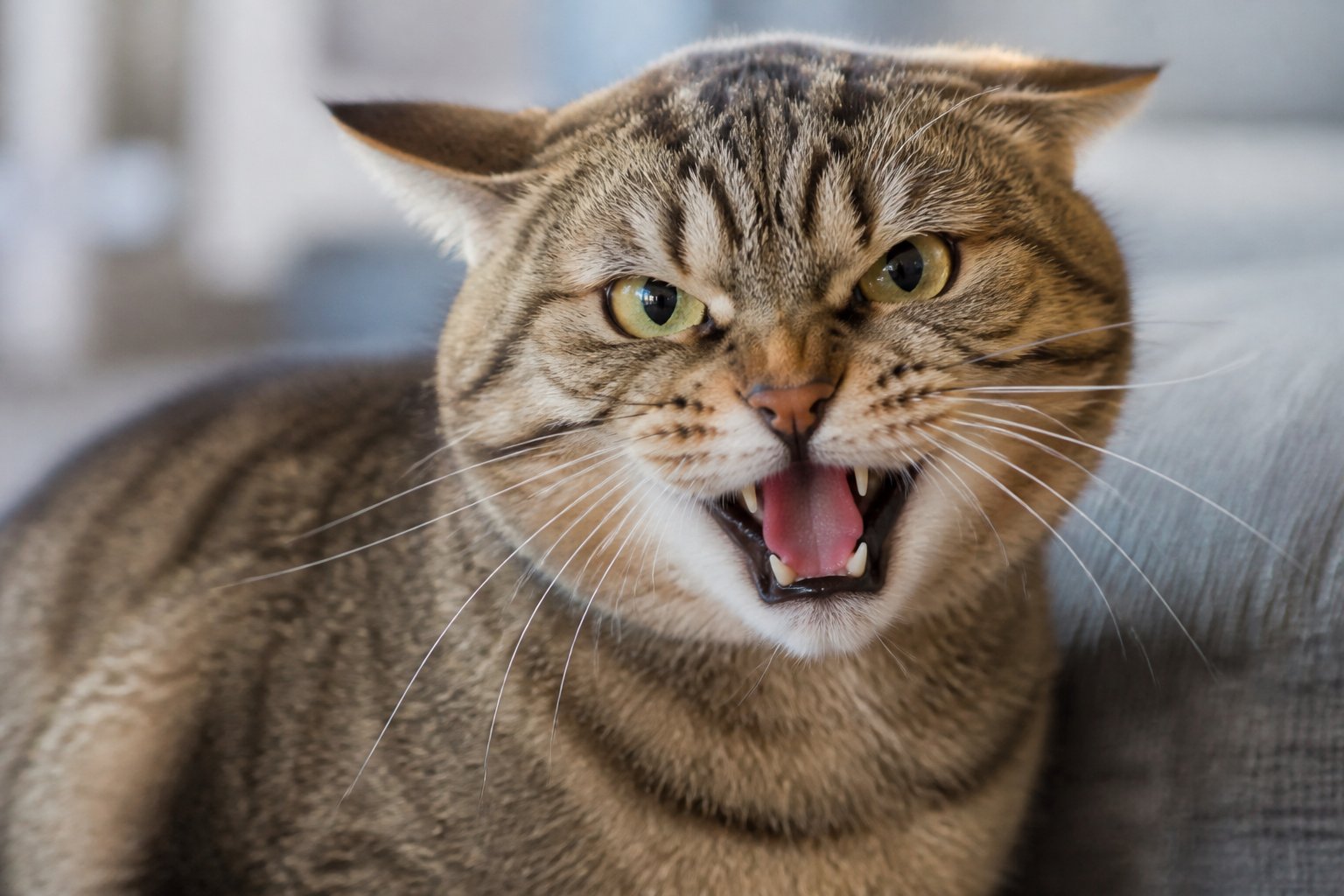
Cats hiss for specific reasons like fear, pain, or feeling threatened, and understanding the context helps you respond correctly. Some cats hiss defensively while remaining friendly, while others need immediate space and time to calm down.
Why is my cat hissing at me all of a sudden?
Your cat may suddenly start hissing at you if they are in pain or feeling unwell. Physical pain is one reason cats hiss, especially if you touch an area that hurts them.
Changes in your environment can also trigger sudden hissing. If you recently brought home a new pet, moved furniture, or have unfamiliar smells on your clothes, your cat might feel stressed or threatened.
Sometimes cats hiss when their routine gets disrupted or they feel cornered. They might also hiss if you approach them too quickly or try to interact when they want to be left alone.
Why does my cat hiss at me when I walk by?
Your cat might hiss when you walk by if they feel startled or caught off guard. Cats need to feel safe in their space, and sudden movements near them can trigger a defensive response.
If your cat is in pain, even walking past them can cause them to hiss as a warning to stay away. You should watch for other signs like limping, hiding, or changes in eating habits.
Your cat may also hiss when you pass by if you carry the scent of another animal on you. Dogs, cats, or other pets can leave odors on your clothing that make your cat feel threatened.
What are the most common triggers that make cats hiss?
Common triggers include feeling threatened by people or other animals, protecting their territory, and experiencing stress or fear. Cats also hiss when they anticipate pain or feel uncomfortable.
Meeting unfamiliar animals or being placed in new situations often causes cats to hiss. New kittens, visiting pets, or moving to a different home can all trigger this behavior.
Certain activities you do can also make your cat hiss at you. Trying to trim their nails, putting them in a carrier, vacuuming, or grooming them when they don’t want it are all common triggers.
Why is my cat hissing but still acting friendly?
Your cat might hiss as a warning while still maintaining their friendly nature overall. Hissing is more defensive than offensive, so your cat is simply asking for space in that moment without rejecting you completely.
Some cats hiss out of habit or learned behavior, especially if hissing has worked to create boundaries in the past. They may not feel truly aggressive but use hissing as their go-to communication tool.
Your cat can also hiss reflexively when startled, even if they recognize you immediately afterward. Once they realize it’s you and there’s no threat, they return to their normal friendly behavior.
How can I calm my cat down when it starts hissing?
Back away from your cat immediately to give them the space they need. Do not try to hold, comfort, or stare at your cat when they are hissing.
Let your cat hide in a safe spot where they feel secure. Cats may take several hours to fully calm down after feeling threatened or stressed.
Once your cat appears calm, you can use treats or catnip to encourage positive feelings. Give them time to approach you on their own terms rather than forcing interaction.
How can I get my cat to stop hissing without making it worse?
Never punish your cat for hissing, as this will increase their stress and fear. Hissing is your cat’s way of communicating discomfort, and punishing them removes their ability to warn you before escalating to biting or scratching.
Identify what triggers the hissing and remove or modify those triggers when possible. If your cat hisses during nail trimming, break the task into shorter sessions or ask your vet for help.
Make sure your cat has escape routes and high places to retreat to when they feel overwhelmed. Cat trees, perches, and hiding spots help cats feel more secure in their environment.