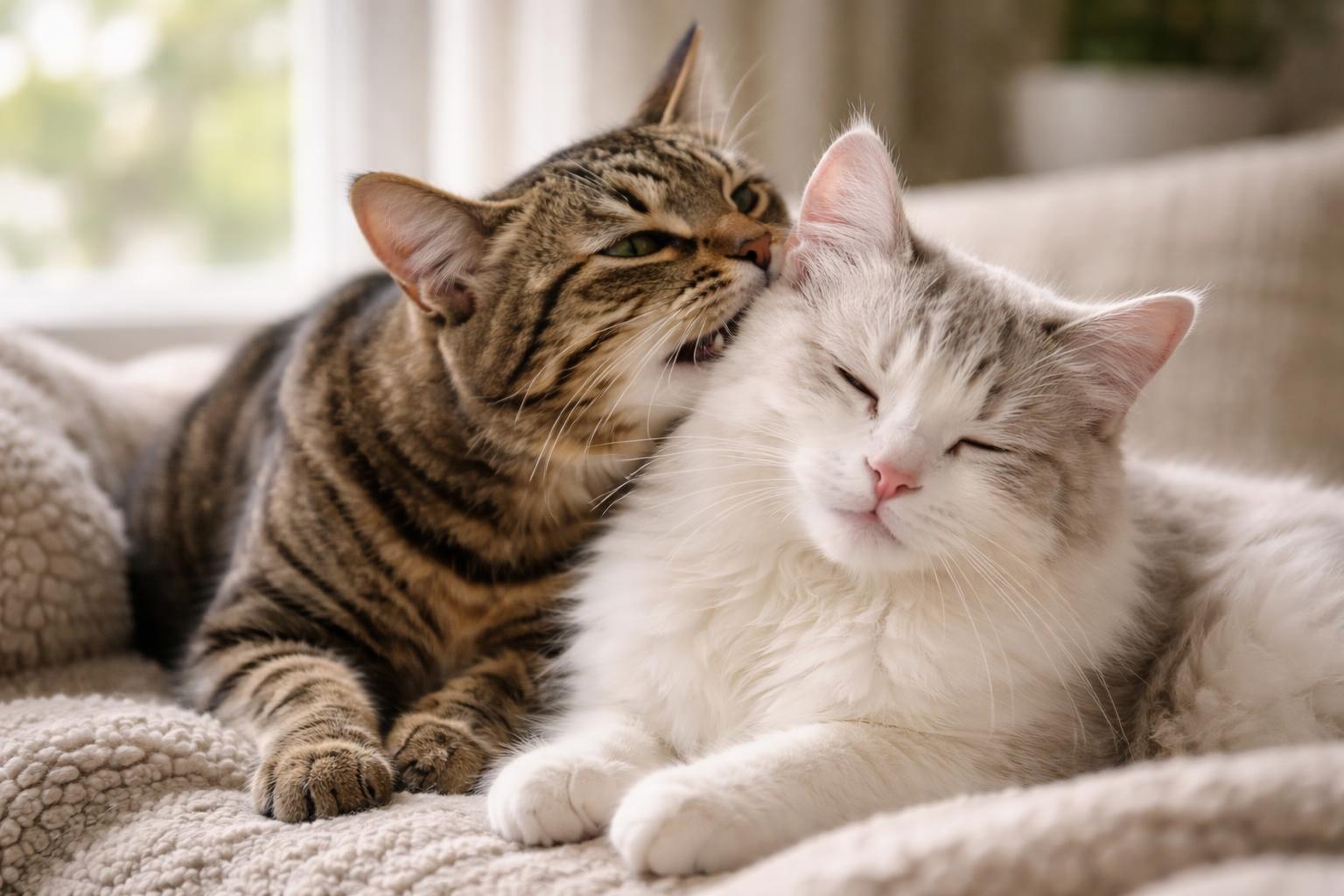
Your cat gently nibbles on your hand during a petting session, leaving you wondering whether it’s affection or aggression. This common feline behavior confuses many cat owners who struggle to interpret what their pet is trying to communicate. Understanding the difference between a playful nip and a warning bite helps you build a stronger bond with your cat.
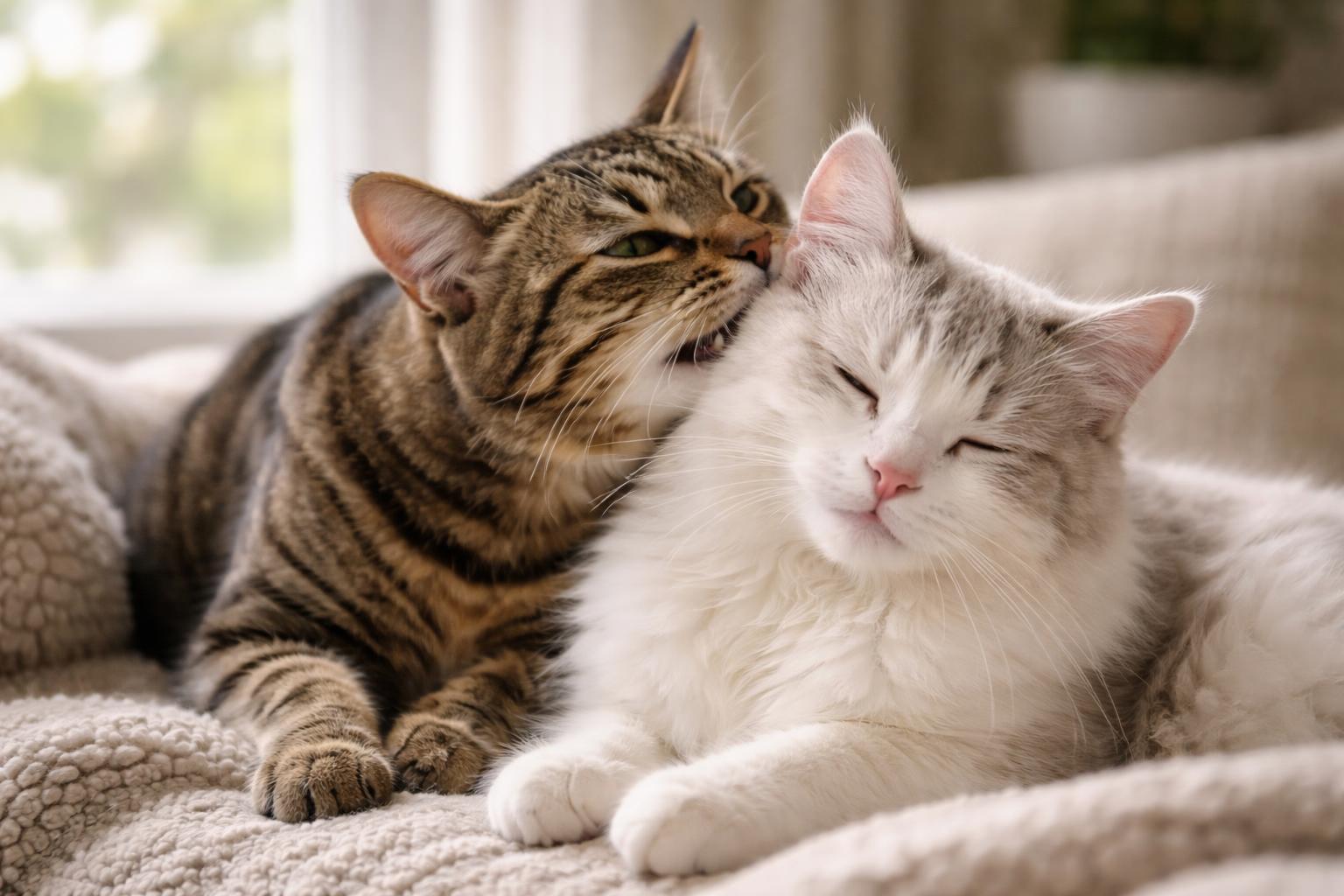
Cat love bites are gentle nibbles that typically don’t break the skin and serve as a form of communication expressing affection, playfulness, or mild overstimulation. These bites differ from aggressive biting because they lack violent undertones and occur during moments of interaction rather than sudden attacks. Your cat uses these gentle nips to express various emotions and needs.
Learning to read your cat’s body language and respond appropriately transforms confusing moments into opportunities for better communication. Recognizing why cats give love bites allows you to meet their needs while setting healthy boundaries. This guide covers everything you need to know about interpreting, responding to, and managing this unique feline behavior.
Key Takeaways
- Cat love bites are gentle nibbles used for communication that typically don’t break skin and differ from aggressive bites
- Reading your cat’s body language helps you recognize early warning signs of overstimulation before biting occurs
- Responding calmly and redirecting behavior with toys helps prevent unwanted nipping while maintaining your bond
What Are Cat Love Bites?
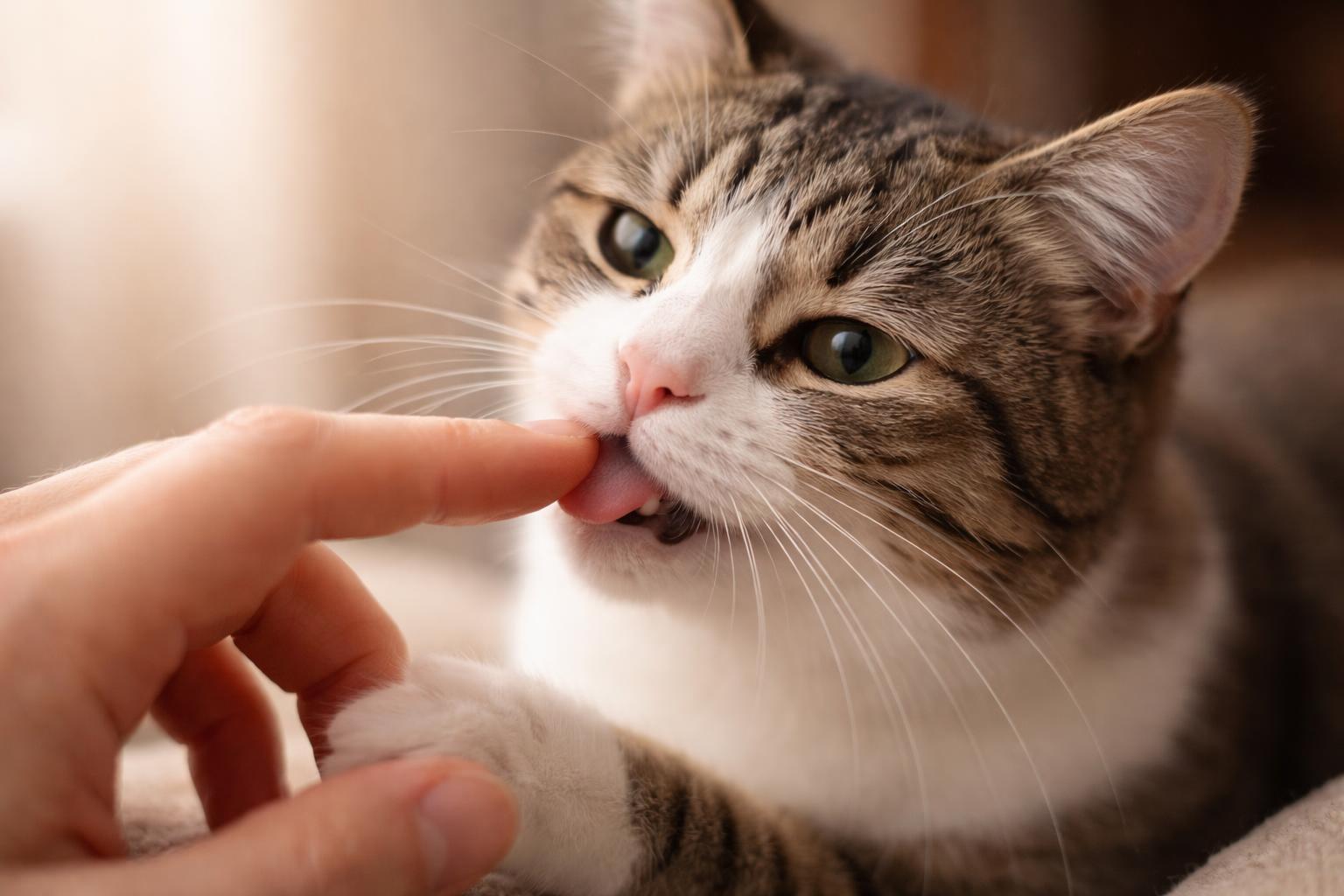
Cat love bites are gentle, controlled nibbles that cats give to their human companions as a form of communication and affection. These behaviors differ significantly from aggressive biting through their intensity, context, and accompanying body language.
Definition and Characteristics
A cat love bite is a soft, gentle nip that your cat gives you, typically without breaking the skin or causing pain. These typically harmless nips occur when your cat uses their teeth to lightly grasp your skin, usually on your hand, arm, or finger.
The pressure applied during cat nipping is considerably lighter than aggressive biting. Your cat controls the force of their jaw, creating a pinching sensation rather than a painful bite. The duration is brief, lasting only a second or two.
Cat love bites commonly happen during petting sessions, grooming behaviors, or when your cat is showing affection. You might notice these gentle nibbles when your cat is purring, kneading, or rubbing against you. The behavior often appears alongside other signs of contentment and bonding.
Signs and Body Language of Cat Love Bites
When giving love bites, your cat displays relaxed and comfortable body language. Their ears point forward or slightly to the side, and their tail remains calm without aggressive thrashing or puffing.
Your cat’s pupils stay normal-sized rather than dilated, and their whiskers point forward in a neutral position. The body appears loose and relaxed, not tense or crouched. You may observe:
- Slow blinking
- Purring before, during, or after the nip
- Kneading with their paws
- Head bunting or rubbing
- A softly curved or upright tail
The context matters significantly. Understanding cat love bites requires observing when they occur—usually during calm, affectionate interactions rather than play or startled moments.
Cat Love Bites vs. Aggressive Biting
Aggressive biting differs dramatically from love bites in intensity, intent, and physical presentation. Aggressive bites apply significant pressure, often breaking skin and causing pain or bleeding. Your cat may latch on rather than quickly releasing.
The body language during aggressive versus affectionate biting tells you everything you need to know. Aggressive cats show flattened ears, dilated pupils, a lashing or puffed tail, and a tense, rigid body. They may hiss, growl, or yowl.
Aggressive bites typically happen when your cat feels threatened, overstimulated, or territorial. The bite often comes with scratching using their claws. In contrast, cat love bites occur during positive interactions without these warning signs or defensive behaviors.
Key differences:
| Love Bites | Aggressive Bites |
|---|---|
| Gentle pressure | Hard, painful pressure |
| Relaxed body | Tense, defensive posture |
| Forward ears | Flattened ears |
| Calm tail | Thrashing or puffed tail |
| During affection | During fear or irritation |
Why Do Cats Give Love Bites?
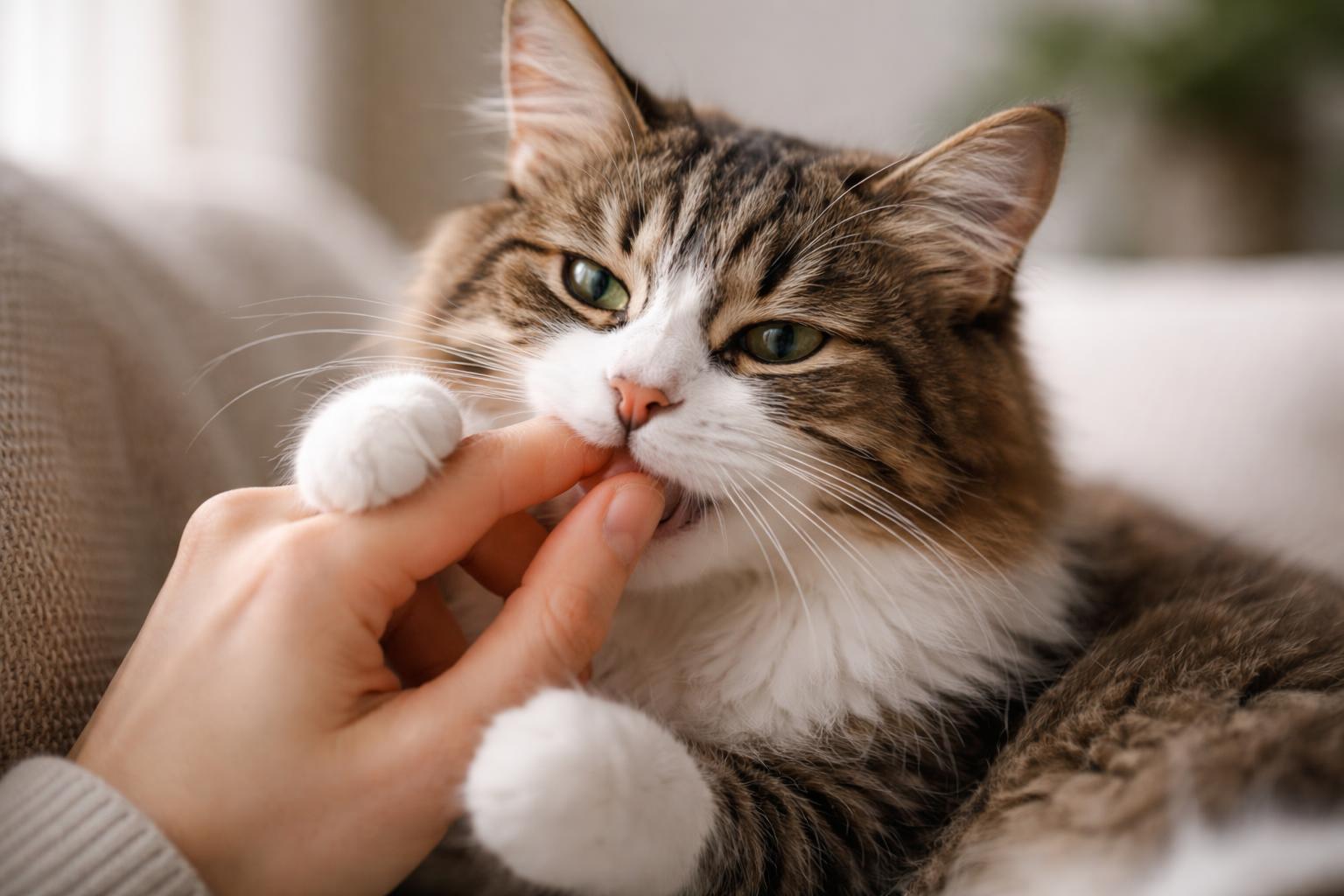
Cats give love bites for several distinct reasons, ranging from expressing affection and bonding to signaling overstimulation or seeking your attention. Understanding these gentle nips helps you interpret what your cat is communicating and respond appropriately.
Affection and Bonding Behavior
When cats groom each other in the wild, they use both their tongues and teeth to strengthen social bonds. Your cat may give you gentle nibbles as a form of grooming behavior, treating you like a member of their family group. These affectionate bites typically occur after licking or during calm, relaxed moments together.
Cats learn this behavior from their mothers and littermates during kittenhood. The gentle pressure mimics how cats interact with trusted companions. When your cat bites you gently during cuddle sessions, they’re likely showing trust and comfort with your presence.
This type of love bite rarely breaks the skin and feels more like a soft pinch than an aggressive action. You might notice your cat’s body language remains relaxed, with slow blinks, purring, or kneading accompanying the nip.
Petting Induced Aggression and Overstimulation
Cats have a threshold for physical touch, and petting-induced aggression occurs when you exceed that limit. Your cat may initially enjoy being stroked but become overwhelmed by the repetitive sensation. The gentle bite serves as a clear “stop” signal before the situation escalates.
Watch for warning signs before the bite happens. Your cat’s tail may start twitching rapidly, their ears might flatten slightly, or their skin could ripple along their back. These indicators tell you they’ve reached their tolerance level.
Certain areas trigger overstimulation faster than others. The belly, base of the tail, and lower back are particularly sensitive spots. Some cats tolerate only brief petting sessions, while others enjoy extended contact depending on their individual preferences and mood.
Attention-Seeking and Playful Nipping
Cats use nipping to get your attention when they want something specific from you. Your cat might bite gently to remind you about dinner time, request playtime, or simply demand interaction. This behavior often works because most people immediately respond to the nip.
Playful love bites differ from aggressive bites in several ways:
- Pressure: Light and controlled rather than forceful
- Context: Occurs during active or social moments
- Body language: Relaxed posture with playful energy
- Repetition: May happen multiple times in quick succession
Young cats and kittens display this behavior more frequently as they explore boundaries and learn appropriate play. If your cat combines nipping with running, pouncing, or bringing you toys, they’re likely inviting you to engage in play.
Comfort, Grooming, and Kittenhood Habits
Cats carry grooming behaviors from kittenhood into adulthood, and some individuals retain nursing-related habits throughout their lives. When your cat gently bites while kneading or purring, they may be reverting to comforting behaviors learned as kittens. This often happens when they feel particularly safe and content.
During mutual grooming sessions between cats, small bites help remove debris, untangle fur, and reach difficult spots. Your cat might nibble your fingers, hair, or clothing as an extension of this grooming instinct. They’re essentially trying to “clean” you as they would another cat.
Some cats develop specific routines around these comfort bites. You might notice they only occur at certain times of day or in particular locations where your cat feels most secure, like your lap or bed.
Cat Body Language and Early Warning Signs
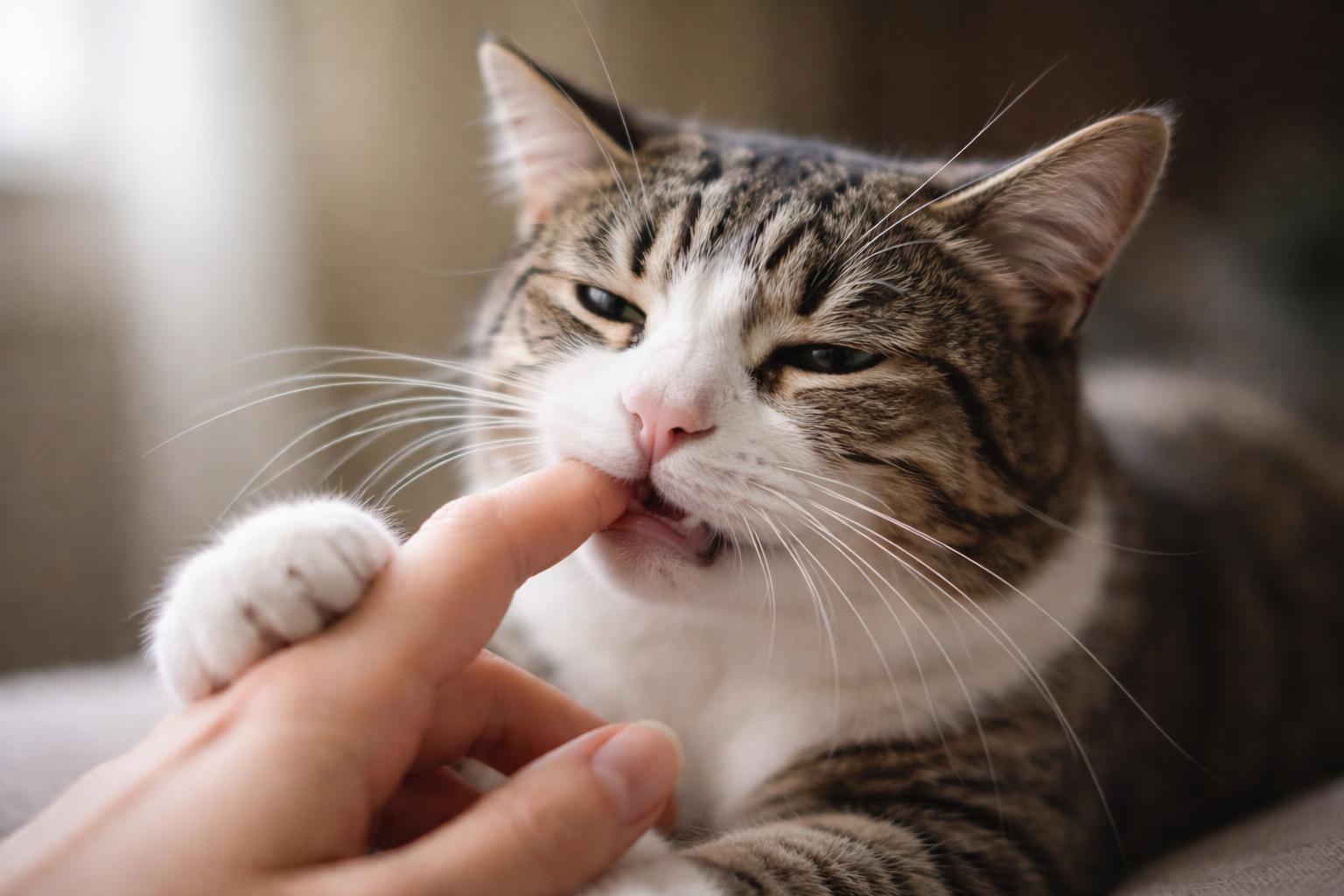
Cats communicate their comfort level through distinct physical signals that appear before they deliver a bite. Recognizing whether your cat is showing affection or genuine aggression requires attention to specific behavioral cues.
Physical Cues Before a Love Bite
Your cat displays several warning signs of overstimulation before cat nipping occurs. Watch for dilated pupils, which indicate heightened arousal or excitement during petting sessions.
A twitching or lashing tail signals your cat is reaching their tolerance limit. The movement typically starts as a gentle swish and escalates to more aggressive flicking as irritation builds.
Muscle tension and skin rippling along your cat’s back suggest they’re becoming uncomfortable with continued touch. You might notice the fur appearing to wave or shudder without your direct contact.
Flattened ears rotated backward show your cat is transitioning from relaxed to defensive. Combined with a sudden head turn toward your hand, these signals mean you should stop petting immediately.
How to Distinguish Love Bites From Real Bites
Cat love bites feel gentle and controlled, rarely breaking skin or leaving marks. Your cat maintains a relaxed body posture during these nibbles, with soft eyes and forward-facing ears.
Aggressive bites are harder and more sustained, often accompanied by hissing, growling, or swatting. These bites typically break skin and may draw blood.
Love bites occur without other aggressive behaviors, while real bites come with clear warning displays. Your cat might purr or knead before delivering affectionate nips, whereas genuine aggression includes arched backs and puffed tails.
The context matters significantly. Why do cats love bite during calm petting sessions? They’re often expressing mild overstimulation or reciprocating affection, not attempting to harm you.
How to Respond to Cat Love Bites
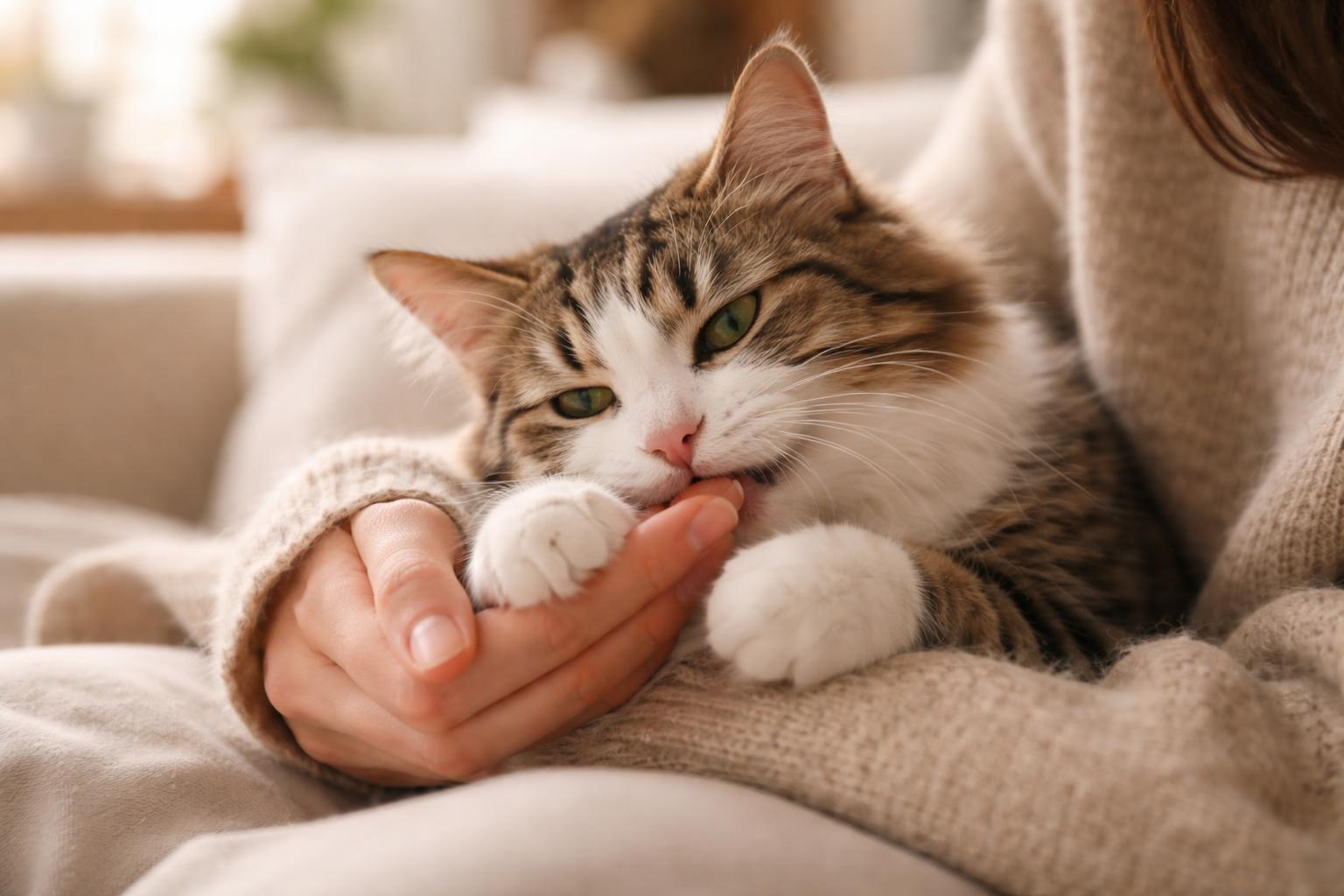
When your cat gives you a gentle nibble, staying calm and redirecting their behavior works better than punishment. Understanding proper responses helps maintain your bond while teaching appropriate boundaries.
Best Practices for Handling Nips and Bites
The moment you feel teeth on your skin, stop moving immediately. Pulling away quickly can trigger your cat’s prey drive and intensify the biting behavior. Instead, go completely still and avoid reacting with sudden movements or loud sounds.
Redirect your cat’s attention to an appropriate toy or object they can bite instead. Keep a small toy nearby during petting sessions so you can offer it when cat love bites start to occur. This teaches your cat what they can safely nibble without using negative reinforcement.
If your cat bites during petting, end the interaction calmly by standing up and walking away for a few minutes. This helps your cat learn that biting stops the attention they enjoy. Wait until they settle down before resuming contact.
Watch for warning signs before bites happen. Tail twitching, ear flattening, or skin rippling indicates overstimulation. When you notice these signals, pause your interaction before understanding cat love bites becomes necessary through an actual nip.
What Not to Do When a Cat Love Bites
Never yell at or physically punish your cat for giving love bites. These reactions can damage your relationship and increase anxiety, potentially leading to more aggressive behavior. Cats don’t understand punishment the way dogs do, so negative responses prove ineffective.
Avoid using your hands as toys during play sessions. Wrestling with your cat or encouraging them to chase your fingers teaches them that human skin is an acceptable target for biting and scratching. This confusion makes it harder for them to distinguish between appropriate and inappropriate responses to cat love bites.
Don’t ignore repeated or increasingly forceful bites. While gentle nibbles usually indicate affection or playfulness, harder bites may signal pain, fear, or aggression. If the behavior escalates or happens frequently, consult your veterinarian to rule out medical issues.
Resist the urge to continue petting when your cat shows discomfort. Pushing past their tolerance threshold reinforces that they need to bite harder to communicate their boundaries effectively.
Preventing and Minimizing Unwanted Nipping Behavior
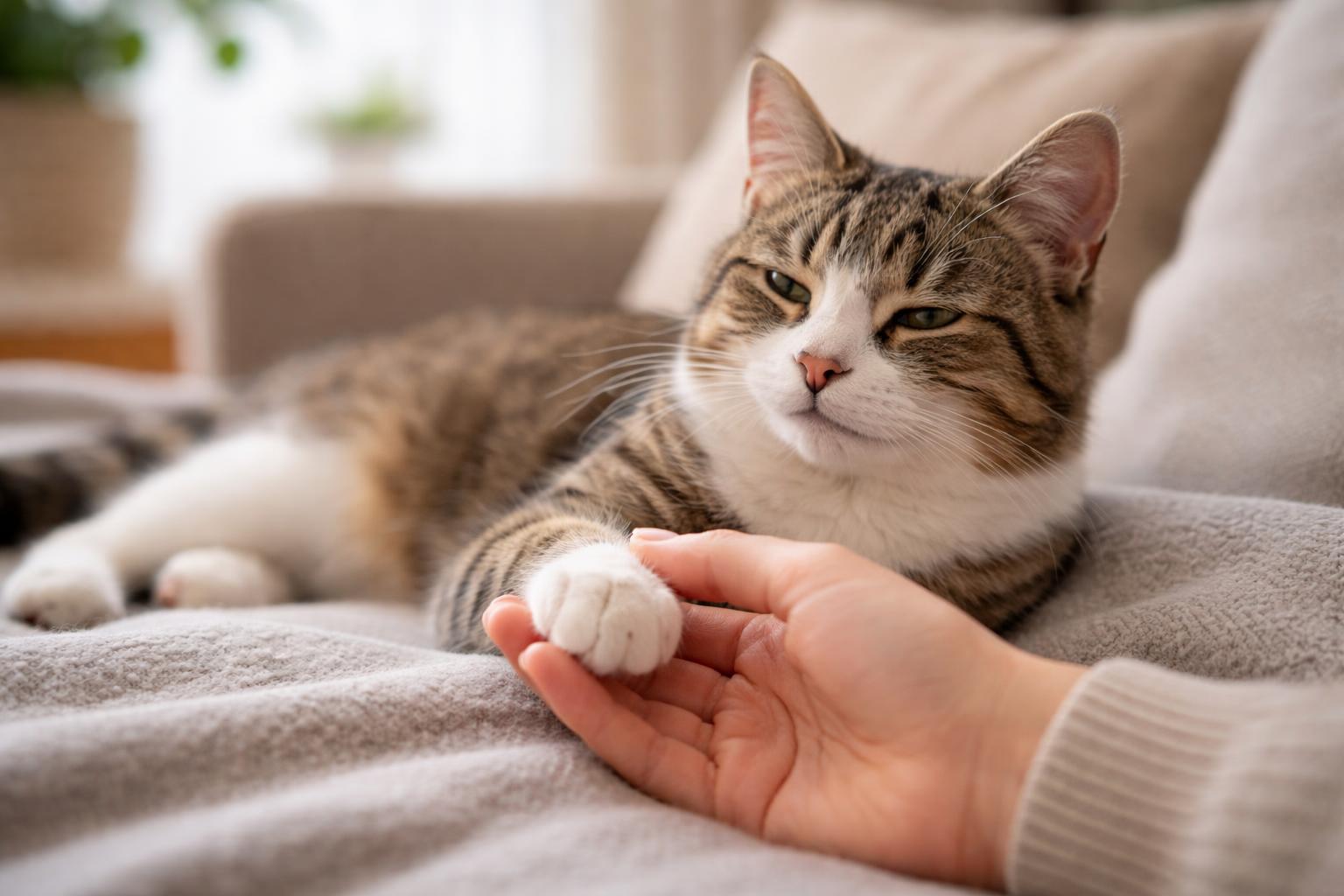
While cat love bites often stem from affection or playfulness, you can take specific steps to discourage this behavior through consistent training techniques and by offering alternative outlets for your cat’s natural instincts.
Strategies to Reduce Cat Love Bites
Stop petting your cat immediately when you notice warning signs like tail twitching, ear flattening, or skin rippling. These signals often precede petting-induced aggression, which occurs when your cat becomes overstimulated during handling sessions.
Keep petting sessions brief, typically 5-10 minutes, before your cat reaches its tolerance threshold. Pay attention to which body areas your cat enjoys having touched versus those that trigger defensive responses.
Key prevention techniques include:
- Withdrawing your hand slowly rather than pulling away quickly
- Standing up and walking away calmly when nipping occurs
- Avoiding rough play with your hands or fingers
- Never punishing your cat physically for nipping behavior
When your cat nips during interaction, say “no” in a calm, firm voice without yelling. Consistency in your response teaches your cat which behaviors are unacceptable.
Redirecting Your Cat’s Attention
Offer interactive toys like feather wands or fishing pole-style toys when your cat shows signs of wanting to bite. This approach redirects nipping behavior toward appropriate objects rather than your skin.
Keep toys readily accessible in areas where your cat typically engages in play biting. Toss a small ball or crinkle toy away from yourself when you sense mounting energy levels.
Engage your cat in regular play sessions twice daily for 10-15 minutes each. These sessions burn excess energy and reduce the likelihood of spontaneous nipping during calm moments. Schedule play before typical nipping times if you notice patterns in your cat’s behavior.
When to Seek Professional Help for Biting
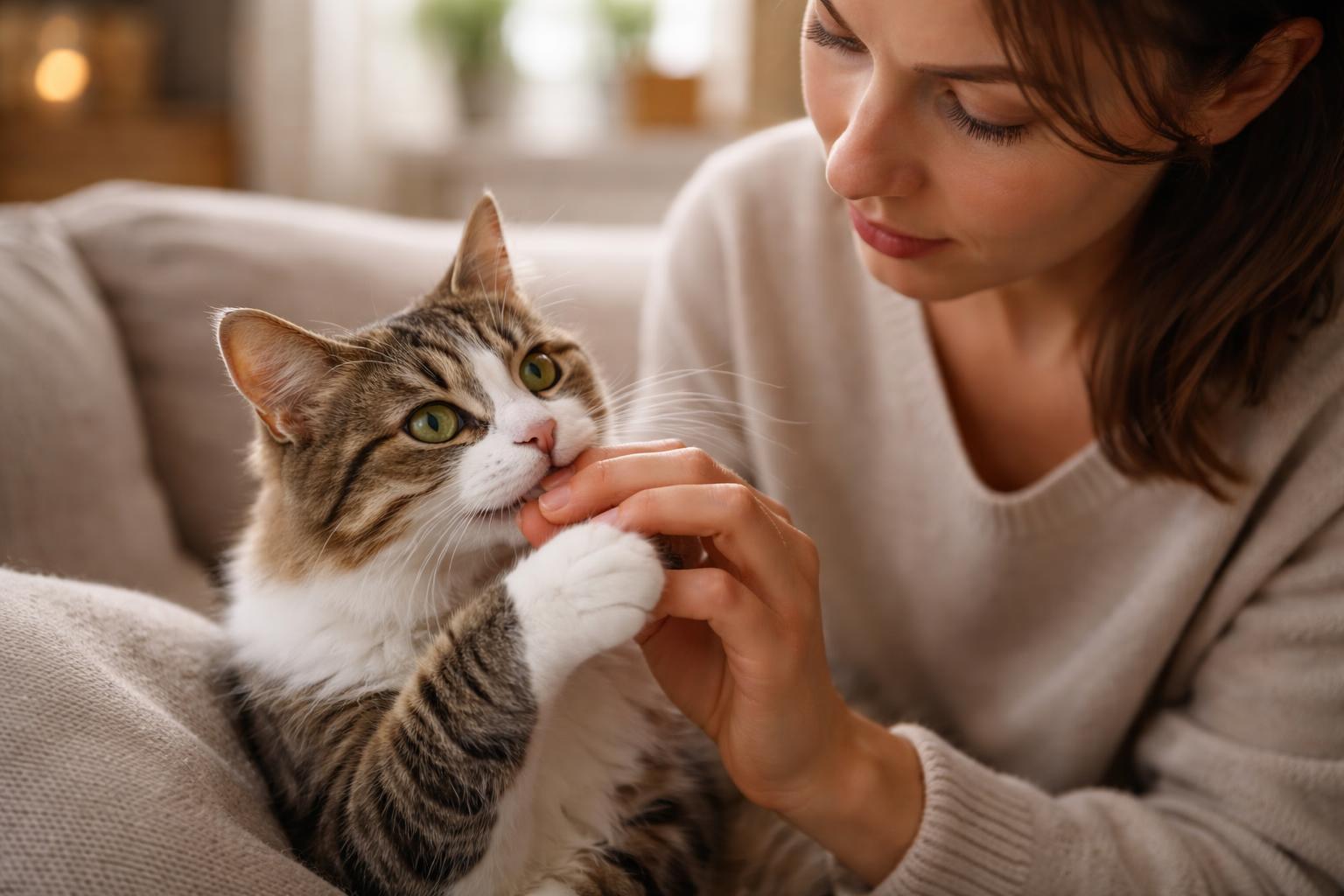
While gentle nibbles are normal feline behavior, persistent aggressive biting or sudden changes in your cat’s biting patterns may signal underlying health issues or behavioral problems that require expert intervention.
Recognizing Medical or Anxiety-Related Causes
Pain or discomfort can transform typical cat love bites into more aggressive behavior. Dental disease, arthritis, or other medical conditions may cause your cat to bite harder than usual or react defensively when touched in certain areas.
Watch for signs that distinguish medical issues from normal behavior. If your cat suddenly bites when you touch specific body parts, vocalizes during petting, or shows changes in appetite or litter box habits, these may indicate pain-related biting.
Anxiety and stress can also escalate biting behavior beyond affectionate nibbles. Cats experiencing environmental changes, such as new pets or household moves, may develop heightened reactivity. Petting induced aggression differs from playful nips in its intensity and your cat’s body language leading up to the bite.
Look for warning signs like dilated pupils, flattened ears, twitching tail, or tense body posture before bites occur.
Consulting a Veterinarian or Behaviorist
Schedule a veterinary appointment if your cat’s biting becomes more frequent, intense, or is accompanied by other behavioral changes. Your veterinarian can rule out medical causes through physical examination and diagnostic tests.
A veterinary behaviorist or certified cat behavior consultant can help address persistent biting issues. These professionals assess your cat’s environment, identify triggers, and develop customized behavior modification plans. They can distinguish between affectionate bites and problematic aggression.
Professional help becomes necessary when bites break skin regularly, your cat shows consistent aggressive behaviors like hissing or swatting, or you feel unsafe around your pet. Behaviorists teach you to recognize subtle body language cues and implement training techniques that redirect unwanted biting without damaging your bond with your cat.
Leave a Reply