Food for Kittens: Nutrition, Types, and Expert Recommendations
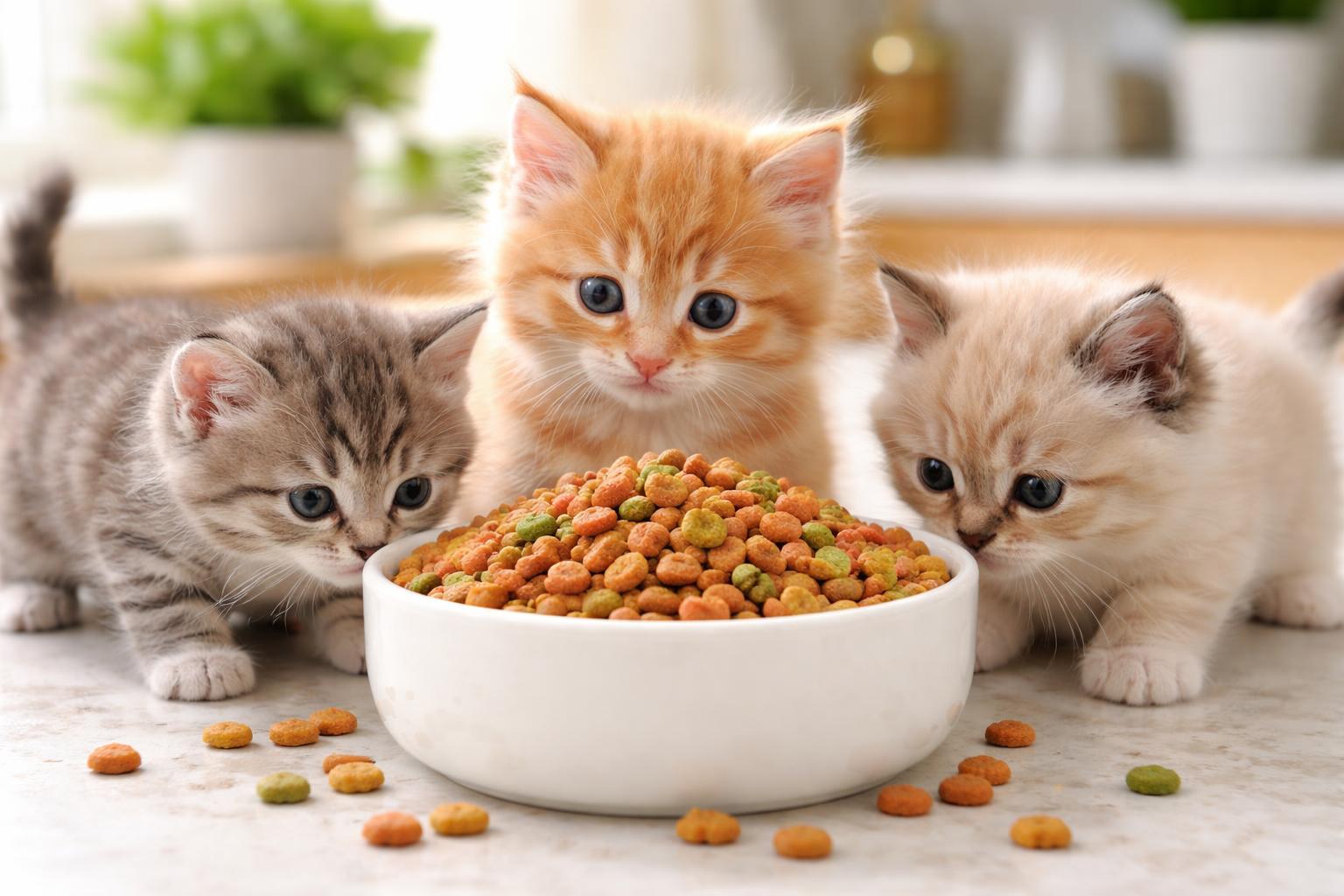
Feeding your kitten the right food sets the foundation for a lifetime of good health. Kittens need specially formulated food with higher protein levels (around 35-50%) and more calories than adult cat food to support their rapid growth and development during their first year of life. The choices you make now about kitten nutrition will directly impact your pet’s energy levels, immune system, and overall wellness.
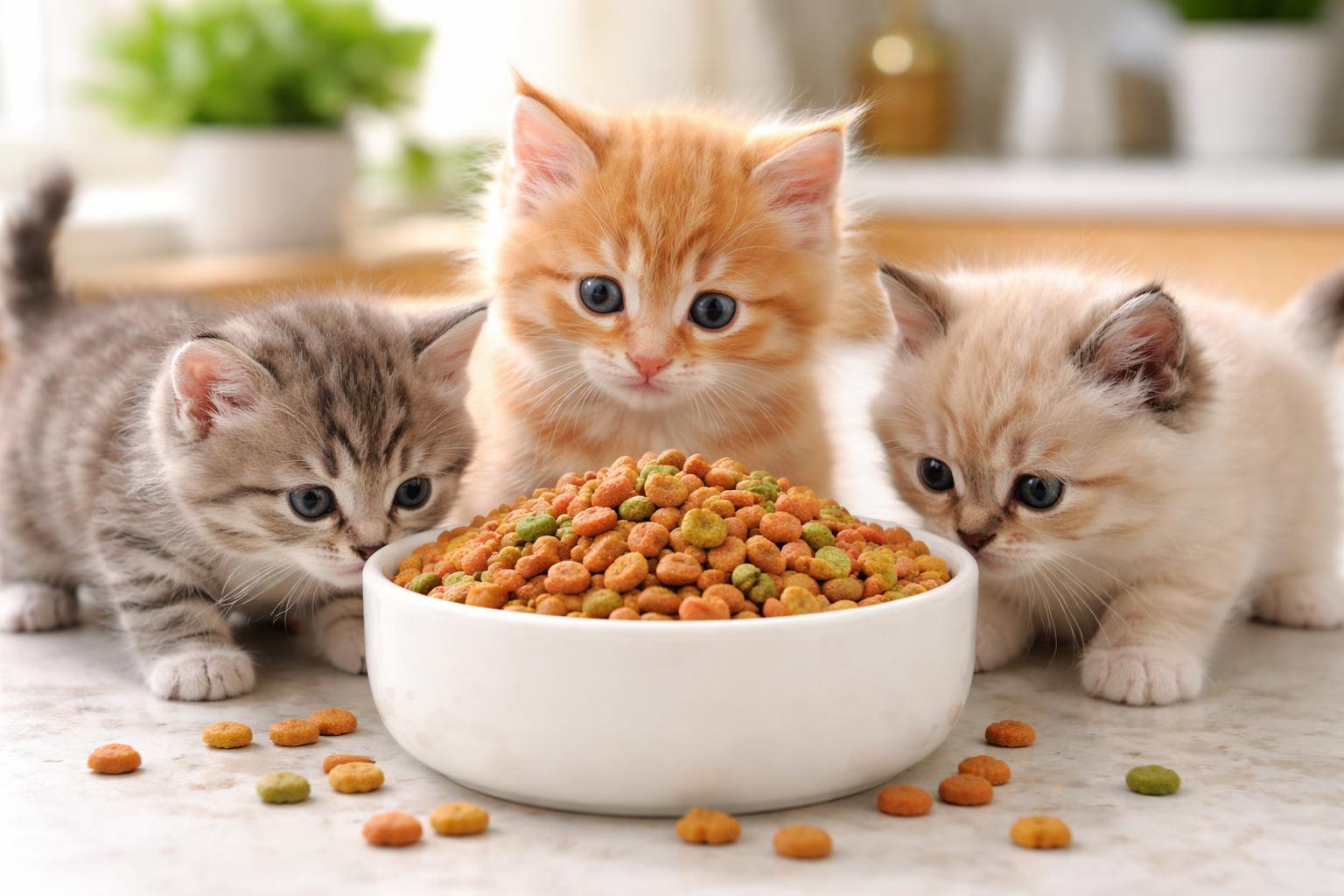
Understanding what makes quality kitten food different from regular cat food helps you make informed decisions at the pet store. Young cats have unique dietary needs that change as they grow from newborns to weaned kittens and beyond. The right balance of nutrients supports everything from brain development to strong bones.
Whether you’re considering wet food, dry kibble, or a combination of both, knowing when to feed your kitten and how much to offer prevents both underfeeding and overfeeding. This guide walks you through each stage of your kitten’s nutritional journey and helps you create feeding routines that work for your household.
Key Takeaways
- Kittens require food with higher protein and calories than adult cats to support their growth until they reach one year old
- The weaning process begins around 4-5 weeks of age, with kittens gradually transitioning from milk to solid food over several weeks
- A mix of wet and dry kitten food provides both hydration benefits and dental health advantages when fed according to your kitten’s age and weight
Essential Nutritional Requirements for Kittens
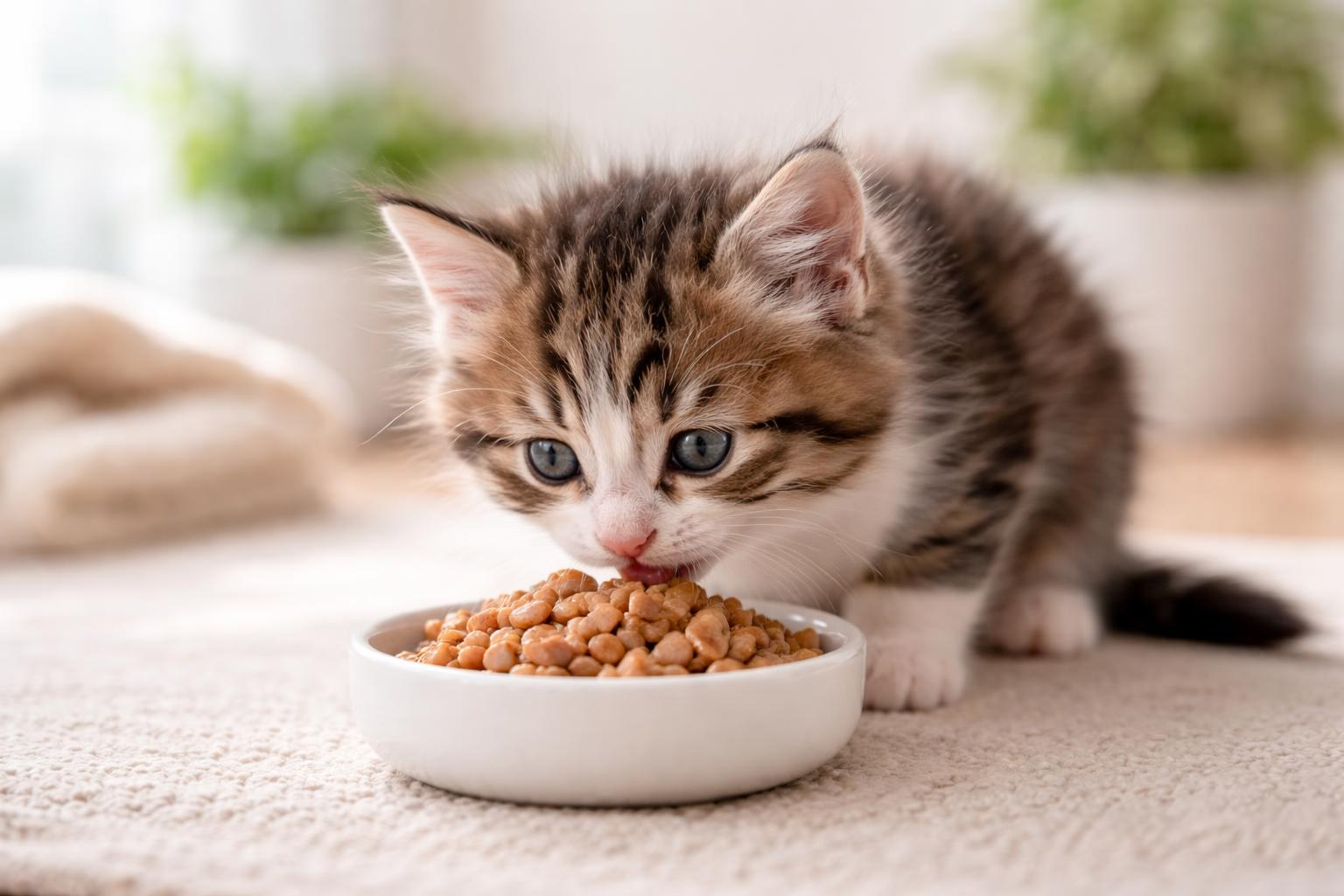
Kittens need significantly more nutrients than adult cats to support their rapid growth and development. Their diet must include higher levels of protein, fat, specific vitamins and minerals, plus essential fatty acids that support brain and eye development.
Protein, Fats, and Energy Needs
Your kitten requires more protein than adult cats to build strong muscles and support growth. According to AAFCO standards, kittens need at least 7.5 grams of crude protein per 100 kilocalories, compared to just 6.5 grams for adult cats.
Animal-based protein provides the best nutrition for your kitten. It contains all the essential amino acids that plant proteins lack. Look for foods that list meat, poultry, or fish as the first ingredient.
Kittens also need more fat in their diet than grown cats. Fat provides concentrated energy to fuel their active lifestyle and rapid growth. It also helps their bodies absorb important vitamins and supports healthy skin and coat development.
Feeding your kitten multiple times per day ensures they get enough calories. Young kittens should eat 3-4 times daily when under 4 months old.
Critical Vitamins and Minerals
Your growing kitten needs specific vitamins and minerals to develop properly. Calcium and phosphorus work together to build strong bones and teeth during the rapid growth phase.
Key vitamins for kitten health include:
- Vitamin A for vision development and immune function
- Vitamin D for calcium absorption
- Vitamin E as an antioxidant
- B vitamins for energy metabolism
Antioxidants protect your kitten’s developing cells from damage. They support immune system function during this vulnerable growth period.
The balance of minerals matters just as much as the amounts. Too much or too little of certain minerals can cause health problems in your growing cat. Commercial kitten foods formulated to meet nutritional standards provide the right balance.
Role of DHA, Taurine, and Omega-3 Fatty Acids
DHA is an omega-3 fatty acid that plays a crucial role in brain and eye development. Your kitten’s vision development depends on adequate DHA during the growth phase. This nutrient supports cognitive function and learning ability.
Taurine is an essential amino acid that cats cannot produce in sufficient amounts on their own. It supports heart health, vision, and reproductive function. Without enough taurine, your kitten could develop serious health problems.
Omega-3 fatty acids reduce inflammation and support healthy skin and coat. They also contribute to proper brain development and immune system function. These essential fats must come from your kitten’s diet since their body cannot make them.
Kitten nutrition requirements include these specialized nutrients that may not be present in adult cat food.
AAFCO Standards and Feeding Trials
The AAFCO cat food nutrient profiles set minimum requirements for kitten food. These standards ensure that food labeled for kittens contains adequate protein, fat, vitamins, and minerals for growth.
You should look for a nutritional adequacy statement on your kitten’s food package. This statement confirms the food provides complete and balanced nutrition for growth and reproduction.
An AAFCO feeding trial provides stronger evidence of nutritional adequacy than just meeting nutrient profiles. During feeding trials, real kittens eat the food to verify it supports healthy growth and development.
Foods tested through feeding trials demonstrate they can sustain life and promote growth in actual cats. The label will state whether the food was tested through feeding trials or formulated to meet AAFCO profiles.
Kitten Feeding Stages and Transitioning Diets
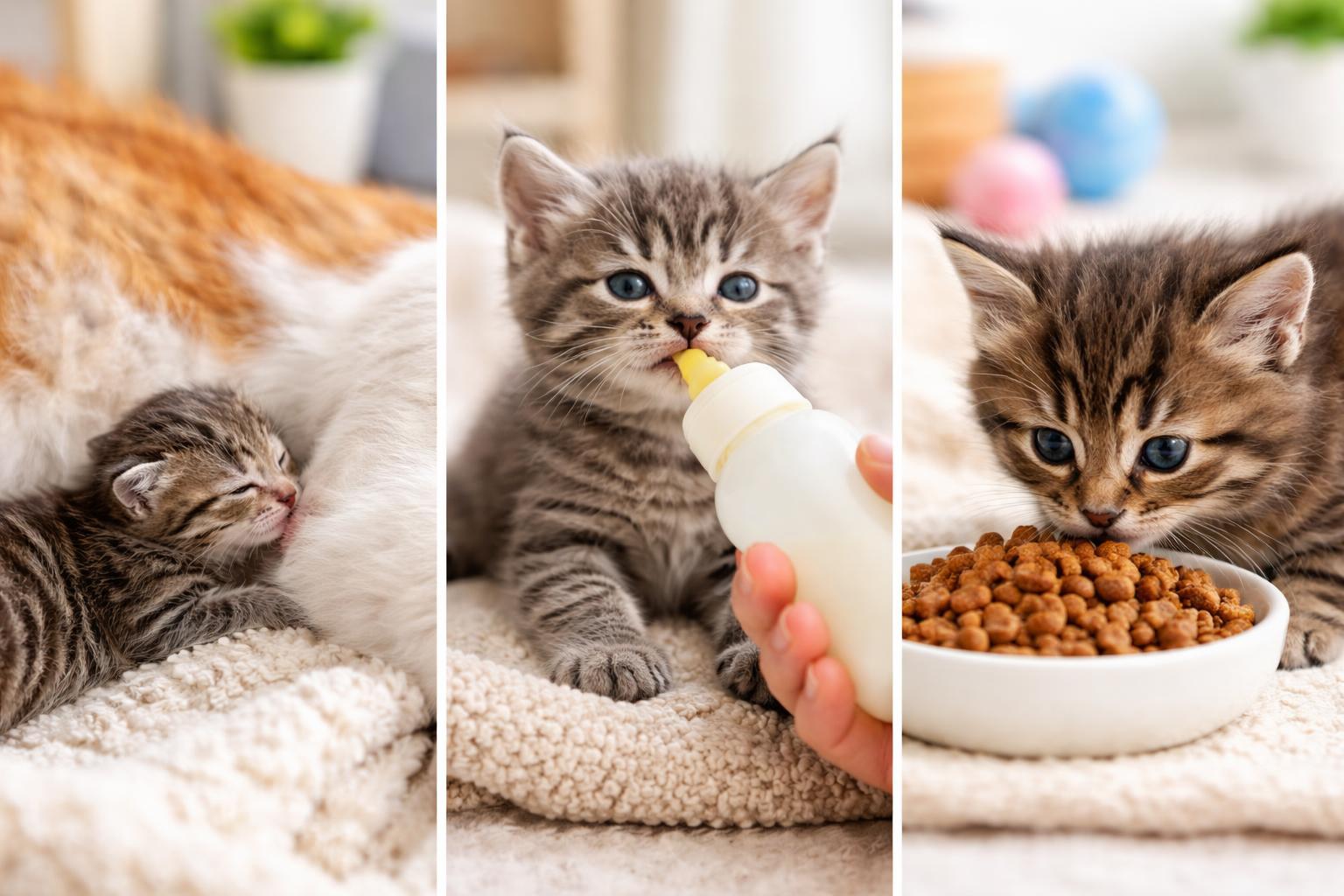
A kitten’s nutritional needs change rapidly during the first year of life. Understanding when and how to adjust their diet ensures proper growth and development.
Feeding Newborns and Kitten Formula
Newborn kittens need their mother’s milk for the first few weeks of life. If the mother cat is unavailable, you must provide kitten formula as a replacement.
Cow’s milk is not safe for kittens because it lacks the right nutrients and can cause digestive upset. You should use specially formulated kitten milk replacer instead.
Bottle-fed kittens need to eat every 2-3 hours during their first two weeks. As they grow, you can gradually space out feedings to every 4-6 hours.
Feeding Guidelines for Formula:
- Week 1-2: Feed every 2-3 hours, including overnight
- Week 3-4: Feed every 4-6 hours
- Use warm formula (around 100°F)
- Follow mixing instructions on the package exactly
Always check the formula temperature on your wrist before feeding to prevent burns.
Weaning and Introducing Solid Foods
The weaning process begins around 4 weeks of age when kittens start showing interest in solid food. This transition should happen gradually over several weeks.
Start by mixing kitten formula with wet canned kitten food to create a soupy mixture. Place small amounts in a shallow dish so kittens can easily access it.
Over the next few weeks, gradually reduce the amount of formula in the mixture. By 8 weeks old, most kittens can eat solid food without any added liquid.
Weaning Timeline:
- 4-5 weeks: Offer watered-down kitten food mixed with formula
- 5-6 weeks: Reduce liquid content gradually
- 6-7 weeks: Introduce more solid textures
- 8 weeks: Full transition to solid kitten food
Hydration remains important during weaning. Always provide fresh water in a separate bowl even when feeding wet food.
Age-Based Dietary Changes
Kittens need 3-4 meals per day by 8-12 weeks of age to support their rapid growth. Their small stomachs can’t hold enough food in just one or two feedings.
The moisture content in their food matters for proper hydration. Wet canned kitten food contains 70-80% water, while dry kibble only has about 10%.
Feeding Frequency by Age:
| Age | Meals Per Day |
|---|---|
| 8-12 weeks | 4 meals |
| 3-6 months | 3 meals |
| 6-12 months | 2-3 meals |
Monitor your kitten’s body condition and adjust portions based on their growth rate. You should be able to feel their ribs without pressing hard, but they shouldn’t be visible.
High-quality kitten food contains more protein and calories than adult formulas. This extra nutrition supports bone development, muscle growth, and energy needs during their active first year.
Switching to Adult Cat Food
Most cats are ready to switch to adult cat food between 10-12 months of age. Large breeds like Maine Coons may need kitten food until 18-24 months.
The transition should take 7-10 days to avoid digestive upset. Start by mixing 25% adult food with 75% kitten food for the first few days.
Gradually increase the proportion of adult food every 2-3 days. By the end of the transition period, your cat should be eating 100% adult food.
Transition Schedule:
- Days 1-3: 25% adult food, 75% kitten food
- Days 4-6: 50% adult food, 50% kitten food
- Days 7-9: 75% adult food, 25% kitten food
- Day 10+: 100% adult cat food
Watch for signs of digestive issues like vomiting, diarrhea, or reduced appetite during the switch. If these occur, slow down the transition and give your cat more time to adjust.
Comparing Wet and Dry Kitten Foods
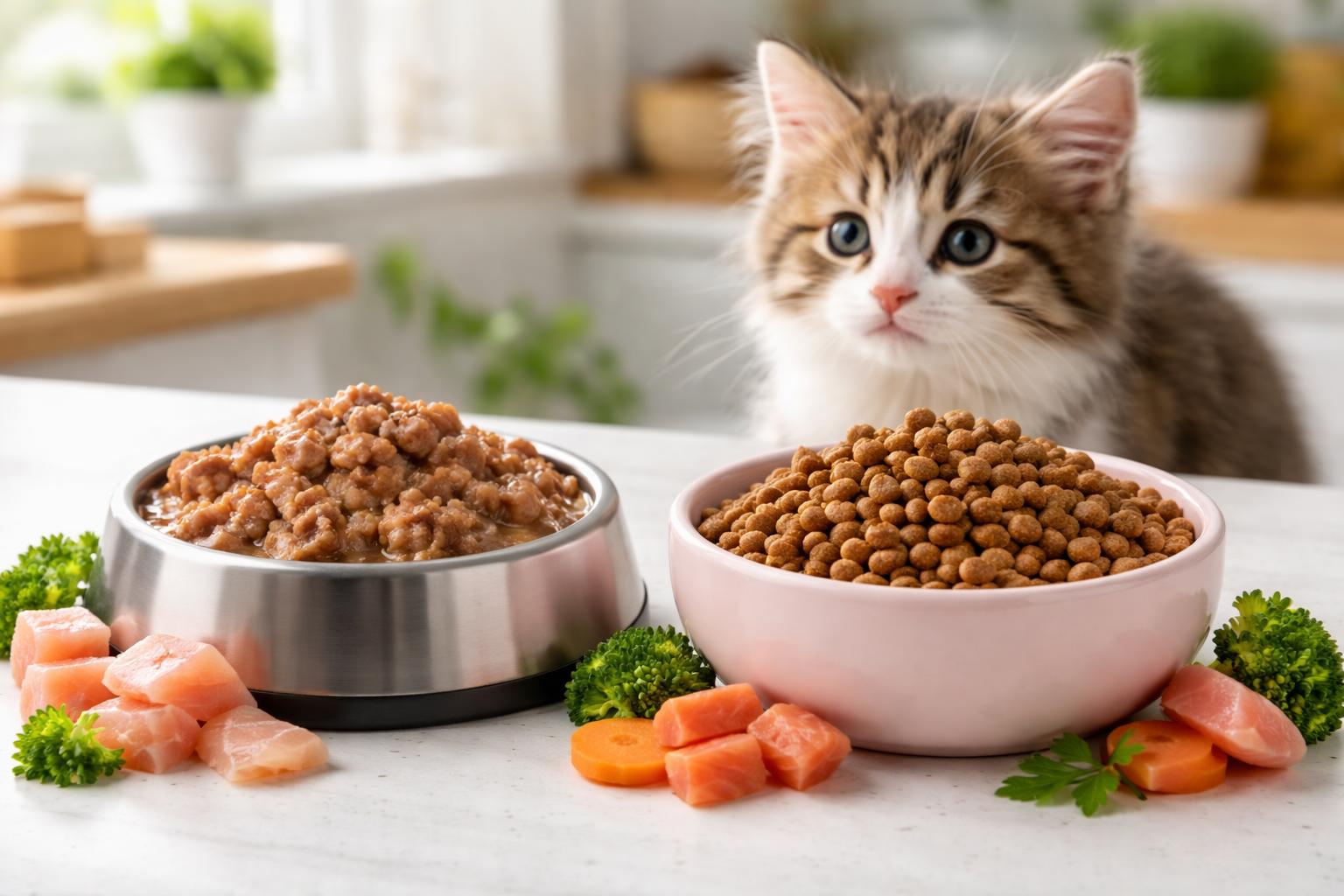
Both wet and dry kitten foods offer complete nutrition, but they differ significantly in moisture content, digestibility, and how they support your kitten’s development. Understanding these differences helps you choose the best option for your growing cat.
Benefits of Wet Kitten Food
Wet kitten food contains between 75-80% moisture, which makes it an excellent choice for keeping your kitten hydrated. This high water content is especially important for kittens who don’t drink enough water on their own.
The protein and moisture levels in wet food support healthy kidney function and urinary tract health. Wet food generally contains fewer carbohydrates and more protein, which your growing kitten needs for proper muscle and organ development.
Many kittens find wet food more appealing due to its strong smell and soft texture. If you have a picky eater, wet food often encourages better food intake. The palatability factor becomes important when your kitten needs to consume adequate nutrition during critical growth periods.
Wet food also works well for kittens with dental issues or those transitioning from nursing. The soft texture requires less chewing effort and feels more familiar to young kittens.
Advantages of Dry Kitten Food
Dry kitten food costs less than wet food and offers better convenience for busy pet owners. You can leave dry food out longer without worrying about spoilage, though you should still discard any uneaten portions by the end of each day.
The crunchy texture of dry food may help reduce plaque buildup on your kitten’s teeth. You can also use dry food in puzzle feeders and interactive toys to provide mental stimulation during mealtime.
Certain formulations of dry food contain probiotics that support digestive health. These beneficial bacteria help maintain a healthy gut balance in your growing kitten. Some brands also include prebiotics, which feed the good bacteria already in your kitten’s digestive system.
Dry food works well for free-feeding schedules, though you need to measure portions carefully. Many owners find it easier to monitor exact amounts when they feed on a schedule rather than leaving food available all day.
Moisture and Hydration
The moisture difference between wet and dry food significantly impacts your kitten’s daily water intake. Wet food provides up to 78% moisture content, while dry food contains only about 10% water.
Kittens eating primarily dry food need to drink more water from their bowl to stay properly hydrated. Young cats don’t always have strong thirst drives, which can lead to dehydration if they rely solely on dry food.
Key hydration differences:
- Wet food: Provides most daily water needs through food
- Dry food: Requires additional water consumption from drinking
- Combined feeding: Balances convenience with hydration support
You can offer both types of food to ensure your kitten gets adequate moisture while enjoying the benefits of dry food. This approach works especially well for kittens who need extra hydration but prefer the taste of dry kibble.
Digestibility and Food Sensitivities
Wet kitten food typically offers higher digestibility because the cooking process breaks down proteins and fats more thoroughly. The moisture content also helps food move through your kitten’s digestive system more smoothly.
Some kittens develop food sensitivities to certain ingredients, particularly grains. Grain-free options exist in both wet and dry formulas, giving you flexibility if your kitten shows signs of digestive upset or allergies.
Watch for these signs of food sensitivities:
- Vomiting or diarrhea after meals
- Excessive scratching or skin irritation
- Poor coat quality or hair loss
- Reduced appetite or weight loss
Feeding a combination of wet and dry food can help you identify which type works better for your kitten’s digestive system. If your kitten shows signs of sensitivity, switching between formulas or consulting your veterinarian helps pinpoint the problem ingredient.
Recommended Kitten Food Brands and Top Choices
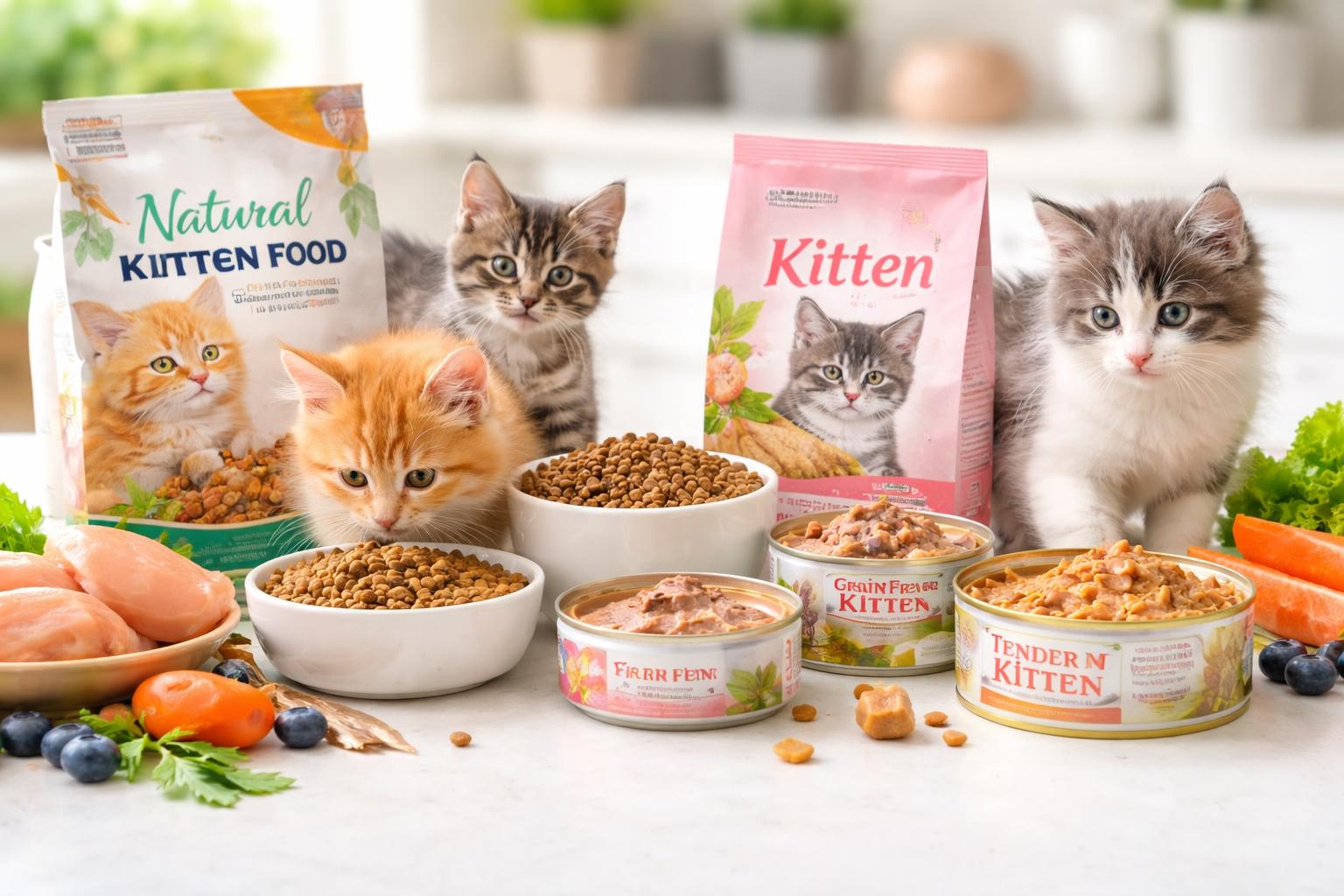
Several trusted brands consistently meet nutritional standards for growing kittens, with options ranging from veterinary-approved formulas to specialized diets for sensitive stomachs and high-protein needs.
Veterinary-Recommended Commercial Foods
Hill’s Science Diet Kitten ranks among the most frequently recommended brands by veterinarians. The Hill’s Science Diet dry kitten food contains chicken meal, functional fibers, vitamins, and antioxidants without added synthetic colors or preservatives.
Purina Pro Plan Kitten offers complete nutrition with high-quality protein sources. This formula supports healthy growth and development during your kitten’s first year.
Royal Canin Feline Health Nutrition provides age-specific formulas designed for kittens. The brand focuses on digestibility and immune system support.
IAMS Proactive Health Kitten delivers balanced nutrition at a mid-range price point. This food contains essential nutrients for muscle development and energy needs.
Purina One Healthy Kitten and Purina Kitten Chow both appear on vet-approved nutrition lists as reliable options. Fancy Feast Kitten wet food provides hydration along with complete nutrition in various flavors.
Grain-Free, Limited Ingredient, and Sensitive Stomach Options
Blue Buffalo Healthy Growth features real meat as the first ingredient and includes LifeSource Bits. These dark kibble pieces contain antioxidants, vitamins, and minerals selected by veterinarians and animal nutritionists.
Wellness Complete Health Kitten offers grain-free options for kittens with sensitivities. The formula excludes common allergens while maintaining complete nutrition.
Some kitten foods include brown rice as a digestible carbohydrate source. This ingredient provides energy without causing digestive upset in most kittens.
Instinct Original Kitten provides grain-free recipes with cage-free chicken as the primary protein. This brand works well for kittens with grain sensitivities or digestive issues.
Limited ingredient diets help identify food sensitivities. These formulas contain fewer components, making it easier to pinpoint ingredients that cause problems.
Natural fibers in these foods promote healthy digestion and work especially well for indoor kittens with less active lifestyles.
High-Protein and Specialty Diets
Merrick Purrfect Bistro delivers high protein content from real deboned meat. This grain-free option supports muscle development in active, growing kittens.
Tiki Cat Baby provides extremely high protein levels with real shredded meat. The wet food format offers maximum hydration along with species-appropriate nutrition.
High-protein formulas typically list real meat or chicken meal as the first ingredient. Chicken meal contains concentrated protein since moisture has been removed during processing.
Purina Pro Plan also offers high-protein kitten formulas for kittens needing extra energy. These recipes support rapid growth periods between 2-12 months of age.
Specialty diets address specific health concerns. Some kittens require urinary health support, weight management, or hairball control even at young ages.
Wet food options from these brands provide 70-80% moisture content. This hydration supports kidney function and overall health in kittens who don’t drink enough water.
Evaluating Brand Quality and Safety
Look for AAFCO certification on any kitten food label. This ensures the formula meets minimum nutritional standards for growth and reproduction.
WSAVA guidelines recommend choosing manufacturers with veterinary nutritionists on staff. Brands that meet these standards conduct feeding trials and quality control testing.
Top brands include detailed feeding guidelines based on your kitten’s age and weight. Follow these recommendations carefully to prevent overfeeding or nutritional deficiencies.
Check ingredient lists for named protein sources like chicken, turkey, or salmon. Avoid foods listing generic terms like “meat” or “poultry” without species identification.
Manufacturing location matters for quality control. Brands producing food in facilities with strict safety protocols reduce contamination risks.
Review sites evaluate over 120 cat food brands to identify top performers. These independent assessments help you compare options objectively.
Feeding Guidelines and Daily Routines
Kittens need consistent feeding schedules and proper portion sizes to support their rapid growth during their first year. Understanding how much to feed, when to feed, and what healthy eating looks like will help you provide the best pet care for your new cat.
Portion Sizes and Meal Frequency
Your kitten’s portion size depends on their age and weight. A 2-month-old kitten weighing 2 pounds needs about 150 calories daily, while a 6-month-old at 6.5 pounds requires around 400 calories per day.
Kittens 4 months and younger should eat three meals per day. After 4 months, you can reduce feeding to two meals daily. This schedule fits well into most pets’ lifestyle routines and helps regulate their digestion.
The actual volume of food varies based on the calorie content per cup. If your dry food contains 568 calories per cup, a 10-pound kitten needs about 1 cup daily. If the food has 409 calories per cup, you’ll need to feed about 1⅓ cups to reach the same calorie intake.
Pay attention to your kitten’s eating patterns throughout the day. Some cats prefer nibbling small amounts across multiple feeding times, while others eat their full portion in one sitting. Adjust your schedule based on what works best for your kitten’s natural habits and your daily routine.
Monitoring Growth and Weight
Regular weight checks help you ensure your kitten is growing at a healthy rate. Weigh your kitten weekly during the first few months to track their progress.
Expected weight milestones include 3 pounds at 3 months, 5.5 pounds at 5 months, and 8 pounds at 9 months. Keep in mind that breed and body frame size affect these numbers, so some variation is normal.
If your kitten isn’t gaining weight as expected, consult your veterinarian. They can evaluate whether you need to adjust portion sizes or switch foods. Companies that conduct feeding trials ensure their diets support proper growth and development.
Track your kitten’s body condition alongside weight. You should feel their ribs easily but not see them prominently. Their waist should be visible when viewed from above.
Signs of Healthy Eating
A healthy kitten shows enthusiasm at mealtime and finishes most of their food within 20-30 minutes. Their energy levels remain consistent throughout the day, with normal periods of play and sleep.
Watch for these positive indicators:
- Clean bowl – Your kitten eats their full portion regularly
- Regular bathroom habits – Solid waste 1-2 times daily
- Shiny coat – Healthy fur indicates good nutrition
- Bright eyes – Alert and clear appearance
- Playful behavior – Active during wake times between sleep periods
Warning signs include refusing food for more than 24 hours, vomiting after meals, diarrhea lasting more than a day, or extreme lethargy. These symptoms require immediate veterinary attention.
Your kitten’s bathroom habits connect directly to their eating patterns. They typically use the litter box shortly after meals, making it easy to establish a routine that works with your lifestyle and their natural bath and grooming schedule.
Tips for a Healthy Home Environment
Keeping your kitten healthy goes beyond choosing the right food. Proper food storage protects against contamination, careful planning helps when you have multiple pets, and professional guidance ensures your kitten gets complete nutrition.
Safe Food Storage and Preparation
Store dry kitten food in an airtight container in a cool, dry place away from direct sunlight. Keep the container in your kitchen pantry or a dedicated storage area where temperatures stay between 50-70°F.
Wet food requires different handling. Once you open a can or pouch, refrigerate any unused portions immediately and use them within 24-48 hours. Never leave wet food out at room temperature for more than 30 minutes, as bacteria can multiply quickly.
Wash your kitten’s food and water bowls daily with hot, soapy water. This prevents bacterial growth and keeps your pet healthy. Use separate cutting boards and utensils if you prepare homemade kitten food, and clean all surfaces thoroughly after each use.
Store kitten food away from household chemicals and cleaning supplies. Check expiration dates regularly and discard any food that smells off or appears moldy.
Managing Multi-Pet Households
If you have dogs or other cats at home, feed your kitten separately to prevent food stealing and ensure proper nutrition. Dogs often try to eat cat food, which can cause digestive issues for them and leave your kitten underfed.
Set up a feeding station in a quiet area where your kitten can eat without interruption. You can use a baby gate to create a dog-free zone or place food bowls on elevated surfaces that dogs cannot reach.
Feed pets at the same time but in different rooms. This creates a routine and reduces competition for food. Monitor each pet during mealtimes to ensure everyone eats their own food.
Remove uneaten food after 20-30 minutes to maintain freshness and prevent cross-feeding. Some kittens need time to adjust to a new home with other pets, so patience is important during the transition period.
Involving Veterinary Nutritionists
A veterinary nutritionist can create customized feeding plans based on your kitten’s specific health needs, breed, and growth rate. These specialists have advanced training in animal nutrition beyond standard veterinary education.
Consider consulting a veterinary nutritionist if your kitten has food allergies, digestive problems, or health conditions that require special diets. They can also help if you want to prepare homemade meals and need guidance on balanced nutrition for kittens.
Your regular veterinarian can refer you to a board-certified veterinary nutritionist in your area. Many nutritionists also offer virtual consultations, making it easier to get expert advice from your home.
These specialists analyze your kitten’s current diet and recommend specific adjustments. They can identify nutritional gaps and suggest supplements if needed to support healthy growth.