
Cat Allergies: Types and Symptoms Every Pet Owner Should Know
Cat allergies affect both humans and their feline companions in different ways. When people talk about cat allergies, they might mean being allergic to cats themselves, or they could be referring to allergies that cats experience. Both types of allergies involve distinct symptoms and triggers, from environmental allergens affecting your cat to proteins in cat dander causing reactions in humans.

Understanding the difference between these two types of allergies helps you identify what’s happening in your home. Your cat might be scratching constantly due to flea allergies or food sensitivities. On the other hand, you or your family members could be experiencing sneezing and itchy eyes when spending time with your pet.
The good news is that cat allergies can be managed with the right approach. This guide walks you through the main types of allergies related to cats, how to spot warning signs, what causes these reactions, and the most effective ways to treat and prevent allergy symptoms in both cats and people.
Most Common Types of Cat Allergies

Cats experience three primary types of allergies: flea allergy dermatitis, food allergies, and environmental allergies. Each type triggers different reactions in your cat’s immune system and requires specific treatment approaches.
Flea Allergy Dermatitis (FAD)
Flea allergy dermatitis is the most common type of feline allergy worldwide. Your cat develops this condition when their immune system reacts to proteins in flea saliva, not the flea bite itself.
Even a single flea bite can cause severe itching and discomfort in allergic cats. The reaction typically appears along your cat’s back, base of the tail, and hindquarters. You might notice your cat scratching excessively, biting at their skin, or developing small scabs called miliary dermatitis.
FAD causes more intense itching than regular flea bites. Your cat may develop hair loss, red bumps, and open sores from constant scratching. The good news is that most flea allergies can be managed effectively with proper flea prevention products.
Food Allergies in Cats
Food allergies develop when your cat’s immune system identifies certain proteins as threats. Common triggers include chicken, beef, fish, and dairy products. These allergies can appear at any age, even if your cat has eaten the same food for years.
Food allergies in cats often cause skin problems rather than digestive issues. Your cat might scratch their head, neck, and ears excessively. Some cats also experience vomiting or diarrhea alongside skin symptoms.
Diagnosing food allergies requires an elimination diet trial lasting 8-12 weeks. Your veterinarian will recommend a special diet with novel proteins your cat hasn’t eaten before. If symptoms improve during the trial and return when you reintroduce the original food, a food allergy is confirmed.
Feline Atopic Skin Syndrome
Feline atopic skin syndrome occurs when your cat reacts to environmental allergens like pollen, mold, and dust mites. This condition is similar to hay fever in people but shows up as skin problems in cats.
Your cat may scratch their face, ears, and belly more than usual. Some cats develop small crusty bumps on their skin or lose patches of fur. The itching often gets worse during certain seasons when pollen counts are high.
Indoor allergens like dust mites and mold can cause year-round symptoms. Your cat might suffer from multiple allergic conditions at the same time, making diagnosis more complex. Treatment typically includes medications to reduce itching and sometimes allergy shots to build tolerance.
Contact and Environmental Allergies
Contact allergies happen when your cat’s skin touches irritating substances directly. Common triggers include certain plastics, fabrics, cleaning products, and plants. These reactions usually appear on areas with less fur coverage like the chin, paws, and belly.
Your cat might develop redness, bumps, or hair loss in the affected areas. The symptoms typically stay localized to where contact occurred. Removing the offending substance usually resolves the problem quickly.
Environmental allergies extend beyond direct contact to include airborne particles and household irritants. Cat dander, perfumes, and cigarette smoke can trigger respiratory symptoms or skin reactions. You’ll need to identify and minimize your cat’s exposure to these triggers for effective management.
Distinct Symptoms and Warning Signs

Cat allergies trigger a range of reactions that vary from mild discomfort to serious health problems. Recognizing these symptoms of cat allergies early helps you take action and get proper treatment.
Symptoms of Cat Allergies
Your body reacts to cat allergens within minutes or hours of exposure. The common signs of cat allergies include sneezing, runny nose, and watery eyes.
You might also notice nasal congestion and itching in your nose, throat, or the roof of your mouth. These symptoms happen because your immune system treats harmless cat proteins as dangerous invaders. Your eyes may become red and swollen, making it hard to wear contact lenses comfortably.
Some people experience postnasal drip and facial pressure. Coughing is another frequent symptom that can last for hours after you leave the area where a cat lives. A skin prick test can confirm whether you have a true cat allergy or another condition causing similar symptoms.
Cat Allergy Rash and Skin Issues
Direct contact with cats often causes cat allergy rash and other skin problems. You might develop hives or raised, red bumps on areas where a cat licked, scratched, or rubbed against you.
Common skin reactions include:
- Red, itchy patches on your skin
- Eczema flare-ups or allergic dermatitis
- Swelling at the contact site
- Dry, scaly skin that feels irritated
Itchy skin can appear anywhere on your body, not just where the cat touched you. Some people develop allergic dermatitis that causes ongoing inflammation and discomfort. Scratching these areas makes the problem worse and can lead to infections.
Feline Asthma and Respiratory Reactions
Cat allergies can trigger serious breathing problems, especially if you have asthma. Respiratory-related symptoms include chest tightness, wheezing, and difficulty breathing.
Feline asthma refers to breathing problems in cats themselves, but people with cat allergies often develop asthma-like symptoms too. You might hear a whistling sound when you breathe or feel like you cannot get enough air. Your chest may feel heavy or constricted.
These breathing issues require immediate attention if they become severe. Shortness of breath that gets worse quickly can be dangerous. People with existing asthma often find their symptoms worsen significantly around cats.
Digestive and Rare Signs
While less common, cat allergies can affect your digestive system. Some people experience nausea, stomach cramps, or diarrhea after close contact with cats.
These symptoms are more likely if you accidentally ingest cat allergens. This can happen when you touch your face or eat food after petting a cat without washing your hands first.
In rare cases, cat allergies can lead to anaphylaxis, a life-threatening reaction. Signs include rapid pulse, dizziness, severe breathing difficulty, and swelling of the throat. Anaphylaxis requires emergency medical care right away.
Causes and Risk Factors for Cat Allergies
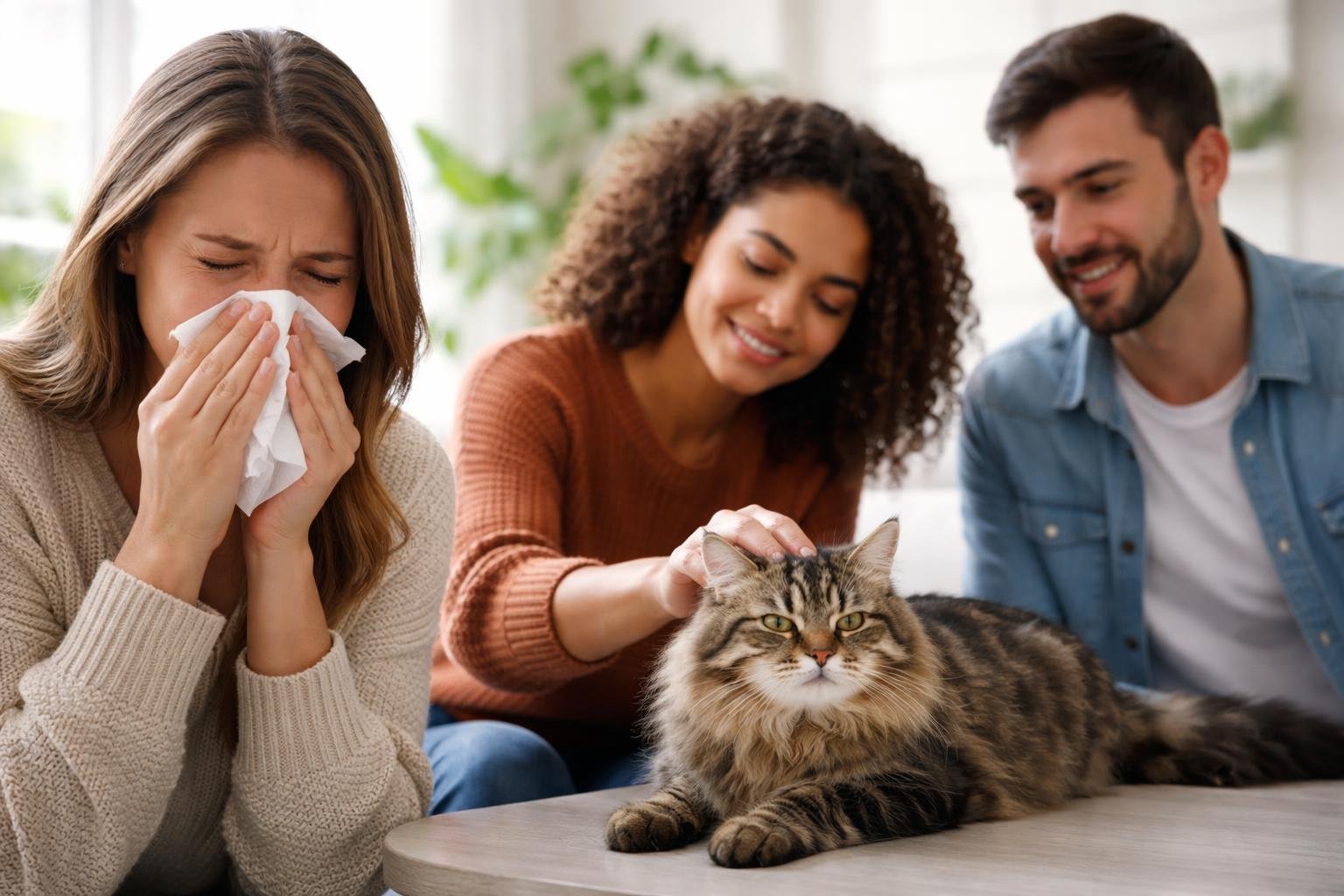
Cat allergies stem from specific proteins found in cats, though your genetic makeup and home environment also play significant roles in whether you develop these reactions. About 10% to 15% of adults show sensitization to cat allergens.
Proteins Responsible for Allergies
The primary culprit behind your cat allergy is a protein called Fel d 1. This protein is produced in your cat’s sebaceous glands, salivary glands, and anal glands.
When cats groom themselves, the protein spreads onto their fur and skin. As the saliva dries, it becomes airborne and attaches to cat dander.
Cat dander consists of tiny flakes of dead skin that float through the air. These microscopic particles carry the allergenic proteins directly to your respiratory system. The Fel d 1 protein is the most prominent of the eight known cat allergens that can trigger reactions.
Other proteins like Fel d 2, Fel d 3, and Fel d 4 also contribute to allergic responses, though they’re less common triggers than Fel d 1.
Genetic Predisposition and Atopy
Your genes significantly influence whether you’ll develop cat allergies. If one or both of your parents have allergies, you face a higher risk of developing them yourself.
Atopy refers to your genetic tendency to develop allergic diseases. People with atopy often have multiple allergies affecting different body systems.
Common atopic conditions include:
- Allergic rhinitis (hay fever)
- Asthma
- Eczema
- Food allergies
- Pet allergies
Having one allergic condition increases your likelihood of developing others. Studies show that cat allergen sensitization is linked to an increased risk of asthma.
Environmental Triggers and Household Factors
You don’t need to own a cat to develop cat allergies. Cat allergens are widespread in public spaces, schools, and workplaces because people carry them on their clothing.
Cat ownership is a risk factor for cat sensitivity, but exposure can happen anywhere. The allergens remain airborne for long periods and settle on furniture, carpets, and walls.
Household factors that increase your exposure:
- Carpeted floors that trap allergens
- Poor ventilation systems
- Upholstered furniture
- Infrequent cleaning
House dust mites can also worsen your symptoms since they thrive in the same environments where cat dander accumulates. Your risk increases if you spend significant time in homes with cats, even if you don’t live there permanently.
Diagnostic Approaches for Cats and Humans

Finding out what triggers allergic reactions requires different testing methods for cats and humans. Veterinarians use skin tests and diet trials to identify cat allergies, while doctors test people through skin or blood work to diagnose allergies to cats.
Intradermal Skin Testing
Intradermal skin testing involves injecting small amounts of allergens under the skin to see which ones cause a reaction. An allergist typically performs this test on humans who suspect they have cat allergies by introducing various allergens and watching for raised, red bumps at injection sites.
For cats with allergies, veterinarians use the same basic method. They inject tiny amounts of common allergens like pollen, dust mites, and mold into your cat’s skin. The vet then waits 15 to 20 minutes to check which spots swell up or turn red.
This allergy testing method works best for environmental allergies rather than food allergies. Your cat usually needs to be sedated during the procedure since it requires shaving a small area and multiple injections. The test identifies specific allergens so you can create a targeted treatment plan.
Elimination Diets for Cats
An elimination diet helps identify food allergies in cats by removing all potential allergen sources from their meals. You feed your cat a simple diet with proteins and carbohydrates they have never eaten before for 8 to 12 weeks.
During this trial, your cat cannot eat any treats, flavored medications, or table scraps. A hydrolyzed diet breaks down proteins into tiny pieces that the immune system cannot recognize as allergens. This makes it another effective option for elimination trials.
If your cat’s symptoms improve during the trial, you slowly add back individual ingredients one at a time. When symptoms return after adding a specific food, you have found the allergen. This method takes patience but remains the most reliable way to diagnose food allergies in cats.
Blood Testing and Allergen Identification
Blood testing measures antibodies in the bloodstream that react to specific allergens. Diagnosing allergies to cats in humans through blood work checks for antibodies against cat proteins found in dander, saliva, and urine.
Your doctor draws a blood sample and sends it to a lab that exposes it to various allergens. The test measures how strongly your immune system reacts to each one. Blood tests work well for people who cannot stop taking antihistamines or have skin conditions that prevent accurate skin testing.
Allergy tests for cats using blood samples are available but less reliable than skin testing. These tests measure allergen-specific antibodies in your cat’s blood. Veterinarians often prefer intradermal testing or elimination diets because blood tests can produce false positives or miss actual allergies.
Evidence-Based Treatment and Management

Managing cat allergies requires a targeted approach based on the specific type of allergy your cat has. Effective treatment combines eliminating allergen exposure, dietary changes when needed, and medications to control symptoms.
Flea Control and Environmental Management
Flea allergy dermatitis (FAD) is one of the most common allergic conditions in cats. Just one flea bite can trigger severe itching and skin irritation in allergic cats.
You need to use year-round flea prevention products on all pets in your household. Modern flea preventatives include topical treatments, oral medications, and flea collars that kill fleas before they can bite. Your veterinarian can recommend the most effective product for your cat.
Environmental flea control is equally important. You should vacuum carpets and furniture frequently, wash your cat’s bedding in hot water weekly, and treat your home with appropriate flea control products. Remember that fleas can survive in your environment for months, so consistent prevention is essential.
Managing flea allergies requires a long-term commitment to flea prevention. Even indoor cats can develop flea allergies since fleas can enter homes on clothing or other pets.
Dietary Intervention and Food Management
Food allergies require a systematic approach to identify and eliminate the problem ingredient. Your veterinarian will typically recommend an elimination diet trial lasting 8-12 weeks.
During an elimination diet, you feed your cat a novel protein source or hydrolyzed protein diet. Novel proteins are ingredients your cat has never eaten before, such as venison, duck, or rabbit. Hydrolyzed diets contain proteins broken down into tiny pieces that don’t trigger allergic reactions.
You must feed only the prescribed diet during the trial period. No treats, table scraps, or flavored medications are allowed since even small amounts of the allergen can interfere with results. After symptoms improve, you can gradually reintroduce foods to identify the specific allergen.
Key rules for food trials:
- Feed only the prescribed diet
- No treats or table food
- No flavored medications or supplements
- Monitor symptoms carefully
- Complete the full 8-12 week trial
Medications and Immunotherapy
Several medications help control allergic symptoms in cats. Antihistamines, corticosteroids, and newer allergy medications can reduce itching and inflammation.
Corticosteroids like prednisolone provide fast relief for severe allergic dermatitis. However, long-term use can cause side effects, so your veterinarian will prescribe the lowest effective dose. Antihistamines work better for prevention than treating active symptoms.
Allergen-specific immunotherapy offers a long-term solution for environmental allergies. This treatment involves exposing your cat to gradually increasing amounts of specific allergens to build tolerance. Allergy shots or oral immunotherapy can reduce symptoms in 60-70% of cats, though results may take 6-12 months to appear.
Newer medications like oclacitinib and lokivetmab target specific immune pathways. These options provide relief with fewer side effects than traditional steroids. Your veterinarian will choose treatments based on your cat’s specific diagnosis and symptoms.
Living With Cat and Human Allergies
If you’re allergic to cats but want to keep your pet, you can take steps to reduce allergen exposure. Cat allergens, particularly Fel d 1 protein found in saliva and skin, trigger most human allergic reactions.
Regular bathing of your cat can reduce airborne allergens, though many cats resist bathing. Wiping your cat daily with pet-safe wipes offers a less stressful alternative. Keep your cat out of bedrooms and use HEPA air filters to remove allergens from the air.
For your own symptoms, you can use allergy medicine like antihistamines or nasal sprays. Some people benefit from immunotherapy through allergy shots that gradually build tolerance to cat allergens. Montelukast, a leukotriene modifier, may help control respiratory symptoms.
Strategies to reduce cat allergens in your home:
- Use HEPA air purifiers
- Vacuum frequently with HEPA filters
- Wash hands after petting your cat
- Keep cats off furniture and beds
- Clean litter boxes regularly
Environmental factors and genetic predisposition both affect the severity of human allergies to cats. Some people find their symptoms improve over time with consistent allergen management and treatment.
Preventive Strategies and Long-Term Care

Managing cat allergies requires both immediate action and ongoing care plans. You can reduce your exposure by keeping cats out of bedrooms and creating pet-free zones in your home.
Regular cleaning helps control allergens that trigger your symptoms. Vacuum carpets and furniture at least twice weekly using a HEPA filter. Wash bedding in hot water and dust surfaces often to remove dander.
Key Prevention Methods:
- Use air purifiers with HEPA filters in main living areas
- Bathe cats weekly to reduce dander buildup
- Replace carpets with hardwood or tile floors when possible
- Wash your hands after touching cats
Allergen immunotherapy offers long-term relief for some people. This treatment gradually builds your tolerance through regular exposure to small amounts of cat allergens. Your allergist can determine if you qualify for this option.
Creating an allergy-friendly home takes effort but brings lasting benefits. Keep humidity levels below 50% to reduce house dust mites. These tiny creatures live in bedding and carpets and can worsen pet allergies.
Long-Term Care Options:
| Strategy | Frequency | Benefit |
|---|---|---|
| HEPA air purifiers | Run daily | Removes airborne allergens |
| Professional cleaning | Monthly | Deep allergen removal |
| Allergy medications | As prescribed | Controls symptoms |
Work with your doctor to develop a personalized plan. Some people need daily medications while others benefit from immunotherapy. Your treatment plan should fit your lifestyle and symptom severity.
Monitor your symptoms over time and adjust strategies as needed. What works initially may need refinement as your living situation changes.
Frequently Asked Questions

People with cat allergies often experience sneezing, congestion, and itchy eyes, though symptoms can vary widely between individuals. Allergic reactions can range from mild skin irritation to severe respiratory distress requiring immediate medical attention.
What are the most common symptoms of a cat allergy in adults?
The most common symptoms include sneezing, a runny or stuffy nose, and itchy or watery eyes. You might also experience coughing or wheezing when exposed to cats.
Some adults develop skin reactions like hives or red, itchy patches where a cat has touched them. Postnasal drip and facial pressure are also frequent complaints.
In more sensitive individuals, asthma symptoms can develop, including chest tightness and difficulty breathing.
How can I tell whether my symptoms are caused by my cat or something else?
Your symptoms will typically appear or worsen when you’re around cats and improve when you’re away from them. This pattern is a strong indicator that cats are triggering your allergic response.
The timing of your symptoms matters. If you notice sneezing and congestion within minutes to hours of cat exposure, it’s likely cat-related.
Keep a symptom diary to track when and where your reactions occur. If symptoms persist even when you’re not around cats, you may have additional allergies to dust, pollen, or other environmental triggers.
Are there different kinds of cat-related allergens that trigger reactions in people?
The primary allergen is a protein called Fel d 1, which cats produce in their saliva, skin, and sebaceous glands. When cats groom themselves, this protein spreads to their fur and becomes airborne as dander.
Fel d 4 is another protein found in cat saliva that can trigger allergic reactions. Some people react to cat urine proteins as well.
Male cats tend to produce more allergens than female cats. However, all cats produce these proteins regardless of breed or hair length.
Can a cat allergy develop later in life even if I never had issues before?
Yes, you can develop a cat allergy at any age, even if you’ve been around cats your whole life without problems. Your immune system can change over time and start identifying cat proteins as threats.
Some people notice their first symptoms after years of cat ownership. Stress, hormonal changes, and other health conditions can influence when allergies appear.
Moving to a new environment or getting a new cat can also trigger allergies that weren’t present before.
What skin reactions can occur after contact with cats, and what do they look like?
Direct contact with cats can cause raised, red bumps called hives that appear on your skin within minutes. These welts are usually itchy and can vary in size from small dots to large patches.
You might develop contact dermatitis, which shows up as red, inflamed skin where the cat touched you. The affected area may feel rough, dry, or scaly.
Scratches from cats can become more inflamed than normal if you’re allergic. The skin around the scratch may swell significantly and remain red and itchy for longer than expected.
What are the typical signs of a severe cat allergy that may require urgent care?
Difficulty breathing or shortness of breath are serious symptoms that need immediate medical attention. If your airways feel tight or you’re wheezing severely, seek emergency care.
Facial swelling, especially around your lips, tongue, or throat, indicates a potentially dangerous reaction. This can quickly progress to anaphylaxis.
A rapid heartbeat, dizziness, or a sudden drop in blood pressure alongside other allergy symptoms requires urgent treatment. Severe asthma attacks triggered by cat exposure can also be life-threatening and need immediate care.