Are Cats Nocturnal: Understanding Your Feline’s Sleep and Activity Patterns
If your cat zooms around the house at 3 AM or pounces on your feet while you’re trying to sleep, you might assume they’re nocturnal creatures. Many cat owners notice their pets becoming energetic during hours when humans prefer to rest. However, the truth about feline activity patterns is more nuanced than simply labeling cats as nighttime animals.
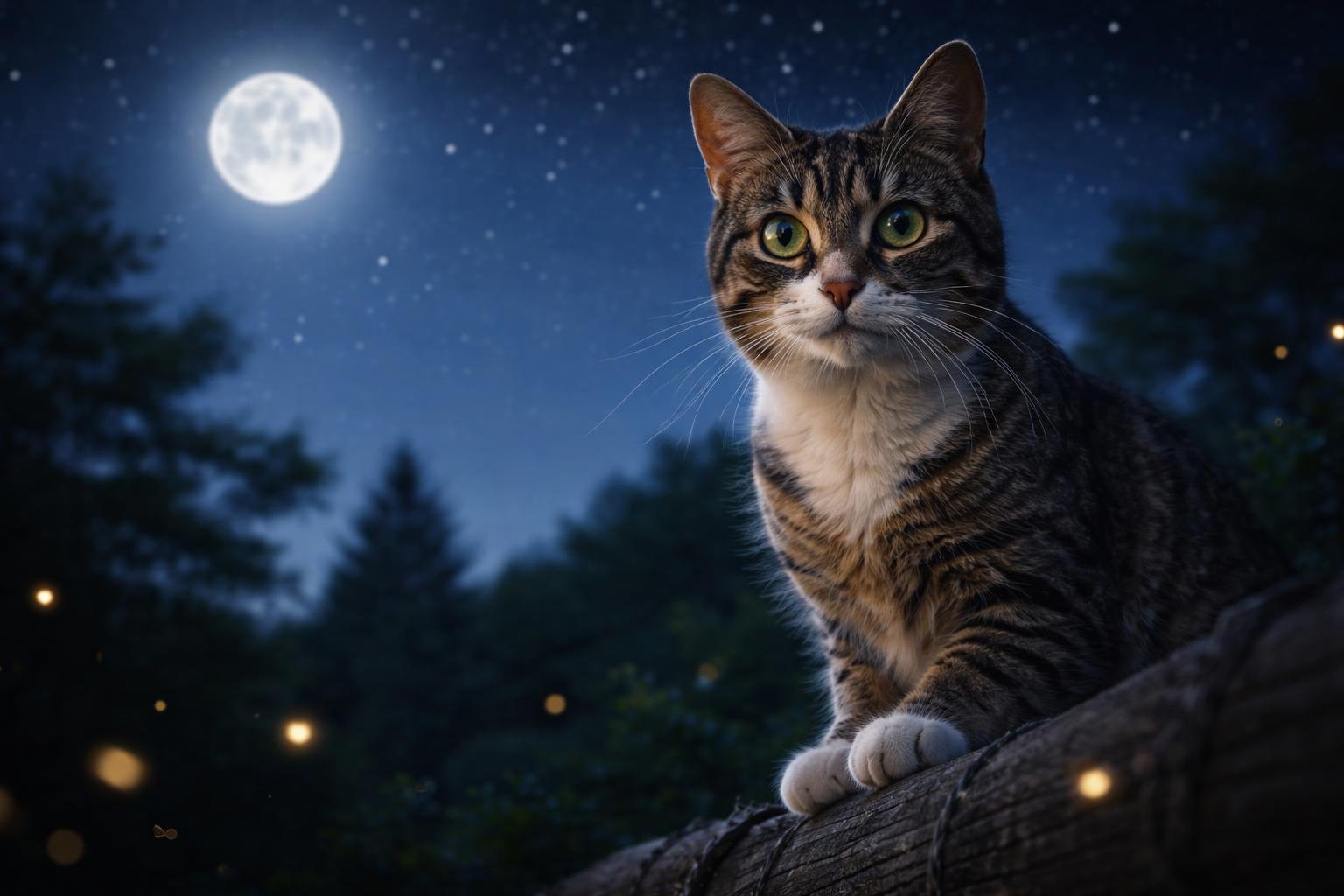
Cats are not nocturnal but rather crepuscular, meaning they are naturally most active during dawn and dusk. This crepuscular behavior pattern aligns with their wild ancestors’ hunting schedules, when prey animals were most available during twilight hours. Understanding this natural rhythm helps explain why your cat may wake you up early in the morning or race around the house in the evening.
While cats sleep between 12-16 hours per day, their sleep and wake patterns can be influenced by your household routine and environment. Learning about your cat’s biological clock and how domestic life shapes their behavior can help you manage nighttime disturbances and ensure both you and your feline companion get adequate rest.
Key Takeaways
- Cats are crepuscular animals that are naturally most active at dawn and dusk rather than being truly nocturnal
- Domestic cats typically sleep 12-16 hours daily and their activity patterns can be adjusted through daytime play and routine
- Persistent nighttime activity may indicate boredom or attention-seeking behavior that can be managed with environmental enrichment
Are Cats Nocturnal Or Crepuscular?
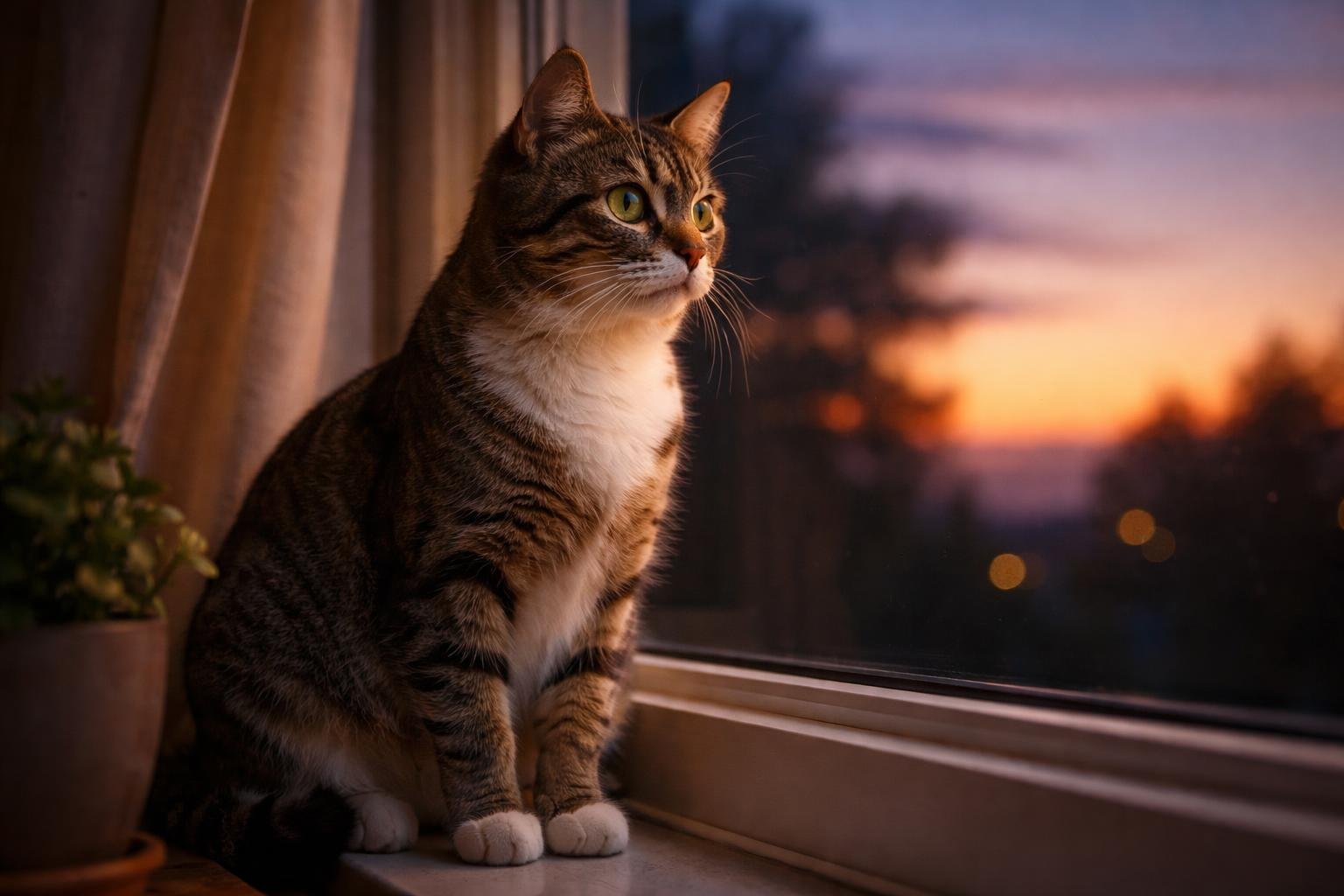
Cats are crepuscular animals, not nocturnal, meaning they’re most active during dawn and dusk rather than throughout the night. This natural rhythm aligns with the hunting patterns of their wild ancestors and explains why your cat may seem particularly energetic during twilight hours.
Understanding Nocturnal vs. Crepuscular Patterns
Nocturnal animals are most active during nighttime hours and sleep throughout the day. Common examples include owls, bats, and raccoons that conduct most of their hunting and activity in darkness.
Crepuscular animals follow a different pattern entirely. They experience peak activity levels during twilight periods at dawn and dusk. These animals typically rest during both the middle of the day and the middle of the night.
Cats are crepuscular, which means they naturally become more alert and active when the sun rises and sets. During these twilight hours, your cat’s energy levels increase as their internal clock triggers hunting instincts.
This pattern differs significantly from diurnal animals like humans, who are most active during daylight hours. Understanding these distinctions helps explain why your cat’s schedule may not match yours.
Why Cats Are Commonly Mistaken as Nocturnal
Many cat owners observe their pets running around the house at night and assume cats are nocturnal animals. However, this nighttime activity often occurs because cats sleep frequently throughout the day and have energy to burn during evening hours.
Your cat is polyphasic, meaning they take multiple naps throughout a 24-hour period rather than sleeping in one long stretch. This sleeping pattern creates the illusion of nocturnal behavior when cats wake up during the night.
Additionally, cats aren’t diurnal like humans, so they don’t follow your daytime schedule. When you’re asleep at 2 AM, your cat may simply be between nap cycles and ready to play. Indoor cats often adapt their schedules somewhat to match their owners, but their natural crepuscular tendencies remain.
How Cats Compare to Other Crepuscular Animals
Common crepuscular animals include:
- Rabbits
- Deer
- Rodents
- Some big cats (lions and cougars)
These animals share the twilight activity pattern because dawn and dusk offer strategic advantages. The low light conditions provide enough visibility for hunting while offering cover from predators.
Prey animals like rabbits and rodents are crepuscular, which explains why predatory cats evolved the same pattern. Your domestic cat retains these ancestral hunting instincts even though they eat from a bowl.
Big cats demonstrate this connection clearly. Lions and cougars are also crepuscular, hunting primarily during twilight hours when their prey is most active. Your house cat exhibits the same biological programming, just directed at toys instead of wildlife.
The Science Behind Cat Sleep Cycles
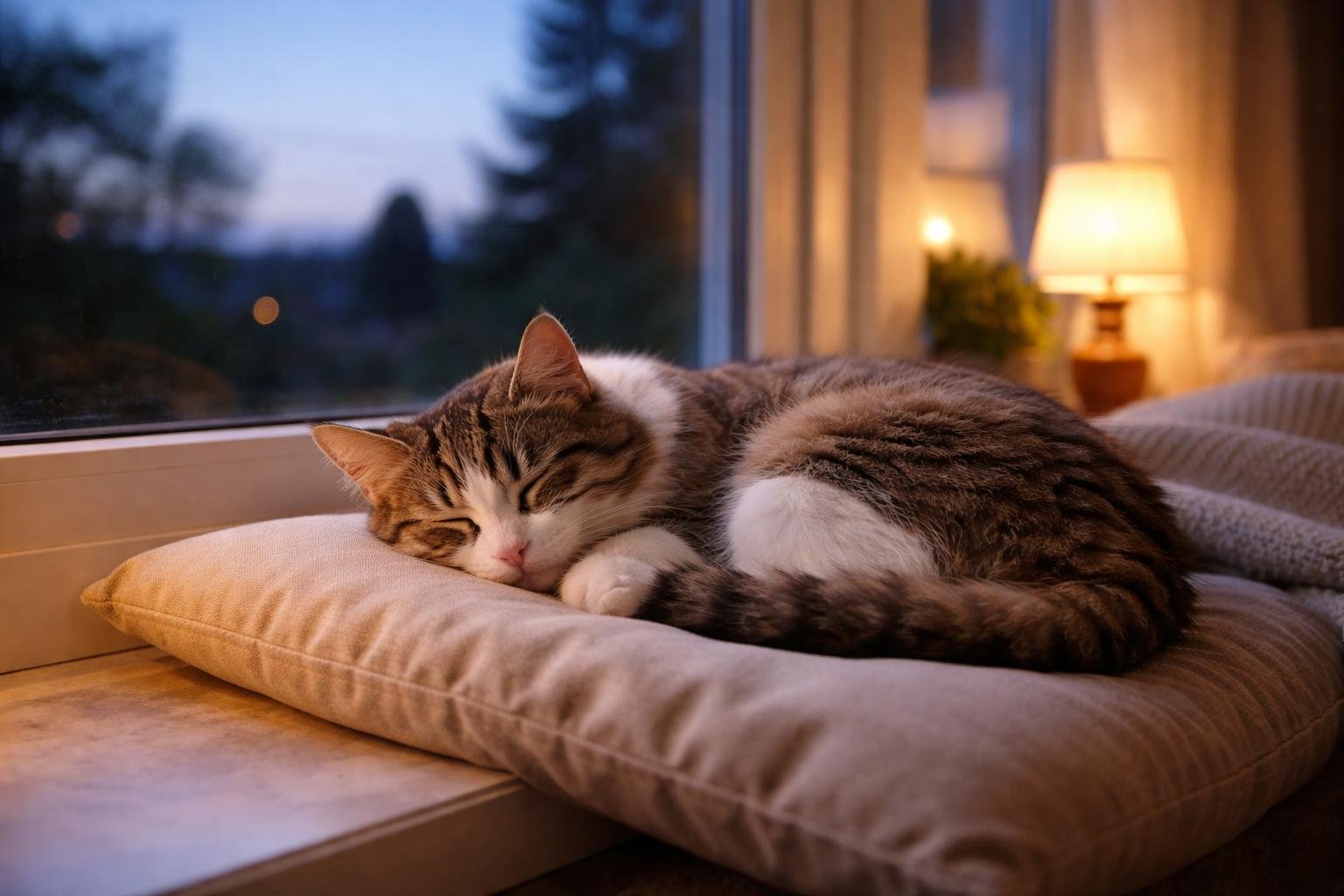
Cats follow biological rhythms that differ significantly from human sleep patterns, with activity levels tied to their evolutionary history as hunters. Their sleep cycles are regulated by internal clocks that respond to light levels and prey availability rather than a strict day-night schedule.
Natural Activity Peaks at Dawn and Dusk
Your cat experiences heightened alertness during twilight hours because cats are crepuscular animals, not truly nocturnal. This means their natural activity peaks occur at dawn and dusk when many small prey animals are most active.
During these crepuscular periods, your cat’s body temperature rises slightly, metabolism increases, and sensory awareness sharpens. These physiological changes prepare them for hunting activity. Between these active windows, cats typically sleep 12-16 hours per day in multiple short cycles rather than one long continuous rest period.
The crepuscular pattern explains why your cat may wake you at 5 AM or become energetic around sunset. Understanding cat activity cycles reveals that this behavior aligns with their biological programming rather than deliberate mischief.
Ancestral Hunting Behavior and Low-Light Adaptations
Wild cats evolved to hunt small rodents and birds that emerge during low-light conditions. Your domestic cat retains these ancestral traits, including specialized eyes that function optimally in dim lighting.
Feline eyes contain a high concentration of rod cells for detecting motion in darkness and a reflective layer called the tapetum lucidum that amplifies available light. These adaptations make twilight hunting highly efficient. Your cat’s sleep schedule naturally synchronizes with these optimal hunting times, even though domestic cats no longer need to catch their meals.
The polyphasic sleep pattern cats display—sleeping in short bursts throughout the day—allows them to conserve energy between hunting opportunities. This differs markedly from the monophasic sleep pattern most humans follow.
Cathemeral Patterns and Individual Variation
Some cats display cathemeral activity, meaning they remain active at irregular intervals throughout both day and night. This flexibility allows cats to adjust their schedules based on food availability, household routines, and social factors.
Your individual cat’s activity pattern depends on several variables:
- Age: Kittens and young cats show more nocturnal tendencies
- Feeding schedule: Meal times can shift activity peaks
- Human interaction: Cats often adapt to their owner’s schedule
- Indoor vs outdoor: Outdoor cats follow more traditional crepuscular patterns
Research shows that domestic cats can adjust their circadian rhythms based on environmental cues. If you consistently engage your cat during daylight hours and maintain regular feeding times, their activity pattern may shift to align more closely with yours.
How Domestic Life Influences Cat Activity
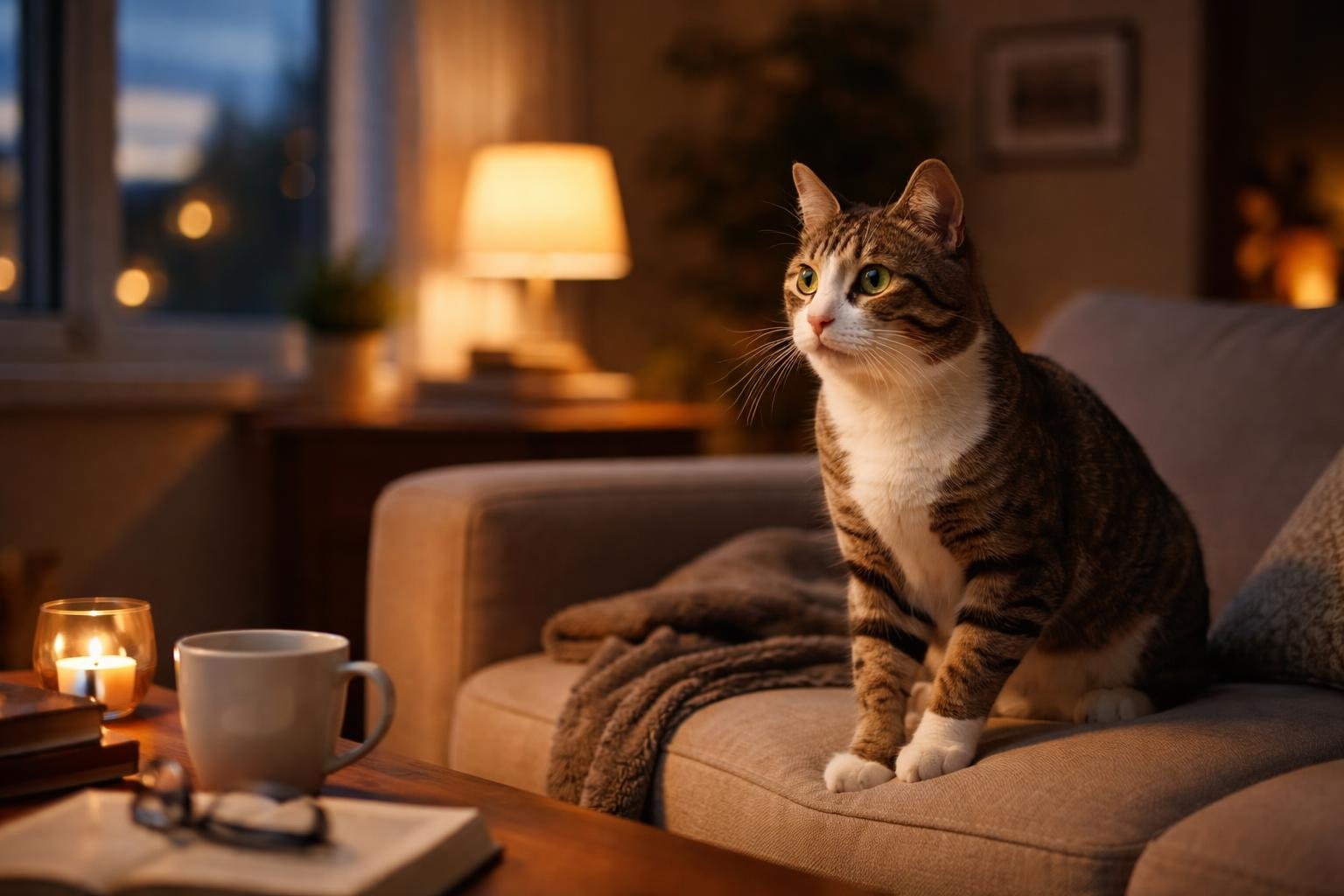
Living with humans significantly alters when and how cats expend their energy throughout the day. Feeding times are among the strongest drivers of daily activity, while your presence and household environment reshape natural crepuscular patterns.
Human Schedules and Feeding Times
Your daily routine directly shapes your cat’s activity cycles. Cats adapt their natural crepuscular tendencies to align with when you’re available for interaction and meals. When you establish regular feeding times, your cat anticipates these periods and becomes more active in the hours leading up to meals.
Artificial lighting blurs natural day-night cues and shifts cat activity later into the evening. Your household lights extend perceived daylight hours, making cats less dependent on dawn and dusk as activity triggers. This means your cat may stay awake watching television with you at night rather than settling down at sunset.
The interaction you provide throughout the day also matters. If you work from home and engage with your cat during traditional human waking hours, your cat will likely shift more activity to daytime rather than maintaining strictly crepuscular patterns.
Environmental and Breed Factors
Whether your cat lives exclusively indoors or has outdoor access dramatically affects activity patterns. Indoor cats show longer midday activity troughs with low activity from 12:00-20:00, while outdoor cats maintain more prolonged activity throughout the day and night.
Indoor environments limit natural hunting opportunities and environmental stimulation. Your cat receives all food from you rather than needing to hunt during optimal crepuscular hours when prey is active. Temperature-controlled homes eliminate the need to seek cooler rest areas during hot afternoons.
Cats with outdoor garden access demonstrate different behavioral patterns. They stay active after afternoon human interaction periods and show activity levels more similar to unowned cats.
Impact of Boredom and Stimulation
Some house cats show more persistent nighttime activity due to boredom or attention-seeking behavior, but this doesn’t make cats nocturnal by nature. When your cat lacks sufficient daytime enrichment, excess energy manifests as nighttime activity that disrupts your sleep.
Understimulated cats often sleep excessively during the day when you’re busy or away. They then wake at night seeking interaction, food, or entertainment. This creates a cycle where your cat’s activity pattern becomes increasingly misaligned with yours.
Providing adequate play sessions, puzzle feeders, and environmental enrichment helps synchronize your cat’s energy expenditure with your schedule. Interactive play before bedtime can reduce pre-dawn meowing and nighttime disturbances.
Typical Daily Sleep and Activity Patterns in Cats
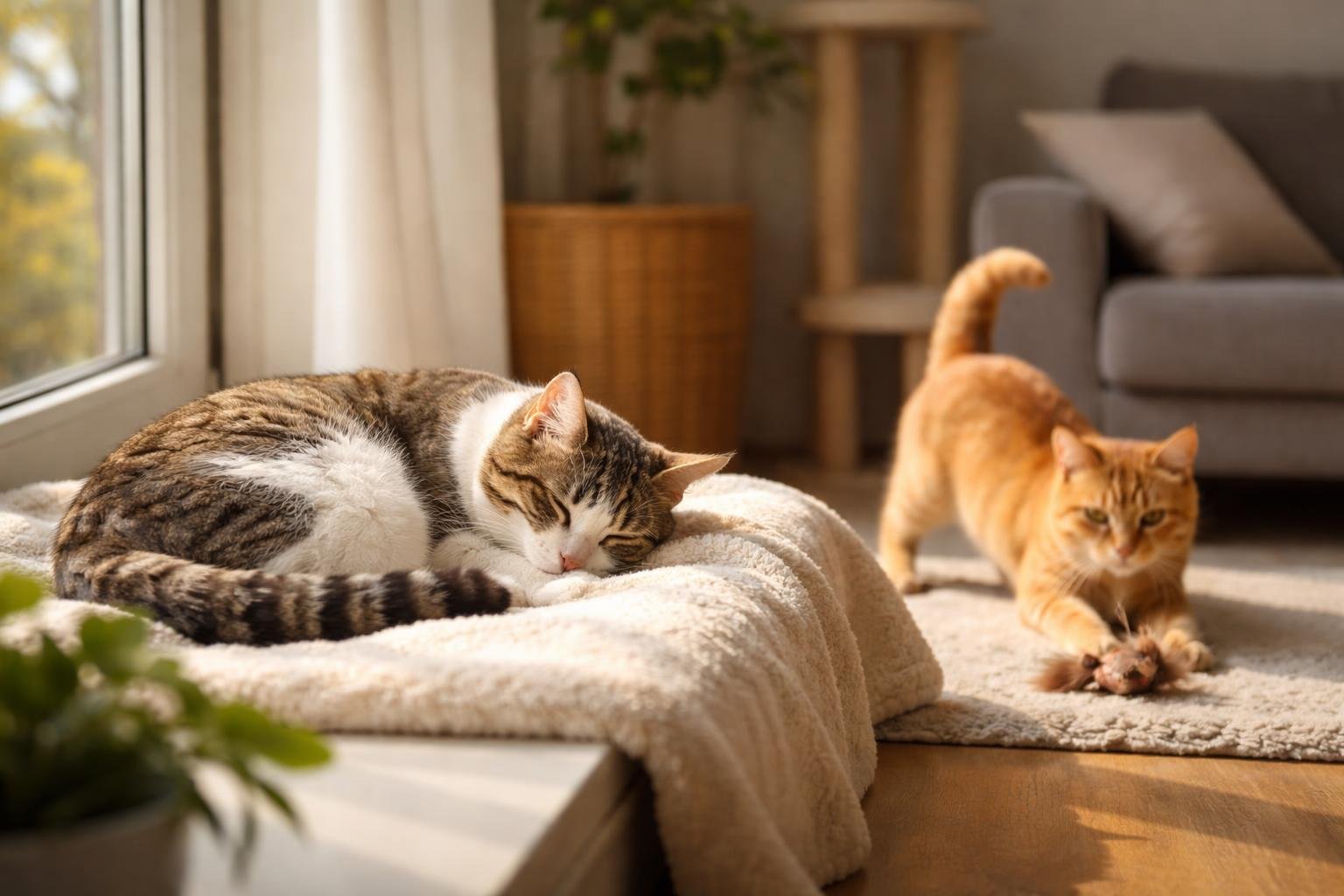
Cats sleep between 12 to 16 hours per day on average, distributing this rest throughout multiple short periods rather than one long stretch. Their crepuscular nature means they’re most active during dawn and dusk, with sleep and wake cycles that differ significantly from human patterns.
The Role and Duration of Cat Naps
Cat naps serve as your cat’s primary method of conserving energy for hunting activities, even in domestic settings. These brief sleep sessions typically last 15 to 30 minutes and allow your cat to remain alert to potential threats or opportunities in their environment.
During these naps, your cat experiences light sleep where their muscles stay relatively tense and their ears continue rotating toward sounds. This state accounts for roughly 75% of your cat’s total sleep time. The remaining 25% involves deep sleep, where your cat’s body fully relaxes and they may twitch or move their paws as they dream.
Young kittens and senior cats often sleep even longer than the typical 12 to 16 hours, sometimes reaching up to 20 hours per day. Your cat’s napping pattern allows them to wake quickly and be ready for action within seconds.
Polyphasic Sleep Versus Human Sleep
Your cat practices polyphasic sleep, meaning they sleep multiple times throughout a 24-hour period rather than in one consolidated block. This contrasts sharply with your monophasic or biphasic sleep pattern as a human.
Cats crepuscular activity peaks align with their natural hunting instincts, as prey animals are most active during twilight hours. Between these active periods, your cat takes numerous short naps rather than sleeping through the night like you do. This fragmented sleep schedule explains why your cat may wake you up at 5 AM or become playful when you’re trying to sleep.
Key differences include:
- Humans: 7-9 hours of continuous sleep
- Cats: 12-16 hours split into multiple sessions
- Human deep sleep: 20-25% of total sleep
- Cat deep sleep: 25% of total sleep, but in shorter bursts
Common Signs of Cat Wakefulness
You can identify when your cat is awake and alert through several distinct behavioral cues. Their pupils dilate or constrict based on lighting and interest level, while their ears rotate independently to track sounds in different directions.
An awake cat displays a raised tail position, often with a slight curve at the tip, indicating confidence and alertness. Your cat’s whiskers point forward when they’re engaged with their environment and investigating something interesting.
Physical indicators of wakefulness:
- Kneading with front paws
- Grooming behavior
- Vocalization (meowing, chirping, or trilling)
- Stalking or pouncing movements
- Rapid tail flicking or swishing
You’ll notice your cat’s body posture becomes more upright and their movements grow deliberate when they transition from rest to activity. These signs become particularly pronounced during dawn and dusk when your cat’s energy levels naturally peak.
Managing Nighttime Cat Activity
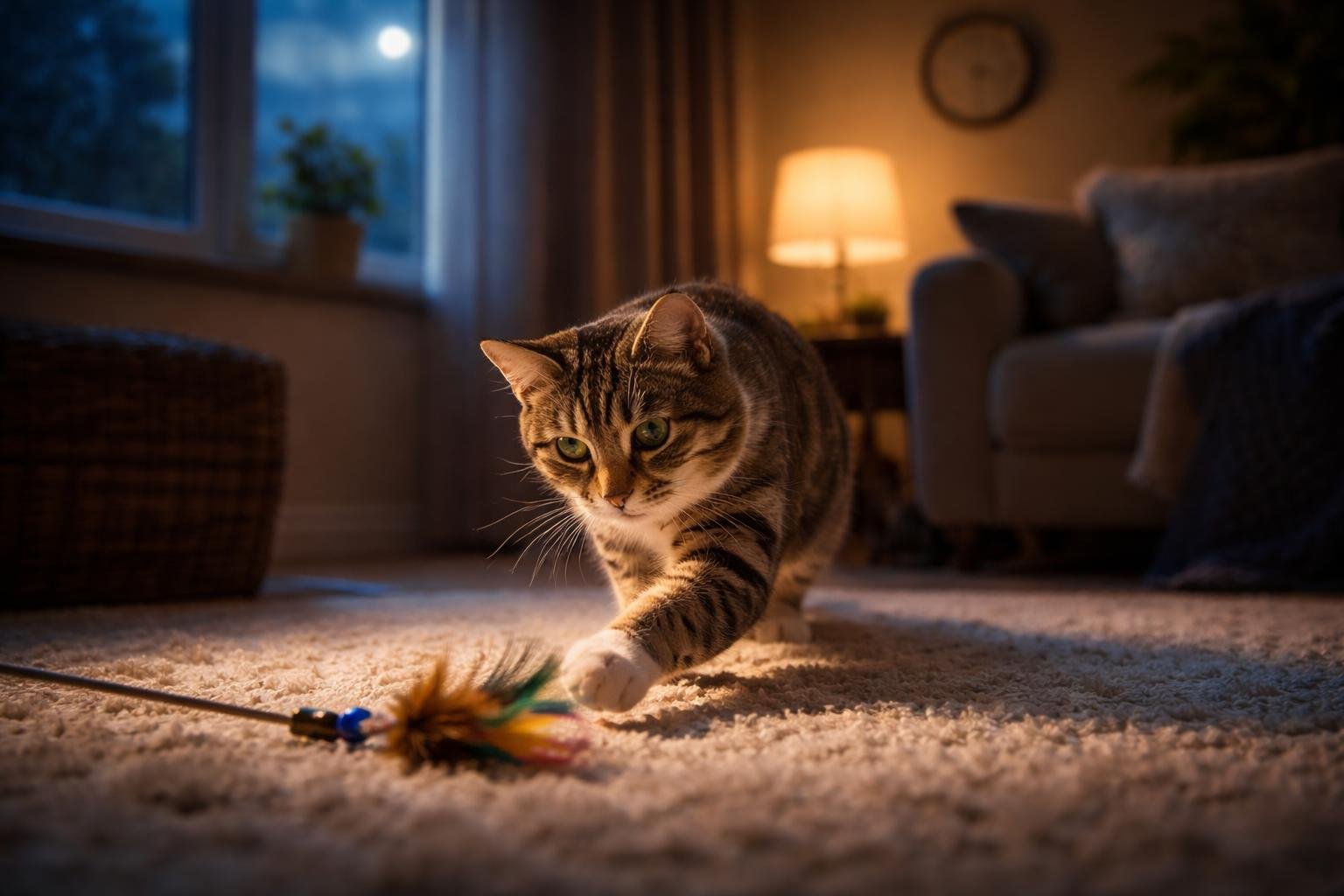
Redirecting your cat’s energy during daylight hours, timing meals strategically, and creating an environment conducive to rest can significantly reduce disruptive nighttime behaviors. These approaches work together to align your cat’s activity patterns with your sleep schedule.
Encouraging Adequate Daytime Exercise
Your cat needs sufficient physical and mental stimulation during the day to reduce nighttime restlessness. Interactive play sessions scheduled before you leave for work and again in the evening help tire your cat out. Aim for at least two 15-20 minute play sessions using toys that mimic prey movements, such as feather wands or laser pointers.
Providing environmental enrichment keeps your cat engaged when you’re not available to play. Cat trees, window perches, puzzle feeders, and rotating toy selections prevent boredom that often leads to excessive cat naps during the day. Since cats sleep an average of 12-16 hours daily, you want to ensure those rest periods don’t all occur while you’re at work.
If your cat is the only pet in the household, consider ways to increase daytime activity since solitary cats tend to sleep more during your absence. Background videos designed for cats or automated toys can provide stimulation throughout the day.
Adjusting Feeding Schedules
Timing your cat’s meals influences their sleep-wake cycle significantly. Feeding a substantial meal right before your bedtime encourages your cat to groom and settle down for sleep, mimicking the natural pattern of hunting, eating, grooming, and sleeping.
Split your cat’s daily food portion into multiple smaller meals rather than leaving food available all day. This prevents hunger from waking your cat (and you) in the early morning hours. Many owners find success with a feeding schedule that includes breakfast, dinner, and a final meal 30-60 minutes before bed.
Automatic feeders programmed to dispense food at specific times can help if your cat wakes you demanding breakfast. This breaks the association between your movement and food availability, reducing early morning pestering.
Tools and Strategies to Promote Nighttime Rest
Creating a sleep-friendly environment helps your cat settle during nighttime hours. Provide a comfortable sleeping area in your bedroom if your cat enjoys your company, or in a quiet space away from windows if outside activity triggers alertness.
Managing your cat’s nighttime environment includes minimizing stimulation during evening hours. Dim lights, reduce noise levels, and avoid engaging with nighttime vocalizations or play requests, which only reinforce the behavior.
Helpful tools include:
- Calming pheromone diffusers that promote relaxation
- Blackout curtains to reduce dawn light stimulation
- White noise machines to mask outdoor sounds
- Heated pet beds for comfort during rest
If nighttime activity persists despite these interventions, especially if accompanied by excessive vocalization, consult your veterinarian to rule out medical issues like hyperthyroidism or cognitive dysfunction in older cats.
When To Be Concerned About Your Cat’s Sleep Habits
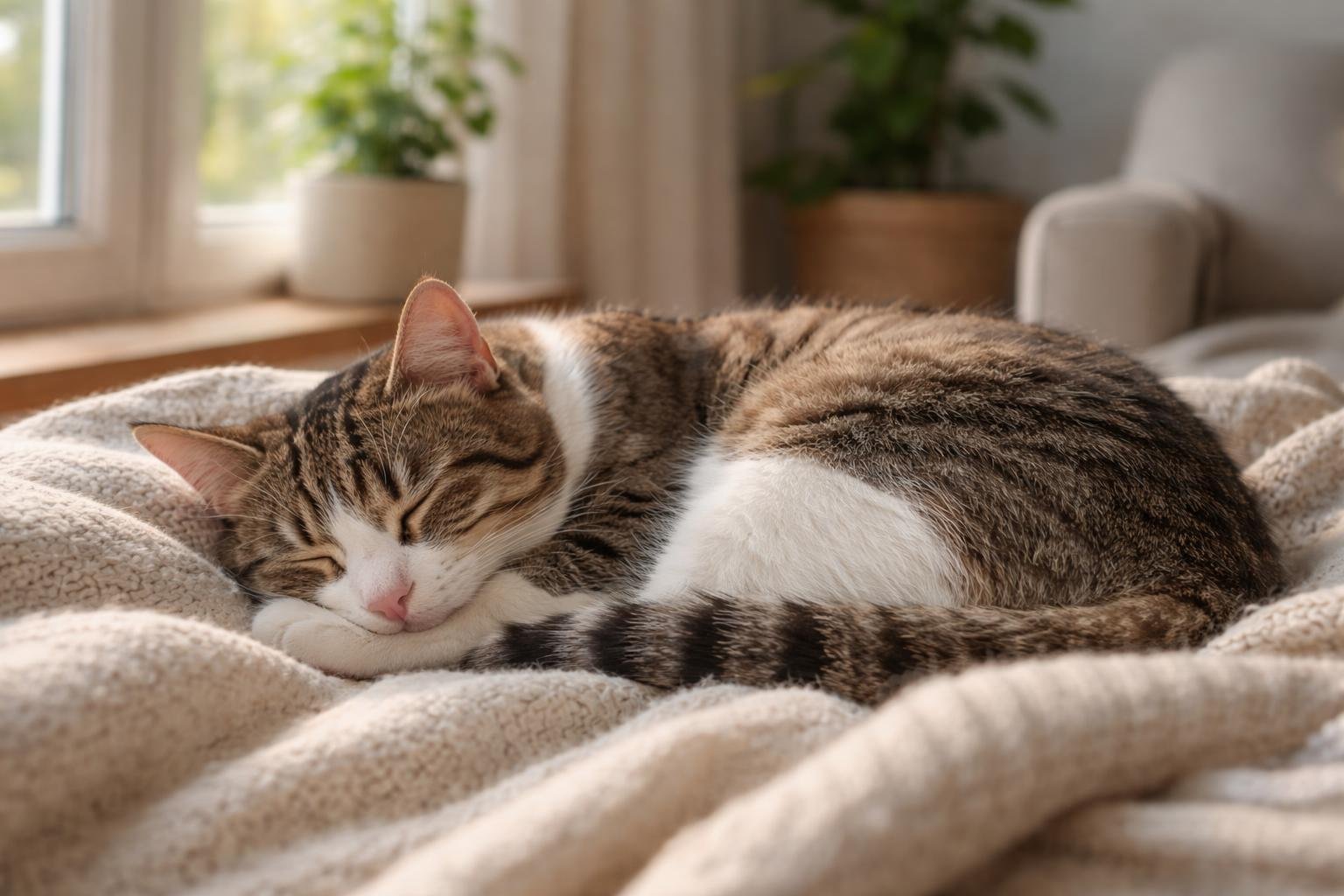
While cats crepuscular nature means they’re naturally active at dawn and dusk, significant changes in sleep patterns or excessive nighttime activity can indicate health problems. Recognizing abnormal sleep behaviors helps you identify when your cat needs medical attention.
Signs of Underlying Health or Behavioral Issues
Sudden changes in your cat’s sleep schedule warrant attention. If your previously calm cat becomes excessively active at night or stops sleeping through quiet hours, this shift could signal pain, anxiety, or cognitive dysfunction.
Watch for these warning signs:
- Increased vocalization at night, especially loud crying or yowling
- Disorientation or confusion when awake during normal rest periods
- Excessive sleepiness beyond the typical 12-16 hours daily
- Restlessness with inability to settle down for sleep
- Pacing or wandering aimlessly during nighttime hours
Senior cats may develop cognitive decline similar to dementia, causing disrupted sleep-wake cycles. Hyperthyroidism, pain from arthritis, or urinary issues can also keep cats awake at night. Young cats showing extreme lethargy during their typically active periods may have infections or other medical conditions.
When to Consult a Veterinarian
Schedule a veterinary exam if your older cat’s sleep habits suddenly change. Any abrupt deviation from your cat’s normal pattern requires professional evaluation, especially if accompanied by other symptoms.
Contact your vet immediately if you notice:
- Weight loss or gain alongside sleep changes
- Reduced appetite or increased thirst
- Litter box accidents during the night
- Aggressive behavior when disturbed during rest
- Limping or signs of physical discomfort
Your veterinarian can rule out thyroid problems, kidney disease, diabetes, and neurological conditions. Early intervention for changes in your cat’s sleeping habits often leads to better outcomes and helps maintain quality of life.