Kitten Teething Relief: Signs, Stages, and Safe Chew Toys
Your tiny kitten’s sharp bites and constant chewing might seem like bad behavior, but these actions often signal a normal part of growing up. Kitten teething happens in two phases as baby teeth emerge and then fall out to make room for adult teeth, typically occurring between 2 weeks and 7 months of age. Kittens experience teething discomfort that you can ease with safe chew toys, proper dental care, and knowledge about what to expect during each stage.
Understanding the teething process helps you support your kitten through this uncomfortable period. You’ll learn to spot the difference between normal teething behavior and signs that require a vet visit. The right approach can prevent dental problems and turn this challenging time into an opportunity to build healthy habits that last your cat’s entire life.
This guide covers everything from recognizing teething symptoms to choosing appropriate relief options for sore gums. You’ll discover specific age milestones, safe toys your kitten can chew, and practical ways to make teething easier for both of you.
Understanding Kitten Teething and Dental Development

Kittens go through two distinct teething phases where they develop 26 baby teeth first, then transition to 30 permanent adult teeth between 3 and 7 months of age. Baby teeth are smaller and sharper than adult teeth, and the teething process causes kittens to chew more as they seek relief from sore gums.
What Is Kitten Teething?
Kitten teething is the natural process where your kitten’s teeth emerge through the gums and later fall out to make room for adult teeth. Your kitten experiences two teething periods during their first year of life.
The first period happens when baby teeth, also called deciduous teeth, break through the gums. This starts around 2 weeks of age and continues until about 8 weeks old.
The second period occurs when baby teeth fall out and permanent teeth replace them. This transition typically begins around 3.5 to 4 months old and finishes by 6 to 7 months of age. Most kittens swallow their baby teeth as they fall out, so you might not find them around your home.
Kitten Teeth Anatomy and Diagram
Your kitten develops 26 baby teeth total, which include 12 incisors (small front teeth), 4 canines (long pointed teeth), and 10 premolars. Adult cats have 30 permanent teeth consisting of 12 incisors, 4 canines, 10 premolars, and 4 molars.
Baby teeth look different from adult teeth in several ways. They appear smaller, sharper, and more translucent than permanent teeth.
Here’s the timeline for kitten teeth development:
Baby Teeth Eruption:
- 2-4 weeks: Incisors appear
- 3-4 weeks: Canines emerge
- 4-6 weeks: Premolars come in
- 8 weeks: All 26 baby teeth are present
Adult Teeth Replacement:
- 3.5-4 months: Adult incisors replace baby incisors
- 4-5 months: Adult canines, premolars, and molars begin erupting
- 5-7 months: Full set of 30 adult teeth complete
Why Kittens Chew During Teething
Kitten chewing increases during teething because it helps soothe irritated and painful gums. When new teeth push through the gums or baby teeth loosen, your kitten experiences discomfort that creates a natural urge to chew on objects.
The pressure from chewing provides temporary relief by massaging sore gum tissue. This behavior is normal and beneficial for your kitten’s dental development, so you shouldn’t try to stop it completely.
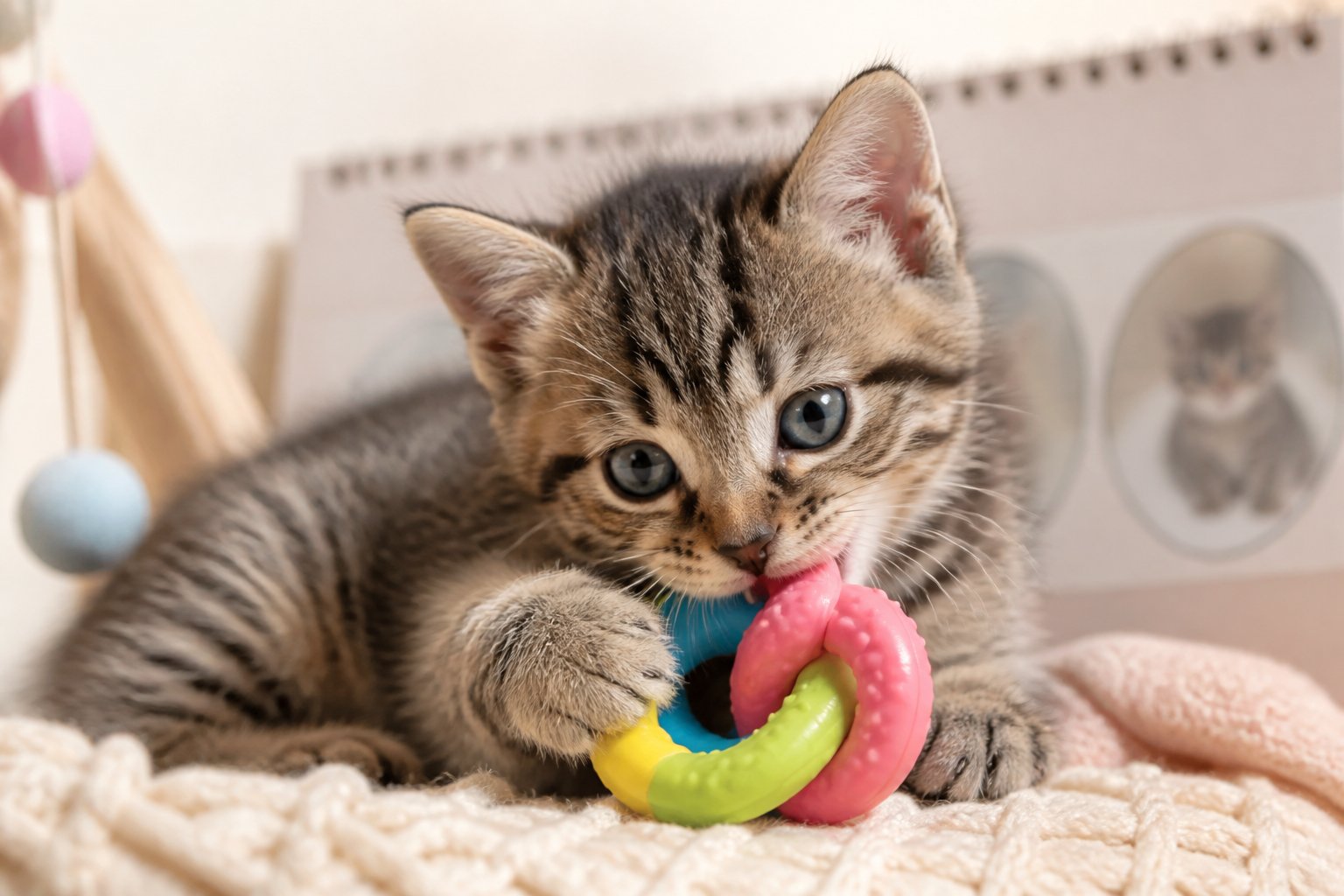
Your kitten may chew on soft items like blankets, toys, or even your hands during this time. The key is redirecting this natural chewing behavior toward appropriate items rather than allowing your kitten to bite hands or dangerous household objects. Providing proper chew toys gives your teething kitten a safe outlet for this instinct.
Kitten Teething Timeline and Age Milestones
Kittens develop two sets of teeth during their first seven months of life. Your kitten will first grow baby teeth, which then fall out to make room for larger adult teeth as their jaw grows.
Eruption of Baby Teeth
Kittens are born without any teeth because they only need their mother’s milk at birth. Their first teeth start appearing when they are 2 to 4 weeks old.
The incisors erupt first at the front of the jaw. Your kitten will develop six incisors on top and six on the bottom. These are the small teeth you’ll notice at the very front of their mouth.
Between 3 to 4 weeks, the canines come in next. These are the long, pointed teeth located just outside the incisors. Kittens have four canines total, with one on each side of both the upper and lower jaws.
The premolars are the last baby teeth to appear between 4 to 6 weeks of age. Your kitten will have three premolars on each side of their upper jaw and two on each side of their lower jaw. By 8 weeks old, all 26 baby teeth are usually in place.
Transition to Adult Teeth
The kitten teething process for adult teeth begins around 3.5 to 4 months of age. This is when baby teeth start falling out to make room for permanent teeth.
Your kitten’s baby incisors are the first to go. Adult incisors begin replacing them at this stage. You might find tiny baby teeth around your home, but kittens usually swallow them.
Between 4 to 5 months, the baby canines and premolars fall out. Adult canines, premolars, and molars start erupting during this time. Molars are brand new teeth that weren’t present in the baby set.
By 5 to 7 months, your kitten should have their complete set of 30 adult teeth. This includes 12 incisors, 4 canines, 10 premolars, and 4 molars.
Sometimes a baby tooth doesn’t fall out before the adult tooth emerges. These are called persistent deciduous teeth or retained baby teeth, which can cause crowding and dental problems.
Kitten Teething Stages by Age
| Age | Teething Stage | What Happens |
|---|---|---|
| Birth | No teeth | Kittens are born toothless |
| 2-4 weeks | First baby teeth | Incisors appear |
| 3-4 weeks | More baby teeth | Canines erupt |
| 4-6 weeks | Final baby teeth | Premolars come in |
| 8 weeks | Complete baby set | All 26 baby teeth present |
| 3.5-4 months | Adult teeth start | Baby incisors fall out, adult incisors emerge |
| 4-5 months | Major transition | Canines and premolars replaced, molars appear |
| 5-7 months | Complete adult set | All 30 adult teeth present |
How Long Does Kitten Teething Last?
The entire kitten teething timeline spans from about 2 weeks old until 6 to 7 months of age. This means your kitten will be teething for roughly six months total.
The first teething period lasts from 2 weeks to 8 weeks as baby teeth come in. The second teething period runs from 3.5 months to about 7 months as adult teeth replace baby teeth. The second period tends to cause more discomfort because teeth are falling out and new ones are pushing through.
Most kittens experience the worst teething symptoms between 4 to 5 months old. This is when the most teeth are being replaced at once.
Recognizing Signs and Symptoms of Teething in Kittens

Kittens show several telltale signs when they start teething, from physical changes in their mouth to noticeable shifts in behavior. Learning to spot these symptoms helps you provide the right support during this uncomfortable stage.
Common Kitten Teething Symptoms
Kitten teething symptoms typically appear around 3 to 4 months of age when baby teeth begin falling out. Your kitten may drool more than usual as their gums become irritated. You might notice a distinct smell on their breath, often called “kitten breath,” which happens during the teething process.
Some kittens paw at their face or rub their mouth against objects to relieve discomfort. You may find tiny baby teeth around your home, though most kittens swallow them naturally. Bad breath combined with drooling signals that your kitten’s adult teeth are pushing through the gums.
Physical Signs to Watch For
Check your kitten’s mouth for red or swollen gums where new teeth are emerging. The gums may look inflamed or tender to the touch. You’ll see gaps where baby teeth have fallen out and small white points where adult teeth are breaking through.
Your kitten might have difficulty eating hard food during this time. They may drop food from their mouth or chew more slowly than usual. Some kittens become reluctant to eat because chewing causes pain.
Baby teeth look smaller and sharper than adult teeth. They also appear more translucent compared to the permanent teeth replacing them.
Behavioral Indicators of Discomfort
Your kitten will likely show a strong desire to chew on soft objects to soothe their irritated gums. This is a normal response to teething pain. Kitten chewing increases noticeably during the 3 to 7 month period.
Common behavioral changes include:
- Increased irritability or crankiness
- Chewing on furniture, cords, or household items
- Biting at toys more aggressively
- Showing less interest in play
- Acting more sensitive when you touch their face
Your kitten may seem more restless or vocal than normal. These mood changes happen because teething causes real discomfort, just like it does in human babies.
Potential Dental Problems and When to Seek Veterinary Care
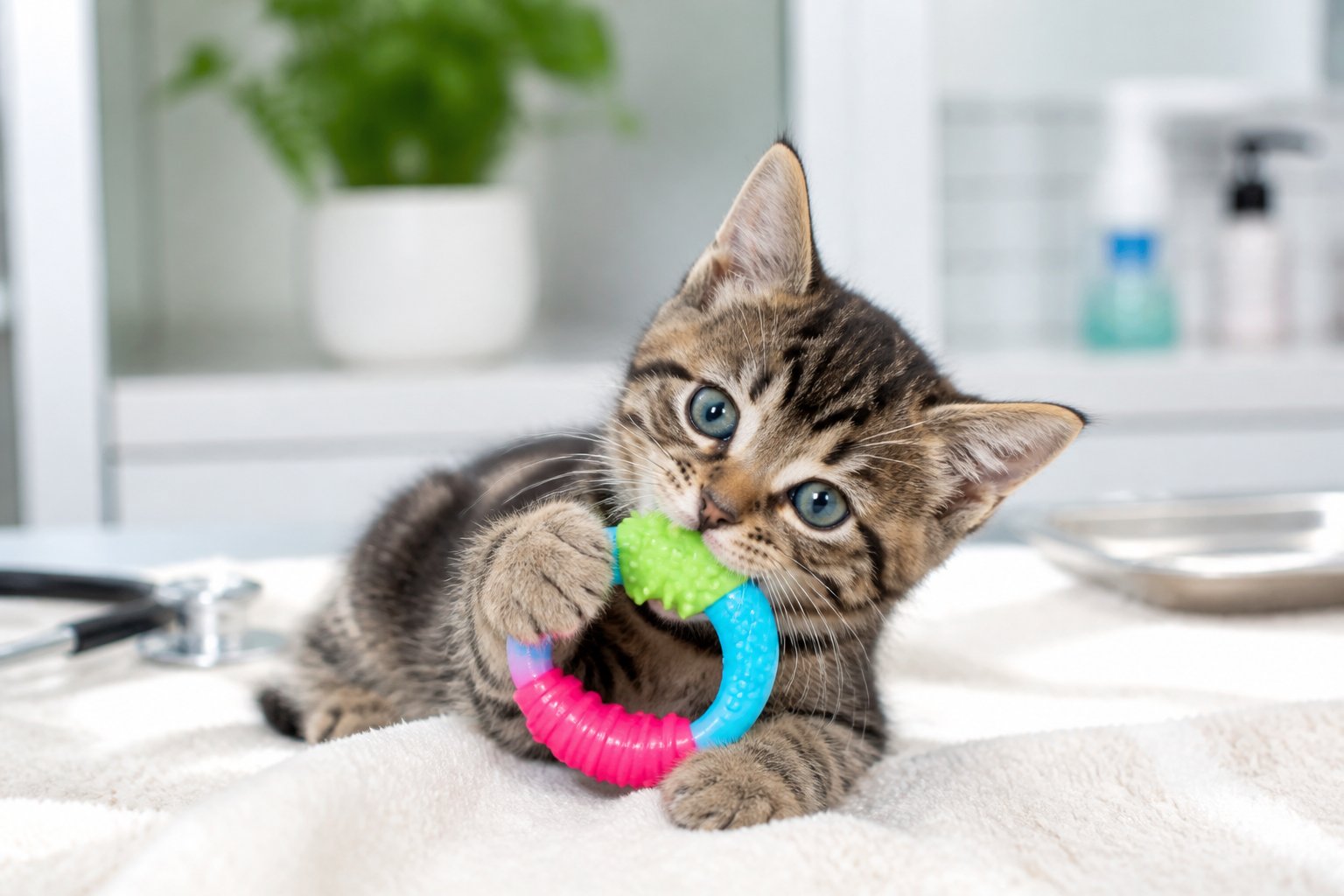
Some kittens experience complications during teething that require professional treatment. Retained baby teeth can cause crowding and lead to serious oral health issues if left untreated.
Retained Baby Teeth and Deciduous Teeth
Retained deciduous teeth occur when baby teeth don’t fall out before adult teeth emerge. This creates a situation where your kitten has two teeth occupying the same space. Persistent deciduous teeth can lead to tooth crowding, abnormal tooth eruption, periodontal disease, wounds in the mouth, or infection.
The canine teeth are most commonly affected by this condition. You may notice a smaller, sharper tooth next to a larger adult tooth in the same position.
Your veterinarian will need to remove persistent deciduous teeth to allow proper adult tooth development. The procedure typically requires anesthesia and should be done as soon as the problem is identified. Waiting too long can cause permanent damage to your kitten’s jaw alignment and bite pattern.
Red Flags That Need Medical Attention
Contact your veterinarian if you notice bleeding gums that lasts more than a few minutes or excessive drooling that soaks your kitten’s fur. Refusal to eat for more than 24 hours during teething requires immediate attention.
Watch for swelling around the face or jaw, which may indicate an abscess or infection. Broken teeth or teeth growing at odd angles need professional evaluation.
Your kitten should have regular veterinary dental check-ups every 3-4 weeks from 6-8 weeks old through 16-18 weeks old. Foul breath that smells rotten rather than the typical “kitten breath” odor may signal infection. Any signs of severe pain, such as pawing constantly at the mouth or crying when eating, warrant an immediate vet visit.
Safe Kitten Teething Relief Strategies
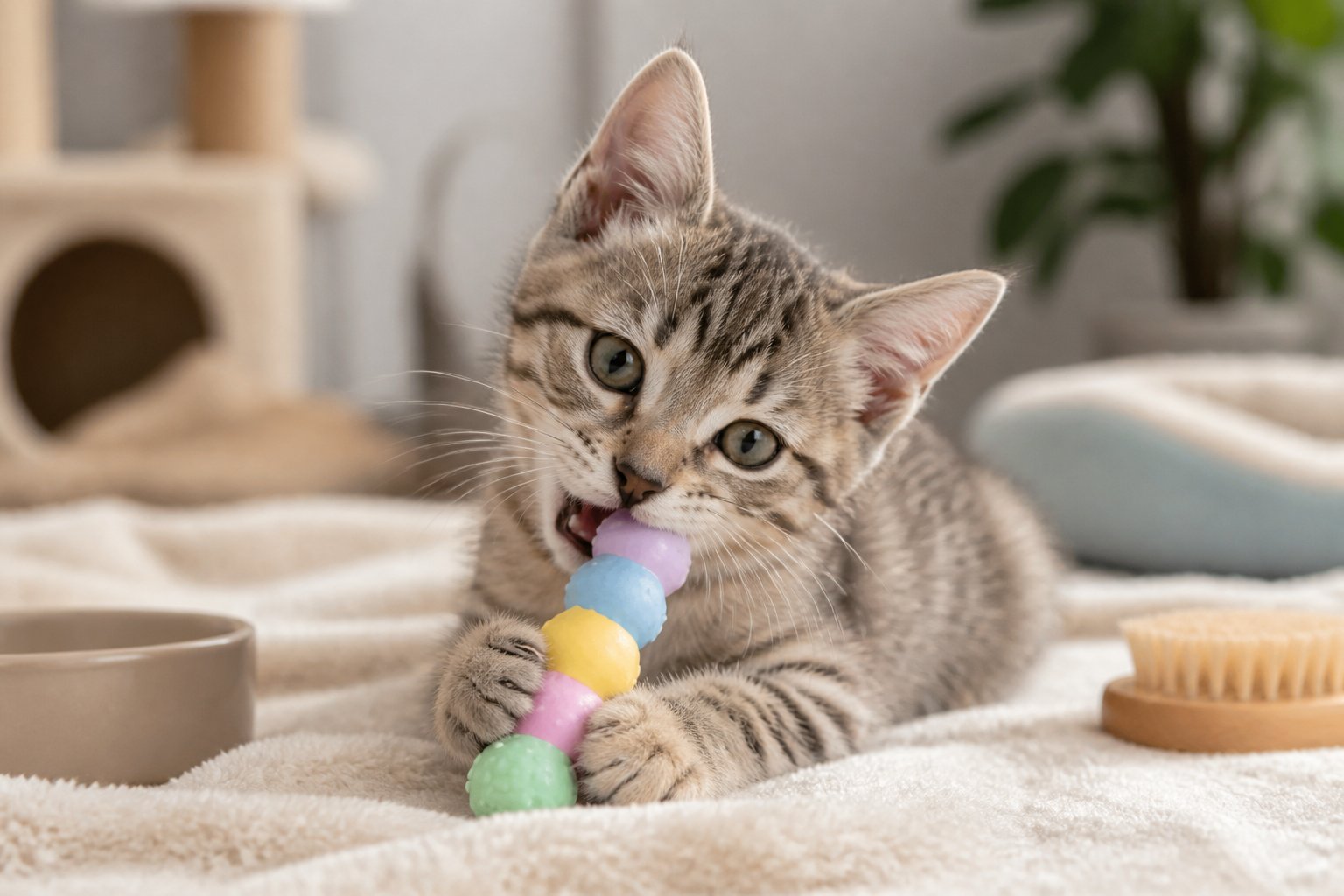
Teething kittens need gentle support to ease their discomfort and protect your belongings from their chewing habits. The right combination of soft foods, appropriate toys, and calm handling can make this developmental phase easier for both you and your kitten.
How to Help a Teething Kitten
You can ease your kitten’s teething discomfort through several simple methods. Gently massaging your kitten’s gums with a clean finger can provide temporary relief from soreness. Keep the sessions brief and use light pressure to avoid causing additional pain.
Cold items offer excellent relief for inflamed gums. Dampen a small washcloth, twist it into a rope shape, and freeze it for 30 minutes. Let your kitten chew on the cold cloth to numb sore areas.
Monitor your kitten’s chewing behavior closely during this time. If you notice excessive drooling, bleeding gums, or refusal to eat, contact your veterinarian. These signs may indicate complications beyond normal teething discomfort.
Soothing Foods and Feeding Tips
Adjusting your kitten’s food can reduce pain during meals. Moistened kibble softens hard food and makes it easier for sore gums to handle. Add warm water or kitten-safe broth to dry food and let it sit for 5-10 minutes before serving.
Wet food naturally requires less chewing effort than dry kibble. You can also slightly chill wet food for added soothing benefits, though avoid making it too cold.
Keep food at room temperature or slightly cooler during teething periods. Very cold food may hurt sensitive teeth, while warm food can increase inflammation.
Safe Chew Toys and Teething Aids
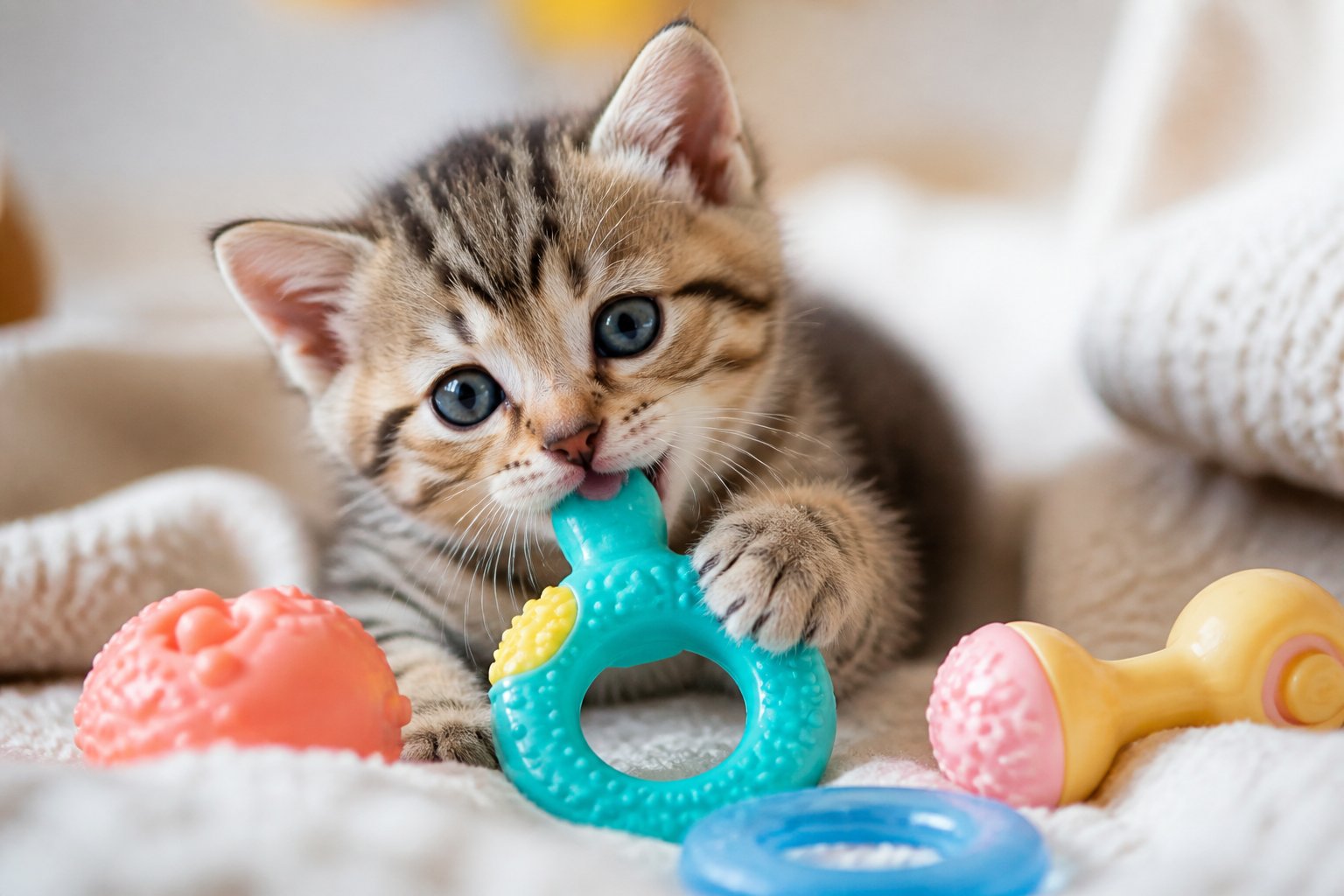
Safe teething toys must be size-appropriate and made from non-toxic materials. Look for kitten-specific chew toys that are small enough for tiny mouths but large enough to prevent choking. Rubber and silicone toys designed for kittens work well because they’re soft on developing teeth.
Avoid hard plastic toys, rawhide, or anything with small parts that could break off. String toys and items with feathers should only be used under supervision since kittens might swallow loose pieces.
The best safe chew toys include:
- Soft rubber dental toys
- Silicone teething rings made for kittens
- Fabric mice filled with catnip
- Small rope toys without fraying ends
Rotate toys every few days to maintain your kitten’s interest. Clean all kitten teething toys regularly with warm water and mild soap to prevent bacteria buildup.
Dental Care Habits and Prevention for Growing Kittens
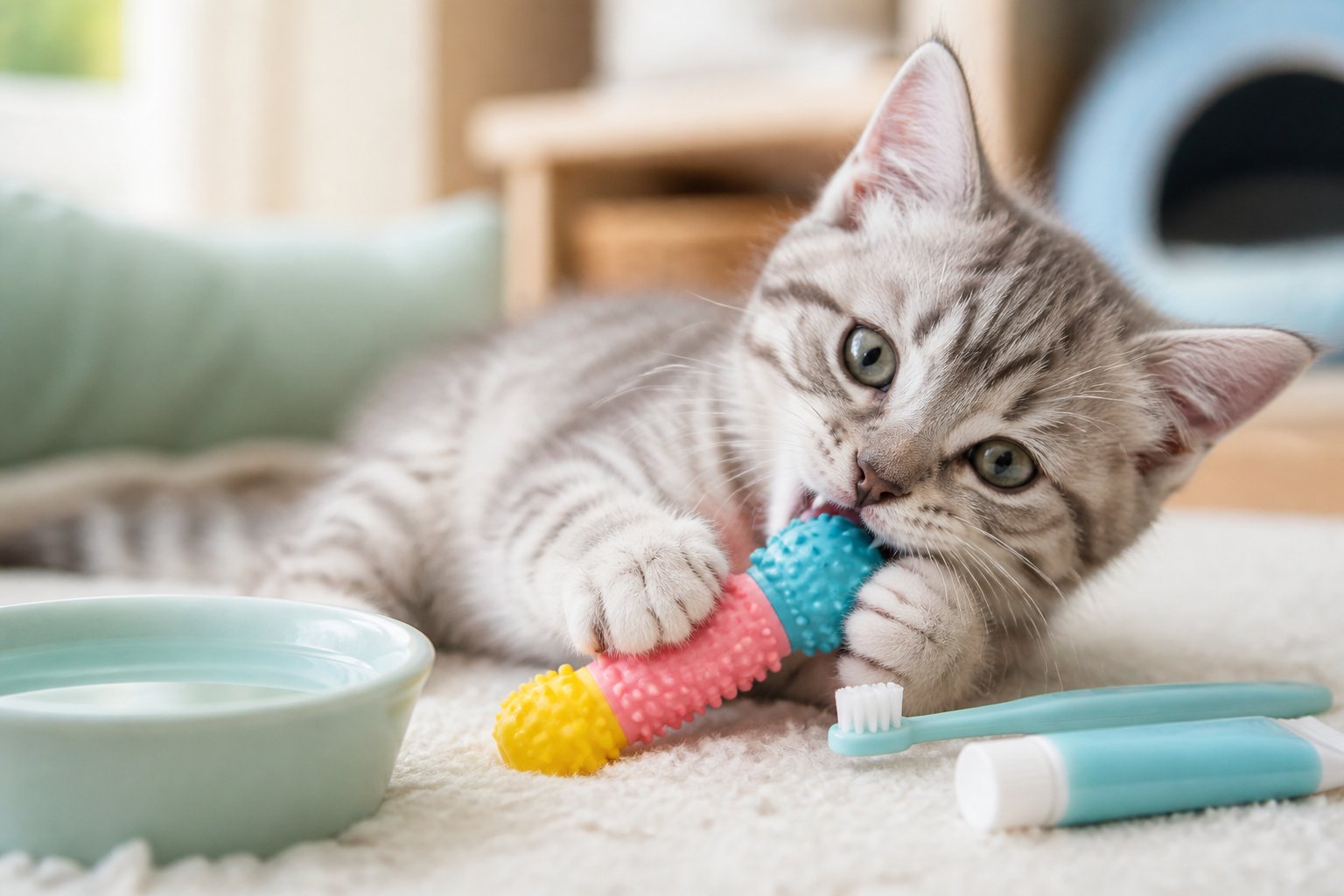
Starting dental care while your kitten is young sets the foundation for healthy teeth throughout their life. Training your kitten to accept tooth brushing during the teething period makes the process easier as they grow into adulthood.
Training Good Oral Hygiene Early
You should use your kitten’s teething period as a time to train them to accept toothbrushing rather than focusing on rigorous cleaning. Their mouth may be tender during teething, so gentle introduction prevents negative associations with the process.
Start by touching your kitten’s mouth and gently lifting their lips for a few seconds each day. Gradually increase the time and move to rubbing their teeth and gums with your finger.
Once your kitten accepts this handling, introduce a soft finger brush with a small amount of flavored toothpaste. Focus on making the experience positive through praise and treats afterward. Keep sessions short at first, around 30 seconds to one minute.
The goal during kitten teething is comfort and familiarity, not perfect cleaning. You can perform more thorough brushing sessions once all their adult teeth come in around six months of age.
Using Pet-Safe Toothpaste
Never use human toothpaste on your kitten because ingredients like fluoride and xylitol are toxic to cats. Pet-safe toothpaste comes in flavors like chicken, seafood, and malt that appeal to cats.
These specially formulated products are safe to swallow since cats cannot rinse and spit. Look for toothpastes approved by veterinary dental organizations that contain enzymes to break down plaque.
Start with a tiny amount on your finger to let your kitten taste and smell it. Many kittens enjoy the flavor and will lick it willingly. Apply a pea-sized amount to a soft finger brush or kitten toothbrush during your daily routine. The enzymatic action in the toothpaste continues working even after brushing, providing ongoing protection for your kitten’s developing teeth.
Frequently Asked Questions
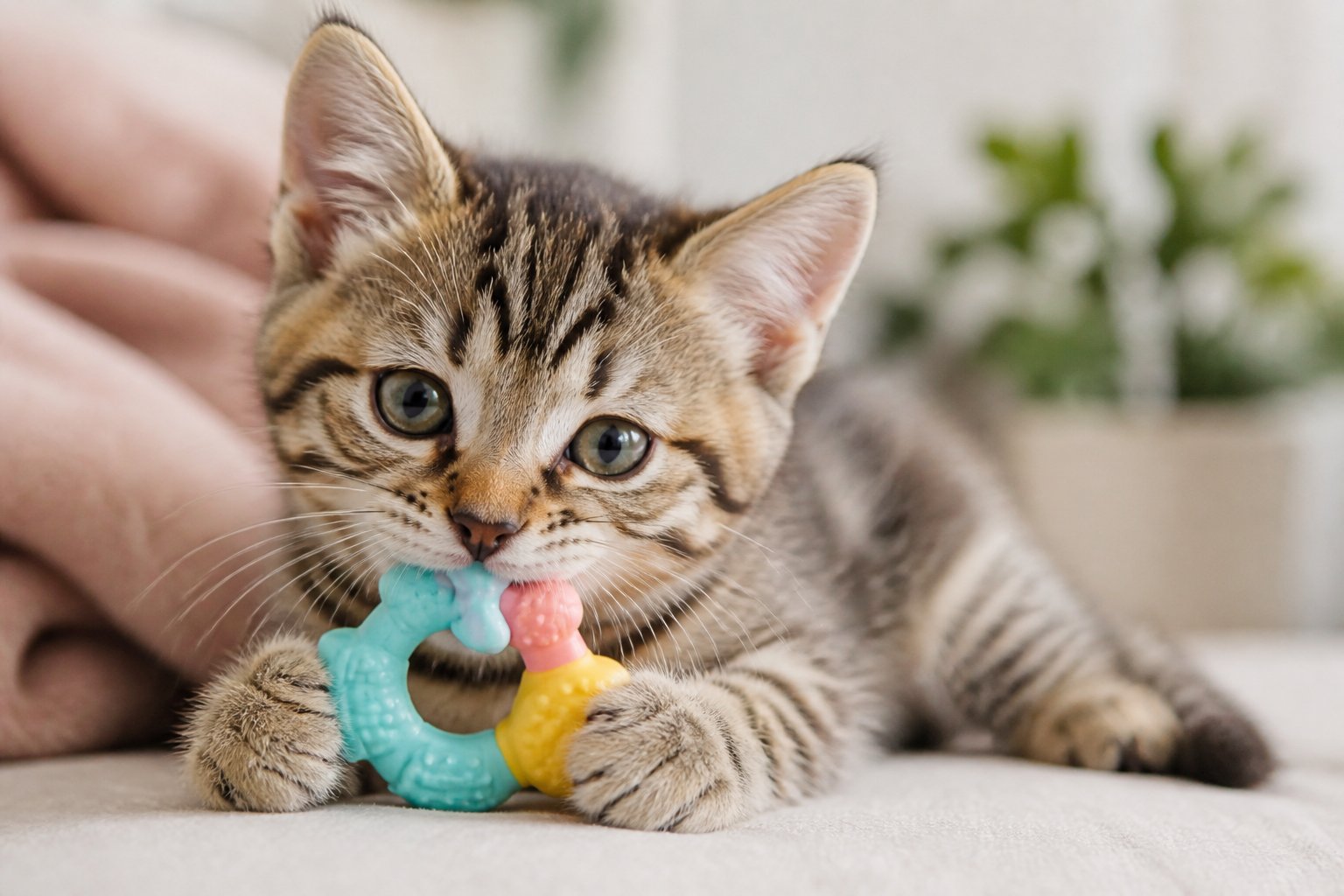
Kittens begin teething around 2 to 4 weeks old with their baby teeth and transition to adult teeth starting at 3.5 to 4 months. Most teething concerns involve recognizing normal behavior, managing discomfort, and providing safe outlets for chewing.
At what age do kittens start teething, and when does it usually end?
Your kitten is born without teeth and starts teething between 2 to 4 weeks old when their incisors first appear. The canines come in at 3 to 4 weeks, and premolars erupt between 4 to 6 weeks.
By 8 weeks old, your kitten should have all 26 baby teeth. The second teething phase begins around 3.5 to 4 months when baby teeth fall out and adult teeth replace them.
The teething process typically ends between 5 to 7 months when your kitten has all 30 adult teeth. Some variation in this timeline is normal, but you should talk to your vet if you have concerns.
What are the most common signs and symptoms of teething in kittens?
You may notice your kitten pawing or rubbing at their face due to discomfort from sore gums. Teething kittens often drool more than usual, similar to human babies.
Your kitten might have difficulty eating or drop food from their mouth because chewing hurts. Bad breath, often called “kitten breath,” is another common sign associated with teething.
A strong desire to chew on soft objects helps soothe irritated gums. Your kitten may also seem crankier than normal during this uncomfortable period.
Is it normal for a kitten to still be losing teeth at 6 months old?
Yes, it is completely normal for your kitten to lose teeth at 6 months old. Most kittens have their full set of 30 adult teeth by around 6 months of age, but the process can continue until 7 months.
Baby teeth typically fall out between 3.5 to 5 months, so some late baby teeth may still be coming out at 6 months. Each kitten develops at a slightly different pace.
You should contact your vet if your kitten still has baby teeth alongside adult teeth in the same spot. This condition, called retained deciduous teeth, can cause crowding and dental problems.
What do kitten teeth look like when they fall out, and should I try to find them?
Baby teeth are small, white, and sharper than adult teeth. They can also appear more translucent than the permanent teeth that replace them.
You rarely need to find your kitten’s baby teeth because kittens usually swallow them. This is completely normal and won’t harm your kitten.
You might occasionally spot a baby tooth on the floor or in your kitten’s bedding. Finding these teeth can confirm that teething is progressing normally, but searching for them isn’t necessary.
What safe chew toys and materials can kittens use while teething?
Soft kitten chew toys are ideal for teething because they soothe irritated gums without damaging emerging teeth. Look for toys specifically designed for kittens rather than adult cats.
A frozen washcloth works as a simple home remedy for teething relief. Dampen a clean washcloth, freeze it until crunchy, and let your kitten chew on it.
The cold temperature combined with the texture helps numb sore gums. Avoid hard toys or objects that could crack baby teeth or hurt sensitive mouths.
How can I soothe a teething kitten and reduce chewing on furniture or hands?
Provide plenty of appropriate chew toys to redirect your kitten’s natural urge to bite and chew. Never let your kitten chew on your hands because this habit becomes difficult to break later.
Switch to wet food if your kitten struggles to eat dry kibble during teething. The softer texture is easier on sore gums and provides better nutrition overall.
Keep potentially dangerous household items out of reach so your kitten only chews on safe objects. Use gentle play and positive reinforcement to teach your kitten that biting you is unacceptable, even during play.