How to Bathe a Cat Safely and Without Stress: Expert Techniques
Most cats don’t need frequent baths because they groom themselves, but sometimes a bath becomes necessary when your cat gets into something messy or develops a skin condition that requires special care. You can safely bathe your cat by using gentle handling techniques, cat-safe shampoo, and a calm environment that minimizes stress for both you and your pet. The key is knowing when bathing is truly necessary and having the right approach.
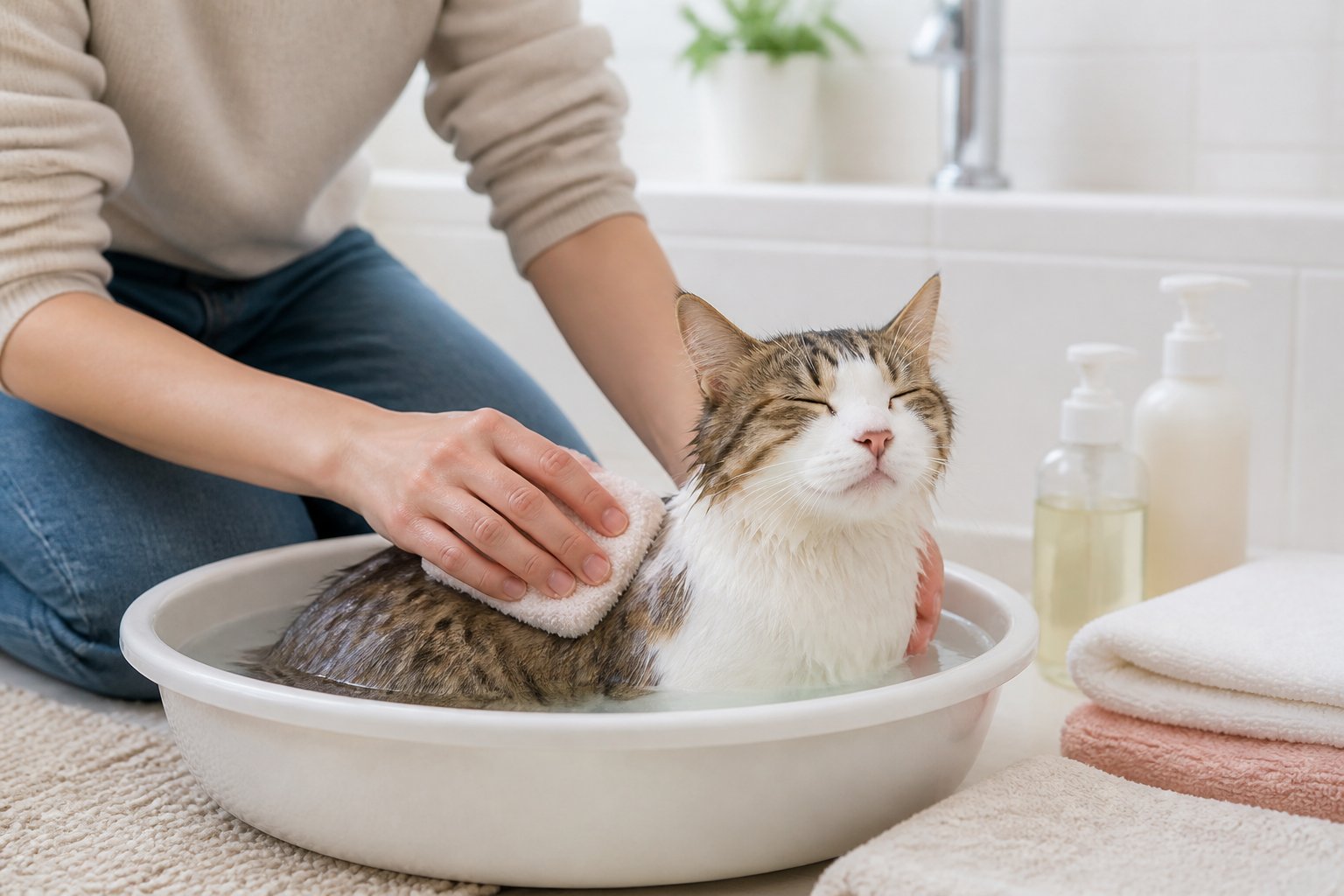
Many cat owners worry about getting scratched or causing their pet unnecessary anxiety during bath time. The good news is that with proper preparation and the right techniques, you can make the experience manageable.
This guide walks you through everything from gathering supplies and reducing stress before the bath to proper drying methods and alternatives for cats who are extremely fearful of water. You’ll learn practical steps to keep your cat clean while maintaining their comfort and your safety.
When and Why Cats Need a Bath
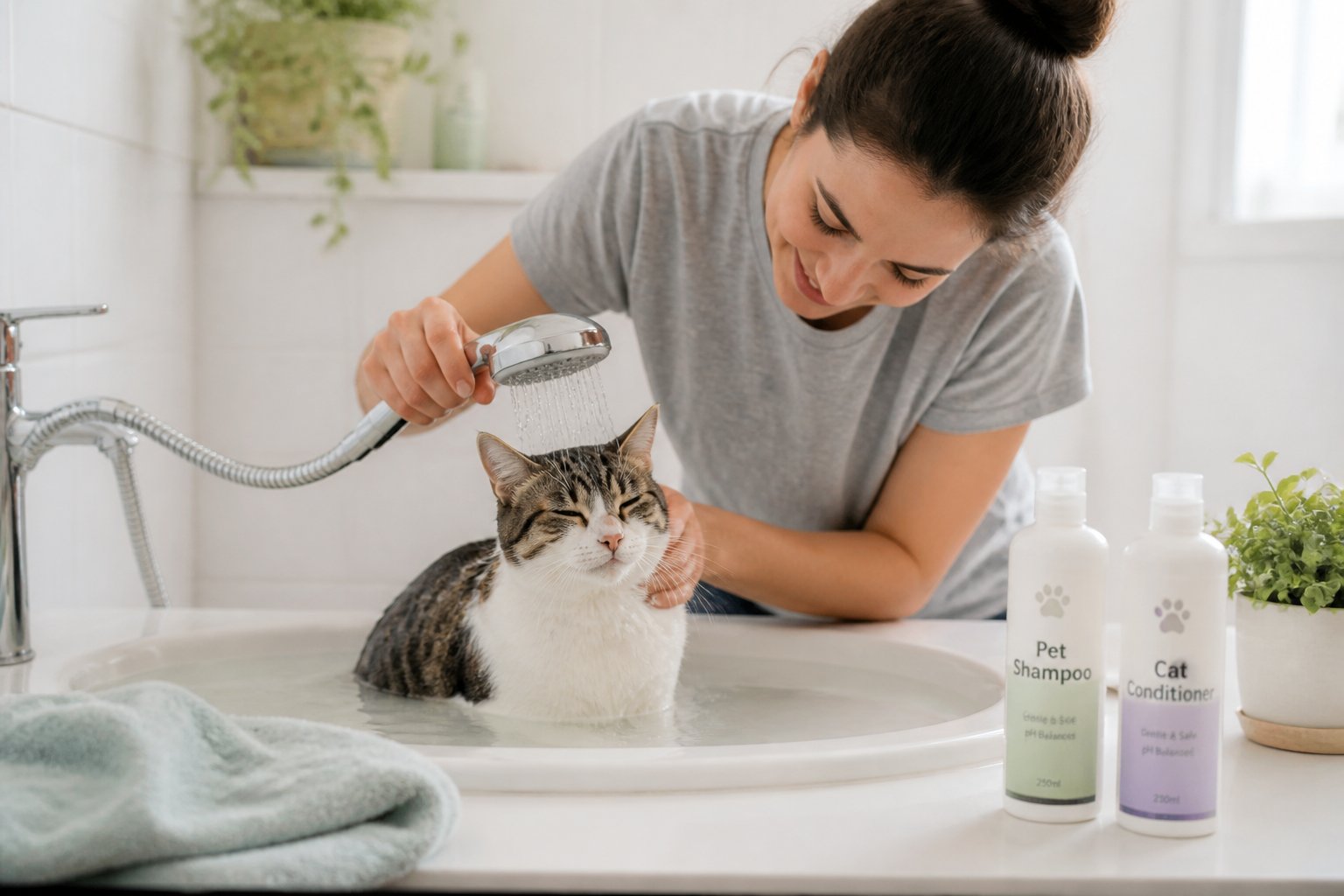
Most cats keep themselves clean through natural grooming, but specific situations require owner intervention. Understanding when to bathe your cat helps prevent unnecessary stress while ensuring proper hygiene.
Self-Grooming vs. Owner Assistance
Cats spend a large portion of their day cleaning themselves with their tongues and paws. This natural behavior removes dirt, loose fur, and debris from their coat. Their rough tongues work like built-in combs that distribute oils and keep fur healthy.
However, self-grooming has limits. When your cat gets into sticky substances, toxic materials, or heavy dirt, their own cleaning efforts won’t be enough. Senior cats, overweight cats, and those with mobility issues may struggle to reach all areas of their body. Long-haired breeds can develop mats and tangles that prevent proper grooming.
You need to step in when your cat’s natural grooming fails. This assistance protects their health and keeps their coat in good condition.
Common Situations Requiring a Cat Bath
Your cat needs a bath when they get into substances that could harm them if ingested during grooming. Motor oil, paint, chemicals, or toxic plants require immediate washing. Outdoor cats may roll in mud, garbage, or animal waste that creates strong odors.
Food spills can mat into fur, especially around the face and chest. Flea infestations sometimes need medicated baths as part of treatment. Indoor accidents with litter box issues can soil your cat’s fur and paws.
Hairless breeds like Sphynx cats need regular bathing to remove oil buildup on their skin. These situations make bathing necessary rather than optional.
Medical and Grooming Reasons
Your veterinarian may recommend bathing for specific skin conditions. Allergies, fungal infections, and parasites often require medicated shampoos as part of treatment. Dandruff, excessive oiliness, or dry skin may improve with appropriate bathing products.
Medical conditions requiring baths:
- Seborrhea (oily or flaky skin)
- Ringworm
- Flea allergies
- Bacterial skin infections
Severe matting poses health risks by pulling on skin and trapping moisture. When mats can’t be brushed out, a bath followed by careful trimming becomes necessary. Obese or arthritic cats struggle to clean their rear ends, leading to hygiene issues that require your help.
Bathing Frequency Guidelines
You should avoid bathing your cat more frequently than every four to six weeks unless your veterinarian directs otherwise. Too-frequent bathing strips natural oils from their skin and coat. This can cause dryness, irritation, and skin problems.
Most healthy cats need only one or two baths per year, if any. Hairless breeds are exceptions that need monthly bathing. Cats with medical conditions follow schedules based on their specific treatment plans.
Regular brushing reduces the need for baths by removing loose fur and preventing mats. Daily brushing for long-haired cats and weekly sessions for short-haired breeds keep their coat healthy. Professional groomers can handle difficult cases when home bathing becomes too stressful for you or your cat.
Essential Supplies and Choosing Cat-Safe Products
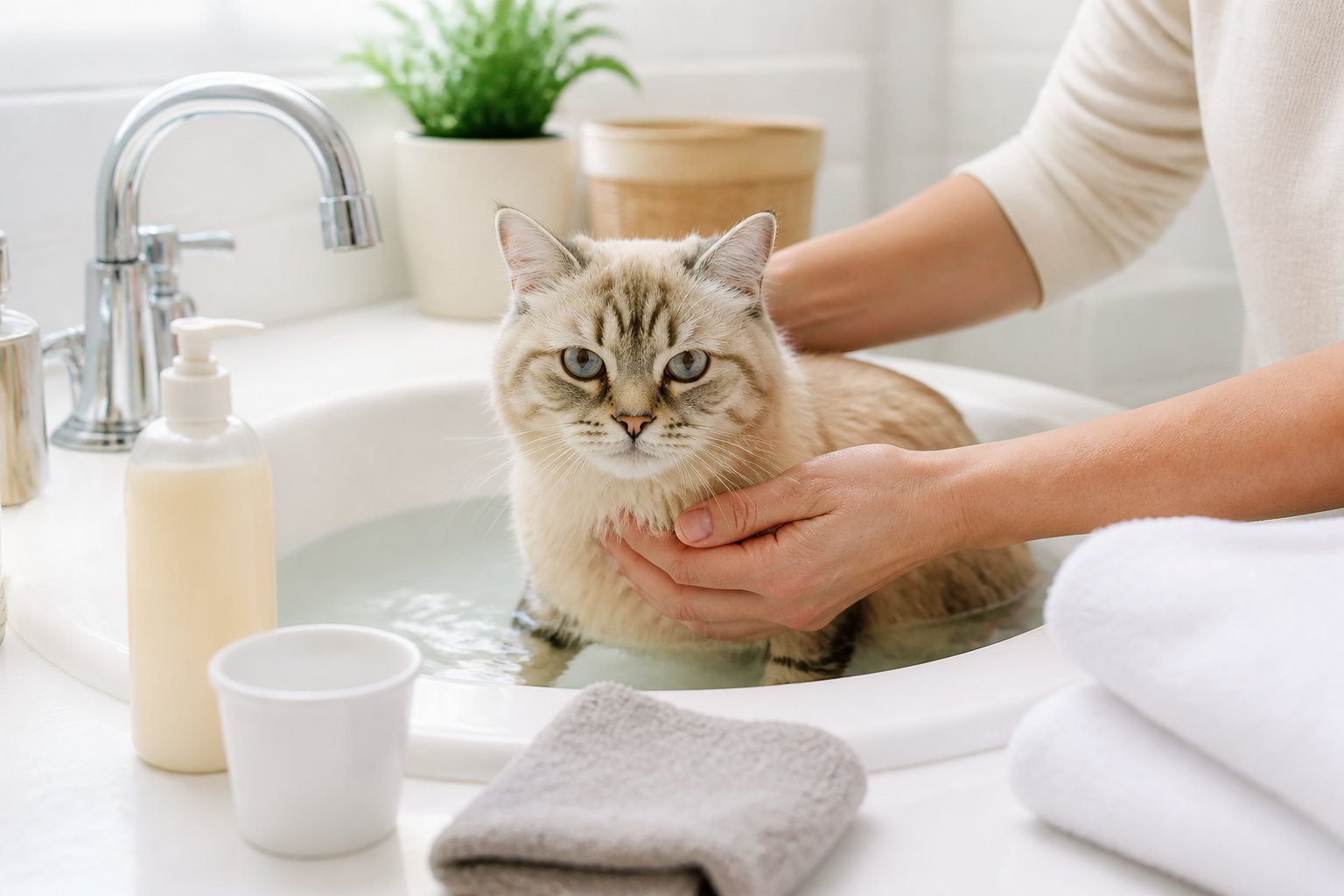
The right supplies make bathing safer and less stressful for your cat. You need proper shampoo formulated specifically for cats and a secure bathing setup with non-slip surfaces.
Selecting the Right Cat Shampoo
Never use human shampoo or dog shampoo on your cat. Cats have different skin pH levels than humans and dogs, so products made for other species can irritate their skin or cause dryness.
Look for cat-safe shampoo options that are gentle and moisturizing. A pH-balanced formula protects your cat’s skin barrier while cleaning effectively.
If your cat has skin issues, ask your vet about medicated shampoos. Your vet might recommend specific products for conditions like dandruff or fungal infections. Some cats benefit from hypoallergenic formulas if they have sensitive skin.
Key features to look for:
- Labeled specifically for cats
- Moisturizing ingredients
- Free from harsh chemicals
- Gentle, tear-free formula
Comparing Cat-Specific and Waterless Shampoos
Traditional cat-specific shampoo requires water and a full bath. This type cleans thoroughly and works best when your cat is very dirty or has gotten into something messy.
Waterless cat shampoo offers an alternative for minor cleaning needs. These foam or spray products don’t require rinsing, which reduces stress for anxious cats. You simply apply the product, massage it into the fur, and towel it off.
Choose traditional shampoo when your cat needs deep cleaning or has a medical condition requiring regular baths. Pick waterless options for spot cleaning, senior cats who struggle with full baths, or cats who become extremely stressed by water.
Preparing the Bathing Area
Set up your bathing station before bringing your cat to the area. Choose either a sink or bathtub based on your cat’s size and your comfort level.
Place a non-slip mat at the bottom of your sink or tub. This prevents your cat from slipping and helps them feel more secure during the bath.
Gather these items within arm’s reach:
- Cat shampoo
- Cup or handheld sprayer for rinsing
- Multiple dry towels
- Damp washcloth for the face
- Treats for after the bath
Fill the basin with a few inches of lukewarm water before you bring your cat in. Running water during the bath can frighten cats and make them more anxious. The water should feel warm but not hot when you test it with your wrist.
Pre-Bath Preparation and Stress Reduction
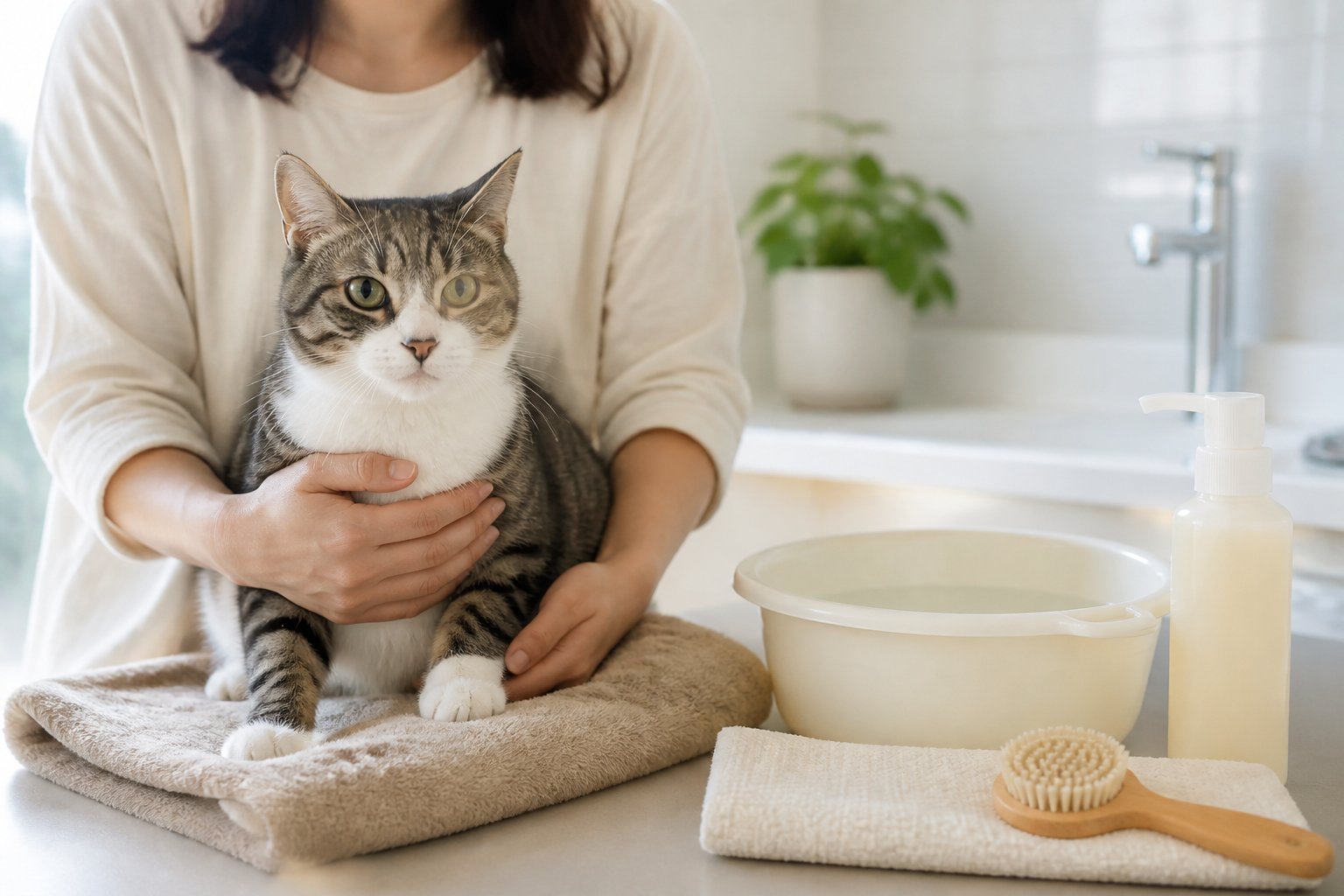
Getting your cat ready before bath time makes the whole process easier for both of you. Proper preparation includes grooming tasks, setting up a peaceful space, and helping your cat get comfortable with water gradually.
Brushing and Claw Trimming
Brush your cat thoroughly before you wet their fur. This removes loose hair, dirt, and tangles that become harder to manage when wet. Long-haired cats especially need good brushing to prevent mats from tightening up during the bath.
Pay extra attention to areas where tangles form easily, like behind the ears and under the legs. Use a comb designed for your cat’s coat type to work through any knots gently.
Trim your cat’s claws before the bath to protect yourself from scratches. Use cat nail clippers and cut only the sharp tip of each claw. If you’re not sure how much to trim, ask your vet to show you the proper technique. This step is important when you prepare your cat for bathing because nervous cats often try to grip or scratch.
Creating a Calm Environment
Choose a warm room without drafts for the bath. A bathroom works well because you can close the door and limit your cat’s escape routes. Place a non-slip mat in the sink or tub so your cat feels more secure on a stable surface.
Gather all supplies before you bring your cat in:
- Cat-safe shampoo
- Plastic cup or pitcher
- Towels
- Treats
- Non-slip mat
Keep the room quiet and calm. Turn off loud music or TV and ask family members to stay out during the bath. Having everything ready means you won’t need to leave your cat alone or search for items mid-bath.
Introducing Your Cat to Water
Start getting your cat used to water days or weeks before the actual bath. Drip small amounts of water on their paws and back while speaking in a calm voice. Give treats immediately after each water exposure to create positive associations.
You can bathe a cat that hates water more easily if they’ve had time to adjust. Let your cat explore the empty tub or sink first. Place treats inside so they associate the space with good things.
Try running water nearby while your cat is in the room. This helps them get used to the sound. Some cats do better with a quieter approach, so you might fill the tub before bringing them in rather than running water while they’re present.
Step-by-Step Bathing Techniques for Cats
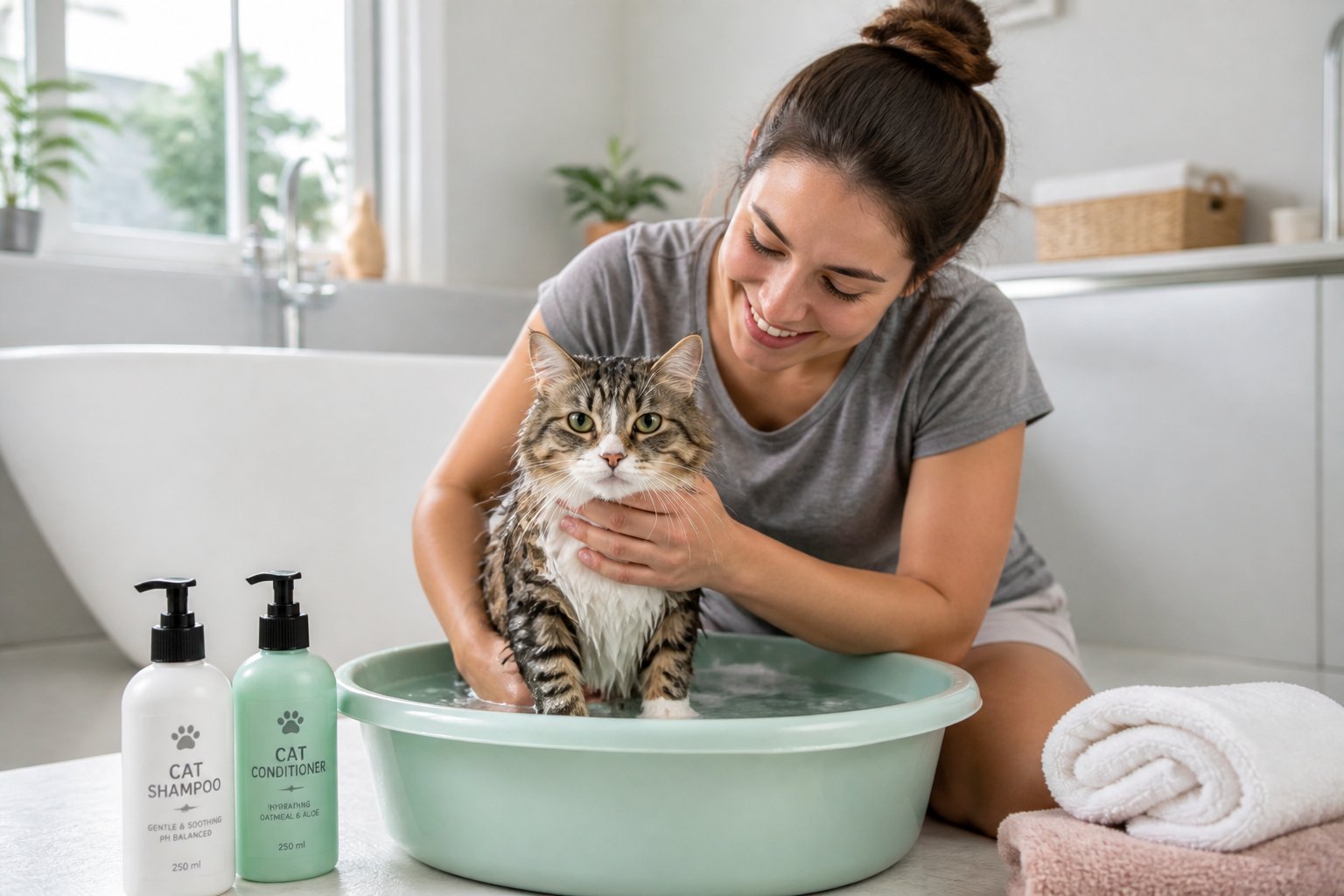
The actual bathing process requires careful attention to wetting, shampooing, and rinsing your cat thoroughly while keeping them calm. Special care around sensitive areas like the face helps prevent stress and keeps water out of ears and eyes.
Wetting and Lathering
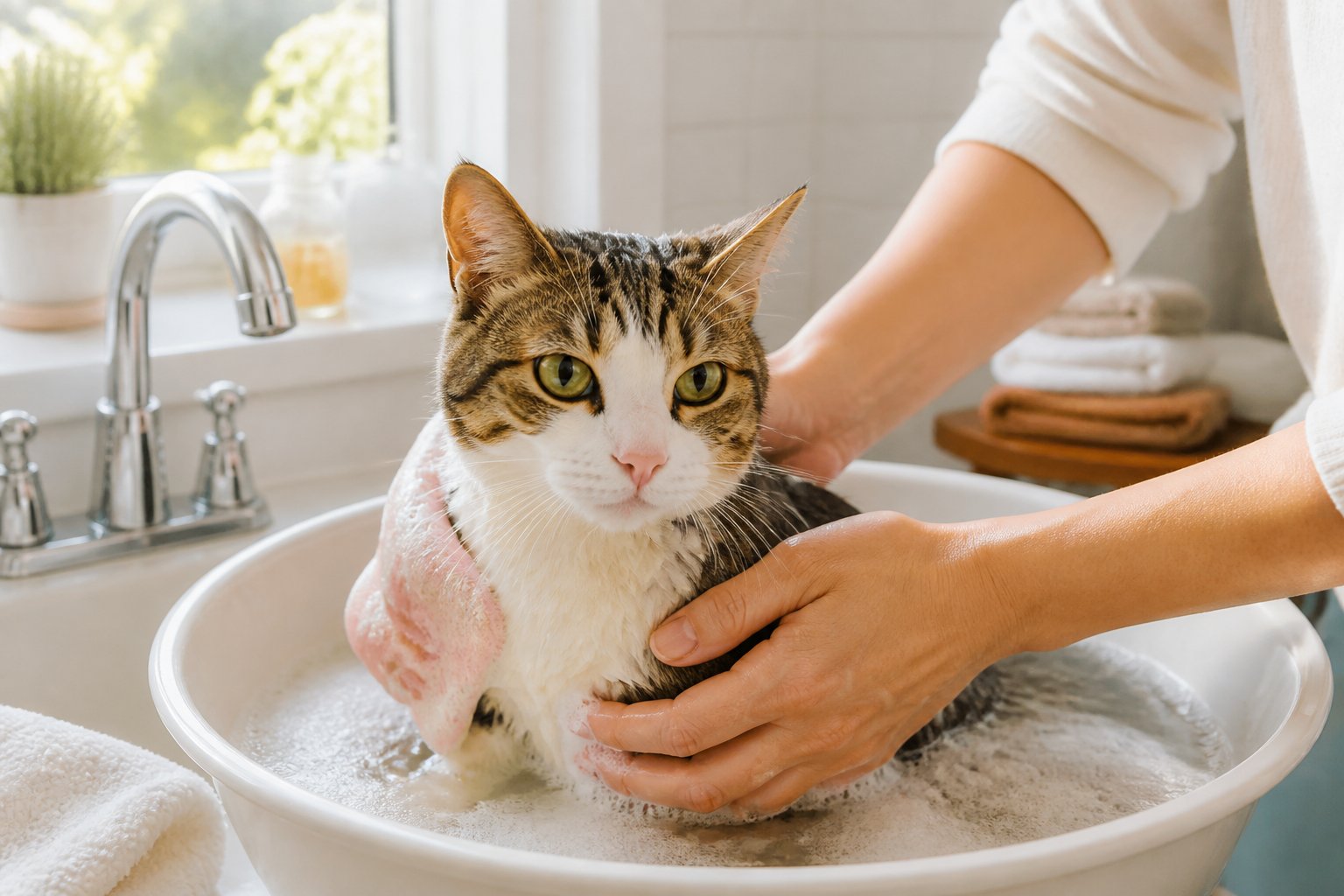
Start by gently lowering your cat into a few inches of lukewarm water. Use a cup or handheld sprayer to wet their fur gradually, starting at the neck and working toward the tail. Avoid the head initially to reduce stress.
Apply a small amount of cat-safe shampoo to your hands and work it through the fur. Focus on getting down to the skin where oils and dirt collect. You may need to shampoo your cat two or three times if their fur is particularly greasy or dirty.
Work the shampoo into a sudsy lather across the entire body. Pay attention to areas that get dirtiest like the paws, tail base, and belly. Keep one hand on your cat at all times to provide security and prevent sudden jumps.
Proper Rinsing Methods
Thorough rinsing is critical because leftover shampoo can irritate your cat’s skin. Use clean water from a separate basin or fresh running water to rinse all the soap out completely.
Pour water over your cat’s body using a cup or gentle spray setting. Work systematically from neck to tail, lifting the fur to ensure you reach the skin. Continue rinsing until the water runs completely clear with no soap residue.
Check hidden spots like under the legs and around the tail where shampoo tends to hide. Any soap left behind can cause itching or skin problems once your cat is dry.
Face and Sensitive Area Care
Never spray or pour water directly on your cat’s face. Instead, use a damp washcloth to gently wipe around the eyes, nose, and mouth. This prevents water from entering the ears and nose.
Clean the outer ear area carefully with the damp cloth, but never insert anything into the ear canal. If your cat has tear stains or crusty buildup around the eyes, wipe gently from the inner corner outward.
Skip shampooing the head entirely unless absolutely necessary. Most dirt and oils collect on the body, not the face.
How to Bathe a Cat That Hates Water
If you need to bathe a cat that resists water, preparation makes the biggest difference. Fill basins before bringing your cat in so running water doesn’t scare them.
Start with just their paws in shallow water for a few seconds. Speak in a calm, quiet voice throughout the process. Keep sessions short, focusing on the dirtiest areas first rather than a full bath.
Consider having a helper hold and reassure your cat while you wash. If your cat becomes extremely stressed or aggressive, stop immediately. You can try spot cleaning with pet wipes or consult a professional groomer who has experience with difficult cats.
Some cats respond better to being wrapped in a towel with only the section being washed exposed at a time. This technique provides security while limiting their ability to scratch.
Drying and Post-Bath Care
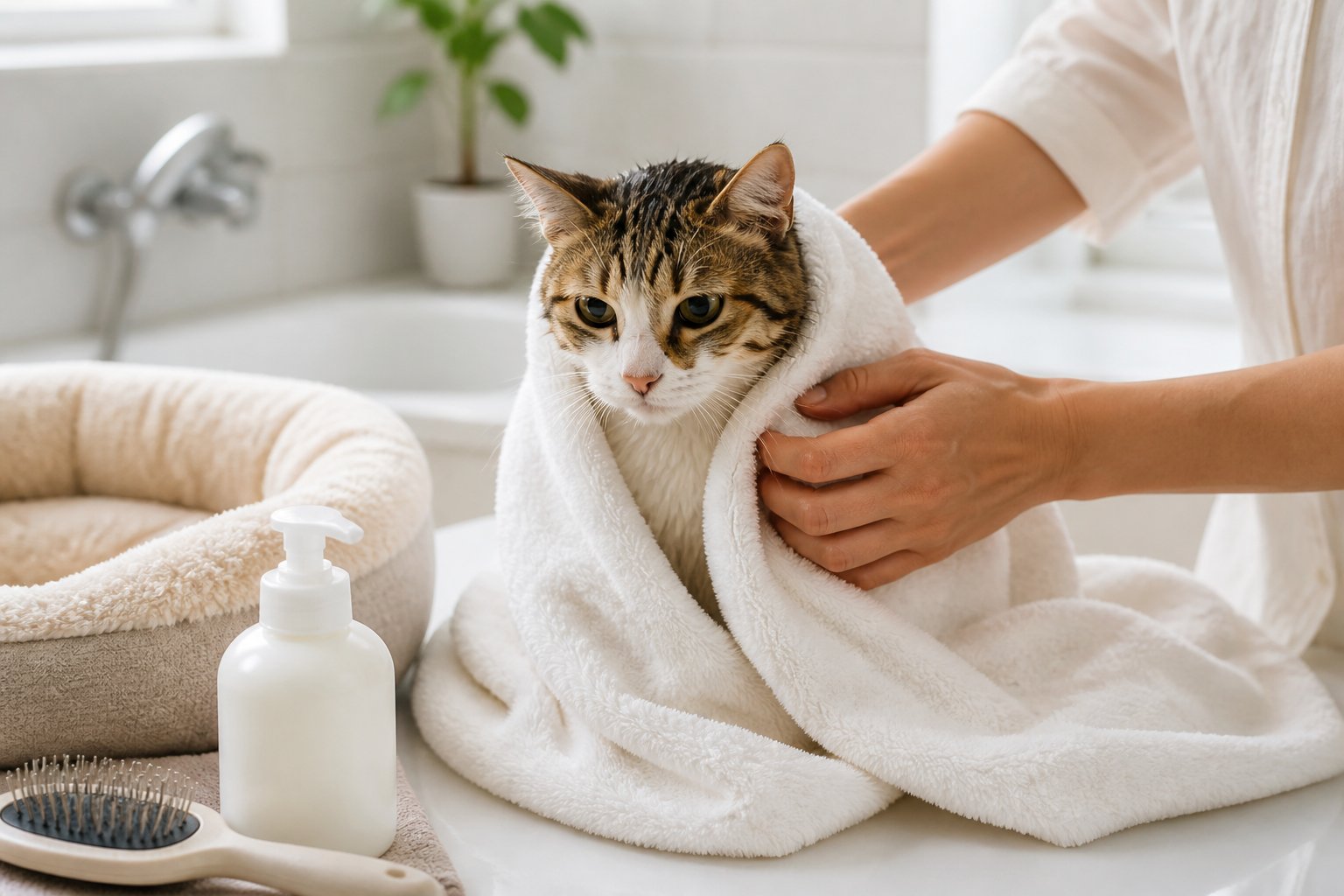
Getting your cat completely dry after a bath prevents health issues and keeps their coat in good condition. Proper drying techniques and positive reinforcement help your cat recover from the stress of bathing.
Towel Drying and Warmth
You need to dry your cat thoroughly as soon as the bath ends. Use a large, absorbent towel to gently press and squeeze water from your cat’s fur. Avoid rubbing harshly, as this can tangle the fur and irritate your cat’s skin.
Wrap your cat in a dry towel and hold them in a warm room. Cats lose body heat quickly when wet, so keeping them warm is important. If your cat tolerates noise, you can use a blow dryer on the lowest heat setting.
Hold the dryer at least 12 inches away from your cat’s body. Keep it moving constantly to avoid overheating one spot. Many cats fear the sound of dryers, so watch for signs of stress like flattened ears or attempts to escape.
You may need two or three towels to get your cat fully dry. Change to a fresh towel when the first one becomes soaked. Keep your cat in a warm area until their fur is completely dry to the skin.
Preventing Fur Matting
Damp fur clumps together easily and forms mats if left to air dry. Preventing matting requires thorough drying of your cat’s coat down to the skin layer.
Use a wide-toothed comb while the fur is still slightly damp. Gently work through any tangles you find, starting at the tips and moving toward the skin. This approach prevents painful pulling and helps distribute natural oils.
Pay extra attention to areas where mats form most often. These include behind the ears, under the legs, and around the tail. Long-haired cats need more careful attention than short-haired breeds.
Check your cat’s entire body once they’re dry. Run your fingers through their coat to feel for any damp spots you might have missed. Those areas need additional drying to prevent mat formation.
Rewarding and Comforting Your Cat
Give your cat a treat immediately after drying them. This positive reinforcement helps them associate bath time with good outcomes. Choose treats your cat loves most for maximum impact.
Speak to your cat in a calm, soothing voice throughout the drying process. Your relaxed tone helps reduce their anxiety. Some cats respond well to gentle petting once they’re mostly dry.
Let your cat retreat to a favorite hiding spot after the bath. They need time to groom themselves and feel secure again. Don’t force interaction if your cat wants space.
Offer playtime or extra attention once your cat seems calm. This helps rebuild trust and ends the cat grooming experience on a positive note.
Alternative Solutions for Cats Who Fear Baths
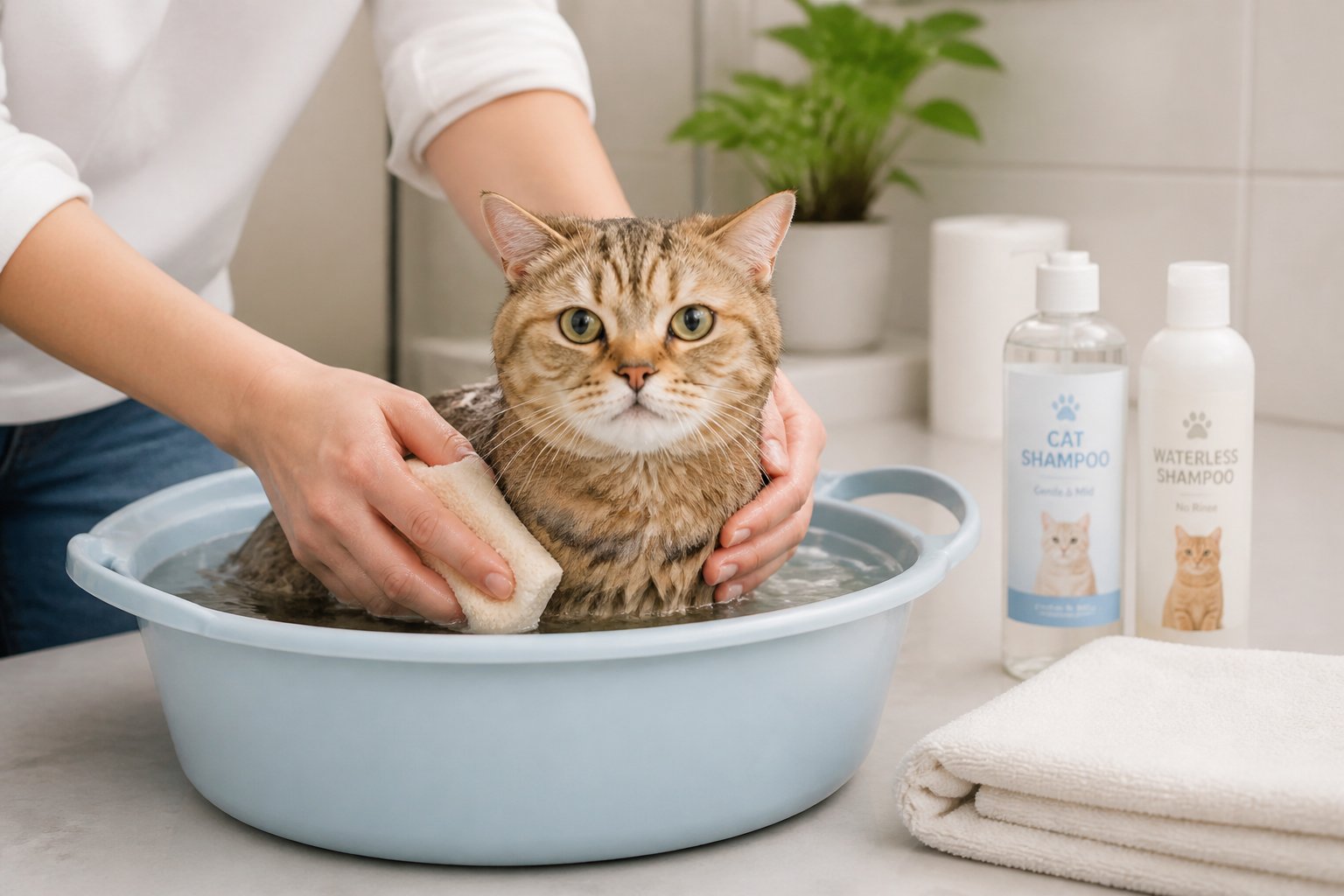
Not every cat needs a traditional water bath. Waterless products, targeted cleaning methods, and professional help can keep your cat clean without the stress of submersion.
Waterless Cat Shampoo Options
Waterless cat shampoo comes as a foam or spray that you apply directly to your cat’s coat. You massage it through the fur and then towel it off without any rinsing required.
These products work well for cats with mild odor, light dirt, or dust. Popular options include Earthbath Hypo-Allergenic Cat Foam and Burt’s Bees Waterless Shampoo for Cats. Both use gentle ingredients that won’t irritate your cat’s skin.
To use waterless shampoo, apply a small amount to one section at a time. Work it through the coat with your fingers, then wipe away with a clean towel. Focus on areas that get dirtiest like the paws, belly, and tail base.
This method won’t work for serious messes like oil, chemicals, or heavy fecal contamination. It’s best for routine freshening between baths or for cats who absolutely cannot tolerate water.
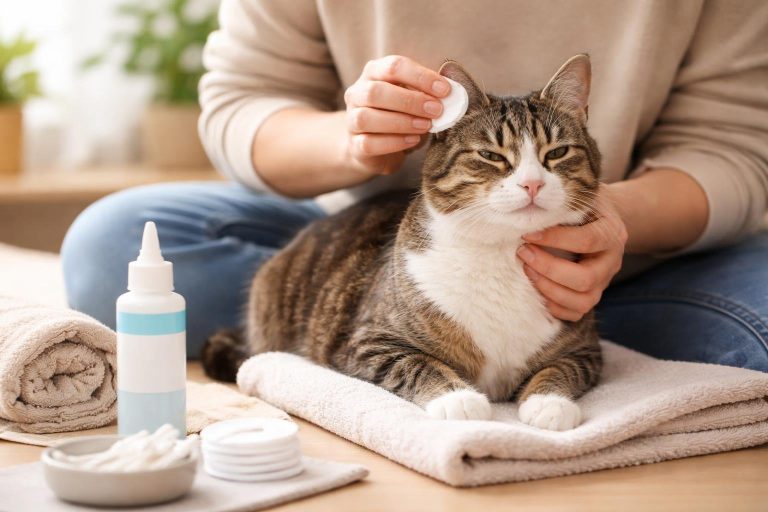
Spot Cleaning and Grooming Wipes
Cat grooming wipes offer the simplest cleaning method for bathe a cat that hates water. These pre-moistened wipes handle small messes without any preparation or equipment.
Best uses for grooming wipes:
- Dirty paws after litter box use
- Food residue around the mouth
- Eye discharge buildup
- Minor dirt on the coat
Keep wipes at room temperature or slightly warm them in your hands before use. Cold wipes can startle your cat and make them less cooperative. Wipe gently in the direction of fur growth and avoid sensitive areas like eyes and inner ears.
For long-haired cats with rear-end messes, combine wipes with a sanitary trim. Trimming the fur around the back end prevents future buildup and makes spot cleaning much easier.
Professional Cat Grooming Services
Professional cat grooming services handle difficult bathing situations when home methods fail. Groomers have specialized equipment, proper restraint techniques, and experience with fearful cats.
A professional groomer can provide full baths, sanitary trims, mat removal, and nail clipping in one appointment. They use cat-specific tables with non-slip surfaces and sometimes grooming loops for safety. Many groomers also offer mobile services that come to your home, which reduces travel stress.
Costs typically range from $50 to $100 depending on your location and your cat’s coat condition. Matted fur, aggressive behavior, or medical conditions may increase the price.
Some veterinary clinics offer grooming services with sedation for extremely fearful or aggressive cats. Your vet can determine if light sedation is appropriate based on your cat’s health and stress level.
Frequently Asked Questions
Most cats can be bathed safely with the right approach, though many never need regular baths. Understanding when bathing is necessary and how to handle resistant cats makes the process easier for everyone.
How can I bathe a cat that hates water without causing fear or panic?
Start by getting your cat comfortable with the bathing area before you add water. Let them explore the sink or tub while it’s dry so they can sniff around and feel safe.
Fill the water basin before bringing your cat into the room. The sound of running water can scare cats and make them panic before the bath even starts.
Use warm water that’s comfortable to the touch, similar to what you’d use for a baby. Keep the water level shallow, only a few inches deep, so your cat doesn’t feel overwhelmed.
Work slowly and speak in a calm, quiet voice throughout the process. If your cat starts to panic, take a break and try again later rather than forcing them to continue.
Consider using a damp washcloth instead of submerging your cat if they show extreme fear. You can clean most areas this way without causing the same level of stress.
What are the safest steps to bathe a cat for the first time?
Gather all your supplies before you start, including a non-slip mat, cat-safe shampoo, a cup for rinsing, towels, and a damp washcloth. Having everything ready means you won’t need to leave your cat unattended.
Place the non-slip mat at the bottom of your sink or basin to give your cat stable footing. This helps them feel more secure and reduces slipping.
Gently lower your cat into the shallow water and wet their fur using a cup to pour water over them. Avoid getting water in their ears, eyes, and nose.
Apply a small amount of shampoo and work it through their fur down to the skin. Shampoo your cat at least two times if they have greasy fur or are particularly dirty.
Rinse thoroughly to remove all shampoo residue, which can irritate your cat’s skin if left behind. Use a separate basin of clean water for rinsing if possible.
Clean your cat’s face with just a damp washcloth rather than submerging their head. Dry them completely with towels to prevent matting.
How do I bathe a cat without getting bitten or scratched?
Trim your cat’s nails a day or two before bath time to reduce the damage if they do scratch. This simple step protects you without causing extra stress on bathing day.
Keep your movements slow and deliberate throughout the bath. Quick or sudden movements can startle your cat and trigger a defensive reaction.
Support your cat’s body firmly but gently at all times. Use one hand to steady them while the other hand does the washing.
Watch for warning signs like flattened ears, a lashing tail, or growling. These signals mean your cat is becoming upset and may lash out soon.
Consider asking a professional groomer to handle the bath if your cat becomes so upset that either of you could get injured. Some cats simply don’t tolerate bathing well, and experts have better tools and techniques.
Wear long sleeves if your cat has a history of scratching. This provides a basic layer of protection for your arms.
Is it cruel to bathe cats, and when is bathing actually necessary?
Bathing a cat is not cruel when done properly and for valid reasons. Cats naturally groom themselves and keep clean without human help most of the time.
You should bathe your cat when they get into something dirty, toxic, or sticky that they shouldn’t lick off themselves. This includes substances like motor oil, paint, or other chemicals.
Medical conditions sometimes require bathing with special shampoo as directed by your veterinarian. Skin problems, excessive dandruff, or parasite treatments may need regular medicated baths.
Long-haired or overweight cats may need occasional baths because they can’t reach all areas to groom themselves properly. These cats can develop matted fur or sanitary issues without help.
Avoid bathing cats more frequently than every four to six weeks unless your vet tells you otherwise. Bathing too often strips natural oils from their skin and can cause dryness and irritation.
Bathing becomes cruel only when done unnecessarily or without regard for the cat’s stress level. A bath shouldn’t cause injury or extreme fear.
What can I do to clean my cat if a full bath isn’t an option?
Use pet-safe grooming wipes designed for cats to clean dirty areas without water. These wipes work well for small messes or cats who absolutely refuse baths.
Brush your cat regularly to remove dirt, debris, and loose fur from their coat. Daily brushing often prevents the need for bathing in the first place.
Spot-clean problem areas with a damp washcloth and a tiny amount of cat-safe shampoo if needed. Focus only on the dirty spots rather than wetting your entire cat.
Sprinkle baking soda on your cat’s fur, work it in gently, then brush it out to help absorb oils and odors. This dry cleaning method works between baths.
Take your cat to a professional groomer who specializes in cats if grooming at home proves too difficult. Groomers have experience with resistant cats and proper restraint techniques.
What does the 3-3-3 rule for cats mean, and how can it affect grooming or bathing?
The 3-3-3 rule describes the adjustment timeline for cats in new situations. It suggests cats need three days to decompress, three weeks to learn routines, and three months to fully settle in.
This rule applies most often to newly adopted cats or cats who have moved to a new home. During the first three days, your cat may hide, refuse to eat, and feel overwhelmed by their surroundings.
Wait at least three days before attempting to bathe a newly adopted cat unless they’re dangerously dirty. Your cat needs time to feel safe in their environment before handling stressful activities.
After three weeks, your cat starts understanding your household routines and may tolerate grooming better. They’ve begun to trust you and their new space.
By three months, most cats have fully adjusted and will show their