Why Do Cats Rub Against You? Decoding Signs of Trust and Affection
When your cat presses their head or body against your legs, they’re doing much more than just saying hello. Cats rub against you primarily to mark you with their scent, show affection, and claim you as part of their territory. This behavior involves special scent glands located on their cheeks, chin, head, and tail that release pheromones onto you and other objects in their environment.
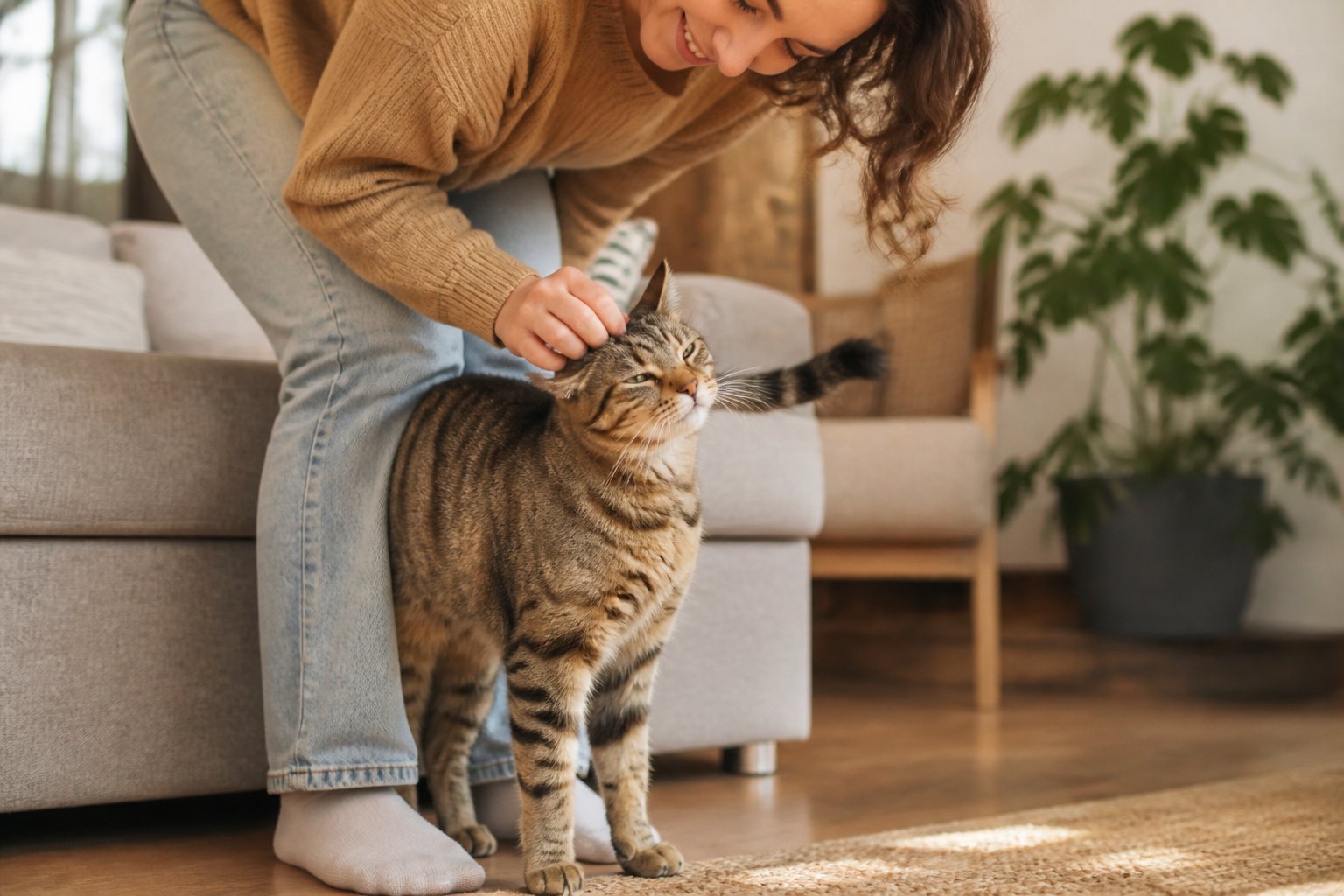
While rubbing usually signals affection and trust, it can also mean your cat is gathering information about you, asking for food, or simply greeting you after you’ve been away. Understanding the context behind this common feline behavior helps you decode what your cat is really trying to tell you.
Sometimes cats rub against you because they need something or want attention. In rare cases, excessive rubbing might point to a health problem that needs your vet’s attention. Learning to recognize the difference between normal affectionate rubbing and signs of distress helps you respond appropriately to your cat’s needs.
Understanding Cat Rubbing: Communication and Behavior
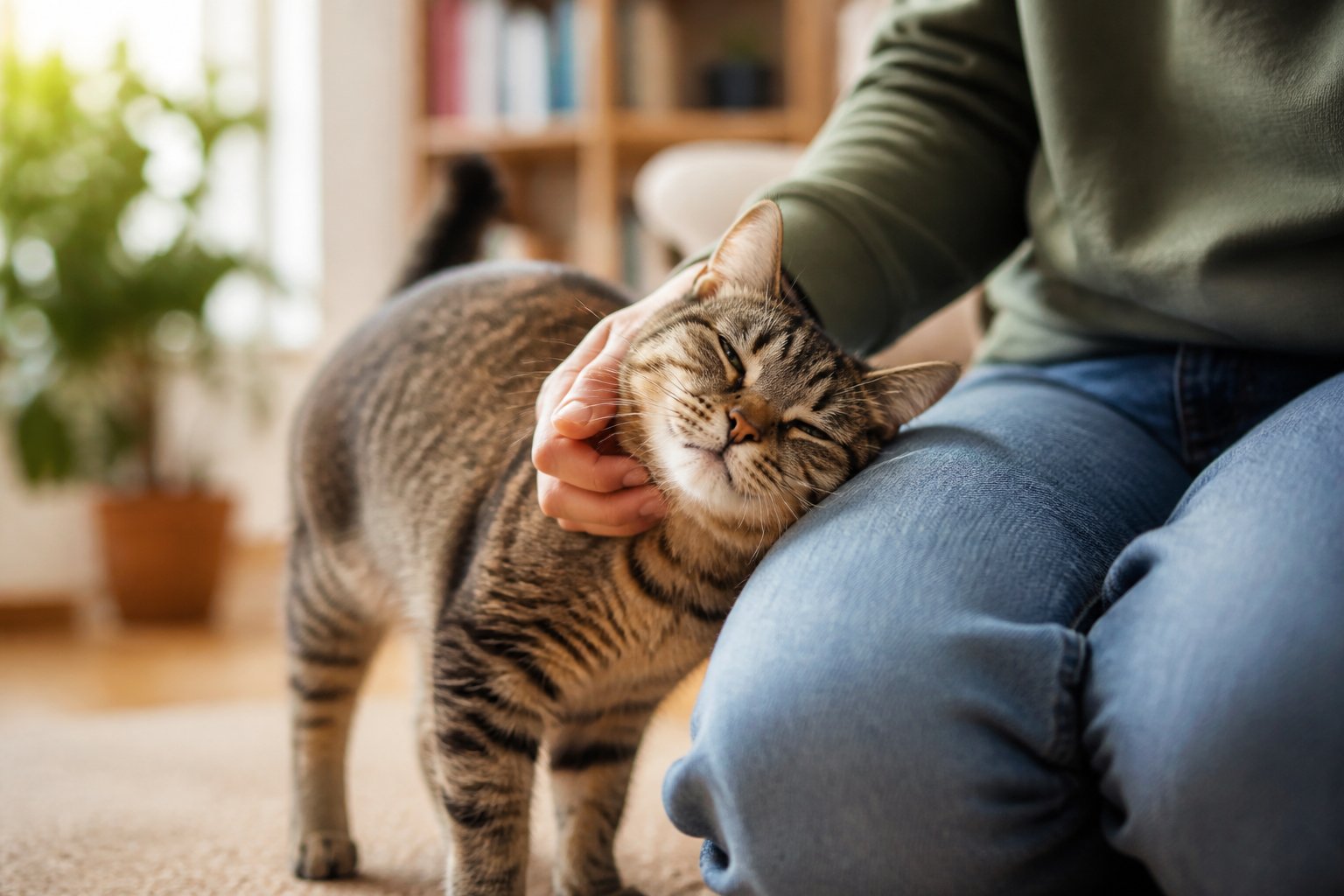
Cats use rubbing as a complex form of communication that involves scent marking, social bonding, and information gathering. When your cat rubs against you, they’re using specialized scent glands to leave pheromones that serve multiple purposes in their social world.
The Social Nature of Feline Communication
Cats communicate through a combination of body language, vocalizations, and scent-based signals. Rubbing stands out as one of their most important non-verbal communication tools.
Your cat has scent glands located on their cheeks, chin, top of their head, and base of their tail. These glands produce pheromones that other cats can detect and interpret. When your cat rubs these areas against you, they’re depositing these chemical messages.
This behavior allows cats to exchange information without making sounds. The pheromones they leave behind communicate details about their identity, emotional state, and territorial claims. These scent markers fade over time, which is why your cat needs to reapply them regularly by rubbing against you repeatedly.
The Meaning Behind Cat Rubbing
When you ask yourself “why does my cat rub against me,” the answer often involves multiple meanings at once. Cat rubbing behavior typically signals affection, acts as a greeting, or marks territory.
Common reasons for cat rubbing include:
- Greeting behavior – Your cat shows happiness to see you, especially after you’ve been away
- Territory marking – They claim you as part of their territory by leaving their scent
- Information gathering – They collect details about where you’ve been and who you’ve encountered
- Expressing needs – They signal hunger, desire for attention, or need for playtime
The rubbing releases endorphins that give your cat feelings of calm, happiness, and safety. This explains why cats seem so content while rubbing against you.
Allorubbing and Group Dynamics
Allorubbing refers to when cats rub against each other or other members of their social group. This behavior creates a shared group scent that helps cats identify who belongs.
In feral cat colonies, cats rub against each other to leave pheromones that create a communal scent. This group smell helps them recognize intruders and maintain peace within their colony. When your cat rubs against you, they’re including you in their social group.
Your cat treats you as part of their family unit. By rubbing their scent on you, they’re essentially saying you belong to their trusted circle. This behavior also helps your cat feel more secure in their environment, knowing that familiar scents surround them.
Marking Territory and Scent: The Role of Pheromones
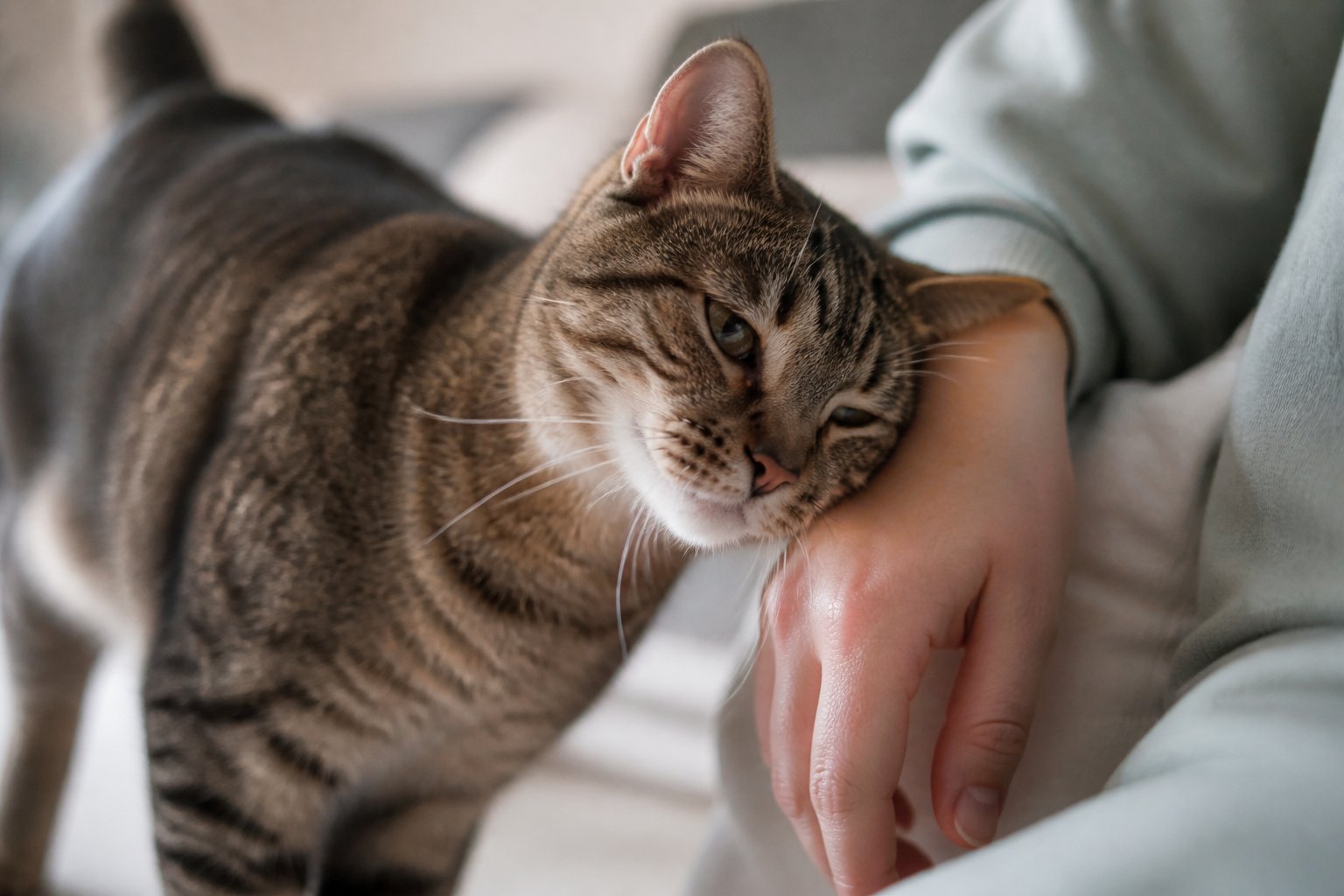
Cats possess specialized scent glands throughout their bodies that produce pheromones for communication and territory marking. When your cat rubs against you, they’re depositing these chemical signals to claim you as part of their space and create a sense of security.
How Cats Use Scent Glands
Your cat has scent glands in several key locations on their body. The most active glands are located on their cheeks, chin, forehead, and the base of their tail.
Cats use these scent glands to deposit pheromones when they rub against objects, people, or other animals. Each gland produces a slightly different blend of chemical signals. The glands on your cat’s face release different pheromones than those on their tail.
These scent markers don’t last forever. Your cat needs to refresh them regularly, which is why you might notice your pet rubbing against you multiple times throughout the day. When you come home after being out, your scent has changed and your cat’s previous markings have faded, prompting them to mark you again.
Types and Functions of Feline Pheromones
F2 pheromones are released from facial glands during bunting behaviors. These chemical signals indicate familiarity and help your cat identify members of their social group.
F4 pheromones serve a different purpose. Your cat releases these when they rub their cheeks against objects or people to mark territory. These pheromones create a calming effect and help your cat feel secure in their environment.
Cats also produce pheromones that signal different messages:
- Territorial markers that identify their space
- Social bonding signals that create group identity
- Calming agents that reduce stress and anxiety
These chemical messages help your cat navigate their world without direct confrontation.
Bunting and Scent Marking of Humans and Objects
Bunting, also called head bunting, occurs when your cat headbutts you or rubs their face against you. This behavior deposits facial pheromones from their cheek and forehead glands. When your cat performs this action, they’re marking you as part of their territory and social group.
You might notice your cat rubbing against furniture, doorways, or corners of walls. This scent marking behavior creates familiar scent pathways throughout their environment. These marked areas help your cat feel confident and relaxed in their home.
Your cat may also rub against new objects or visitors to gather information. The scent glands pick up chemical signals that tell your cat about unfamiliar items or people in their space.
Affection, Trust, and Social Bonding
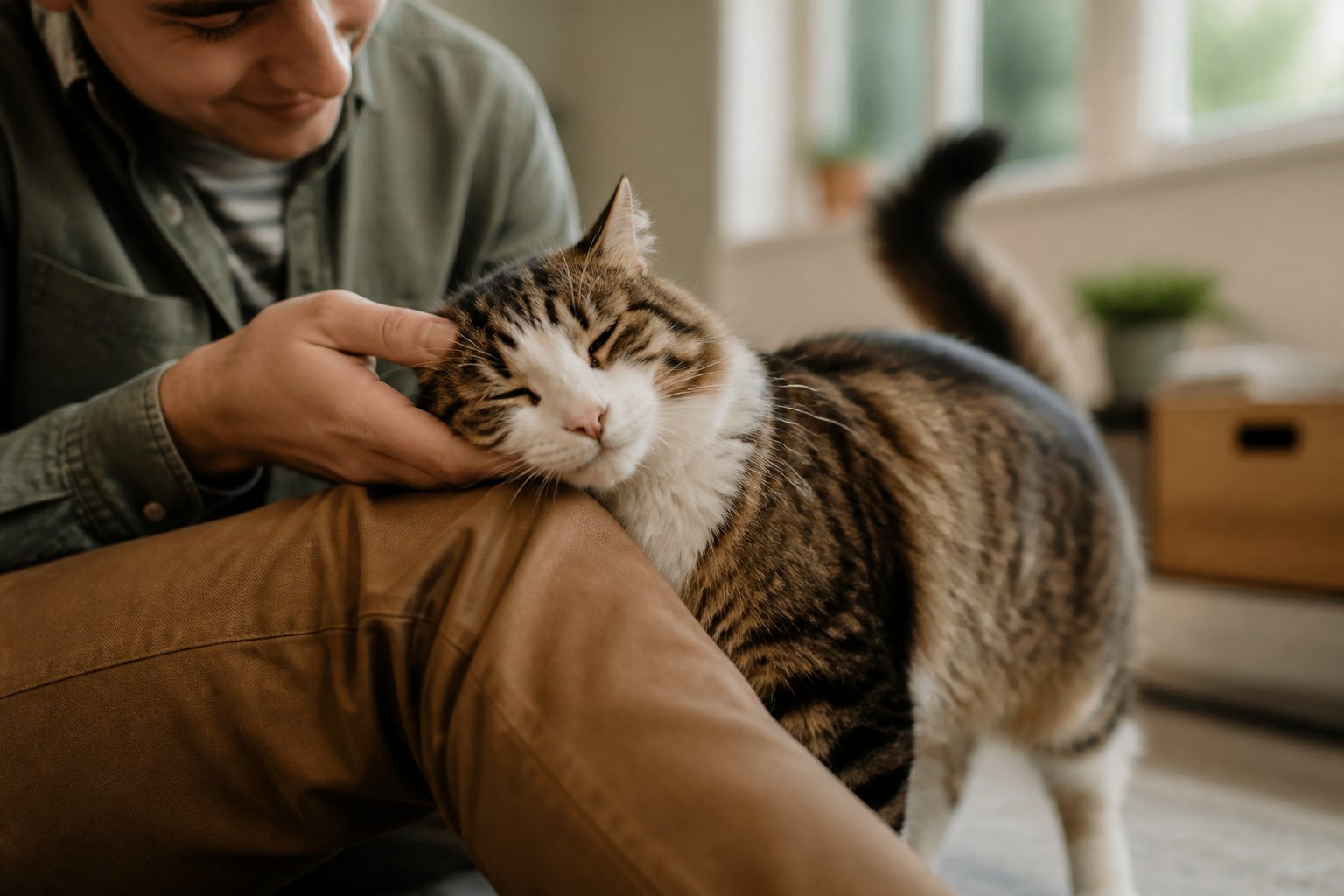
When your cat rubs against you, they’re displaying one of their most significant forms of social communication. This behavior demonstrates that your cat views you as part of their trusted social group and feels safe in your presence.
Signs of Positive Cat-Human Relationships
Cat rubbing is one of the clearest indicators that your pet trusts you. Cats don’t rub against people they perceive as threats or strangers they haven’t accepted yet.
Key signs your cat trusts you include:
- Rubbing their face, body, or tail against your legs
- Head bunting (gently bumping their head against you)
- Slow blinking while making eye contact
- Showing their belly or sleeping near you
- Following you from room to room
These behaviors show your cat feels comfortable and secure around you. When cats engage in rubbing and headbutting behaviors, they’re treating you like a valued member of their family group. This level of comfort takes time to develop, especially since cats naturally take weeks or months to fully trust new people.
Rubbing as a Gesture of Trust
Your cat chooses to rub against you because they see you as safe and important. This isn’t something cats do with everyone they meet.
When cats rub their cheeks, head, or body against you, they’re showing vulnerability. They’re bringing their face close to you and turning their back, which they only do when they feel protected. This gesture releases endorphins in your cat’s brain, creating feelings of happiness and calm.
The frequency of rubbing often increases when you’ve been away. Your cat may greet you at the door with immediate rubbing behavior. This greeting ritual shows they missed you and want to reconnect.
Shared Scent and Family Bonding
Cats have scent glands on their cheeks, chin, forehead, and tail base. When they rub these areas against you, they’re depositing pheromones that mark you as part of their family unit.
This scent marking creates a communal smell that identifies your household. Wild and feral cats living in colonies use this same technique to create a group scent that promotes peace within their community. Your cat applies this instinct to your home, essentially saying you belong to their trusted circle.
The scent doesn’t last forever, which is why your cat needs to remark you regularly. After you’ve been outside or around other animals, your cat may rub against you more intensely to restore their familiar scent.
Seeking Attention and Meeting Needs
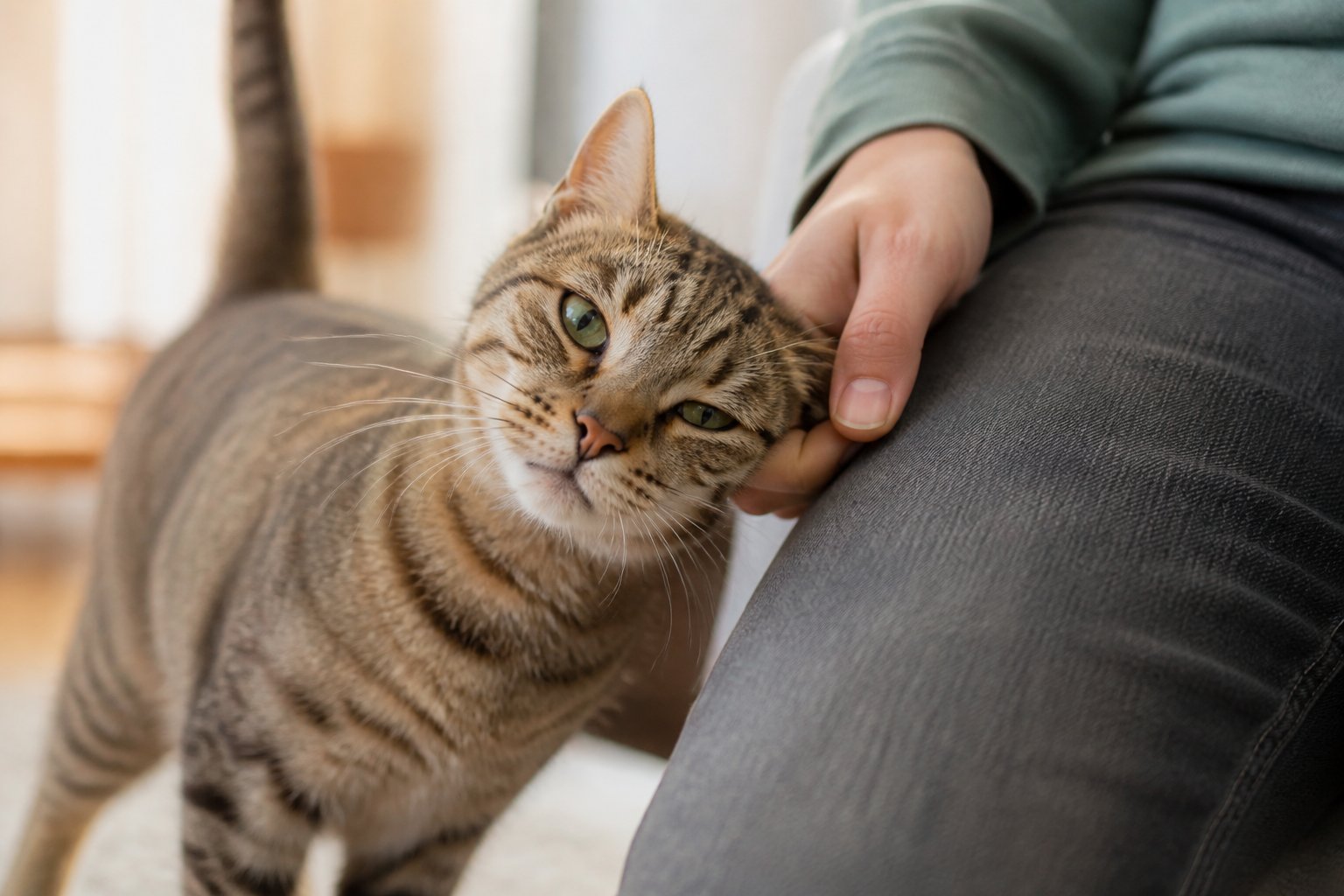
Cats often rub against you as a direct way to communicate their wants and needs. This behavior becomes especially noticeable during feeding times and when they want interaction.
Rubbing to Request Food and Play
When your cat rubs against your legs in the kitchen or near their food bowl, they’re usually asking to be fed. This cat rubbing against you behavior serves as a polite request rather than a demand. Many cats develop this as a learned behavior because it successfully gets results.
The timing of these rubs tells you what your cat wants. Morning rubs near the food area mean breakfast time. Evening leg weaving often signals dinner requests.
Your cat may also rub against you when they want playtime or attention. They’ve learned that physical contact with you often leads to positive outcomes. If you reach down to pet them after they rub your legs, you reinforce this communication method.
Some cats become more persistent with their rubbing when their needs aren’t immediately met. They might increase the frequency, add vocal meows, or switch between rubbing and making eye contact with you.
Greeting Rituals and Daily Routines
Cats engage in leg rubbing as a greeting when you return home or enter a room. This welcoming gesture shows they recognize you and want to acknowledge your presence. Your cat may weave between your legs while purring or meowing softly.
These greetings follow predictable patterns in your cat’s daily routine. You might notice consistent rubbing when you wake up, come home from work, or sit down in their favorite shared space.
The greeting rub differs from food-related rubbing. Your cat appears more relaxed and may not lead you anywhere specific. They simply want to reconnect and exchange scents after being apart. This ritual strengthens your bond and maintains their sense of social connection with you throughout the day.
Rubbing Between Cats: Social Structure and Cohesion
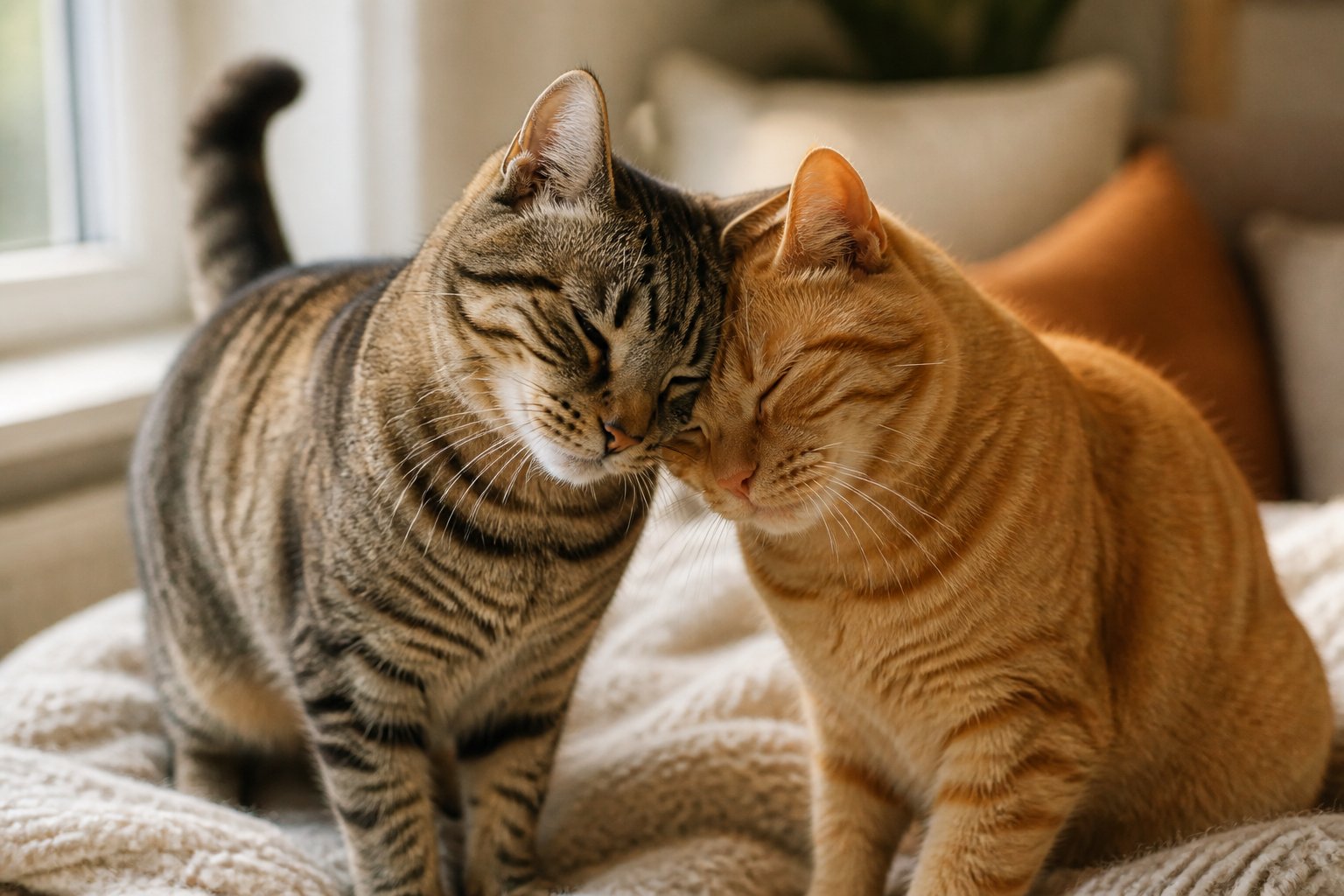
Cats that live together use rubbing behavior to create a shared scent profile and maintain peaceful relationships within their group. This physical contact strengthens their social bonds and helps reduce conflict in multi-cat environments.
Allorubbing in Multi-Cat Households
Allorubbing is when cats rub their heads and bodies against each other. You’ll notice this happens most often between cats that get along well in your home.
This behavior typically involves one cat initiating contact by approaching another cat and rubbing their cheek, head, or flank against them. The other cat often returns the gesture, creating a mutual exchange. Cats use allorubbing to reinforce their social hierarchy without aggression.
The exchange transfers scent between cats through glands located around their faces, heads, and the base of their tails. When your cats engage in allorubbing, they’re actively choosing to mix their scents together. This behavior is most common between cats that share a strong bond, such as littermates or cats that were introduced to each other at a young age.
Establishing Group Scent
The rubbing behavior between cats creates what’s known as a colony scent or group odor. Your cats deposit pheromones from their facial glands onto each other during these interactions.
This shared scent acts as a form of identification that marks each cat as part of the same social group. The F4 pheromone, which cats deposit through bunting and rubbing, plays a key role in this process. When all cats in your household carry similar scent markers, it reduces territorial tension and promotes harmony.
You might observe your cats rubbing against the same furniture, doorways, or corners throughout your home. They’re creating scent landmarks that reinforce the group’s territory. This collective scent profile helps your cats feel secure in their shared environment and recognize each other as family members rather than intruders.
When Cat Rubbing Signals an Underlying Issue
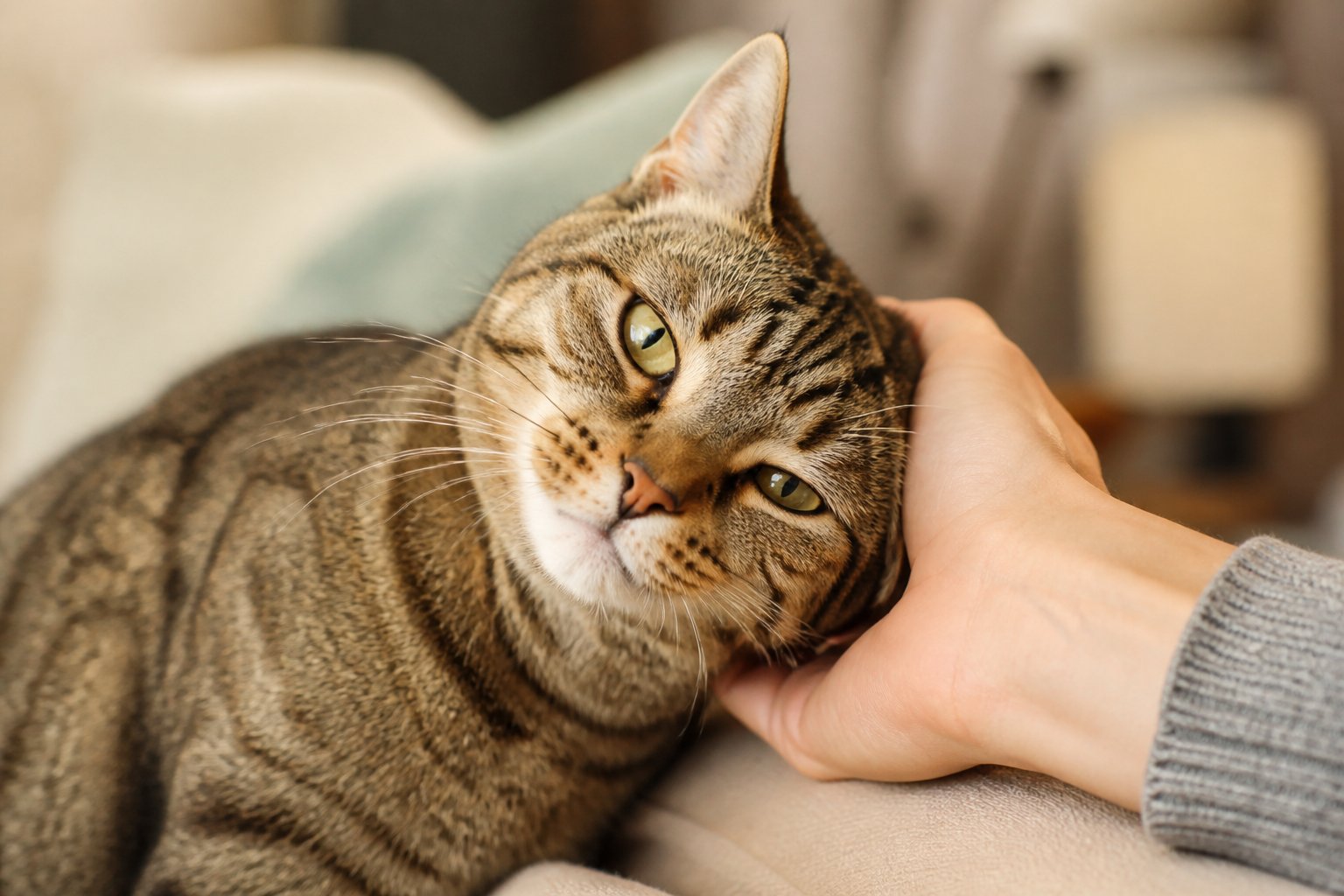
While rubbing is typically normal behavior, excessive or aggressive rubbing can point to medical problems that need attention. Changes in how often or intensely your cat rubs against objects or people may indicate discomfort or illness.
Recognizing Excessive Rubbing
Normal rubbing happens a few times when you come home or during feeding time. Excessive rubbing looks different. Your cat might rub against furniture, walls, or you repeatedly throughout the day without stopping.
Watch for rubbing that seems frantic or aggressive. If your cat rubs so hard that they lose balance or seem uncomfortable, this isn’t typical behavior. You might notice your cat focusing on one specific area of their body while rubbing.
Signs of problematic rubbing include:
- Rubbing that continues for several minutes without pause
- Hair loss in areas where your cat rubs most often
- Raw or irritated skin from constant friction
- Rubbing accompanied by loud vocalizations
- Your cat rubbing their face against rough surfaces repeatedly
The behavior often increases at night or during specific times of day. Your cat might also combine excessive rubbing with other unusual behaviors like aggressive grooming or pacing.
Feline Hypersensitivity and Hyperesthesia Disorders
Feline hypersensitivity disorder causes your cat’s skin to become overly sensitive to touch. Cats with this condition rub against objects trying to relieve the uncomfortable sensations they feel. The rubbing provides temporary relief but doesn’t solve the underlying problem.
Feline hyperesthesia syndrome makes your cat’s skin ripple or twitch, especially along their back. Cats with this disorder often rub frantically to ease the weird sensations. You might see your cat’s tail swish rapidly or their pupils dilate during episodes.
These cats may suddenly sprint around the house after rubbing sessions. They can become aggressive if you touch them during an episode, even if they’re normally friendly.
Health Concerns and When to Consult a Veterinarian
Several medical conditions cause cats to rub excessively. Ear infections make cats rub their heads against furniture or the floor trying to scratch the itch deep inside their ears. Allergies create itchy skin that drives cats to rub constantly for relief.
Fleas are a common culprit behind increased rubbing behavior. Even a small flea infestation causes intense itching that makes your cat rub against everything. Brain tumors or other intracranial diseases can also trigger abnormal rubbing patterns.
Contact your veterinarian if you notice:
- Head tilting or eye flicking along with rubbing
- Confusion or disorientation
- Moderate to severe scratching combined with rubbing
- Bald patches or skin wounds
- Increased meowing or crying while rubbing
Your vet will examine your cat and may run tests to find the cause. Early diagnosis leads to better treatment outcomes for most conditions.
Frequently Asked Questions
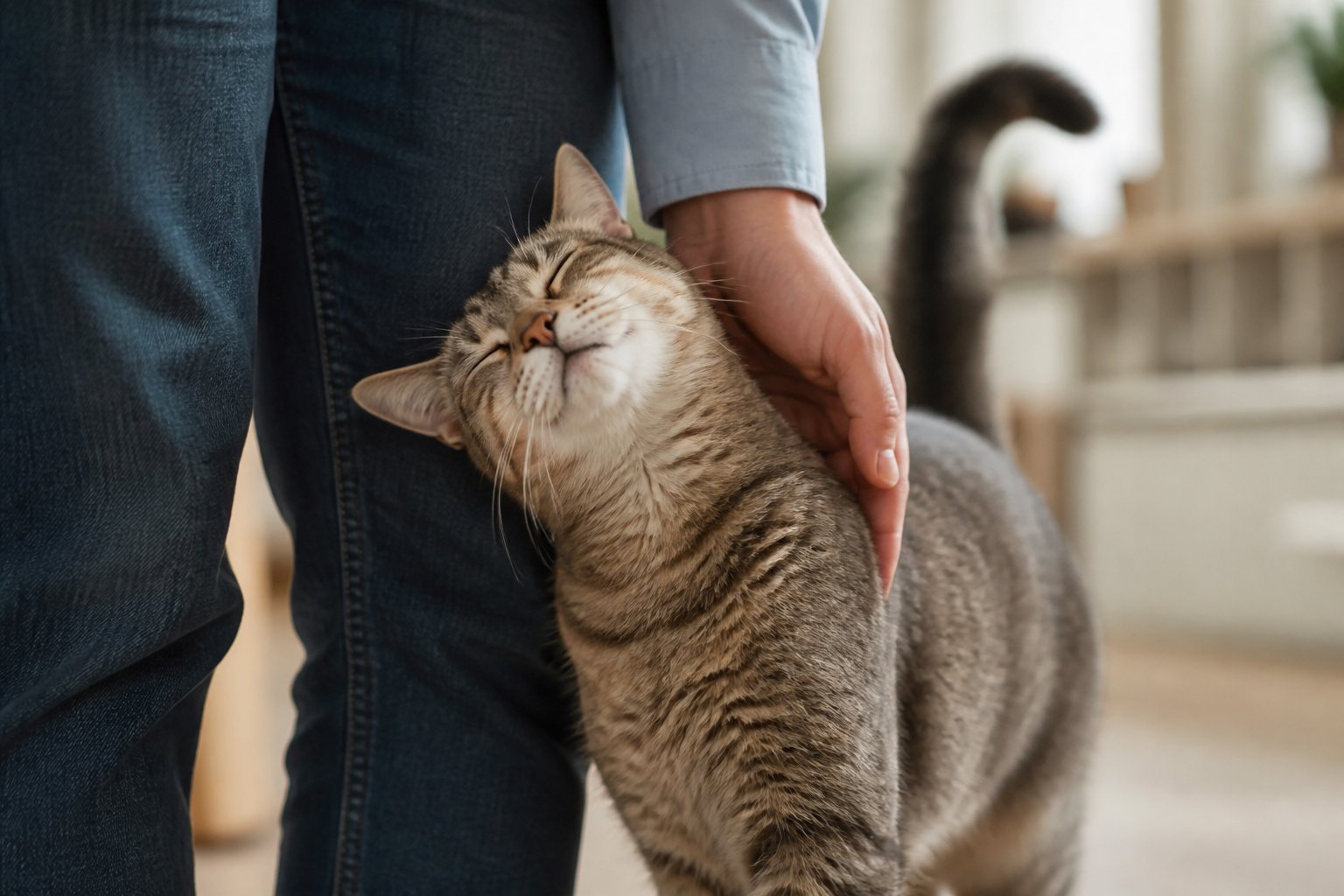
Cats use rubbing as a complex form of communication that involves scent marking, showing affection, and requesting attention. Understanding the context and your cat’s body language helps you figure out what they’re trying to tell you.
What does it mean when a cat rubs its face or body against your legs?
When a cat rubs against your legs, they’re usually marking you with scent glands located in their cheeks, chin, and head. This behavior means they’re claiming you as part of their family and marking you as a safe person.
Cats rub their faces against you to create a communal smell within the household. The pheromones they leave on you can’t be detected by humans but help your cat feel secure.
This rubbing also serves as a greeting, especially after you’ve been away. It’s your cat’s way of saying hello and showing they’re happy to see you.
Why do some cats rub against you and then suddenly bite or nip?
Cats can become overstimulated during petting or rubbing sessions. When they’ve had enough physical contact, they may bite or nip to communicate their need for space.
This behavior happens because cats have limits on how much touching they can handle. Learning your cat’s body language helps you recognize when they’re approaching their threshold.
Watch for signs like tail flicking, ear rotation, or skin rippling. These signals tell you to stop petting before the rubbing turns aggressive.
Why does a cat circle you while rubbing its body and purring?
A cat that circles you while rubbing is performing a thorough scent-marking ritual. They’re using scent glands along their body, including those at the base of their tail, to mark you completely.
The purring that accompanies this behavior typically indicates contentment and affection. Your cat feels comfortable and happy in your presence.
This circling behavior also helps cats show affection and request attention. They may be asking for food, playtime, or simply more interaction with you.
Do stray cats rubbing against people indicate friendliness or a request for help?
Stray cats that rub against people are usually showing some level of trust and comfort. This behavior suggests the cat has had positive experiences with humans before or is naturally social.
The rubbing may indicate the cat wants food, water, or shelter. Stray cats learn that friendly behavior toward humans often results in getting their needs met.
However, approach stray cats carefully even when they seem friendly. They may carry diseases or parasites, and their behavior can change quickly if they feel threatened.
Why do cats rub against furniture, doorways, and other objects in the home?
Cats rub against furniture and objects to mark their territory throughout your home. These items become scent markers that help your cat feel secure in their environment.
Doorways and corners are strategic locations for scent marking. Cats mark these areas because they’re high-traffic zones where the scent will be refreshed regularly.
This territorial marking is normal behavior and doesn’t indicate a problem. It’s simply your cat’s way of making your home feel like theirs.
How can you tell whether a cat’s rubbing behavior is a sign of trust and affection versus stress or anxiety?
Normal rubbing appears gentle and relaxed, with your cat’s body loose and their tail held high or in a neutral position. The cat will have soft eyes and may purr during the interaction.
Stress-related rubbing looks more frantic or intense. Your cat may rub excessively against you or objects while showing other signs like dilated pupils, flattened ears, or a low body posture.
If your cat suddenly starts rubbing more than normal, visit your vet to rule out medical issues like allergies, parasites, or skin conditions. Changes in rubbing behavior can signal health problems that need attention.