Kitten Development Milestones: A Complete Guide to Your Cat’s First Year
Watching a tiny kitten grow from a helpless newborn into a playful, independent cat happens fast. You might wonder when your kitten will open their eyes, start walking, or be ready to eat solid food. Kittens go through rapid development in their first 12 weeks of life, with major milestones happening almost weekly as they gain physical abilities, social skills, and independence.
Understanding kitten development stages week by week helps you provide the right care at the right time. Each week brings new changes in your kitten’s body, behavior, and needs. You need to know what to expect so you can support healthy growth and catch any problems early.
Tracking your kitten’s growth from newborn to confident adult involves watching for key physical and behavioral markers. From the moment they’re born until they reach their first birthday, your kitten will transform completely. This guide breaks down what happens at each stage and what you need to do to help your kitten thrive.
Key Takeaways
- Kittens experience their most dramatic changes in the first eight weeks, including opening their eyes, learning to walk, and starting to eat solid food
- Each week of development brings specific physical and behavioral milestones that help you understand your kitten’s needs and abilities
- Proper nutrition, socialization, and veterinary care during early development stages set the foundation for a healthy adult cat
Understanding Kitten Growth Stages
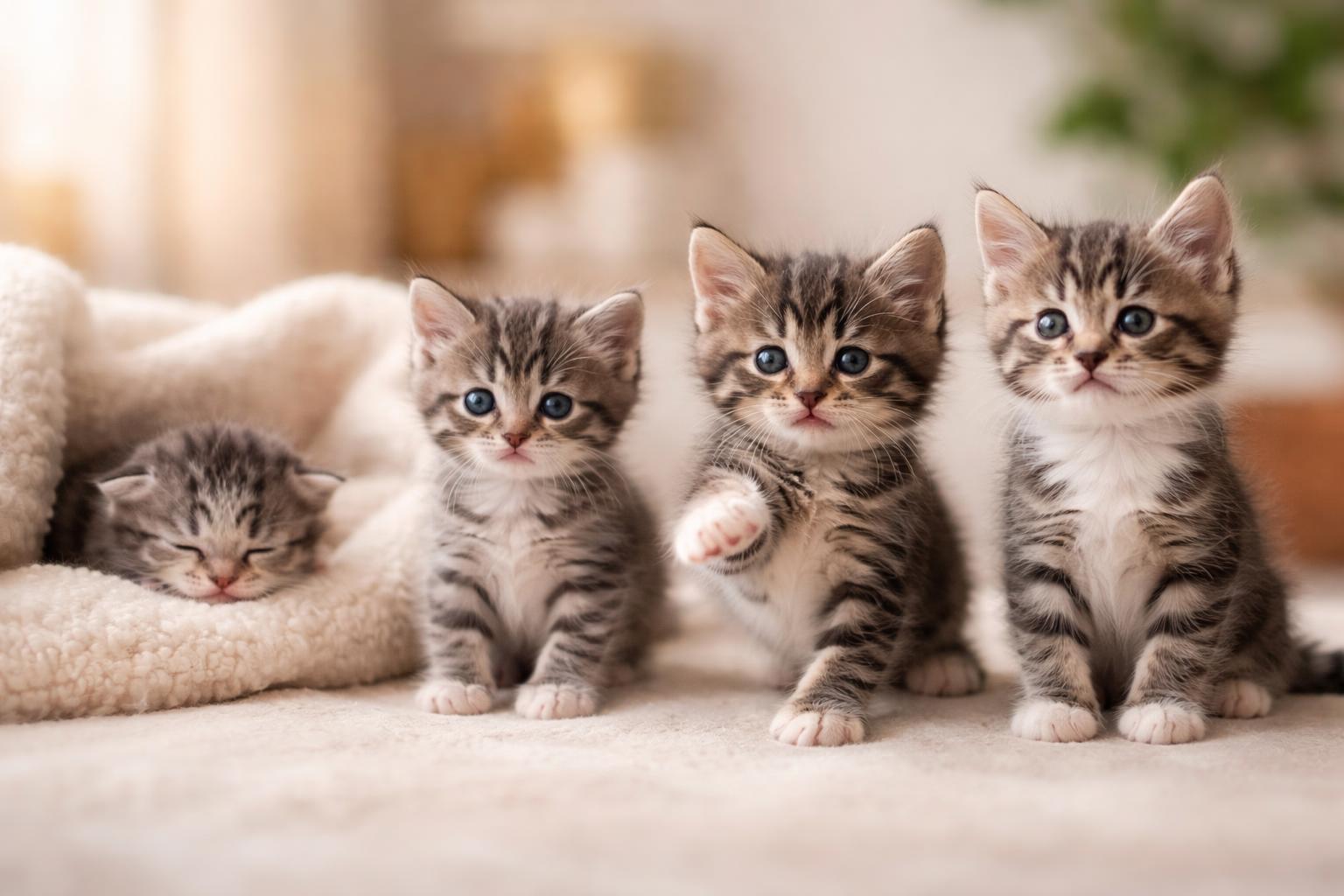
Kittens transform from helpless newborns to active young cats in just three months, with each week bringing new physical abilities and behavioral changes. These early kitten development stages follow a predictable pattern that helps you understand what to expect as your kitten grows.
The Neonatal Stage (Birth to 1 Week)
Newborn kittens are completely dependent on their mother during the first week of life. They’re born blind and deaf, relying entirely on smell and touch to find their mother and littermates.
Key characteristics of the neonatal stage include:
- Eyes and ears remain closed
- Weight ranges from 3 to 4 ounces at birth
- Kittens sleep approximately 90% of the day
- Unable to regulate body temperature independently
- Movement is limited to crawling
Your kitten needs constant warmth during this period. The mother cat provides this through body heat and frequent nursing sessions. Kittens will instinctively root around to find their mother’s nipples for feeding every two to three hours.
Their umbilical cord typically falls off within the first few days. You’ll notice kittens gaining weight steadily if they’re nursing properly, which is the main indicator of health during this critical neonatal period.
Transitional Changes (2 to 3 Weeks)
The transitional period marks major developmental changes in your kitten’s senses and mobility. Eyes begin opening between days 7 and 14, though vision remains blurry at first.
Ear canals start opening around day 10 to 14, allowing kittens to hear for the first time. Baby teeth begin emerging during week three, preparing kittens for eventual weaning.
Physical developments during weeks 2-3:
- Kittens start attempting to stand and walk
- Weight doubles from birth weight
- Blue eyes are visible in all kittens initially
- They begin responding to sounds and movement
- Temperature regulation improves but isn’t fully developed
Your kitten becomes more aware of their surroundings during this phase. They’ll start interacting with littermates through gentle play and exploration. These early interactions help kittens learn important social skills they’ll need throughout life.
Social and Physical Development (4 to 6 Weeks)
Kittens become increasingly coordinated and social between four and six weeks old. This is when their personalities start emerging as they explore their environment with growing confidence.
Running, jumping, and pouncing behaviors develop rapidly during this stage. Your kitten will engage in play fighting with littermates, which teaches them bite inhibition and social boundaries.
Weaning typically begins around week four as kittens show interest in solid food. The mother cat naturally starts spending less time nursing, encouraging kittens to become more independent.
Important milestones from 4 to 6 weeks:
| Age | Development |
|---|---|
| 4 weeks | Canine teeth emerge, litter box training begins |
| 5 weeks | Improved coordination, active play increases |
| 6 weeks | Eye color starts changing to adult color |
Socialization with humans should start during this window. Gentle handling helps kittens become comfortable with people and new experiences. Your kitten’s confidence grows daily as they master new physical skills and social interactions.
Preparing for Kitten Adolescence (7 to 12 Weeks)
Your kitten enters a crucial learning period between seven and twelve weeks that shapes their adult behavior. This phase requires consistent socialization and proper nutrition to support rapid growth.
Kittens should be fully weaned by eight weeks and eating solid kitten food exclusively. Their adult teeth begin replacing baby teeth around week eleven. Weight increases significantly, with kittens typically reaching two pounds by eight weeks.
Behavioral and physical changes include:
- Enhanced hunting instincts and prey drive
- Increased independence from mother
- First veterinary vaccinations administered
- Litter box habits fully established
- Playful energy reaches peak levels
This is the ideal time for kittens to join their new homes, as they’re independent enough to leave their mother but still in the critical socialization window. Your kitten needs exposure to various people, sounds, and experiences during this period.
Their coordination improves dramatically, allowing for complex climbing and jumping. You’ll notice your kitten becoming bolder in exploration while still seeking comfort when startled. Physical growth continues rapidly, with kittens requiring nutrient-dense food to support their developing bones and muscles.
Major Physical and Behavioral Milestones by Week

Kittens transform rapidly during their first weeks of life, progressing from blind and deaf newborns to playful, coordinated young cats. Each week brings distinct changes in their senses, mobility, and social behaviors that help them develop into healthy adult cats.
Newborn Kittens: Birth to 1 Week
Newborn kittens arrive completely dependent on their mother for survival. They are born with their eyes sealed shut and ear canals closed, making them both blind and deaf.
At birth, kittens typically weigh between 3 to 4 ounces. Their umbilical cord stump remains attached for the first few days before falling off naturally.
During this first week, your kitten cannot regulate its own body temperature. The mother cat provides essential warmth, or you must supply a heating source if you’re caring for orphaned kittens.
Newborn kittens spend most of their time sleeping and nursing. They use their sense of smell and touch to locate their mother and littermates. Their main activities include eating and sleeping, with feeding occurring every 2 to 3 hours.
Movement is limited to crawling in a circular pattern using their front legs. They cannot stand or walk yet, but they can slowly drag themselves toward warmth and food.
2-Week-Old Kitten: Eyes and Senses Open
The most exciting milestone for a 2-week-old kitten is when their eyes begin to open. This typically happens between days 7 and 10, though it can take up to 14 days for both eyes to fully open.
When the eyes first open, they appear blue and cloudy. Your kitten’s vision remains blurry at this stage, and full visual clarity won’t develop for several more weeks.
The ear canals also begin opening around day 10 to 14. Once open, your kitten starts responding to sounds in their environment, though hearing is still developing.
Weight doubles during the second week, reaching approximately 7 to 8 ounces. Your kitten’s baby teeth begin forming beneath the gums, though they won’t emerge just yet.
Kitten behavior starts showing more awareness of surroundings. They become slightly more active and may attempt to lift themselves up on wobbly legs, though walking is still beyond their capabilities.
3-Week-Old Kitten: First Steps and Social Interaction
A 3-week-old kitten reaches critical mobility milestones. They take their first awkward steps, though coordination remains poor and falls are frequent.
Baby teeth start erupting through the gums during week three. The tiny incisors appear first, allowing your kitten to begin the gradual transition from exclusively nursing.
Vision and hearing continue improving rapidly. Your kitten can now track movement with their eyes and turn their head toward sounds. They begin recognizing their littermates and mother more clearly.
Social interaction and play behavior emerge during this week. Kittens start batting at siblings and engaging in simple play behaviors. These early interactions help them learn important social skills.
Temperature regulation improves, though they still need external warmth sources. Your kitten becomes more vocal, producing louder mews and beginning to purr.
Litter box training can start at three weeks. Kittens naturally begin eliminating away from their sleeping area, making this an ideal time to introduce a shallow litter pan.
4- to 6-Week-Old Kitten: Exploration and Play
Between four and six weeks, kittens experience explosive growth in coordination and confidence. A 4-week-old kitten walks with increasing steadiness and begins attempting to run and pounce.
Physical developments include:
- Running and jumping with improved coordination
- Climbing low surfaces and furniture
- Grooming themselves and littermates
- Playing with toys and objects
- Wrestling with siblings
A 5-week-old kitten shows refined motor skills. They can groom themselves thoroughly, use the litter box reliably, and engage in complex play behaviors like stalking and pouncing.
Weaning progresses during this period. While kittens still nurse, they start eating solid or moistened kitten food. By six weeks, many kittens eat primarily solid food with occasional nursing.
A 6-week-old kitten displays distinct personality traits. They become more independent from their mother and show preferences for certain toys, sleeping spots, and playmates. Socialization windows remain critical during these weeks for developing confident, well-adjusted adult cats.
Baby teeth are fully erupted by six weeks. Your kitten can eat dry kitten food and shows hunting behaviors like stalking, chasing, and capturing toys.
Tracking Growth and Nutrition
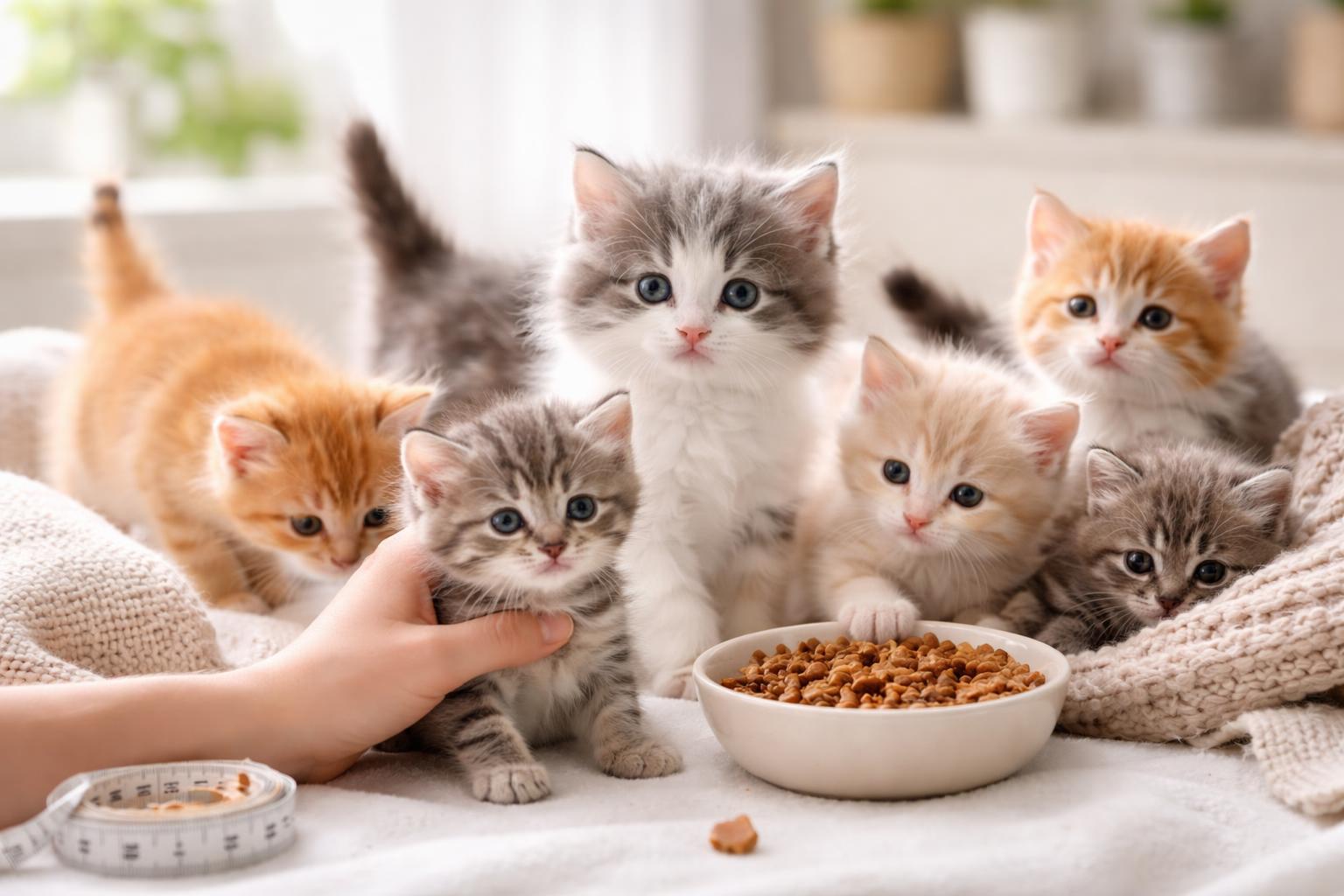
Monitoring your kitten’s weight gain and providing proper nutrition are essential parts of raising a healthy cat. Kittens need specific calorie amounts based on their age and weight, and choosing the right food type supports their rapid development.
Using a Kitten Growth Chart
A kitten growth chart helps you track whether your kitten is developing at a healthy rate. You can compare your kitten’s current weight against expected weight ranges for their age.
Most kittens weigh about 3.5 ounces at birth. By one week, they should double their birth weight. At four weeks, healthy kittens typically weigh around one pound.
Tracking your kitten’s growth milestones lets you spot potential health issues early. Weigh your kitten weekly during the first few months. Record the weight in a notebook or use a digital tracker.
If your kitten falls significantly below the expected weight range, contact your veterinarian. Slow growth can signal parasites, illness, or nutritional problems that need attention.
How Fast Do Kittens Grow
Kittens grow extremely fast during their first six months of life. They gain roughly one pound per month on average, though growth rates vary by breed and individual kitten.
The fastest growth happens between two and six months of age. During this period, your kitten needs nutrient-rich food that includes protein, fat, carbohydrates, vitamins, and minerals.
By six months, most kittens reach about 75% of their adult size. Growth continues at a slower pace until 12 months for most breeds. Large breeds like Maine Coons may keep growing until 18 months or longer.
Kittens need approximately 60 calories per pound of body weight daily to support this rapid growth. This is roughly double what adult cats need. Your kitten’s energy requirements change as they grow, so adjust portions accordingly.
When Do Kittens Start Eating Solid Food
Kittens begin transitioning to solid food around three to four weeks of age. At this point, they still nurse from their mother but start showing interest in other foods.
The weaning process typically lasts until seven to eight weeks old. Start by offering wet kitten food mixed with kitten milk replacer to create a soft gruel. Gradually reduce the liquid as your kitten gets used to the texture.
By eight weeks, most kittens can eat solid food without any added moisture. They should be completely weaned from their mother’s milk at this age. Never give kittens cow’s milk, as it causes digestive upset.
During the transition to solid food, provide fresh water in a shallow bowl. Kittens need constant access to clean water once they start eating solid meals.
Wet vs. Dry Kitten Food
Both wet and dry kitten food provide complete nutrition when you choose high-quality brands. Each type offers different benefits for your growing kitten.
Wet kitten food contains 70-80% moisture, which helps keep your kitten hydrated. It’s easier to chew and digest, making it ideal for younger kittens. The strong smell and soft texture often appeal to picky eaters. Wet food tends to be higher in protein and lower in carbohydrates.
Dry kitten food is convenient and more affordable per serving. It stays fresh in the bowl longer and helps reduce tartar buildup on teeth. Dry food contains only about 10% moisture, so kittens eating it need to drink more water.
Many cat owners choose to feed both types. You can offer wet food at mealtimes and leave dry food available for snacking. Whatever you choose, make sure the label specifically says it’s formulated for kittens, not adult cats. Kitten food contains higher levels of calories, protein, and essential nutrients that support growth.
Kitten Care Essentials for Each Stage
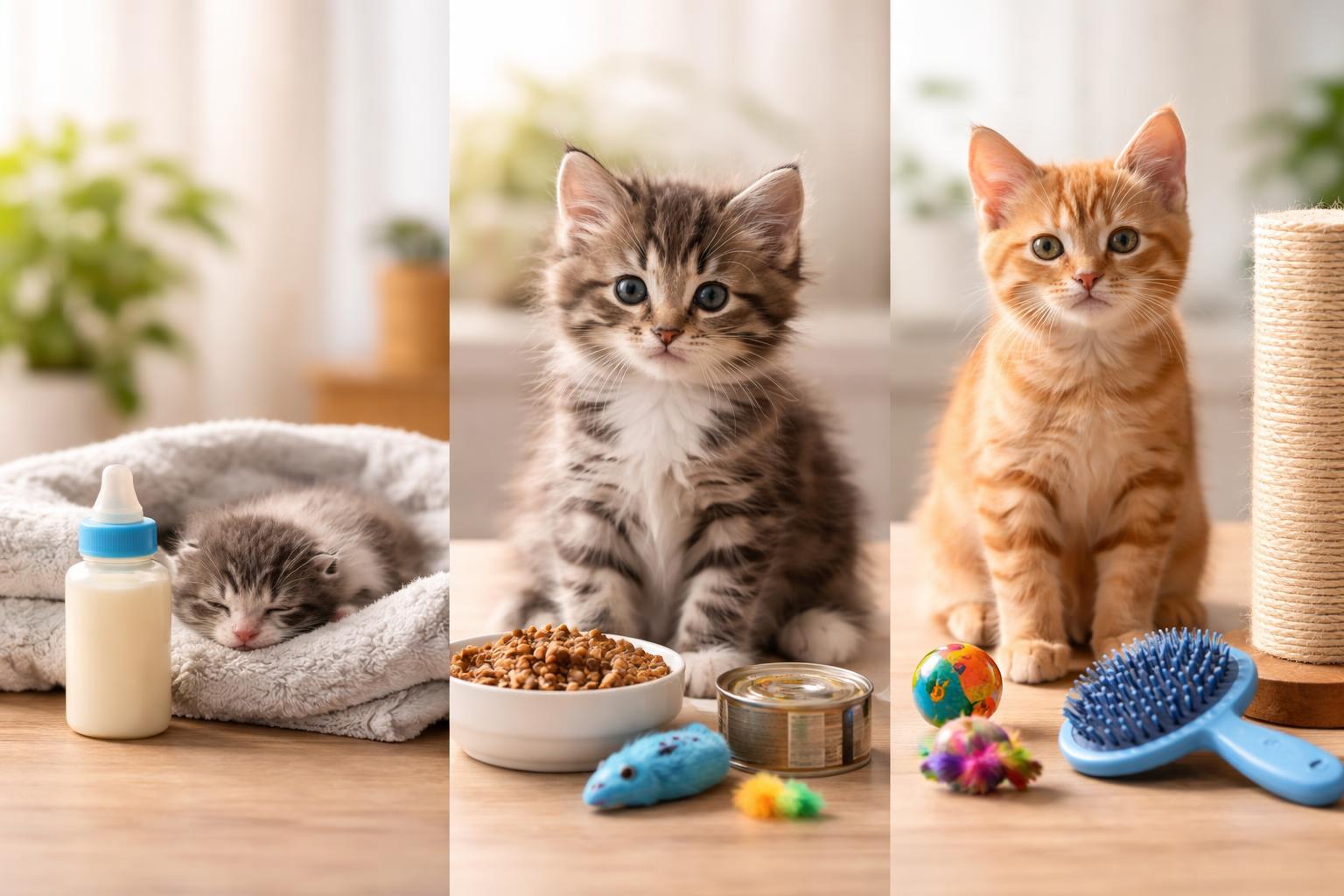
Your kitten’s needs change rapidly as they grow, requiring different care approaches at each development phase. Proper nutrition, a safe environment, and early training lay the foundation for a healthy adult cat.
Creating a Safe and Warm Environment
Newborn kittens cannot regulate their body temperature for the first few weeks of life. You need to keep them in a warm space between 85-90°F during week one, gradually reducing to 80°F by week four.
Place kittens in a draft-free area away from windows and doors. A heating pad set on low and wrapped in towels works well, but make sure half the nesting box remains unheated so kittens can move away if too warm.
Safety considerations by age:
- 0-3 weeks: Keep away from other pets and limit handling
- 3-8 weeks: Remove small objects, electrical cords, and toxic plants
- 8-12 weeks: Secure high surfaces and close off dangerous areas
As kittens become mobile around 3-4 weeks, they explore everything. Check your space at floor level to spot hazards you might miss from standing height.
Feeding and Weaning Practices
Newborn to 4 weeks: Kittens need mother’s milk or kitten milk replacer every 2-3 hours. Never give cow’s milk, which causes digestive problems. Each kitten should gain about 0.5 ounces daily during this period.
4-8 weeks: Understanding kitten development helps you time weaning correctly. Start offering wet kitten food mixed with formula at 4 weeks. Gradually reduce the liquid and increase solid food over the next month. Kittens should eat 4-5 small meals daily.
8-12 weeks: Transition to kitten food designed for growth. These formulas contain higher protein and fat levels than adult cat food. Feed 3-4 times per day, offering about 1/4 to 1/3 cup total daily.
Fresh water must be available once kittens start eating solid food. Choose shallow dishes to prevent drowning risks for young kittens.
Litter Box Training
Most kittens naturally use a litter box once they start walking at 3-4 weeks old. Place them in the box after meals and naps to reinforce the behavior. Keep the box in a quiet, accessible location away from their food and water.
Use a shallow box or cut down the sides of a regular box for easy entry. Young kittens need boxes with sides only 2-3 inches high. Avoid covered boxes initially, as they can frighten small kittens.
Choose unscented, clumping litter once kittens reach 8 weeks. Before then, use non-clumping litter to prevent problems if kittens ingest it. Scoop waste daily and completely change litter weekly.
Common litter box issues:
- Accidents outside the box may signal the box is too far away or dirty
- Multiple kittens need multiple boxes (one per kitten plus one extra)
- Sudden avoidance could indicate a health problem
Monitoring Health and Weight
Weigh your kitten weekly using a kitchen scale. Kitten growth patterns show that healthy kittens should gain weight steadily, roughly doubling their birth weight by 2 weeks and reaching about 2 pounds by 8 weeks.
Schedule your first vet visit at 6-8 weeks old. Your kitten needs vaccinations starting at 6-8 weeks, with boosters every 3-4 weeks until 16 weeks old. Deworming typically happens at 4, 6, and 8 weeks.
Watch for these warning signs at any age:
- No weight gain for several days
- Lethargy or decreased activity
- Diarrhea lasting more than 24 hours
- Discharge from eyes or nose
- Difficulty breathing
Check that kittens urinate and defecate regularly. Very young kittens under 3 weeks need stimulation with a warm, damp cloth after each feeding to eliminate waste. Track development milestones at each stage to ensure your kitten progresses normally.
Health Considerations and Immunity

Kittens face several health challenges in their first months of life as their immune systems develop. Vaccines protect against serious diseases, while parasite control and early illness detection help ensure healthy growth.
Feline Viral Rhinotracheitis Risks
Feline viral rhinotracheitis is a highly contagious respiratory infection caused by feline herpesvirus-1. This disease commonly affects kittens because their immune systems are still developing and cannot fight off infections as well as adult cats.
The virus spreads through direct contact with infected cats or contaminated surfaces. Your kitten can catch it from sneezing, coughing, or sharing food bowls with sick cats.
Common symptoms include:
- Sneezing and nasal discharge
- Eye discharge and conjunctivitis
- Fever and loss of appetite
- Coughing and drooling
Young kittens are especially vulnerable during the early kitten growth stages when maternal antibodies start to fade. The infection can become severe in unvaccinated kittens, sometimes leading to pneumonia or chronic eye problems.
The FVRCP Vaccine Schedule
The FVRCP vaccine protects against three serious diseases: feline viral rhinotracheitis, calicivirus, and panleukopenia. Your kitten needs this core vaccine series to build proper immunity.
Most kittens receive their first FVRCP shot at 6 to 8 weeks of age. They need booster shots every 3 to 4 weeks until they reach 16 weeks old. This timing matches critical periods in kitten development stages when maternal antibodies decline.
Typical FVRCP schedule:
- First dose: 6-8 weeks
- Second dose: 10-12 weeks
- Third dose: 14-16 weeks
- Booster: 1 year later, then every 1-3 years
Your vet might adjust this schedule based on your kitten’s health and risk factors. Never skip vaccine appointments, as incomplete protection leaves your kitten vulnerable to disease.
Parasite Prevention and Deworming
Kittens commonly have intestinal parasites like roundworms and hookworms, often passed from their mother. These parasites steal nutrients and can cause serious health problems during rapid growth periods.
Most kittens need deworming treatments starting at 2 to 3 weeks of age. Your vet will typically deworm your kitten every 2 weeks until they reach 8 weeks old, then monthly until 6 months of age.
Fleas also pose major health risks to kittens. These parasites can cause anemia in young kittens by feeding on their blood. Start flea prevention only with products approved for your kitten’s age and weight, as many adult cat treatments are too strong.
Common parasites to watch for:
- Roundworms (spaghetti-like worms in stool)
- Hookworms (can cause bloody diarrhea)
- Tapeworms (rice-like segments near tail)
- Coccidia (causes watery diarrhea)
Managing Kitten Illness
Kittens can become sick quickly because they have small body reserves and developing immune systems. Watch for warning signs like decreased appetite, lethargy, vomiting, or diarrhea lasting more than 24 hours.
Upper respiratory infections are common in young kittens. Keep your kitten’s eyes and nose clean with a warm, damp cloth if they show discharge. A humidifier can help ease breathing difficulties.
Diarrhea and vomiting can lead to dangerous dehydration in kittens within hours. Contact your vet immediately if your kitten shows these symptoms along with weakness or refuses to eat.
Never give human medications to your kitten without vet approval, as many common drugs are toxic to cats. Keep your vet’s emergency number handy and know the location of the nearest 24-hour animal hospital.
Development of Teeth and Feeding Habits

Kittens undergo major dental changes during their first year, starting with baby teeth that emerge around two to three weeks of age and eventually being replaced by permanent adult teeth. These dental developments directly affect what and how your kitten eats, requiring you to adjust food types and textures as they grow.
Emergence of Feline Baby Teeth
Your kitten’s baby teeth begin to emerge at about two weeks of age, marking an early sign of growth and development. These deciduous teeth, also called milk teeth, are temporary and smaller than adult teeth.
By eight weeks old, your kitten will have a full set of 26 baby teeth. The incisors come in first, followed by the canines, and then the premolars. You won’t see molars during this stage since they only develop with the adult set.
Around three to four months of age, feline baby teeth start falling out as permanent teeth push through the gums. This process usually completes by six to seven months, when your kitten will have all 30 adult teeth. During teething, you might notice your kitten chewing more often or being slightly less interested in food due to sore gums.
Chewing Behaviors and Oral Care
Teething kittens often chew on objects to relieve discomfort from emerging teeth. You should provide safe chew toys designed for kittens to prevent them from gnawing on dangerous items like electrical cords or small objects they could swallow.
Your kitten may drool more than usual or paw at their mouth during teething. You might also find tiny teeth around your home as they fall out naturally. These behaviors are normal and typically don’t require intervention.
Starting dental care early helps your cat accept tooth brushing later in life. You can gently rub your kitten’s gums with your finger to get them used to the sensation. Once adult teeth are in, you can introduce a cat-specific toothbrush and toothpaste. Never use human toothpaste, as it contains ingredients toxic to cats.
Transitioning to Adult Cat Food
Young kittens need wet kitten food or a milk replacement formula until they’re about four weeks old. At this age, you can start introducing solid kitten food mixed with formula to create a soft gruel.
By six to eight weeks, most kittens can eat dry kitten food or wet food without additional mixing. Kitten food contains higher protein, fat, and calories compared to adult formulas to support rapid growth and development.
You should feed kitten food until your cat reaches 12 months of age. At this point, you can gradually transition to adult cat food over seven to ten days by mixing increasing amounts of adult food with the kitten formula.
Some kittens prefer wet food, while others like dry kibble. You can offer both types to provide variety and ensure adequate hydration, especially if your kitten doesn’t drink much water. Dry food also helps clean teeth through the chewing action, though it shouldn’t replace proper dental care.