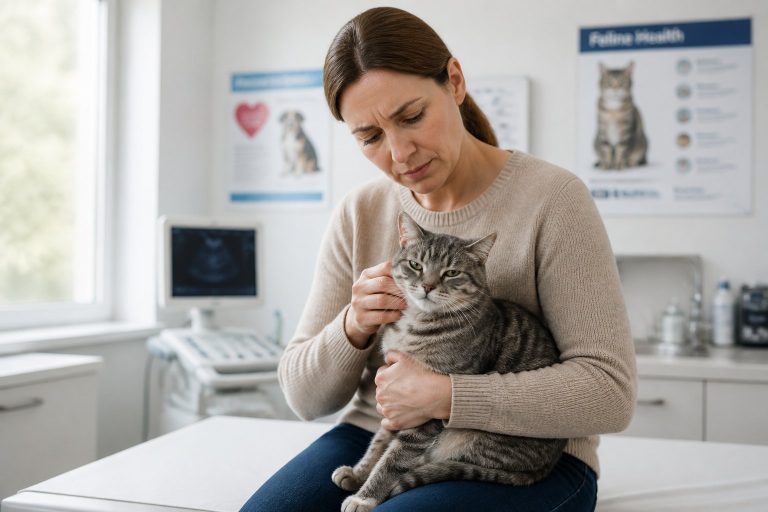
How to Pet a Cat Correctly: Understanding Cat Body Language
Petting a cat might seem simple, but doing it wrong can lead to scratches, bites, or a cat that avoids you altogether. Cats communicate their feelings through body language, and learning to read these signals makes all the difference between a positive bonding experience and a stressful encounter for both of you.
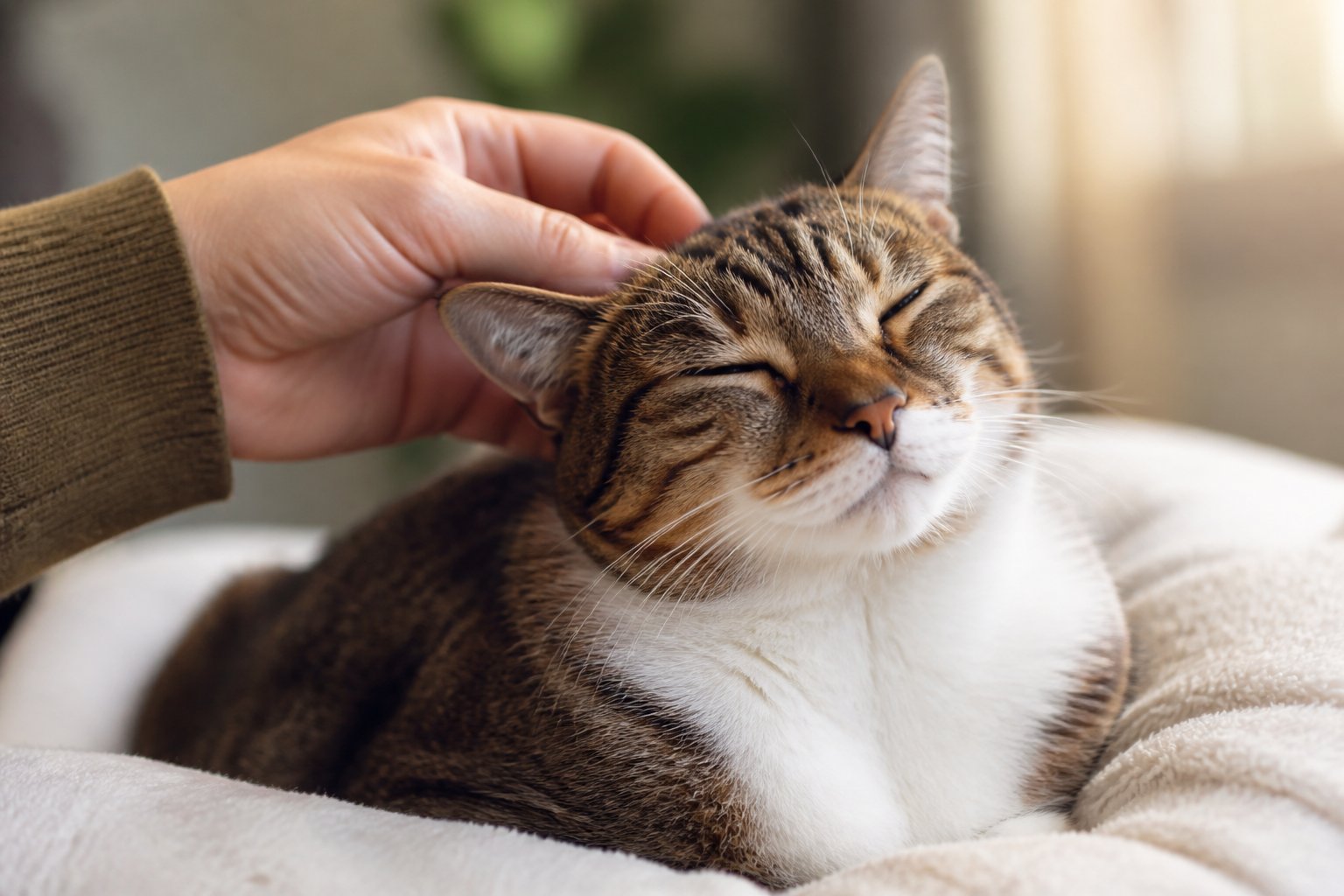
Petting cats correctly means watching for clear signals about when, where, and how long your cat wants to be touched, and understanding these signs helps you build trust while reducing stress for both of you. Research shows that even 10 minutes of proper cat petting can lower cortisol levels in your body, but only if you respect your cat’s boundaries and preferences.
This guide will walk you through recognizing your cat’s mood before you reach out, understanding what their ears and tail are telling you, and discovering which spots they love versus which areas they want you to avoid. You’ll learn how to create positive interactions that strengthen your bond and keep your cat comfortable and happy.
Assessing Your Cat’s Mood and Willingness
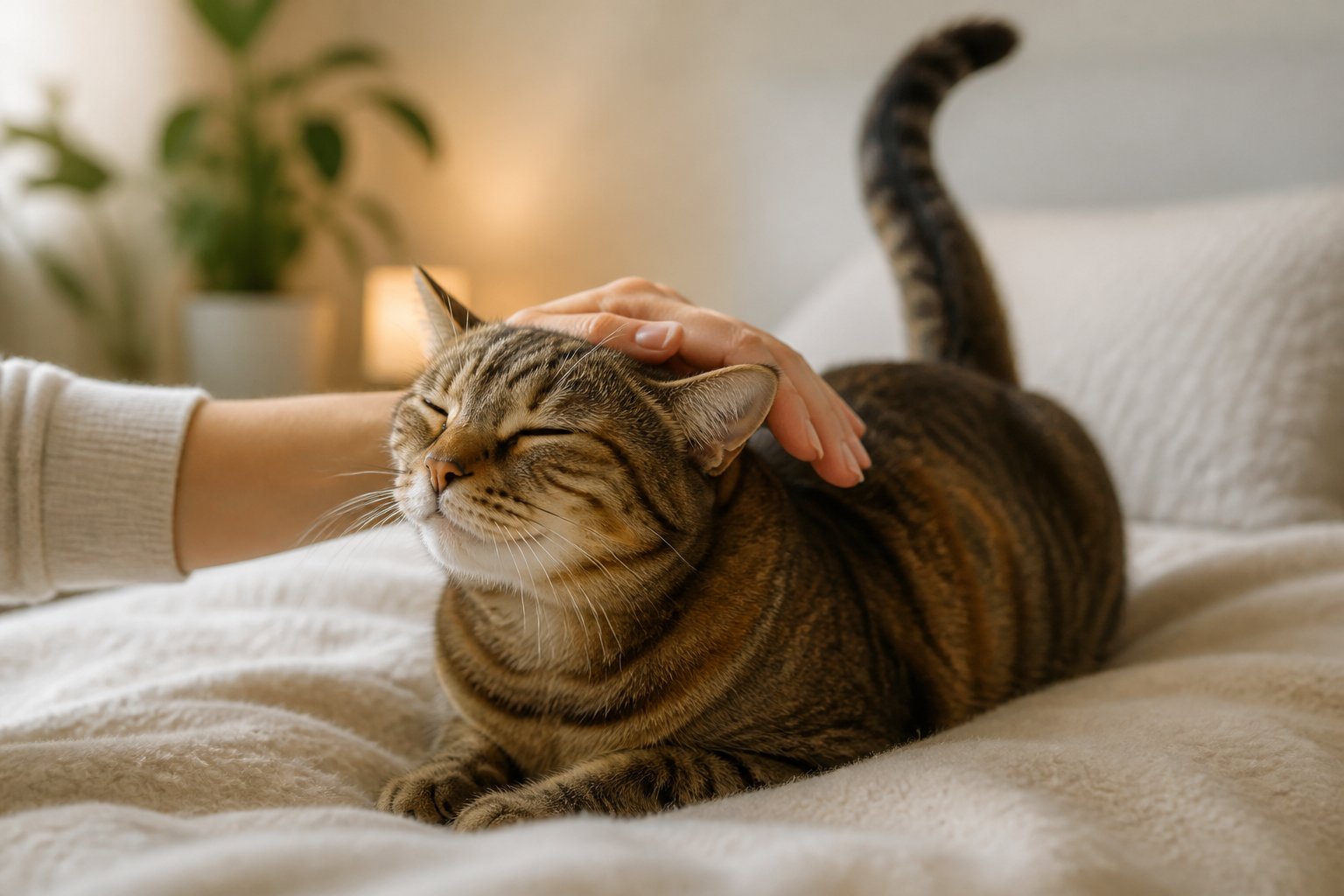
Cats communicate their readiness for interaction through specific body postures and behaviors. Learning to read these signals helps you know when your cat wants attention and when they need space.
Signs a Cat Wants to Be Petted
Your cat will show clear interest when they’re ready for petting. They may approach you directly with a loose and relaxed body. Their ears will point forward and stand upright.
Cats use body language to communicate their emotions and intentions. A tail held high with a curved end that looks like a question mark signals friendliness. Your cat might rub their chin, cheeks, or forehead against your hand. This behavior means they want contact.
When you remove your hand, a cat who wants more petting will continue to rub against it. You may hear purring. Their body stays relaxed with perked ears. Research shows that petting cats for 10 minutes can reduce cortisol, a stress hormone in your body.
Recognizing When to Avoid Petting
Not all cats want to be petted at all times. Your cat will tell you when they’re not interested through distinct warning signs. They may avoid your hand or run away to hide when you reach toward them.
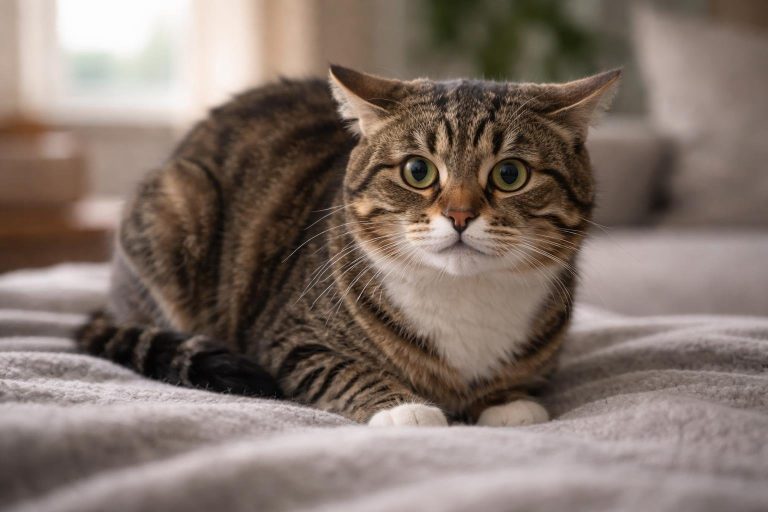
Watch for a rigid body angled away from you. Ears flattened against the head mean discomfort. Dilated pupils and a low tail that swishes back and forth show stress. Your cat might growl or hiss. They may try to swipe at you or bite your hand.
Stop all petting attempts when you see these negative signals. Your cat needs space to calm down. They may be ready for interaction later. Understanding feline body language helps prevent scratches and strengthens your bond. Never pull a cat out of hiding or interrupt their alone time to pet them.
Reading and Responding to Cat Body Language
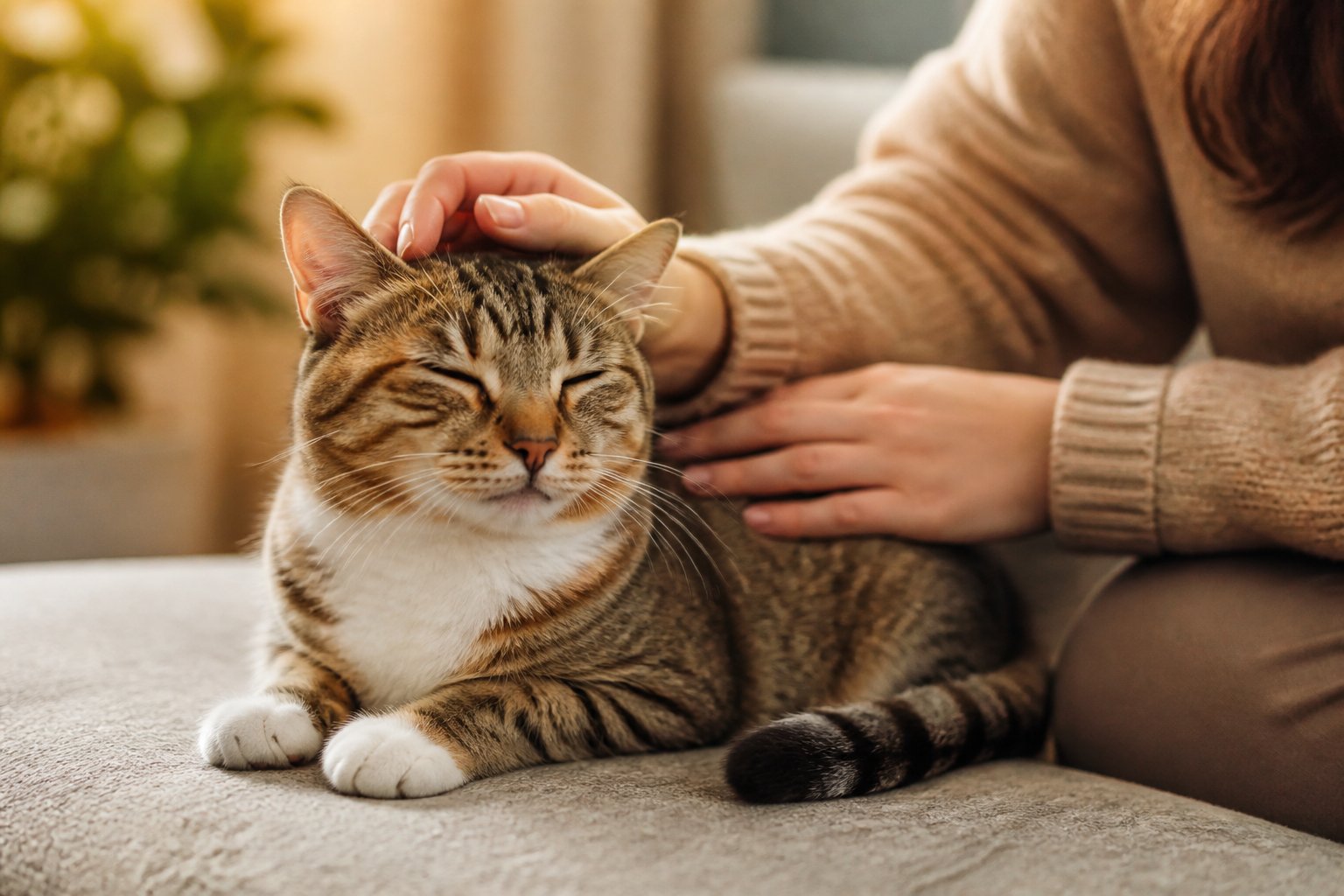
Cats show clear physical signals during petting that tell you whether they’re enjoying the interaction or need you to stop. Learning to recognize happy versus stressed body language helps you pet your cat in ways that build trust and avoid negative reactions.
Positive Body Language During Petting
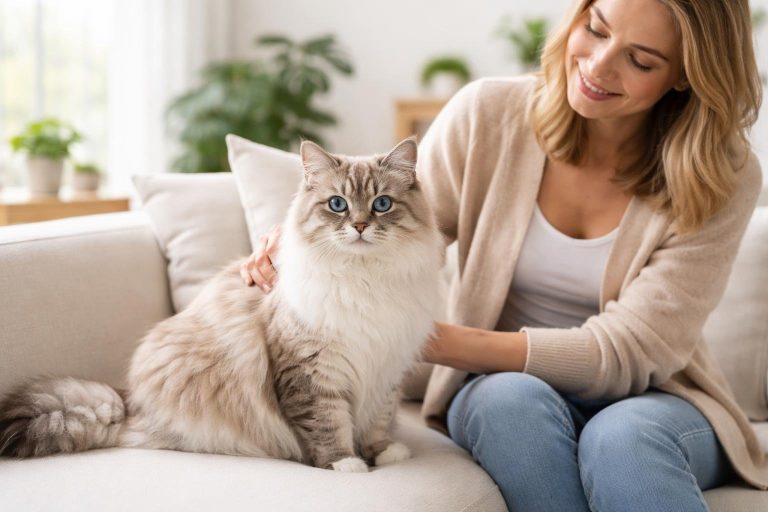
A relaxed cat shows several clear signs that they’re enjoying your touch. Their body will feel loose and soft rather than tense. Happy cats hold their ears upright and facing forward, and their eyes may be half-closed or blinking slowly at you.
Watch for a tail pointed straight up with a slight curl at the tip. This indicates confidence and contentment. Your cat might also purr, knead with their paws, or lean into your hand as you pet them.
Signs your cat wants more petting:
- Slow blinking while looking at you
- Rubbing their head against your hand
- Pushing their body closer to you
- Purring or making soft trilling sounds
- Relaxed whiskers pointing slightly forward
When you see these signals, continue petting using the same pressure and location. Your cat is telling you that what you’re doing feels good.
Warning Signs of Overstimulation or Discomfort
Cats can quickly shift from enjoying petting to feeling overwhelmed. Their tail is often the first indicator—if it starts twitching, thrashing, or wrapping tight against their body, stop petting immediately. Ears that rotate backward or flatten against their head signal discomfort or growing irritation.
Pay attention to your cat’s eyes. Dilated pupils or a fixed stare means they’re becoming stressed. Their body may stiffen or tense up, and their skin might ripple along their back.
Stop petting if you notice:
- Tail flicking or lashing side to side
- Ears pinned back or held low
- Sudden stillness or freezing in place
- Turning their head to look at your hand
- Low growling or hissing sounds
Remove your hand calmly when you see these warnings. Give your cat space to move away if they want to leave. Never try to continue petting or restrain a cat showing signs of stress or fear, as this can lead to defensive scratching or biting.
Best Practices for Petting Cats
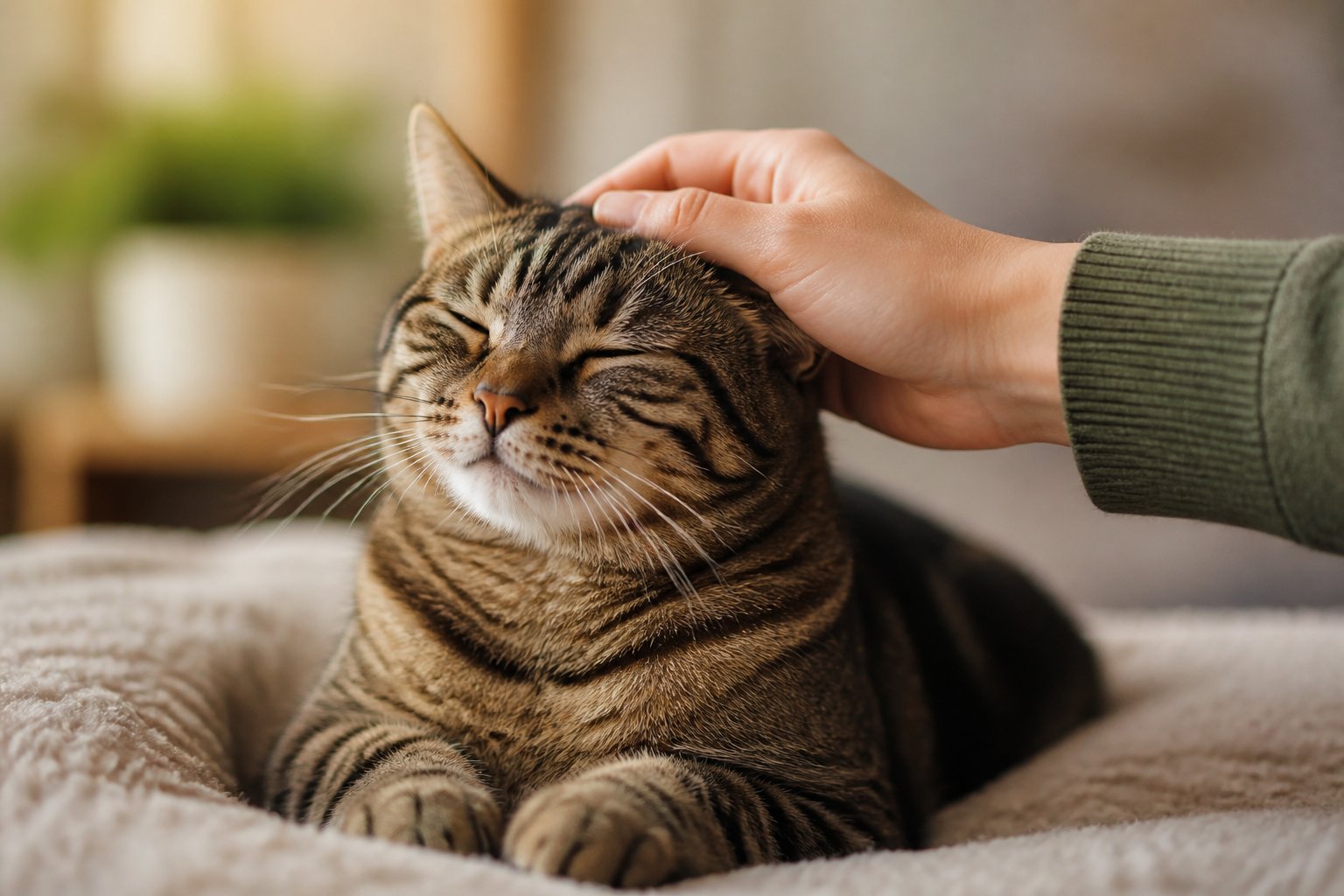
Successful cat petting depends on reading your cat’s signals and using gentle techniques in the right areas. Allowing your cat to make the first move and following proper petting methods will create positive experiences for both of you.
Letting the Cat Initiate Contact
You should wait for your cat to approach you rather than forcing interaction. A cat ready for petting will walk directly toward you with a loose, relaxed body. Watch for forward-facing ears held upright and a tail held high with a curved end that looks like a question mark.
Petting cats for just 10 minutes can reduce cortisol, but only when your cat wants the interaction. Hold out your hand and let your cat sniff it first. Your cat may rub their chin, cheeks, or forehead against your hand to show they want more contact.
If your cat turns their body away from you, flattens their ears, or holds their tail low while swishing it back and forth, they are not ready to be pet. Cats showing these signs need space. Some cats may hiss, growl, or try to swipe at your hand when they don’t want interaction.
How to Properly Pet Your Cat
Start with smooth, gentle strokes or soft scratches rather than firm pats. Focus on areas where cats like to be pet, including the cheeks, chin, forehead, and base of the tail. These spots contain scent glands that release pheromones when rubbed.
Most cats also enjoy petting on the back and behind the ears. Avoid the stomach, chest, legs, paws, and tail unless you know your cat well. These areas are vulnerable or sensitive, which can make your cat feel threatened.
Watch your cat’s reactions while petting. If your cat continues rubbing against your hand when you pause, purrs, and maintains relaxed body posture, they are enjoying the interaction. Stop petting immediately if you notice tense muscles, dilated pupils, or tail twitching. Some cats become overstimulated when pet for too long in one spot.
Finding the Favorite Petting Spots
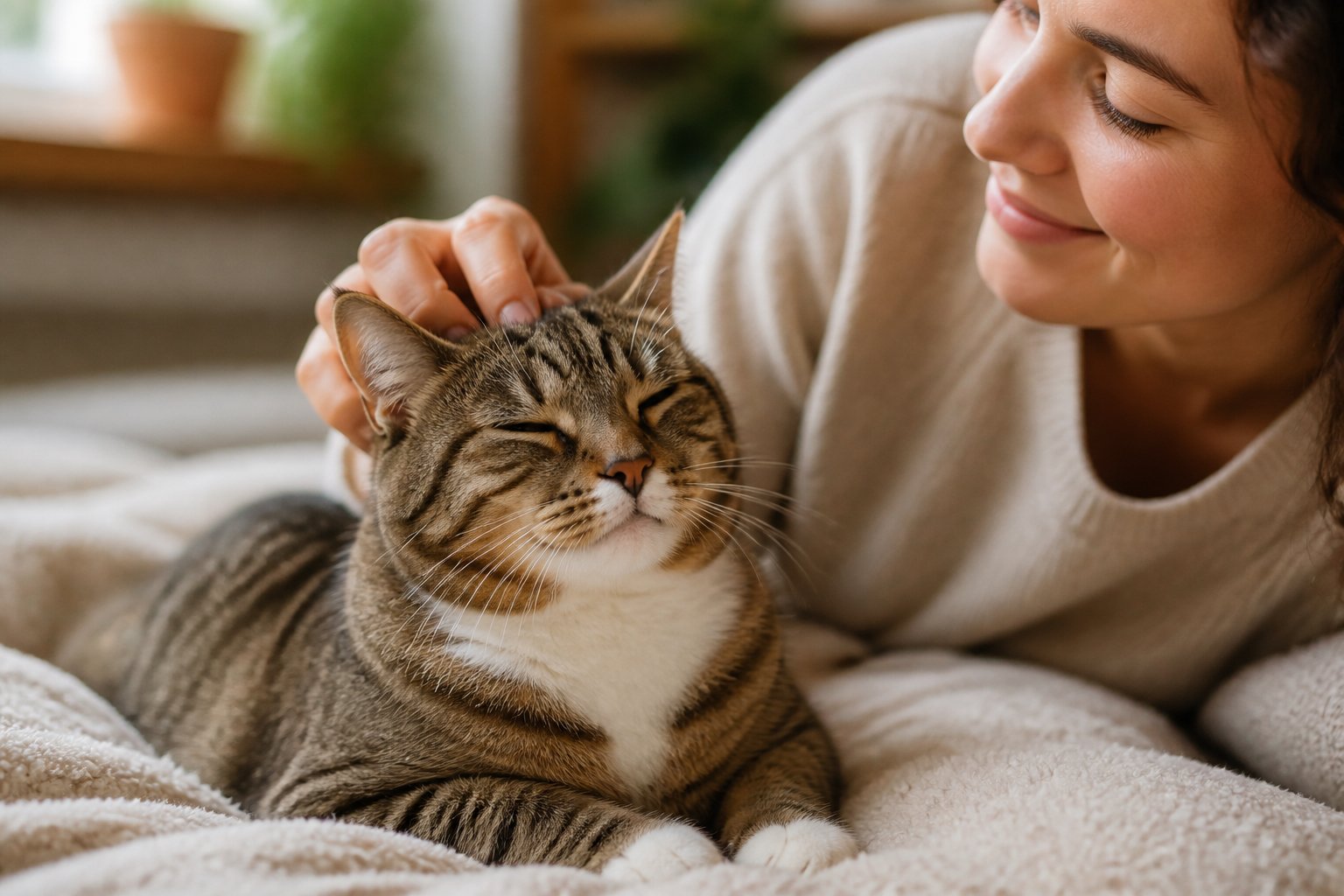
Most cats enjoy being petted in areas where they have scent glands, which helps them feel comfortable and builds trust with you. Cats prefer petting on their cheeks, chin, forehead, and base of the tail because these spots contain pheromones that play a role in social bonding.
Under the Chin and Around the Cheeks
The chin and cheek areas are typically the safest places to start when petting a cat. These spots contain scent glands that cats use to mark their territory and form social bonds with other cats and people. When you gently scratch under the chin, you’re helping your cat spread these familiar scents, which creates a calming effect.
Your cat will often lean into your hand when you pet these areas correctly. Use soft, gentle motions rather than firm pats. The cheeks extend from the corners of the mouth up toward the ears, and many cats enjoy having this entire area scratched or stroked.
If your cat rubs their face against your hand, they’re showing you they want more attention in these spots. This behavior means they’re marking you with their scent and accepting you as part of their social group.
Base of the Tail and Along the Back
The base of the tail sits right where the tail meets the body on the lower back. This area can be hard for cats to groom themselves, so many cats enjoy gentle scratching or petting along the back and toward the base of the tail. When you pet here, use smooth strokes that move in the direction of the fur.
Start at the shoulder blades and work your way down the spine toward the tail base. Some cats will raise their hindquarters when you scratch near the tail base, which usually means they’re enjoying the attention.
Pay attention to your cat’s reactions. If their ears go back or their tail starts swishing quickly, stop petting and give them space. Some cats may become overstimulated if pet on their backs for too long, even if they initially enjoyed it.
Areas to Avoid While Petting
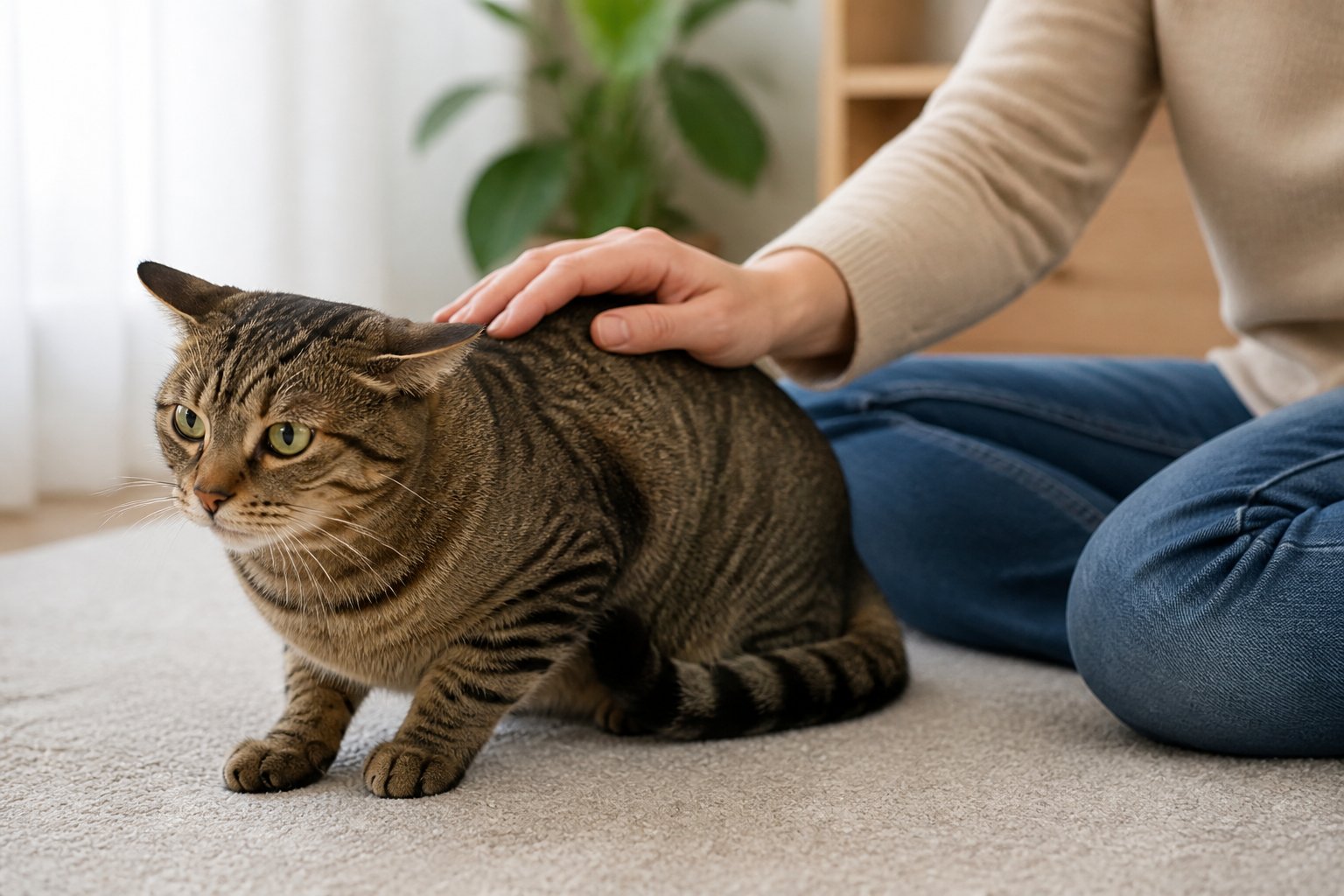
Most cats prefer not to be touched on their stomach, chest, legs, paws, or tail. These areas trigger defensive reactions because they contain vulnerable body parts or sensitive nerve endings that make cats uncomfortable when touched by humans.
Why Cats Dislike Belly, Legs, and Paws
The stomach and chest are highly vulnerable areas for cats. When you reach for these spots, your cat perceives it as a potential threat to their vital organs. This instinct exists even in cats who trust you completely.
Cats often roll over and expose their belly as a sign of trust, not an invitation to pet. This common misunderstanding of cat body language leads many people to get scratched or bitten. Your cat is showing comfort in your presence, but touching their exposed belly can trigger an immediate defensive response.
The legs, paws, and tail contain numerous nerve endings that make them extremely sensitive to touch. These body parts are essential for hunting, balance, and escape. When you pet these areas, your cat may feel restricted or threatened.
Most cats will quickly pull away, swat, or bite if you touch their paws or legs. Their tail also serves as a communication tool, and grabbing or stroking it can cause stress.
Respecting Individual Preference Variations
Some cats develop unique preferences that differ from typical feline behavior. A cat who grew up with frequent handling may tolerate or even enjoy belly rubs. You need to learn your specific cat’s comfort zones through careful observation.
Watch for signs that indicate whether cats like being petted in certain areas. A relaxed body, purring, and leaning into your hand show enjoyment. Ear flattening, tail swishing, or sudden stillness mean you should stop immediately.
If you’re meeting a cat for the first time, stick to safe zones like the cheeks and chin. Avoid all sensitive areas until the cat shows clear comfort with you. Each cat sets their own boundaries, and these can change based on mood, health, or past experiences.
Building Trust and Creating Positive Petting Experiences
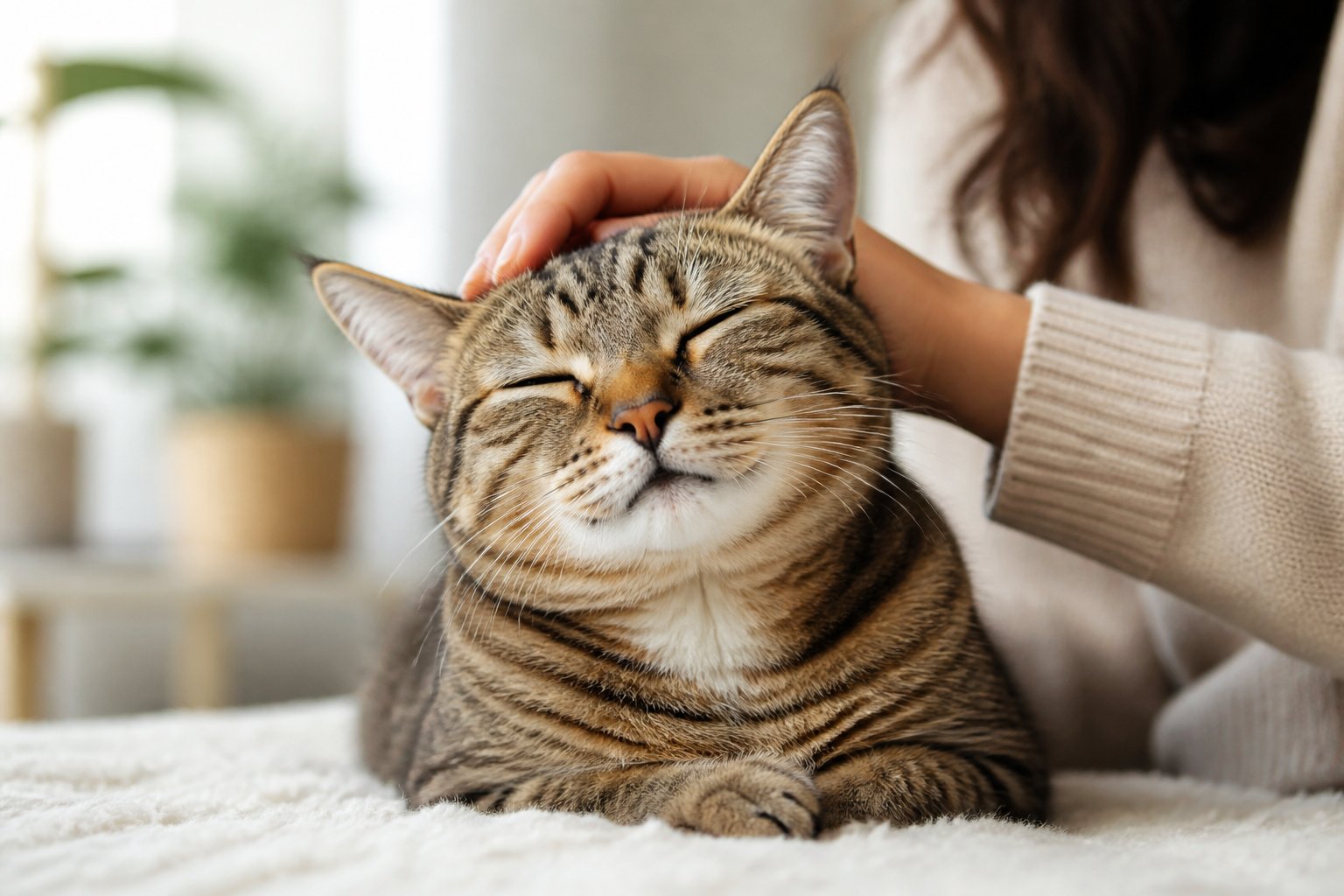
Every cat has unique boundaries that need respect, and establishing a predictable routine helps create the foundation for successful interactions. These two elements work together to build lasting trust between you and your cat.
Recognizing and Respecting Each Cat’s Limits
Pay attention to how long your cat enjoys being petted before showing signs of overstimulation. Some cats want only 30 seconds of interaction, while others happily accept several minutes of attention.
Common signs a cat has reached their limit:
- Tail starts swishing or thumping
- Ears flatten against the head
- Skin ripples along the back
- Pupils dilate suddenly
- The cat turns to bite or swat
Stop petting immediately when you notice these signals. Petting cats for too long in areas they enjoy can lead to overstimulation and aggressive responses.
Let your cat walk away whenever they choose. Never restrain or follow a cat that moves away from you. This freedom to leave builds confidence and makes them more likely to return for future interactions.
Consistency and Routine for Bonding
Schedule petting sessions at the same times each day to help your cat anticipate and prepare for interaction. Morning and evening routines work well for most cats.
Use the same gentle approach each time you pet a cat properly. Start by extending your hand for sniffing, then move to their preferred areas like the cheeks and chin. This predictable pattern reduces anxiety.
Create a calm environment during petting time. Turn off loud music, dim bright lights, and choose a quiet room away from other pets or children. Cats associate these peaceful conditions with positive touch, making them more receptive to future sessions.
Frequently Asked Questions
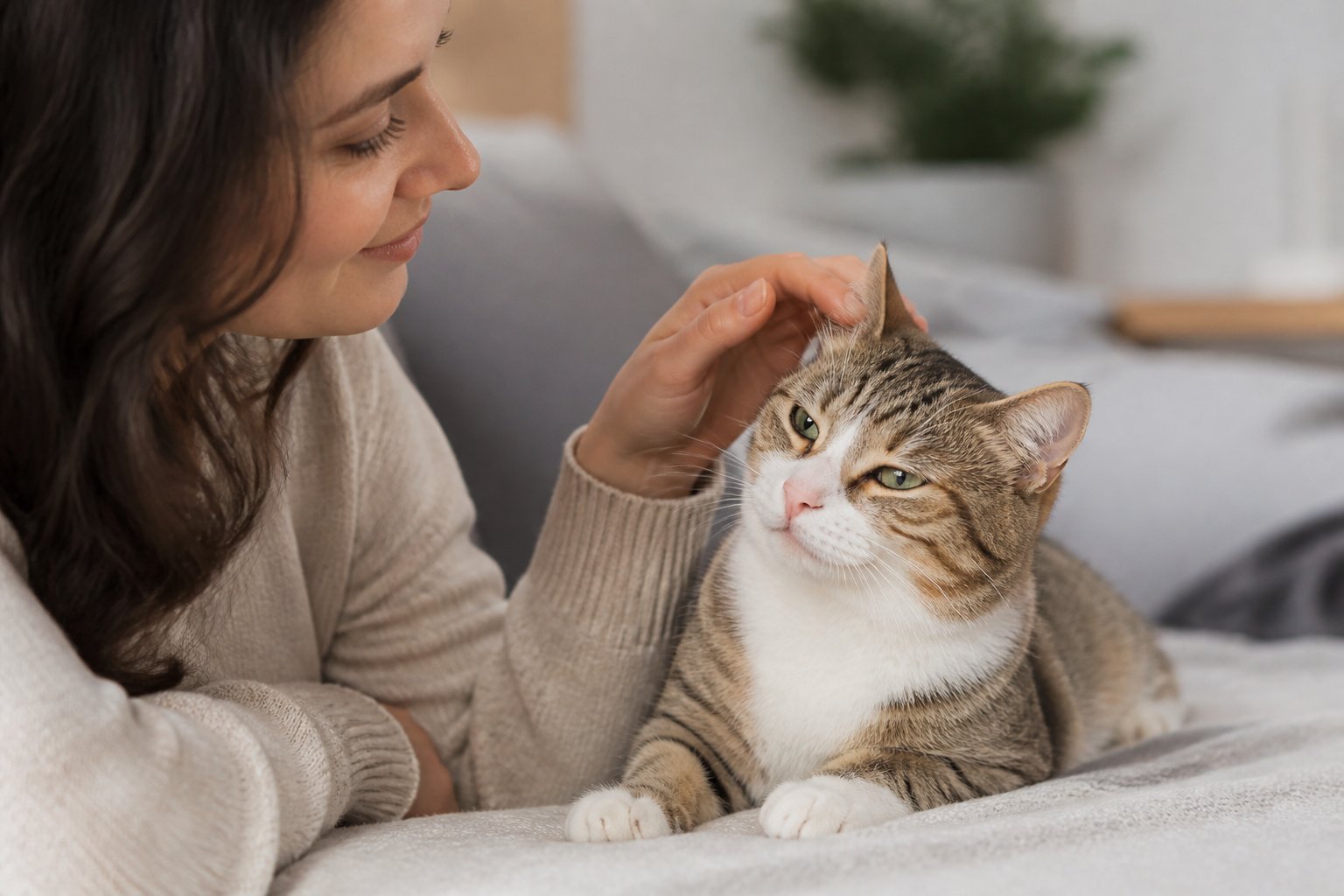
Cats communicate their comfort level through specific body signals that appear in predictable sequences. Recognizing relaxed postures versus stress indicators helps you know when to continue petting and when to stop.
What are the clearest signs a cat is enjoying being petted?
A cat enjoying petting will maintain a relaxed body with soft, loose muscles. Their tail stays still or holds an upright position with a gentle curve at the tip.
Purring often indicates contentment, though you should watch for other signals since cats also purr when stressed. A cat that enjoys your touch will lean into your hand or push their head against you.
Slow blinking is positive emotional communication between you and your cat. Half-closed eyes and forward-facing ears pointed slightly to the sides show your cat feels comfortable.
Which areas do most cats prefer to be petted, and which areas should be avoided?
Cats prefer being petted on the base of their ears, cheeks, chin, and forehead. These areas contain scent glands that cats find rewarding to activate.
The face region where scent glands are located is consistently preferred by most cats. The back of the neck may be tolerated by some cats, but watch their response carefully.
Avoid petting the belly, base of the tail, lower back, and paws. These areas have sensitive nerve endings that can trigger defensive reactions. The belly contains hypersensitive hair follicles that evolved to protect vital organs.
How can you tell from a cat’s tail, ears, and eyes when it’s time to stop petting?
Rapid side-to-side tail swishing signals irritation and means you should stop immediately. A tail that begins thumping or lashing indicates your cat has reached their limit.
Ears that rotate backward or flatten against the head show discomfort. Watch for subtle ear movements since they often appear before other warning signs.
Sudden pupil dilation indicates arousal or stress. Quick head turns toward your hand suggest your cat is monitoring the touch more carefully and may be nearing their threshold.
Why do some cats suddenly bite or swat during petting, and what body language comes first?
Cats bite during petting because repetitive touch overwhelms their sensory receptors. This happens when stimulation exceeds a cat’s individual tolerance threshold.
Warning signs appear 1-3 seconds before biting. Skin twitching or rippling along the back occurs first in many cats. Muscles become tense and rigid as tolerance decreases.
Petting-induced aggression accounts for 40% of feline aggression cases seen by veterinary behaviorists. Most cats tolerate only 3-5 strokes per session before overstimulation begins.
How should you approach and initiate petting with a scared or anxious cat?
Let the cat approach you rather than moving toward them. Extend your hand at their level and wait for them to make contact first.
Allow the cat to rub against your hand before you begin petting. Start with brief touches of 3-5 seconds, then pause to see if the cat returns for more.
Understanding feline behavior helps you create positive experiences with fearful cats. Keep sessions short and stop before the cat shows any negative signals.
What does it mean when a cat rolls over, lies down, or shows its belly while interacting with you?
A cat exposing their belly signals trust and relaxation, not an invitation to pet that area. This differs from dog behavior where belly exposure requests touch.
Rolling over indicates your cat feels safe in your presence. They may be initiating play or showing they feel comfortable enough to be vulnerable around you.
Touching the belly after this display can damage your bond and trigger defensive reflexes. Continue petting preferred areas like the cheeks and chin instead.