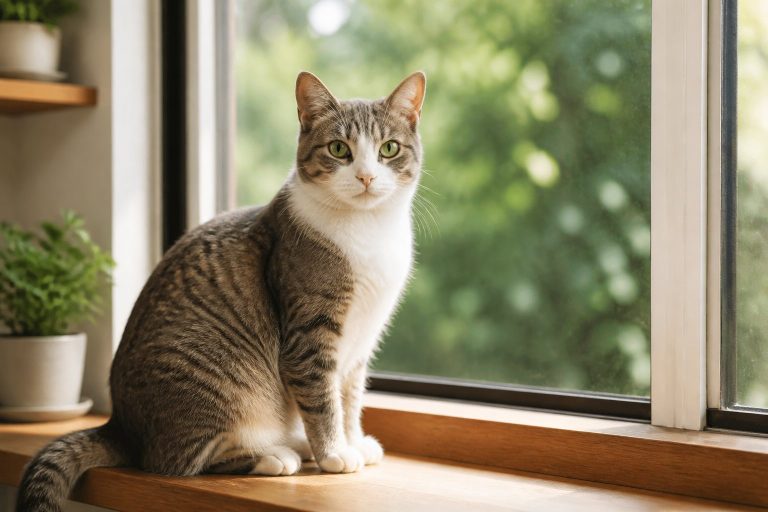
Why Is My Cat Hiding: Common Causes and What You Need to Know
Cats naturally seek out hiding spots as part of their instinctive behavior, but when your feline companion suddenly starts spending more time tucked away, you might wonder if something is wrong. Cats hide for many reasons including feeling stressed, scared, or unwell, though hiding can also be completely normal behavior for creating a sense of security. Understanding the difference between typical hiding and concerning behavior is essential for every cat owner.
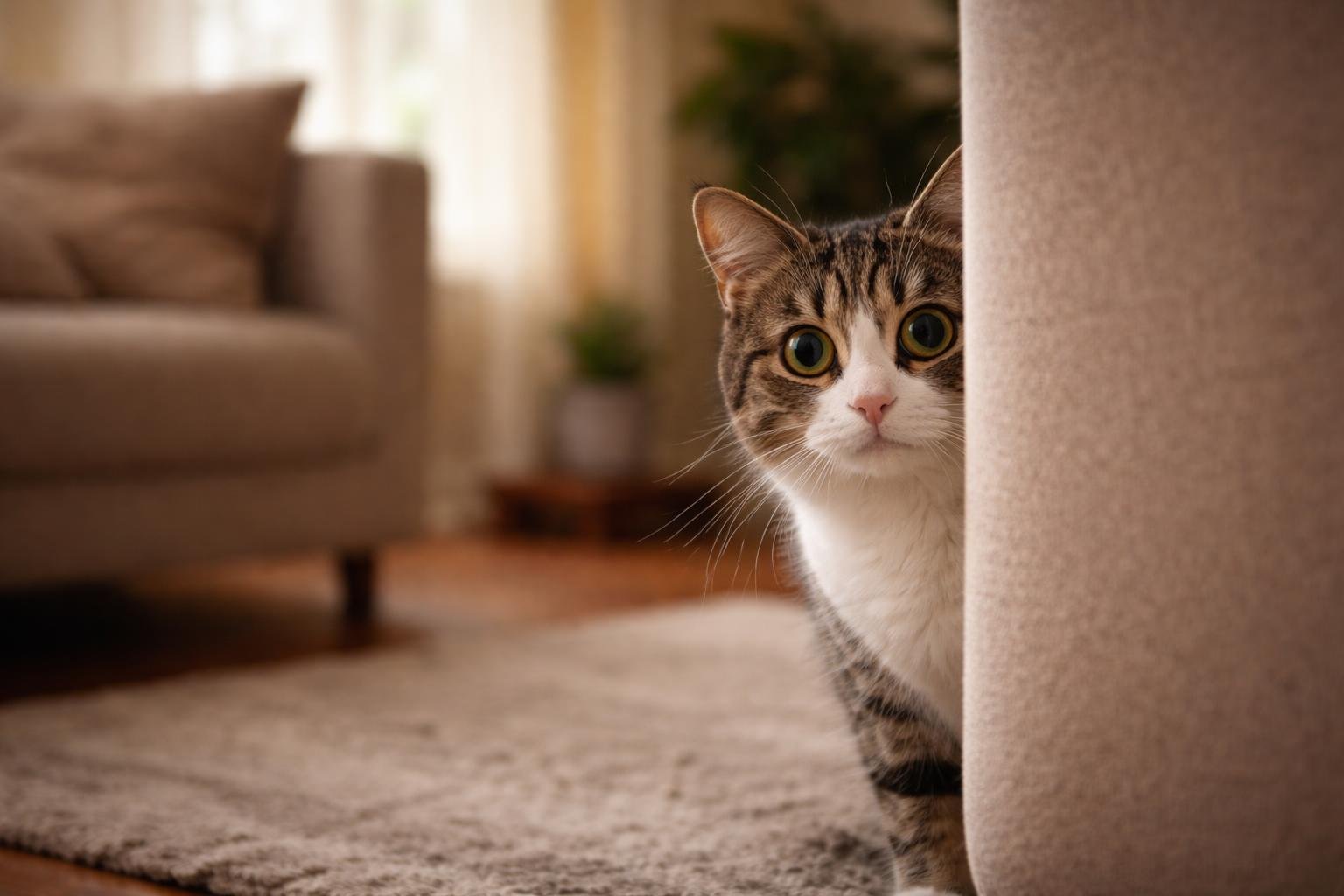
Cat hiding can signal illness, stress, or pain, but it can also simply mean your cat needs a quiet retreat from household activity. The key is recognizing patterns and accompanying signs that help you determine whether your cat’s hiding is harmless or requires attention. Changes in eating habits, litter box use, or overall demeanor alongside hiding behavior are important indicators to watch.
Learning why your cat hides and how to respond appropriately will help you create a more comfortable environment for your pet. This guide covers everything from common reasons cats hide to recognizing warning signs that warrant a veterinary visit, giving you the knowledge to support your cat’s wellbeing.
Key Takeaways
- Cats hide due to stress, illness, or their natural instinct to seek safe spaces
- Watch for red flags like changes in eating, drinking, or litter box habits alongside hiding
- Create safe hiding spots and consult a veterinarian if hiding behavior is sudden or accompanied by other symptoms
Understanding Cat Hiding Behavior
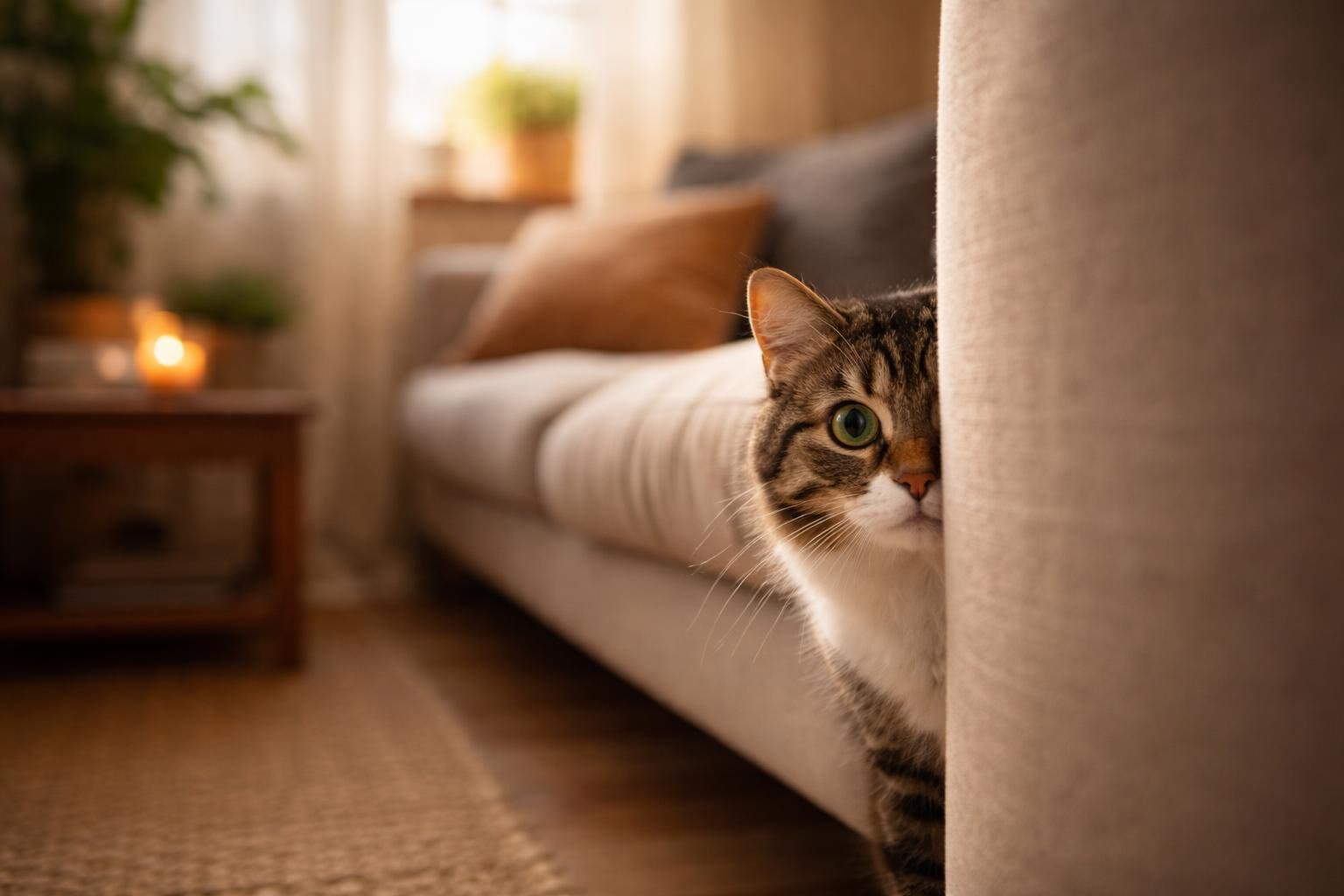
Cats retreat to hidden spots for various reasons, ranging from natural instincts to potential health concerns. Recognizing whether your cat’s hiding behavior is typical or requires attention helps you respond appropriately to their needs.
Why Is My Cat Hiding?
Your cat may be hiding due to stress, fear, illness, or simply seeking a quiet place to rest. Changes in the household environment, such as new pets, visitors, or loud noises, often trigger hiding behavior. Cats also hide when they feel unwell or in pain, making it a potential indicator of medical issues.
Understanding cat hiding behavior involves identifying what prompted the change. If your cat suddenly started hiding after a specific event, that event likely caused the behavior. Common triggers include:
- Moving to a new home
- Introduction of new family members or pets
- Construction or loud household activities
- Changes in routine or feeding schedules
- Unfamiliar scents or objects
Medical reasons can also explain why your cat is hiding more frequently. Cats instinctively conceal illness to avoid appearing vulnerable. Pain, digestive issues, or respiratory problems may drive your cat to isolate themselves in cat hiding places away from activity.
Why Cats Hide: Natural Instincts and Safety
Hiding is an innate behavior rooted in your cat’s survival instincts. In the wild, cats hide to avoid predators, stalk prey, and protect themselves during vulnerable moments like sleeping or giving birth.
Domestic cats retain these instincts even in safe home environments. Your cat’s strong senses can become overwhelmed by modern household stimuli, prompting them to seek quiet, enclosed spaces. This behavior allows them to decompress and feel secure.
Cats naturally prefer elevated perches and confined spaces where they can observe their surroundings while remaining concealed. Common hiding spots include:
- Under beds or furniture
- Inside closets or cabinets
- Behind appliances
- In cardboard boxes
- On high shelves or cat trees
This instinctive behavior serves multiple purposes beyond safety. Cats also hide to regulate their body temperature, manage stress, and maintain their territorial boundaries within your home.
When Cat Hiding Is Normal Versus Concerning
Normal hiding occurs when your cat periodically retreats for short periods and emerges on their own for meals, play, or social interaction. Cats that hide during specific events like thunderstorms or when guests visit typically resume normal behavior once the situation passes.
Concerning cat hiding behavior involves extended periods of isolation accompanied by other symptoms. You should monitor your cat closely if hiding persists beyond 24-48 hours or occurs alongside behavioral changes.
Warning signs that require veterinary attention:
| Symptom | What to Watch For |
|---|---|
| Appetite changes | Refusing food or water for more than 24 hours |
| Litter box issues | Not using the litter box or straining |
| Physical symptoms | Vomiting, diarrhea, limping, or discharge |
| Behavioral shifts | Aggression, excessive vocalization, or lethargy |
Contact your veterinarian if your cat hides continuously without coming out for basic needs. Sudden hiding combined with acting weird often indicates pain or illness requiring professional evaluation.
Common Reasons for Cat Hiding

Cats retreat to hidden spaces for several distinct reasons, ranging from natural instincts to medical concerns. Understanding whether your cat is seeking quiet time, responding to environmental stressors, dealing with health issues, or exhibiting reproductive behaviors helps you determine the appropriate response.
Stress and Anxiety
Cats hide when stressed as a coping mechanism to feel secure and protected. Your cat may retreat from overwhelming sensory experiences in your home, including loud household appliances, strong chemical odors from cleaning products, or excessive activity.
Multi-cat households often trigger hiding behavior when one cat experiences bullying or territorial disputes with other pets. Your cat needs a safe retreat where they can escape confrontation and reduce tension.
Common stress triggers include:
- Fireworks and thunderstorms
- Vacuum cleaners and loud music
- New furniture or rearranged rooms
- Changes in household routines
- Visitors and unfamiliar people
If you notice your cat hiding frequently, evaluate recent changes in your home environment. A cat behavior consultant can help identify specific stressors affecting your pet.
Illness or Pain
Cat hiding can signal illness because cats instinctively conceal vulnerability when they feel unwell. This protective behavior stems from their wild ancestors who needed to avoid predators during periods of weakness.
Monitor your cat for additional warning signs that indicate medical problems. Refusing food, avoiding the litter box, lethargy, or vocalizing when touched all suggest your cat needs veterinary attention.
Red flag symptoms requiring immediate care:
- Not eating for 24+ hours
- Litter box changes or accidents
- Visible injuries or limping
- Rapid breathing or panting
- Excessive grooming or hair loss
If your previously social cat suddenly isolates themselves and displays any concerning symptoms, schedule a veterinary examination promptly.
Fear and Environmental Changes
Why cats hide when people come over relates to their perception of strangers as potential threats. Your cat assesses unfamiliar situations from a distance before deciding whether to engage.
Moving to a new home, introducing new family members, or bringing home a new pet creates significant upheaval. Your cat requires time to adjust and may hide extensively during transition periods.
Environmental factors affecting cat hiding include construction noise near your home, changes in your work schedule, or even seasonal shifts in natural light. Provide consistent access to familiar hiding spots while your cat adapts.
Pregnancy and Territorial Behavior
Pregnant cats instinctively seek secluded areas as they approach labor. Your cat will search for quiet, dark spaces where she feels protected enough to give birth and care for vulnerable kittens.
Territorial behavior also drives hiding in certain situations. Male cats may retreat after encountering unfamiliar cats outside, while females might hide during heat cycles when feeling particularly vulnerable to unwanted attention.
Intact cats display more hiding behavior related to reproductive instincts than spayed or neutered pets.
Identifying and Managing Cat Hiding Places
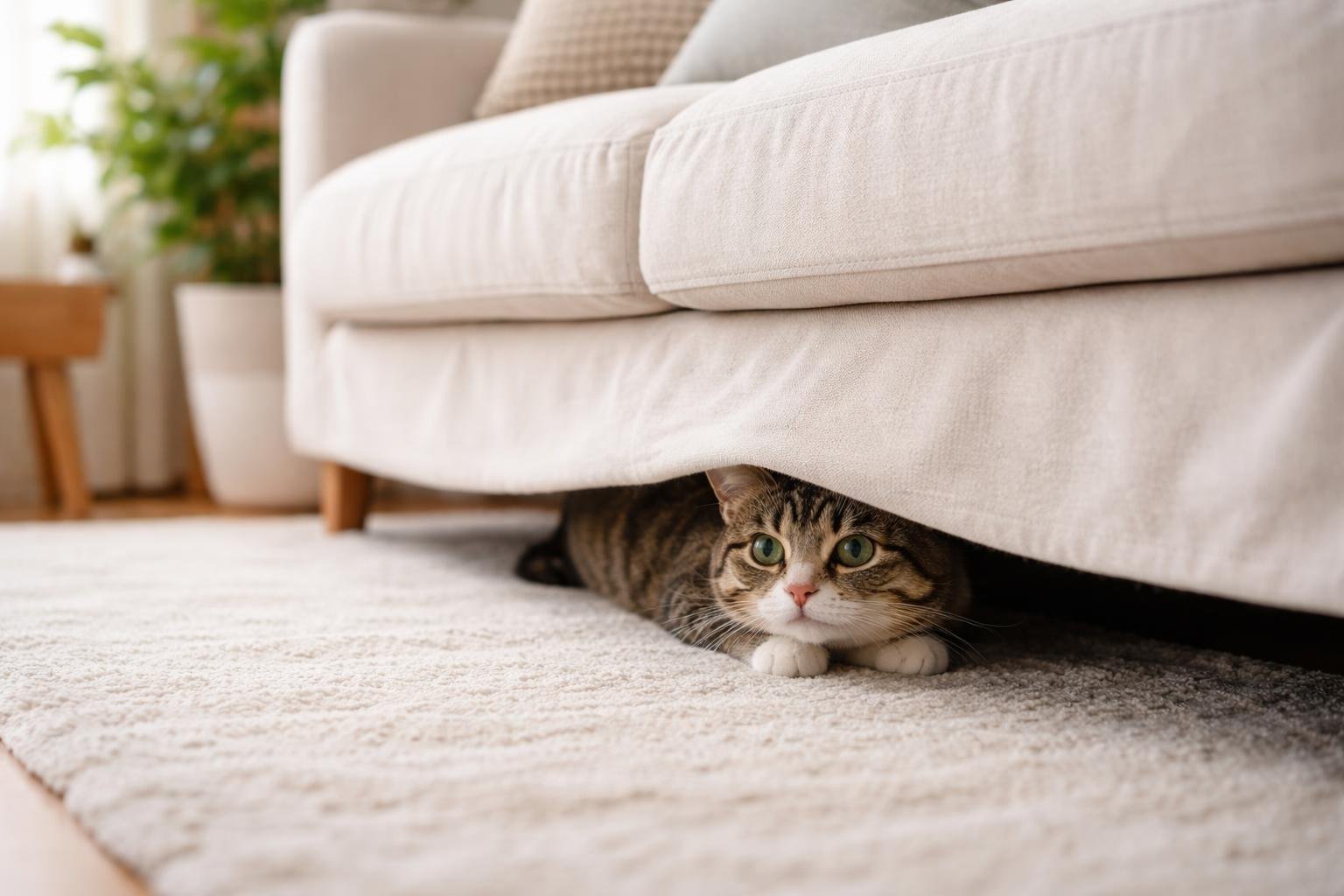
Cats seek out specific types of locations based on their natural instincts for security and comfort. Understanding where cats typically hide helps you locate them quickly and ensure their chosen spots are safe.
Typical Indoor Hiding Spots
Common hiding spots for cats include under beds, behind or under furniture, and inside closets or cabinets. Your cat may also retreat to elevated spaces like shelves or high cabinets where they can observe their surroundings from above.
Dark, enclosed areas appeal to cats because they provide a sense of security. You’ll often find cats tucked into drawers, laundry baskets, or cardboard boxes. Cat trees with enclosed cubby holes offer ideal hiding spots that satisfy your cat’s instinctual need for both elevation and enclosure.
Behind appliances like refrigerators and washing machines are popular choices. Check inside open suitcases, behind curtains, and in bathroom cabinets. Cats also squeeze into spaces between furniture and walls or burrow under blankets and clothing piles.
Dangerous Hiding Locations to Avoid
Some hiding spots pose serious risks to your cat’s safety. Inside running appliances like dryers and washing machines can be fatal, so always check before starting a cycle. Recliners and sofa beds contain mechanical parts that can trap or crush a hiding cat.
Spaces near hot appliances like ovens, water heaters, and furnaces can cause burns or heat exhaustion. Your cat may also hide in garage areas near chemicals, antifreeze, or sharp tools.
Block access to spaces behind heavy furniture that could tip over or areas where your cat might become trapped without escape routes. Unsealed crawl spaces and attics can expose cats to insulation, pests, or temperature extremes. Keep garage doors and car hoods closed, as cats often hide in wheel wells or engine compartments.
Outdoor and Hard-to-Find Cat Hiding Places
Cats hide in elevated spaces outdoors including trees, rooftops, and underneath decks or porches. Your cat may wedge into drainage pipes, storm drains, or crawl under parked vehicles.
Dense bushes, tall grass, and garden sheds provide cover. Check inside open garages, under tarps, and in woodpiles where cats can burrow deep. Neighbors’ yards, especially those with outdoor furniture or storage areas, attract hiding cats.
Look in unexpected vertical spaces like gutters or behind outdoor air conditioning units. Cats climb into open windows of parked cars or hide underneath them near warm engines. Search systematically in widening circles from your home, calling your cat’s name and shaking treats to encourage them to reveal their location.
How to Help Your Cat Feel Safe and Reduce Hiding
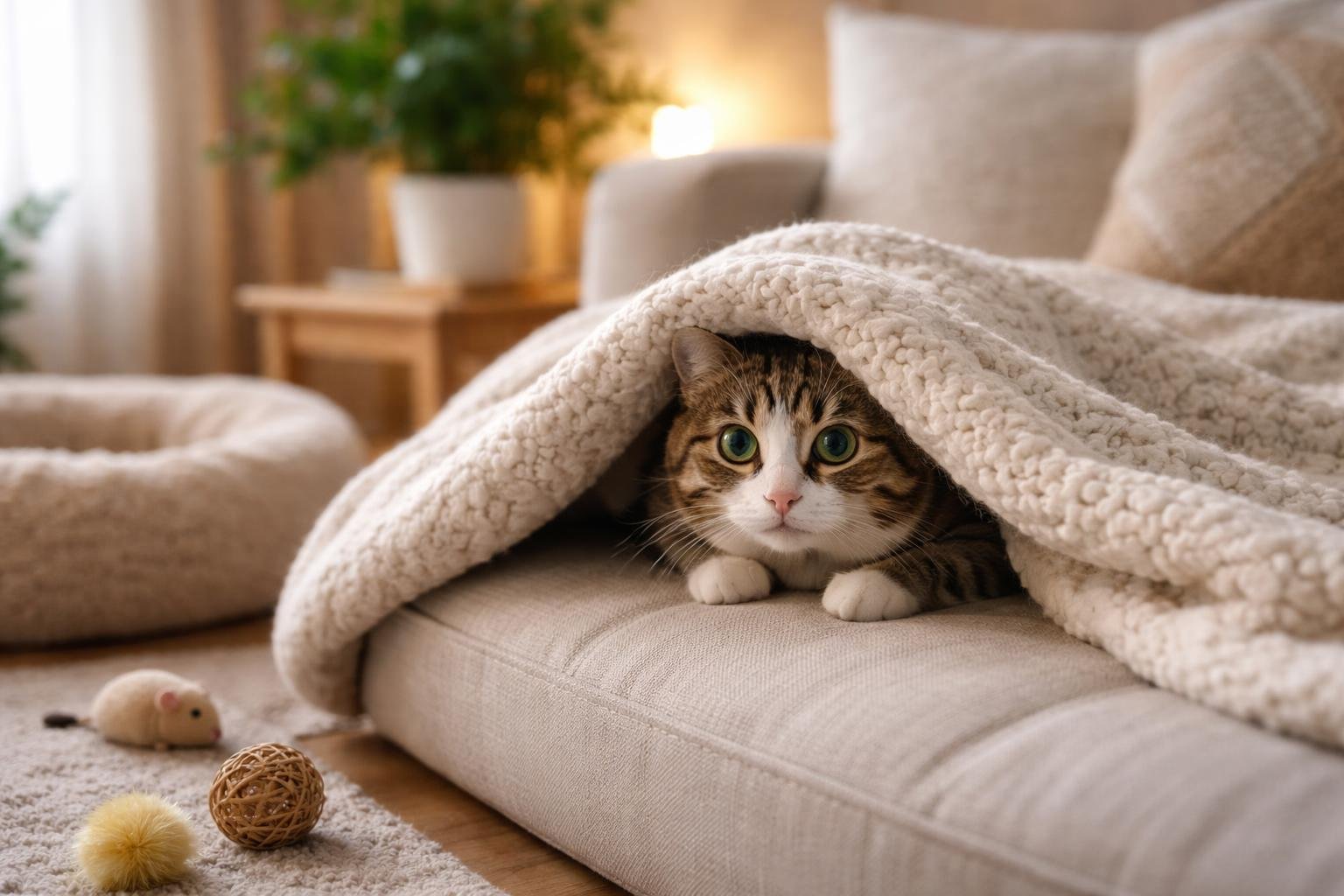
Creating a stable and predictable environment helps minimize stress-related hiding behavior in cats. Strategic enrichment, comfortable alternatives, calming aids, and thoughtful environmental management work together to build your cat’s confidence and security.
Providing Enrichment and Cat Trees
Cat trees offer vertical territory that satisfies your cat’s instinctual need to observe their surroundings from elevated positions. These structures provide multiple perches at different heights, allowing your cat to choose their comfort level while maintaining a sense of control over their environment.
Position cat trees near windows to combine height advantage with visual stimulation from outdoor activity. Multi-level trees with enclosed cubby holes give your cat options between open observation spots and semi-private retreats.
Interactive toys and puzzle feeders redirect anxious energy into productive mental stimulation. Rotate toys weekly to maintain novelty and prevent boredom. Feather wands, laser pointers, and motorized mice encourage natural hunting behaviors that build confidence through successful “catches.”
Scratching posts integrated into cat trees serve dual purposes of territory marking and stress relief. Place horizontal and vertical scratching surfaces throughout your home to give your cat acceptable outlets for marking behavior.
Safe Alternatives Like Heated Cat Beds
A heated cat bed provides warmth and comfort that naturally attracts cats seeking security. These beds mimic the soothing warmth cats associate with safety, making them appealing alternatives to hiding under furniture or in dark corners.
Place heated beds in quiet, low-traffic areas where your cat can relax without interruption. Cats often hide when they need uninterrupted rest, so accessible comfort zones reduce the need to seek out isolated spaces.
Consider beds with raised sides or hooded designs that offer enclosure without complete isolation. This semi-enclosed structure satisfies your cat’s desire for protection while keeping them visible and approachable.
Self-warming beds using reflective materials work well for cats who dislike electrical cords. Position multiple comfortable resting spots throughout your home at various heights and locations to give your cat choices based on their current mood and needs.
Using Calming Products Such as Feliway Diffuser
A Feliway diffuser releases synthetic facial pheromones that signal safety and familiarity to cats. These pheromones mimic the natural markers cats deposit when they rub their faces on furniture, helping reduce stress, fear, or anxiety in your cat’s environment.
Plug diffusers in rooms where your cat spends most time or where hiding behavior occurs frequently. Each diffuser covers approximately 700 square feet and requires refills every 30 days for continuous effect.
Calming collars infused with pheromones offer portable stress relief for cats who move between rooms or hide in multiple locations. These collars work continuously for up to 30 days and complement diffuser use.
Calming sprays containing pheromones can be applied directly to bedding, carriers, or new furniture that might trigger hiding. Allow sprayed surfaces to dry for 15 minutes before your cat contacts them for maximum effectiveness.
Maintaining a Cat-Friendly Environment
A predictable daily routine reduces uncertainty that triggers hiding behavior. Feed your cat at consistent times, maintain regular play sessions, and keep litter box cleaning on a schedule your cat can anticipate.
Keep litter boxes clean with daily scooping and complete changes weekly. Dirty litter boxes cause stress that may drive cats to hide rather than use uncomfortable facilities. Provide one box per cat plus one extra, positioned in quiet, accessible locations.
Minimize loud noises and sudden environmental changes when possible. If renovations or events are unavoidable, create a designated safe room with familiar items where your cat can retreat comfortably.
Respect your cat’s normal hiding places rather than forcing interaction. Arrange hiding spots to remain safe and accessible while gradually introducing positive associations through treats or toys placed nearby. Never block or eliminate all hiding options, as cats need retreat spaces for healthy emotional regulation.
When to Consult a Cat Behavior Consultant or Veterinarian
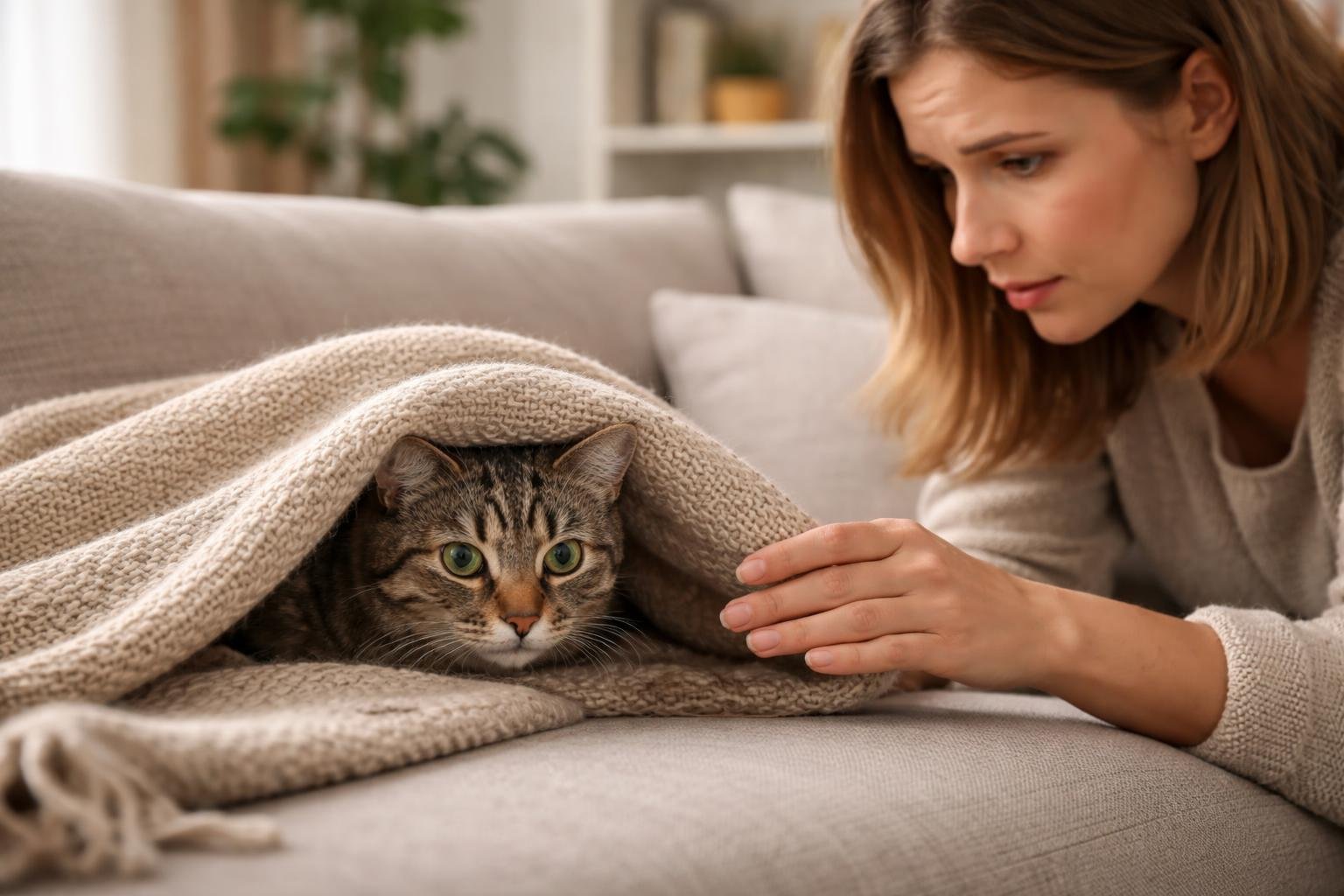
If your cat’s hiding persists beyond a few days or comes with other troubling symptoms, professional intervention becomes necessary. Medical issues should always be ruled out first, while behavioral specialists address ongoing anxiety or stress-related hiding.
Warning Signs That Require Professional Help
Sudden changes in hiding behavior that last more than 48 hours warrant immediate veterinary attention. You should contact your veterinarian if your cat shows loss of appetite, lethargy, vomiting, diarrhea, or difficulty urinating while hiding.
Aggression when approached, excessive vocalization from hiding spots, or visible signs of pain also require urgent care. These symptoms often indicate underlying medical conditions that need diagnosis and treatment.
Medical problems should be suspected first before assuming behavioral causes. Your veterinarian can perform physical examinations, blood work, and other diagnostic tests to identify health issues. Once medical causes are eliminated, behavioral concerns can be addressed.
If hiding continues after medical clearance, stress-related triggers like environmental changes, new pets, or household disruptions may be responsible. Persistent anxiety-driven hiding benefits from professional behavioral guidance.
What to Expect From a Cat Behavior Consultant
A cat behavior consultant is a trained specialist in feline behavior modification, often certified through organizations like the IAABC. They focus exclusively on addressing behavioral issues after medical causes have been ruled out by your veterinarian.
During your consultation, the specialist will gather detailed information about your cat’s history, environment, and specific hiding patterns. They’ll ask about recent changes in your household, your cat’s daily routine, and any triggers you’ve noticed.
The consultant creates a customized behavior modification plan tailored to your cat’s needs. This plan typically includes environmental enrichment strategies, stress reduction techniques, and gradual desensitization exercises. Understanding medical versus behavioral causes is crucial, as these professionals work alongside veterinarians rather than replacing them.
Follow-up sessions monitor progress and adjust strategies as needed. Implementation requires patience and consistency on your part to achieve lasting results.
Supporting Your Cat During Transitions
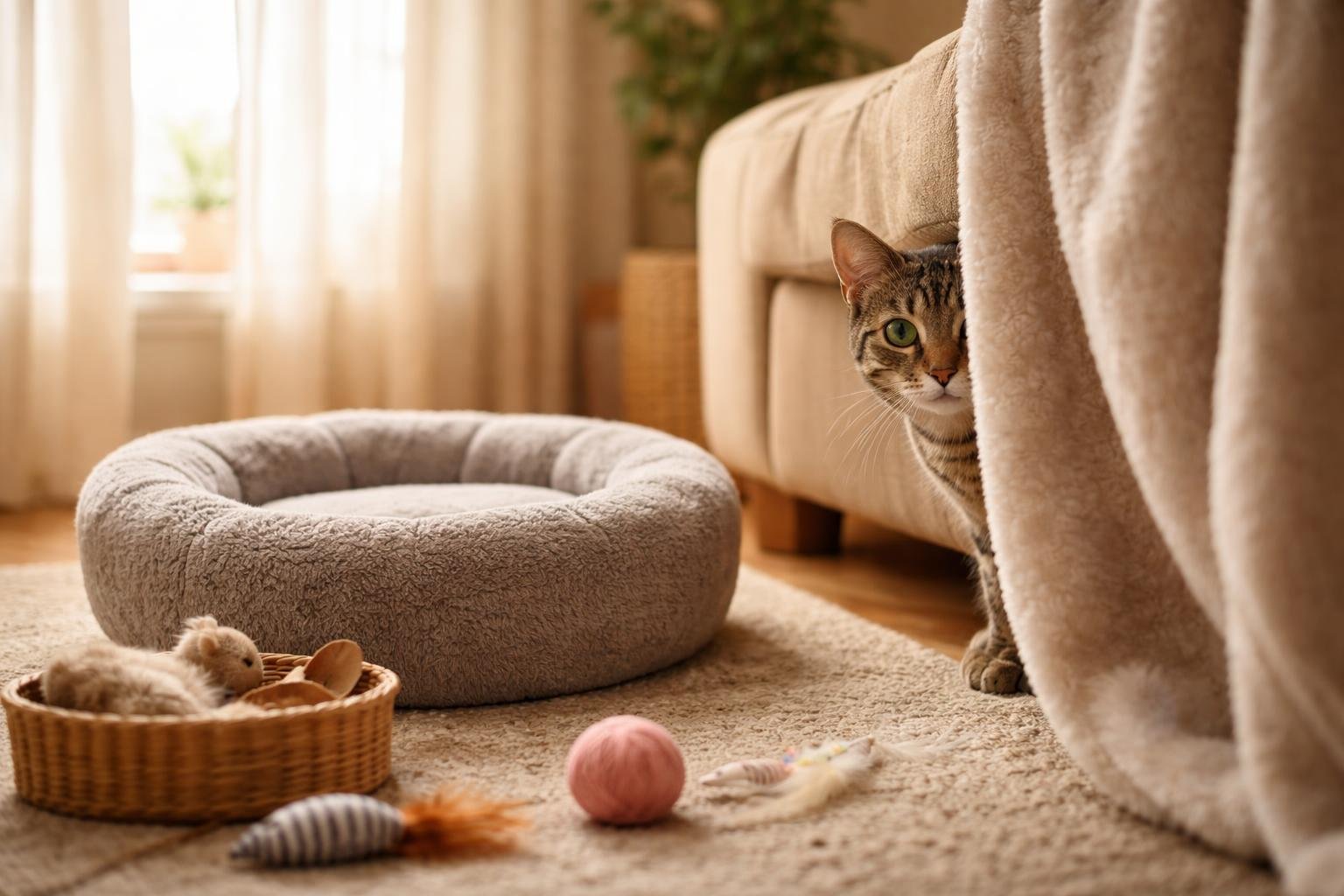
Major changes like moving homes or introducing new family members require specific strategies to help your cat feel secure. Creating a stable environment and respecting your cat’s natural instincts makes the adjustment period significantly less stressful.
Managing Cat Stress After Big Changes
Cats may hide for a while after a move because sudden changes in surroundings trigger anxiety and confusion. You should set up a dedicated safe room with familiar items like their bed, toys, and litter box before letting your cat explore the entire space.
Keep the room quiet and limit visitors during the first few days. Place food and water bowls away from the litter box to create distinct zones your cat can recognize.
Essential comfort items to include:
- Previous bedding with familiar scents
- Favorite toys and scratching posts
- Pheromone diffusers or calming sprays
- Cardboard boxes or covered beds as cat hiding places
Maintain your cat’s previous feeding schedule and routine as closely as possible. Consistency in meal times and play sessions provides predictability during uncertain periods.
Encouraging Exploration Without Forcing Interaction
Allow your cat to emerge from hiding on their own timeline rather than pulling them out or cornering them. Bringing home a rescue cat often means accepting that they need several days or weeks to feel comfortable.
Place treats or toys near but not inside your cat’s hiding spot to encourage gradual movement. You can sit quietly in the same room while reading or using your phone to help them acclimate to your presence without pressure.
Speak in calm, soft tones when your cat is visible but avoid direct eye contact, which cats perceive as threatening. Let them approach you first for sniffing or interaction.
Open doors to additional rooms one at a time over several days. This gradual expansion prevents overwhelming your cat with too much new territory at once and lets them establish multiple safe zones throughout your home.