Why Cats Scratch Furniture: 5 Reasons & Effective Redirection
Your cat’s relentless attack on your couch isn’t bad behavior or spite. Scratching furniture is a normal, instinctive cat behavior that serves multiple purposes including marking territory, maintaining nail health, stretching muscles, and relieving stress. Cats have been doing this for thousands of years, and it’s hardwired into their biology.
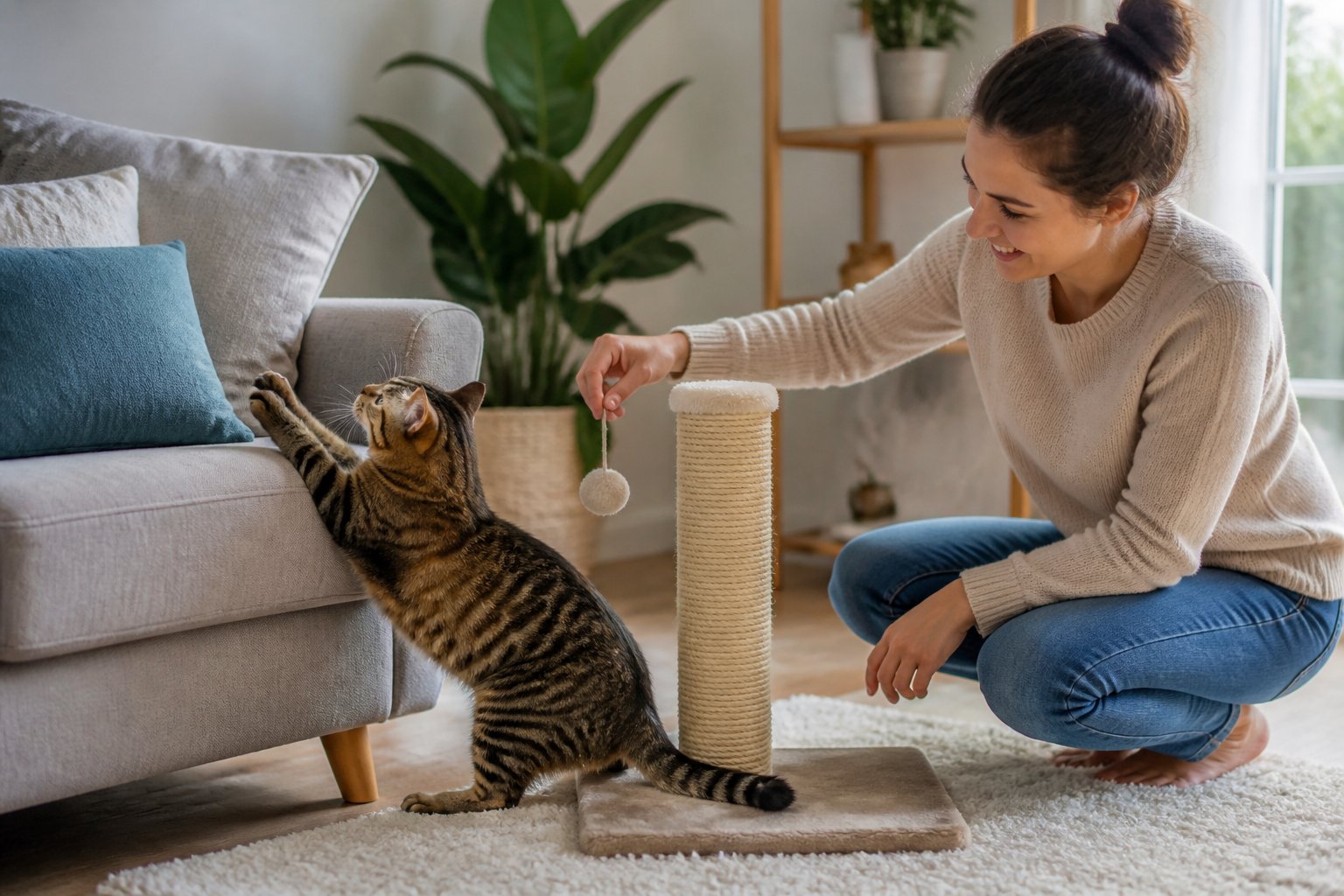
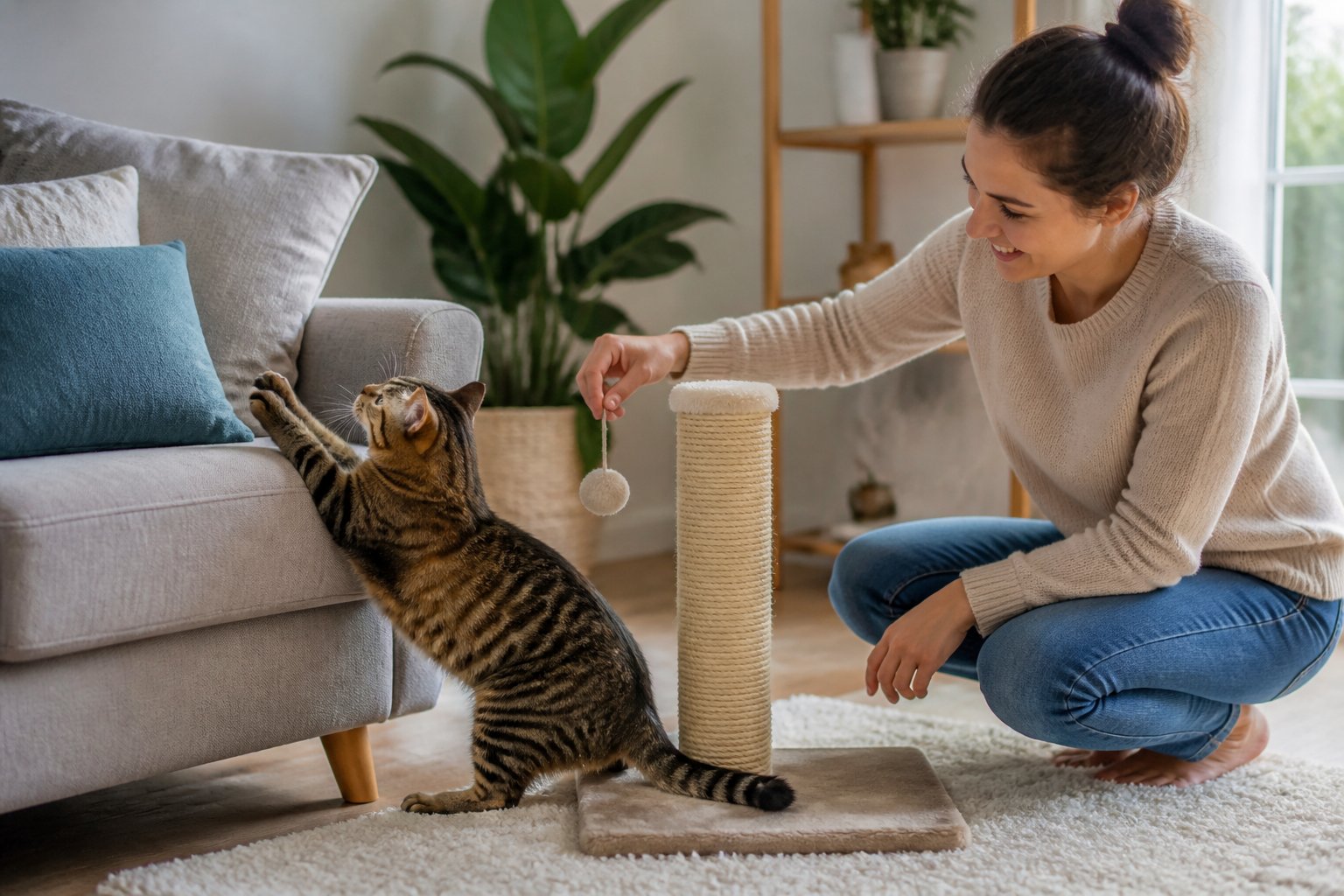
The good news is you don’t need to choose between your furniture and your cat’s wellbeing. Understanding why cats scratch furniture is the first step toward protecting your home while keeping your cat happy. You can redirect this natural behavior to appropriate outlets without punishment or stress.
This guide breaks down the five main reasons behind cat scratching and gives you practical steps to redirect the behavior. You’ll learn what makes furniture so appealing to cats, how to choose scratching posts your cat will actually use, and what to do when standard solutions don’t work.
Understanding Feline Scratching: Instincts and Communication
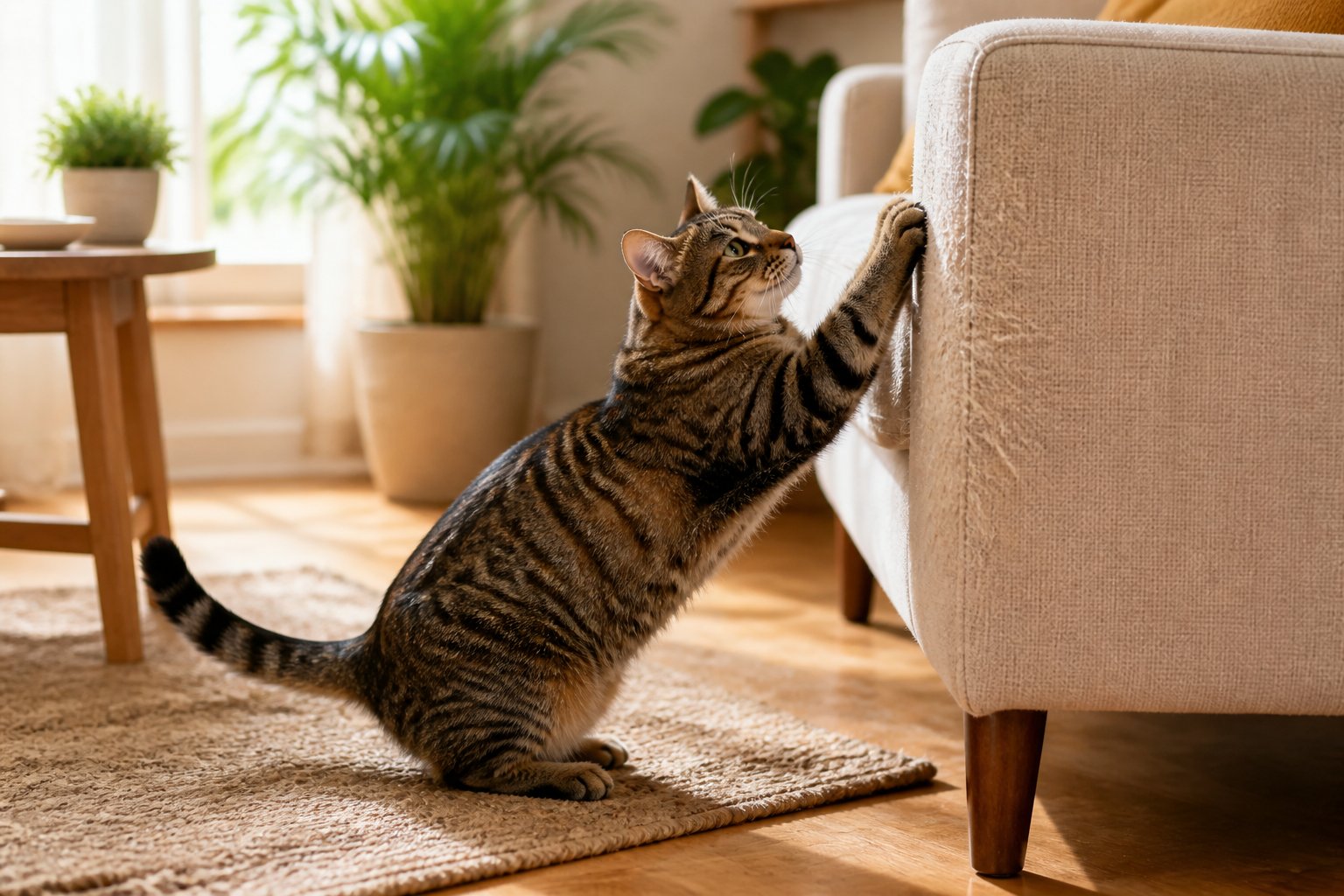
Cats scratch as part of their basic biology and social behavior. This action helps them mark territory through scent, maintain their claws, and send visual messages to other cats in their environment.
Natural Behaviors That Drive Scratching
Scratching is hardwired into your cat’s DNA from their wild ancestors. When cats lived outdoors, they needed sharp claws for hunting, climbing, and defense. Your indoor cat still has these same instincts even though they don’t hunt for survival.
The physical act of scratching helps your cat stretch their entire body. They extend their spine, shoulders, and legs while digging their claws into a surface. This stretching keeps their muscles flexible and helps them stay physically healthy.
Scratching also removes the dead outer layer of their claws. As your cat scratches, the old sheath peels away to reveal a sharper claw underneath. Without this natural process, their claws would become overgrown and uncomfortable. Research shows that cats denied appropriate scratching surfaces showed elevated stress levels within just 48 hours.
Scent Marking and Territorial Signals
Your cat has scent glands in their paw pads that release pheromones when they scratch. These chemical signals are invisible to you but carry important messages to other cats. When your cat scratches your couch, they’re essentially putting up a sign that says “this is mine.”
Scratching as a way to claim ownership works like a territorial marker. The scent tells other animals that this space belongs to your cat. In multi-cat homes, you might notice cats scratching near doorways, windows, or shared spaces more often.
This behavior isn’t about being destructive. Your cat is following their natural drive to establish a sense of security in their environment. The pheromones they leave behind help them feel comfortable and safe in their home.
Visual and Social Communication Through Scratching
Scratching creates visible marks that serve as warnings to other cats. The torn fabric or gouged wood signals that another cat has claimed this area. These visual markers work alongside the scent signals to create a complete territorial message.
Cats often scratch in prominent locations where other animals will notice. They choose vertical surfaces like furniture corners, doorframes, or carpet edges that are easy to see. The height and depth of scratch marks can even indicate the size and strength of the cat who made them.
In households with multiple cats, scratching patterns reveal social dynamics. Dominant cats may scratch more frequently in shared spaces to assert their status. Understanding feline scratching behavior helps you recognize when your cat is communicating stress or territorial concerns through their scratching habits.
The Five Main Reasons Cats Scratch Furniture
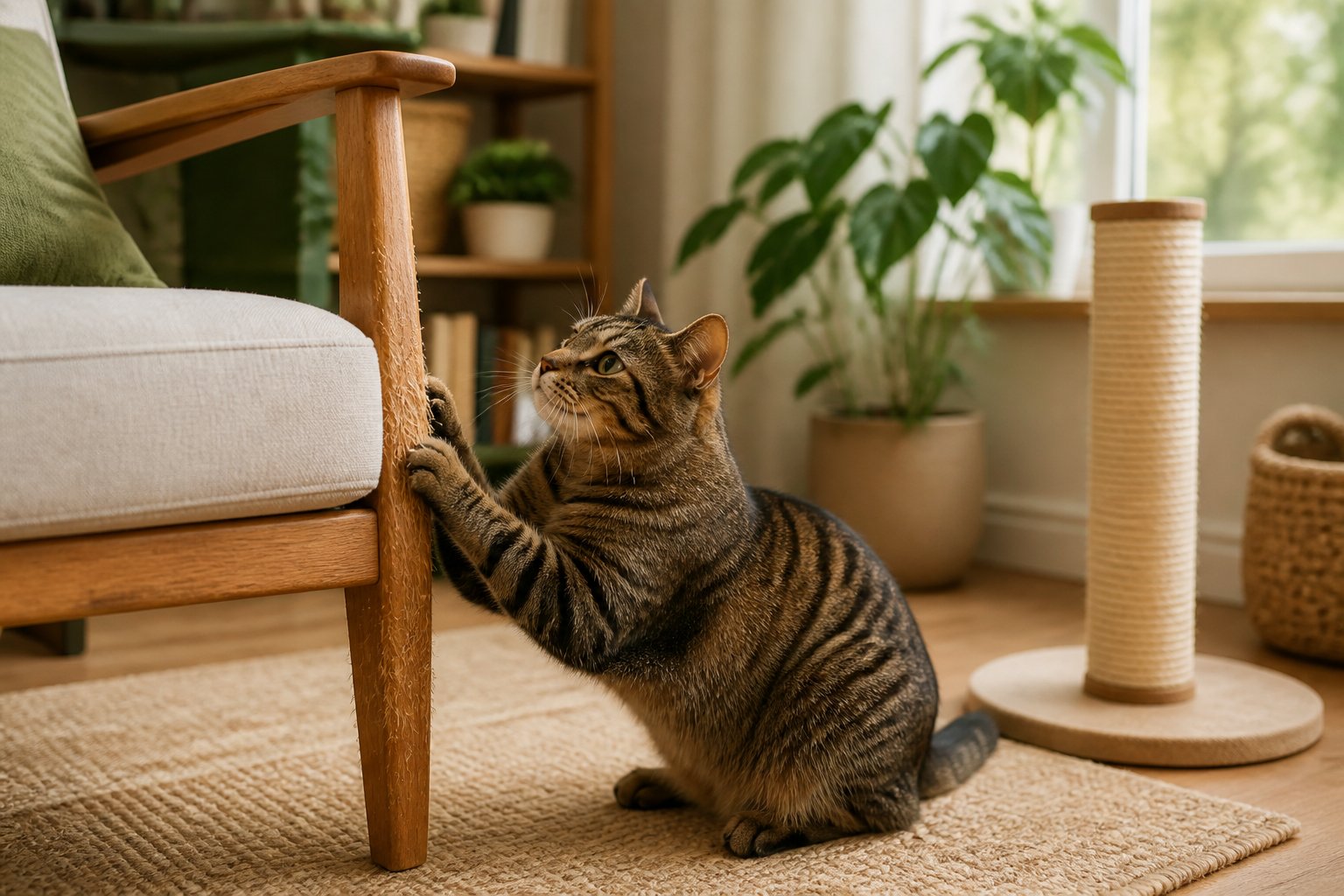
Cats scratch furniture for specific biological and behavioral needs, not to upset you. Understanding why cats scratch furniture helps you address the root causes and provide better alternatives for your pet.
Claw Maintenance and Health
Your cat’s claws grow continuously in layers, similar to how your fingernails grow. When cats scratch furniture, they remove the dead outer layer of their claws to reveal the sharp, healthy claw underneath.
This natural process keeps their claws sharp and healthy. Without regular scratching, the outer layers can build up and cause discomfort or even lead to overgrown claws that curl into their paw pads.
Your cat needs to scratch something every day to maintain proper claw health. If you don’t provide appropriate scratching surfaces, your furniture becomes the default option. This daily maintenance routine is essential for your cat’s physical wellbeing and comfort.
Territorial Marking in the Home
Cat scratching serves as a powerful form of communication with other cats and household members. Your cat has scent glands in their paw pads that release pheromones when they scratch.
These scent markers claim the furniture as part of their territory. The visible scratch marks add a visual component to this territorial claim, creating both a scent and sight-based message.
Scratching is a territorial behavior that tells other animals “this space belongs to me.” This instinct remains strong even in indoor cats who don’t share their home with other pets. Your cat may scratch more frequently in areas where they spend the most time or near entry points like doors and windows.
Muscular Stretching and Physical Fitness
Scratching provides your cat with a full-body workout that stretches their muscles from nose to tail. When your cat reaches up to scratch, they extend their spine, shoulders, and leg muscles.
This stretching motion keeps their muscles flexible and toned. The pulling action against a resistant surface exercises the muscles in their front legs, shoulders, and back.
Your cat often scratches after waking up from a nap because their muscles need stretching after periods of rest. This physical activity helps maintain their agility and coordination. The vertical scratching motion mimics movements they would make in the wild when climbing trees or catching prey.
Emotional Regulation and Stress Relief
Your cat uses destructive scratching as a way to manage emotions and cope with stress in their environment. Research shows a relationship between scratching and environmental stressors like loud noises or the presence of children.
When your cat feels anxious, frustrated, or overwhelmed, scratching releases pent-up energy and tension. The physical act helps them feel calmer and more in control of their surroundings.
Cats may increase their scratching behavior during changes in routine, new household members, or other disruptions. The repetitive motion and physical exertion provide comfort during stressful situations. If your cat doesn’t get to “catch” their prey during play with laser toys, that frustration often gets released through increased scratching later.
Attention-Seeking and Social Cues
Your cat quickly learns that scratching certain pieces of furniture gets an immediate response from you. Even negative attention like yelling or chasing reinforces the behavior because your cat achieved their goal of getting your focus.
Cats are smart enough to distinguish between scratching posts you want them to use and furniture that triggers your reaction. If they feel ignored or want interaction, they may deliberately choose the furniture over their scratching post.
Your cat may also scratch to communicate other needs like hunger, wanting to play, or requesting access to another room. This behavior becomes a learned signal that works effectively to get what they want from you.
Common Targets: Why Furniture and Carpets Are at Risk
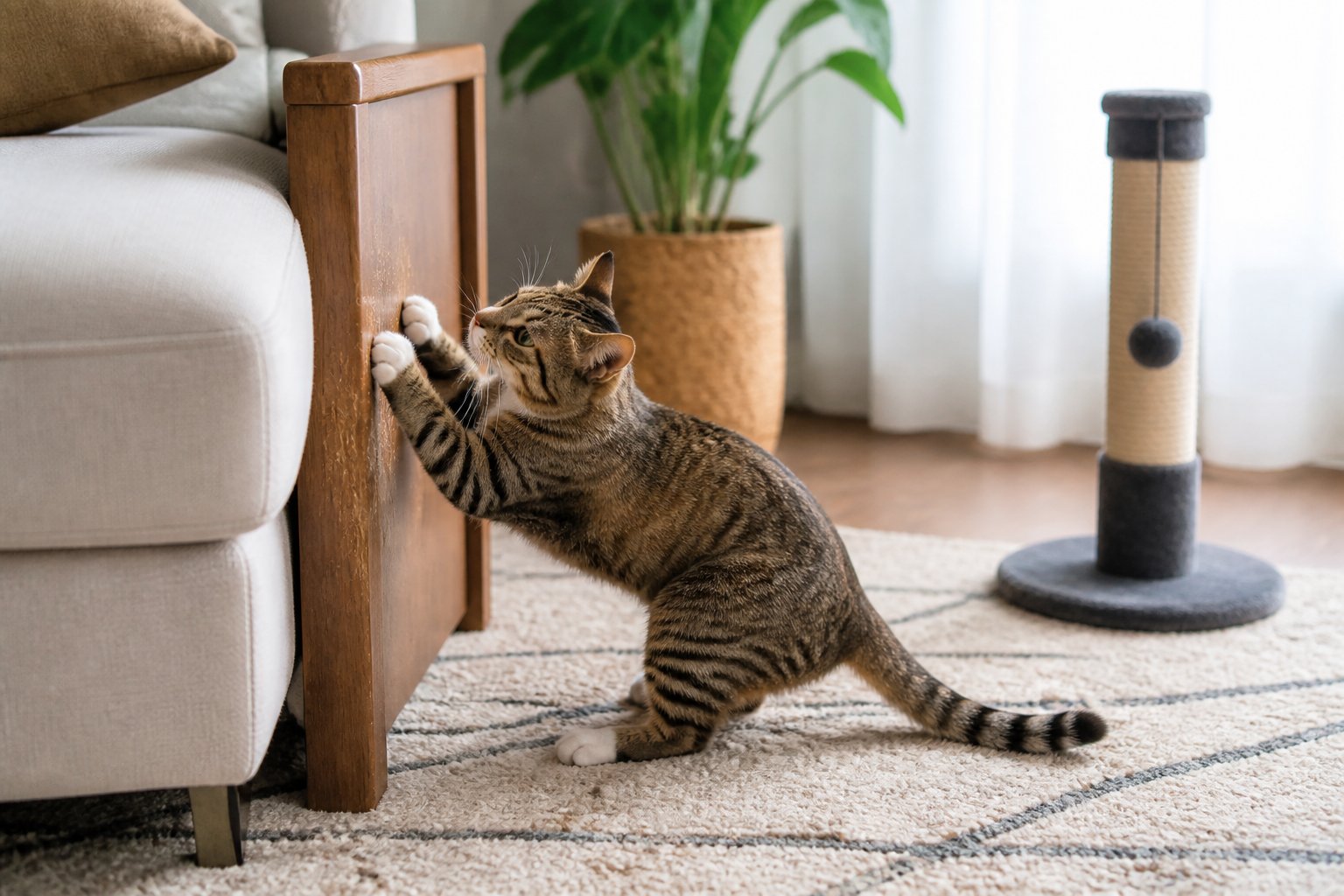
Cats don’t randomly choose where to scratch. Furniture and carpets offer specific qualities that appeal to your cat’s natural instincts, including texture, location, and stability.
Appealing Textures and Resistance
Your furniture and carpets provide the perfect resistance for effective scratching. Cats prefer materials that allow their claws to sink in and pull through, which helps remove the outer sheath of their nails.
Upholstered furniture with woven fabric gives your cat the satisfying pull they need. Carpet fibers offer similar resistance and allow for a good grip. These textures mimic tree bark, which cats would naturally use outdoors.
The firmness matters too. Soft, flimsy materials don’t provide enough resistance for proper claw maintenance. Your sturdy couch or thick carpet gives your cat the feedback they need when scratching.
Different cats prefer different textures. Some like the tight weave of your sofa, while others prefer the loops in your carpet. Cats scratch furniture and carpets because these surfaces meet their specific texture preferences.
Strategic Locations and Human Scent
Your cat chooses furniture in high-traffic areas because scratching serves as territorial marking. They want to leave their scent where it matters most.
Furniture near entryways, in living rooms, or by windows gets targeted frequently. These spots let your cat announce their presence to anyone entering the space. The scent glands in your cat’s paw pads deposit pheromones during each scratch.
Your scent on the furniture makes it even more attractive. Cats scratch items that smell like you to mix their scent with yours. This behavior strengthens their territorial claim and creates a shared family scent.
Preference for Stability and Surface Orientation
Cats need a stable surface that won’t move or tip over during scratching. Your heavy couch or wall-to-wall carpet provides the solid foundation they require.
Vertical surfaces like furniture arms let your cat stretch their full body length while scratching. This stretching is important for their muscles and joints. Horizontal surfaces like carpets offer a different scratching angle that some cats prefer.
The height and angle of your furniture matter. Cats often want to scratch at shoulder height or higher when standing on their back legs. Your couch arm or door frame offers the perfect vertical reach that lightweight scratching posts might not provide.
Choosing the Right Scratching Alternatives
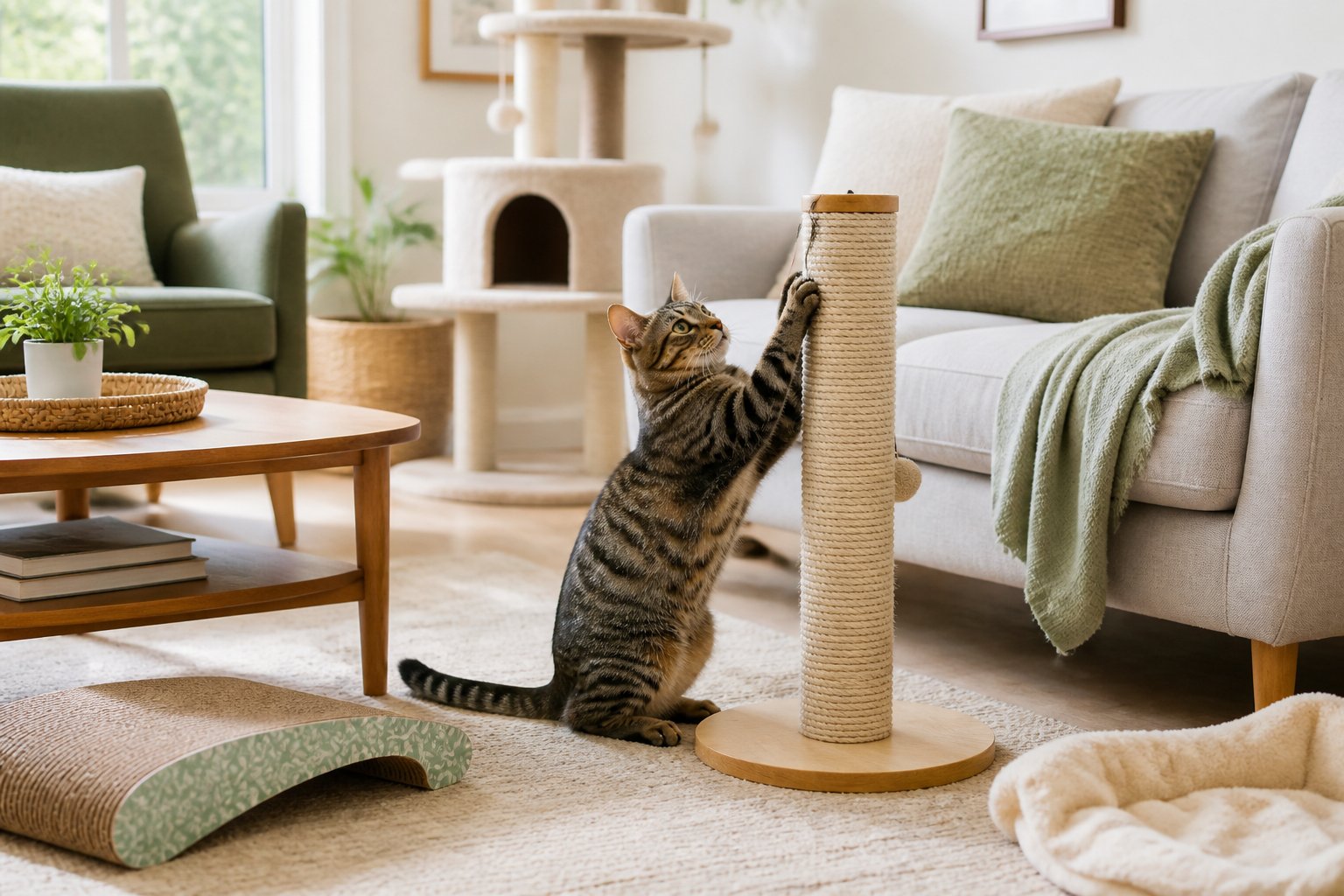
Your cat needs scratching options that match their natural preferences. The right combination of materials, sizes, and orientations will make scratching posts more appealing than your furniture.
Types of Scratching Posts and Cat Trees
Scratching posts need to be tall enough for your cat to stretch fully. Most adult cats need posts at least 30-32 inches high. The base must be sturdy and heavy so the post won’t tip over when your cat uses it.
Cat trees offer multiple scratching surfaces at different heights. They combine scratching posts with perches and platforms. This gives your cat places to climb, rest, and scratch all in one piece of furniture.
Freestanding posts work well near furniture your cat already scratches. You can move them around to find the best spots. Wall-mounted scratchers save floor space and stay firmly in place. Scratching behaviors in cats start as early as 8 weeks of age, so having the right equipment from the beginning helps.
Material and Orientation Preferences
Cats have individual preferences for scratching materials. Common options include sisal rope, carpet, bare wood, and cardboard. Watch where your cat scratches now to figure out what textures they prefer.
Some cats like vertical scratching while others prefer horizontal surfaces. Many cats enjoy both. Vertical surfaces appeal to cats for marking territory because the marks stay at eye and nose level for other cats. Horizontal scratchers work well for stretching and nail maintenance.
Test different materials if your cat ignores the first scratcher you buy. Sisal works for cats that scratch fabric couches. Bare wood or carpet-covered posts suit cats that scratch wooden furniture legs.
Cardboard Scratchers and DIY Solutions
Cardboard scratchers cost less than other options and many cats love them. They tear easily, which gives cats a satisfying scratch. Most cardboard scratchers lay flat on the floor for horizontal scratching.
You can make DIY scratchers from materials you already have. Wrap sisal rope tightly around a sturdy post or board. Attach carpet remnants to plywood for a simple scratching surface. Old door mats also work as scratching pads.
Replace cardboard scratchers when they get worn down. Cats often scratch more when they see shredded material, so worn scratchers can actually encourage use. Keep multiple scratchers in different rooms so your cat always has access to an appropriate scratching spot.
How to Redirect Scratching Behavior Successfully
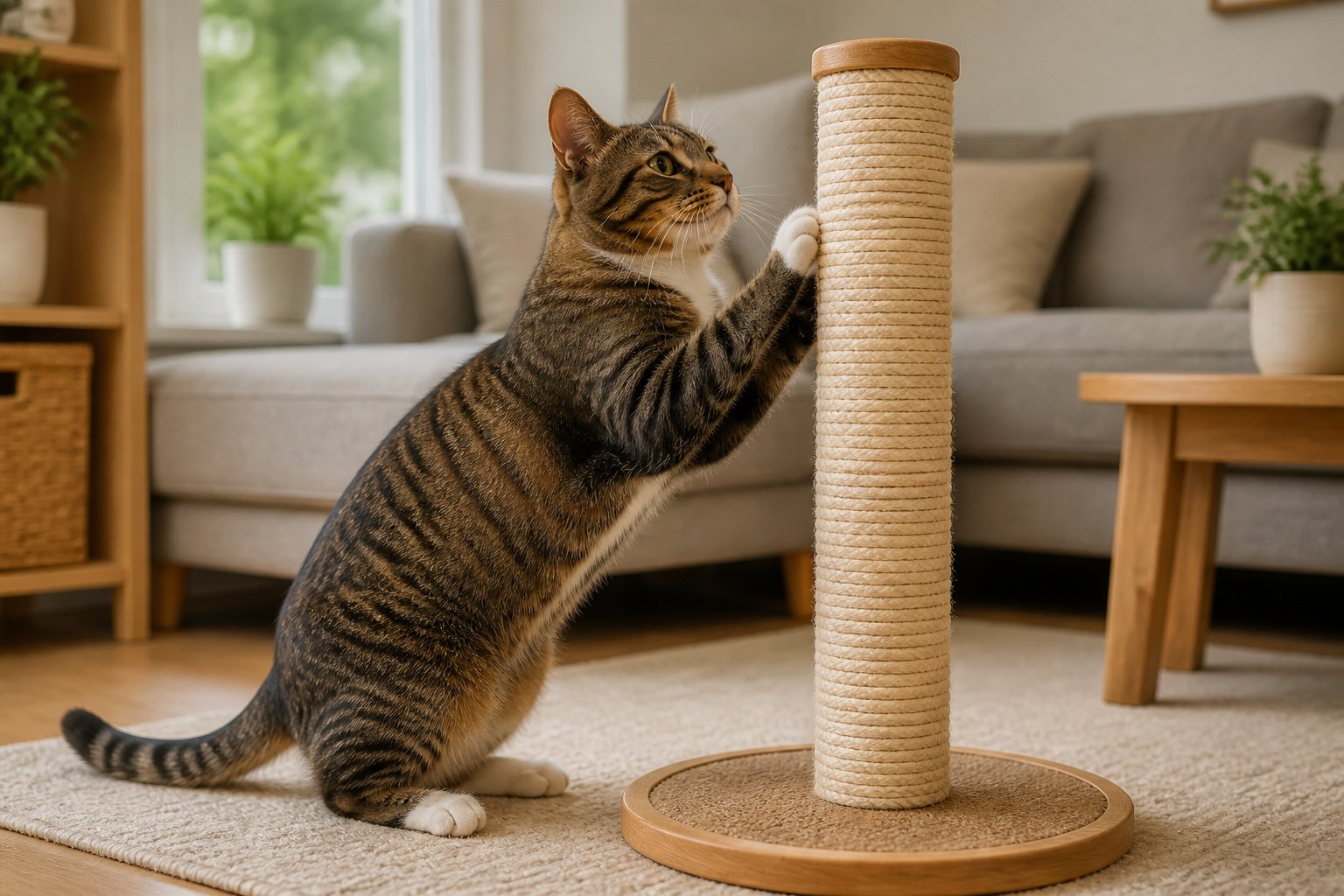
You can stop cats from scratching furniture by providing better alternatives and making your cat’s preferred scratching spots more appealing than your couch. Success comes from understanding your cat’s preferences and creating an environment where appropriate scratching is easier and more rewarding.
Placement Strategies for Scratchers
You need to place scratching posts exactly where your cat already scratches. Block your cat’s access to scratched furniture by putting the post right against those claw marks. This works because your cat wants to mark that specific spot.
Keep scratchers in central locations where your family spends time. Your cat doesn’t want to mark unused corners as their territory. They want to scratch where people gather most often.
Once your cat uses the new scratcher regularly, you can slowly move it to a permanent spot. Move it just a few inches each day. If you move it too fast, your cat may return to scratching your furniture.
Try different types of scratchers to match what your cat prefers. If they scratch vertical surfaces like couches, get a tall vertical post. Cats who scratch carpets often prefer horizontal scratching boards. Test different materials like sisal rope, cardboard, carpet, and wood.
Positive Reinforcement Techniques
You should reward your cat immediately when they use their scratching post. Give treats, praise, or playtime right after they scratch the correct spot. This creates a positive connection between the scratcher and good things.
Never punish your cat for destructive scratching. Yelling or spraying water creates fear and stress. Stressed cats often scratch furniture more, not less.
Make the scratching area more fun by adding toys, hiding spots, or elevated perches nearby. The more desirable the area around the post, the more likely your cat will mark it as their territory.
Use catnip or silvervine to attract your cat to new scratchers. Rub these on the post or sprinkle them around the base. Play with toys near the scratcher to create positive associations.
Making Furniture Less Attractive
You can cover furniture with materials cats dislike scratching. Double-sided tape, aluminum foil, or plastic sheets work well as temporary deterrents. Cats hate the sticky feeling of tape on their paws.
Remove or cover the scent marks your cat left on furniture. Clean scratched areas with an enzyme cleaner to eliminate the territorial scent signals. Without these markers, your cat has less reason to return to that spot.
Use furniture covers or blankets on areas your cat targets. These protect your furniture while you redirect cat scratching to appropriate spots. Remove them gradually once your cat consistently uses their scratchers.
Place scratching posts directly in front of furniture your cat damages. This physically blocks access while offering a better alternative in the exact location your cat prefers.
Trimming Nails and Using Nail Caps
You should trim your cat’s nails every two to three weeks. Shorter nails cause less damage when your cat does scratch furniture. Use cat-specific nail clippers and cut only the sharp tip.
Press gently on your cat’s paw pad to extend the nail. Cut below the pink quick, which contains blood vessels and nerves. If you’re unsure, trim less rather than more.
Nail caps are small plastic covers you glue onto your cat’s claws. They last four to six weeks and prevent damage from cat scratching behavior. Your cat can still scratch and stretch normally, but the caps protect your furniture.
Apply nail caps after trimming nails. Choose the right size for your cat’s claws. Most cats adjust to them within a few days. Replace caps as they fall off naturally with nail growth.
Managing Persistent or Problem Scratching
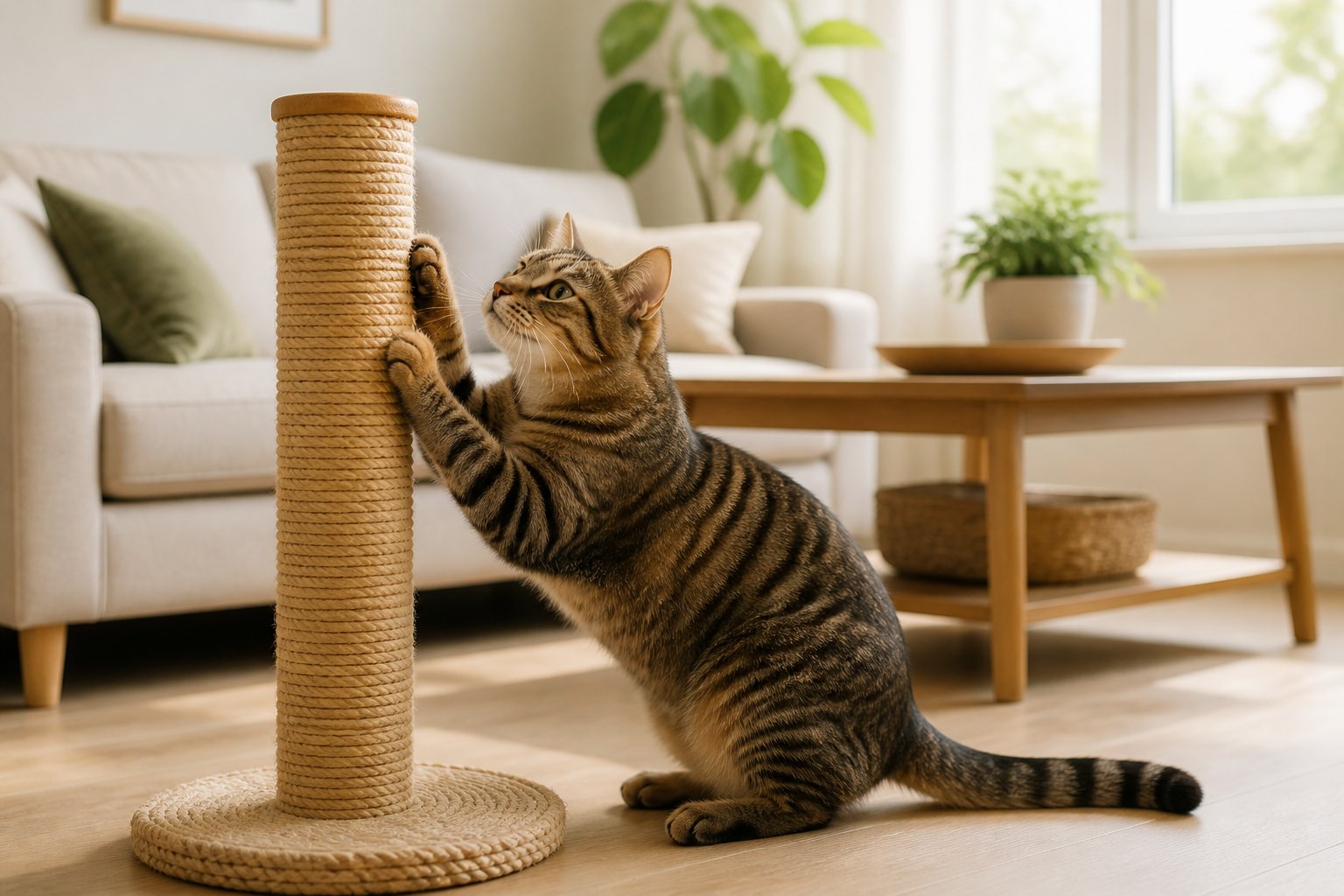
Some cats continue scratching furniture despite your best efforts with posts and deterrents. Stress, boredom, and underlying behavioral issues often drive this destructive scratching, requiring a deeper look at your cat’s environment and mental state.
Recognizing Stress and Anxiety Triggers
Your cat’s scratching may increase when they feel stressed or anxious. Environmental factors like loud noises or children can trigger excessive scratching behavior.
Watch for patterns in when your cat scratches most. Does it happen when guests visit? After you leave for work? During loud activities?
Common stress triggers include:
- Sudden loud sounds like vacuum cleaners or construction
- Changes in routine such as new work schedules
- New pets or people in the home
- Lack of hiding spaces where they feel safe
- Conflict with other cats in multi-cat households
You can reduce stress by creating quiet zones where your cat can retreat. Set up hiding spots using cat beds, boxes, or covered crates in low-traffic areas. This gives your cat control over their environment and a safe place to decompress.
Environmental Enrichment and Play
Bored cats often turn to furniture scratching as an outlet for pent-up energy. Your cat needs both mental and physical stimulation throughout the day.
How you play with your cat matters. Letting them actually catch their “prey” during play sessions prevents frustration. Avoid using laser pointers exclusively, as cats never get the satisfaction of catching anything. End laser play by leading the dot to a physical toy your cat can capture.
Provide these enrichment options:
- Interactive toys like feather wands for daily 10-15 minute sessions
- Puzzle feeders that make your cat work for their food
- Window perches for bird and squirrel watching
- Rotating toys to keep things fresh and interesting
- Vertical spaces like cat trees for climbing
Schedule at least two active play sessions per day. Morning and evening work well for most cats since they’re naturally more active during these times.
When to Consult a Veterinary Behaviorist
Sometimes destructive scratching indicates deeper behavioral issues that need professional help. A veterinary behaviorist specializes in feline behavior and can create a customized treatment plan.
Consider professional help if your cat:
- Scratches obsessively until they damage their paws
- Shows sudden changes in scratching behavior
- Displays aggression when you redirect their scratching
- Continues destructive behavior after 4-6 weeks of training
- Shows other concerning behaviors like excessive hiding or loss of appetite
A veterinary behaviorist can identify underlying medical conditions that contribute to problem scratching. They may recommend behavior modification techniques, environmental changes, or in some cases, anti-anxiety medications. Getting expert guidance prevents the problem from worsening and protects both your furniture and your cat’s wellbeing.
Frequently Asked Questions
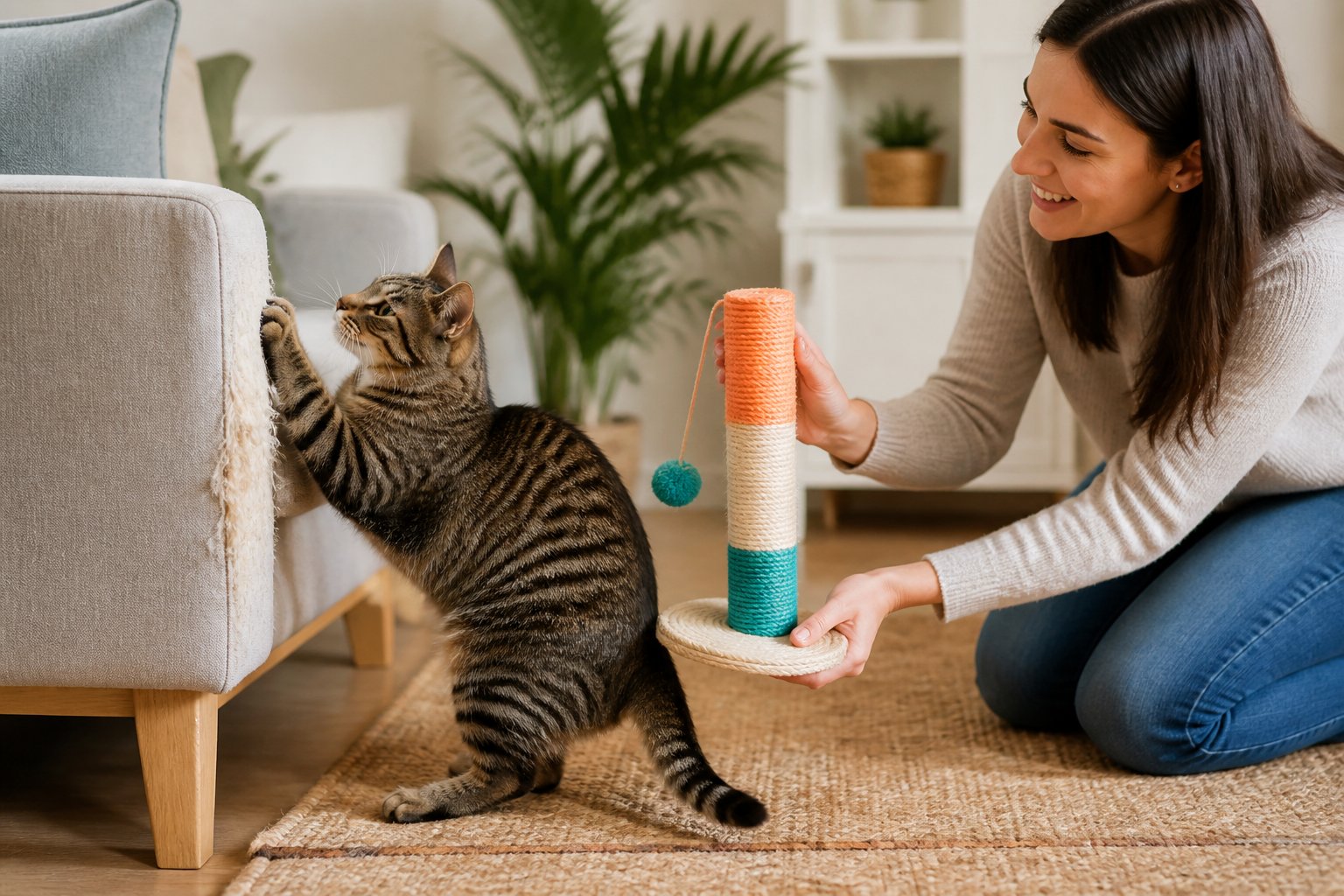
Cats scratch for instinctive reasons like maintaining their claws and marking territory, but you can redirect this behavior with the right tools and techniques. Understanding why your cat scratches and how to guide them toward appropriate surfaces will help protect your furniture.
Why do cats scratch furniture and carpets?
Cats scratch furniture and carpets for several instinctive reasons. They need to maintain their claws by removing the outer layer and keeping them sharp.
Scratching also serves as a way to mark territory. Cats have scent glands in their paw pads that leave behind their unique scent when they scratch. The visible claw marks combined with this scent signal to other cats that this space belongs to them.
Scratching acts as an emotional outlet for your cat. They may scratch more when feeling anxious, excited, or stressed. It’s also a form of stretching that helps them work out their muscles and maintain flexibility.
Do all cats scratch furniture, or is it a behavioral issue?
Scratching is an instinctual behavior for cats, not a behavioral problem. All cats have the natural urge to scratch surfaces. This means your cat isn’t misbehaving when they claw your couch.
Some cats may scratch furniture more than others based on their personality and environment. Anxious or territorial cats often scratch more frequently. Kittens and young cats tend to scratch more as they explore and learn about their surroundings.
The issue isn’t that your cat scratches, but where they choose to scratch. You can train any cat to use appropriate scratching surfaces instead of your furniture.
How can I redirect my cat’s scratching to an appropriate scratching post?
Place the scratching post directly in front of the furniture your cat currently scratches. This blocks their access to the damaged area and encourages them to use the post instead.
Keep the post in a central location where your family spends the most time. Cats want to mark territory in high-traffic areas, not hidden corners of your home.
Make the scratching area more appealing by adding toys, treats, or catnip near the post. You can gradually move the post to its permanent location once your cat uses it regularly.
Offer different types of scratching surfaces to find what your cat prefers. Try various materials like sisal, cardboard, carpet, and wood in both vertical and horizontal orientations.
How do I teach a cat to stop scratching the couch without punishment?
Focus on making appropriate scratching surfaces more attractive than your couch. Punishment doesn’t work because scratching is a natural behavior your cat needs to perform.
Reward your cat with treats and praise when they use their scratching post. This positive reinforcement helps them understand which surfaces are acceptable.
Cover the scratched furniture temporarily with materials your cat doesn’t like, such as aluminum foil or double-sided tape. Clean the area thoroughly to remove scent markers that draw your cat back to the same spot.
Trim your cat’s claws regularly to reduce damage while you’re redirecting the behavior. Keep multiple scratching options available throughout your home.
What is the best spray to stop cats from scratching furniture?
Deterrent sprays contain scents that cats find unpleasant, like citrus or bitter apple. These sprays can temporarily discourage scratching when applied to furniture.
Calming pheromone sprays can reduce anxiety-related scratching. These products mimic natural cat pheromones and help your cat feel more relaxed in their environment.
Catnip spray works well when applied to scratching posts rather than furniture. This attracts your cat to appropriate scratching surfaces instead of pushing them away from unwanted ones.
No spray alone will solve the problem. You must combine deterrents with positive alternatives like scratching posts to successfully redirect the behavior.
What home remedies can help stop a cat from scratching furniture?
Aluminum foil placed on furniture creates an unpleasant texture that most cats avoid. The sound and feel discourage them from scratching these surfaces.
Double-sided tape makes furniture sticky and uncomfortable for cats to scratch. You can find pet-specific versions at most pet stores or use regular tape as a temporary solution.
Citrus peels or citrus-scented cleaners naturally repel cats. Place orange or lemon peels near scratched areas or wipe furniture with diluted citrus cleaner.
Cardboard boxes and corrugated cardboard make excellent DIY scratching surfaces. Cut them into different shapes and place them near furniture your cat typically scratches.